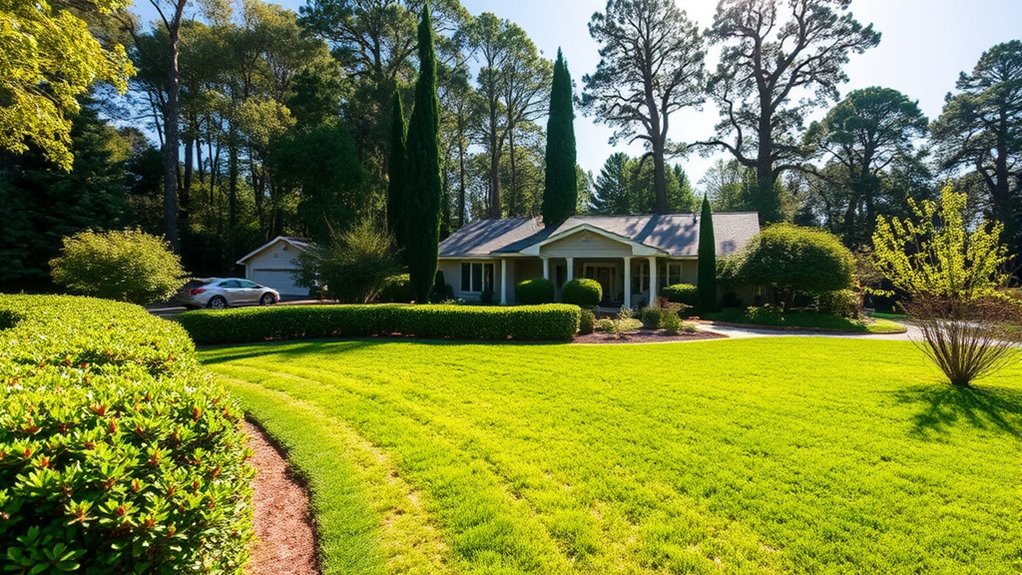

To prepare for wildfires, you should create a defensible space by clearing dead vegetation, trimming trees away from your home, and maintaining a safe distance between plants and structures. Use fire-resistant materials for your roof, vents, and siding, and incorporate non-flammable landscape features like gravel or stone. Regularly inspect and update your vegetation management and safety plans; you’ll discover more ways to protect your home as you continue through this guide.
Key Takeaways
- Clear dead vegetation, fallen leaves, and dry branches regularly to reduce fire fuel around your home.
- Create a defensible zone by trimming trees, maintaining safe distances, and removing dense brush near structures.
- Use fire-resistant building materials like roofing, siding, vents, and windows to prevent ember ignition.
- Incorporate firebreaks and non-flammable landscaping techniques to limit fire spread and protect your property.
- Develop and practice evacuation plans, ensuring multiple routes and safety measures are in place for wildfire emergencies.
Understanding the Importance of Defensible Space

Understanding the importance of defensible space is crucial because it can greatly reduce the risk of your property catching fire. Many people believe wildfire myths, like thinking only big trees pose a threat or that wildfire season is unpredictable. In reality, your homeowner responsibilities include creating a defensible zone that minimizes fuel and keeps flames at bay. Clearing dead vegetation, trimming shrubs, and maintaining a safe distance between trees are essential steps. This space acts as a buffer, slowing or stopping a fire before it reaches your home. Recognizing these facts helps you take proactive measures. Additionally, contrast ratio plays a role in how clearly your home can be seen from a distance, aiding firefighting efforts. By understanding the true role of defensible space, you empower yourself to protect your property effectively during wildfire season.
Assessing Your Property’s Fire Risk

Evaluating your property’s fire risk is a vital step in wildfire preparedness because it helps you identify vulnerabilities and prioritize mitigation efforts. A thorough fire risk assessment involves examining your landscape, vegetation, and structures to determine how easily a fire could spread or ignite. Look for areas with dense brush, dead vegetation, or overgrown trees that could act as fuel. Consider the proximity of your home to these hazards and identify spots where fire could quickly reach structures. Understanding your property’s vulnerability allows you to focus on the most critical areas for removal or maintenance. Additionally, implementing efficient general ledger coding can help in tracking maintenance expenses and mitigation investments. Recognizing fire-prone vegetation and managing it appropriately is crucial for reducing fire spread. Incorporating appropriate plant selections can further minimize fire risks by choosing less flammable options. Understanding how vegetation management influences fire behavior is essential for developing an effective defensible space. Proper fire history assessment can also inform your mitigation strategies by highlighting areas with previous fire activity. This proactive approach reduces the likelihood of a wildfire damaging your home and helps you develop a targeted plan for creating a safer, more defensible property.
Creating a Defensible Zone Near Your Home

To improve your home’s fire resistance, focus on managing the vegetation around it effectively. Incorporate strategies like removing dead plants and keeping trees trimmed away from structures. Additionally, adding structural features such as fire-resistant roofing and vents can help create a stronger defensible zone. Regular maintenance of nearby structures and ensuring proper installation and venting are also essential for fire safety.
Vegetation Management Strategies
Creating a defensible zone near your home starts with strategic vegetation management. You want to reduce fuel sources and promote healthy growth. Focus on removing dead or overgrown plants and replacing invasive species with native plants, which are better adapted to your environment and support pest control naturally. Maintain a safe distance between trees and structures, and regularly prune to prevent fire spread. Consider this emotional impact:
| Native Plants | Pest Control | Fire Resistance |
|---|---|---|
| Thrive locally | Naturally deter pests | Reduce fire risk |
| Support ecosystem | Minimize chemicals | Create a fire-resistant barrier |
| Promote resilience | Protect your home | Enhance safety |
In addition, selecting native plants for landscaping helps create a more resilient and fire-resistant environment around your home. Incorporating fire-resistant native plants can further strengthen your defensible space by providing natural barriers that are less likely to ignite.
Structural Defensible Features
Building a defensible zone around your home involves more than just managing vegetation; it requires implementing structural features that act as barriers against wildfire flames and embers. Installing fire-resistant windows can prevent heat transfer and reduce the risk of breakage during a wildfire, adding a critical layer of protection. Ember resistant vents are equally important, as they prevent embers from entering your attic or crawl spaces, which can ignite your home from within. Consider using non-combustible roofing materials and sealing gaps around vents, pipes, and utility lines. These structural features work together to create a barrier that slows or stops flames and embers from causing interior fires, giving your home a better chance of surviving a wildfire while protecting your loved ones and possessions. Understanding fire-resistant construction can further enhance your home’s defenses against wildfire threats. Incorporating building codes and standards specific to wildfire-prone areas can ensure that your home meets the necessary safety requirements. Additionally, implementing structural defensible features can significantly improve your property’s resilience to wildfire impacts.
Using Fire-Resistant Materials for Landscaping

Using fire-resistant materials in your landscaping can substantially reduce the risk of wildfire damage. Incorporate fire resistant plants like succulents, native grasses, and deciduous shrubs that are less likely to ignite. Choose durable landscape materials such as gravel, stone, or fire-resistant mulch to create a barrier that slows fire spread. Avoid using highly combustible materials like wood chips or bark near your home. Instead, opt for non-flammable alternatives that can withstand heat and flames. Proper placement of these materials is vital—keep them away from your home’s structure and on a well-maintained, non-flammable substrate. Additionally, understanding fire-resistant landscaping can help you select the most effective options for your property. Incorporating landscape design principles that prioritize fire safety helps ensure your yard remains a protective buffer. By selecting the right plants and materials, you create a resilient landscape that offers added protection during wildfire season. Ensuring the landscape design incorporates defensible space principles further enhances safety by reducing fuel sources close to your home.
Maintaining Your Vegetation and Landscape
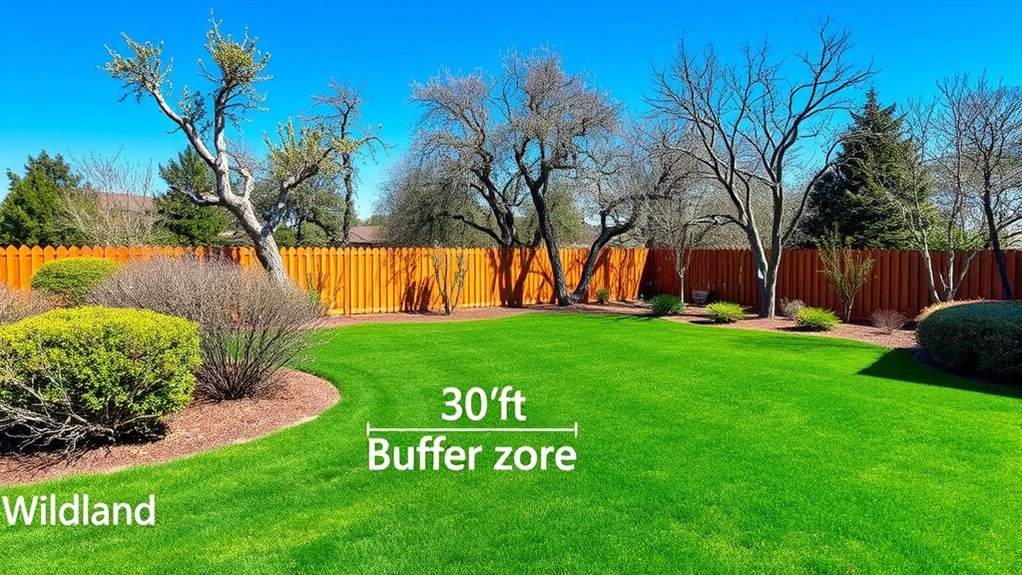
Regularly maintaining your vegetation and landscape is essential for wildfire safety, as overgrown or neglected plants can act as fuel. Keep your yard tidy by trimming dead leaves and removing dry, fallen branches. Use native species and drought-tolerant plants, which are less flammable and require less water. Group plants based on their fire risk, placing less flammable options closer to your home. Maintain a defensible space by creating a buffer zone free of dense vegetation. Regularly prune shrubs and grasses to prevent them from spreading flames. Incorporate fire-resistant landscape strategies to further enhance your wildfire preparedness. Additionally, selecting plants with low flammability can significantly reduce fire risk around your property. Recognizing the importance of vegetation management in wildfire prevention can help you create a safer environment. Proper landscape design techniques can also contribute to reducing fire hazards. For example, incorporating firebreaks into your landscape can help limit the spread of fire and protect structures. Here’s a quick overview to guide your landscaping:
| Plant Type | Fire Safety Tip |
|---|---|
| Native species | Use for resilience and lower flammability |
| Drought-tolerant plants | Reduce watering needs and flammability |
| Grasses | Keep trimmed and away from structures |
| Shrubs | Prune regularly to prevent overgrowth |
| Fallen leaves/debris | Remove to reduce fire fuel |
Managing Trees and Shrubs for Fire Safety
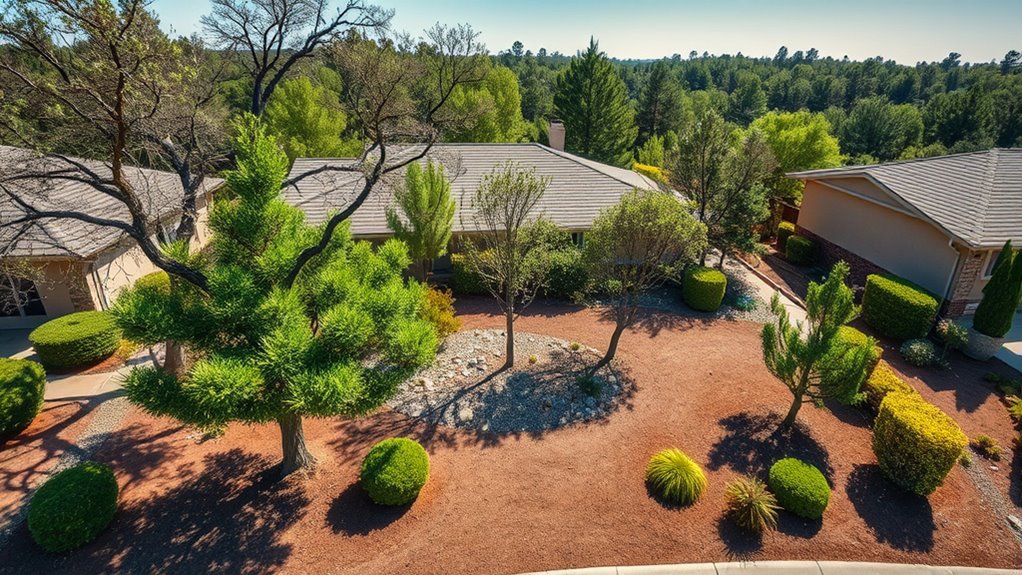
Have you considered how overgrown trees and shrubs can increase your wildfire risk? To reduce danger, prune trees so their canopies don’t touch and remove dead or overhanging branches. Keep ornamental shrubs well-trimmed and spaced away from your home, creating a defensible buffer. Incorporate native plantings that are less flammable and better adapted to your environment, which can help limit fire spread. Avoid planting dense clusters of ornamental shrubs and ensure they are maintained regularly. Remove any dead or dry foliage from trees and shrubs to prevent ignition sources. Additionally, managing vegetation to reduce fire fuel load can significantly decrease the likelihood of wildfire spreading to your property. Properly selecting and maintaining fire-resistant landscaping can further enhance your home’s safety. Using Vetted electric bike conversion kits for transportation can also reduce the risk of fire caused by vehicle accidents or malfunctions in your area. Regularly inspecting and maintaining your landscape can promote healthy growth and further reduce fire hazards. Incorporating fire-resistant plant materials into your landscape design can provide an extra layer of protection against wildfires. By managing your trees and shrubs effectively, you create a safer landscape that resists fire spread and protects your home from potential wildfire damage.
Incorporating Fire-Resistant Building Features

To enhance your home’s ability to withstand wildfires, incorporating fire-resistant building features is essential. Upgrading to fire-resistant roofing helps prevent ember penetration and reduces ignition risk. Ember-resistant vents block embers from entering attic or crawl spaces, protecting your home’s interior. Consider using non-combustible siding materials and installing spark arresters on chimneys. These features form a barrier against flying embers and radiant heat. Below is a table highlighting key fire-resistant features:
| Feature | Purpose | Benefit |
|---|---|---|
| Fire-resistant roofing | Prevents ember ignition from above | Shields your home from direct flames |
| Ember-resistant vents | Stops embers from entering attic or crawl space | Reduces internal fire risk |
| Non-combustible siding | Minimizes flame spread on exterior | Protects walls from ignition |
| Spark arresters | Blocks embers from chimneys | Prevents ember escape during fires |
Developing an Emergency Plan and Evacuation Routes
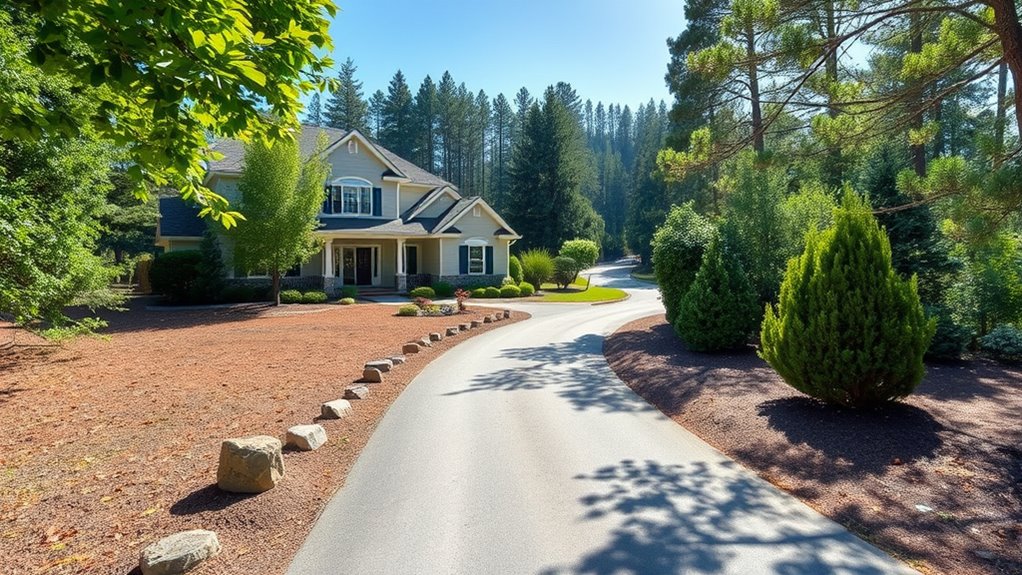
Creating a clear emergency plan and well-defined evacuation routes is essential for wildfire preparedness. You should identify multiple evacuation routes in case your primary path becomes blocked by fire or traffic. Practice evacuation planning regularly with your family so everyone knows what to do and where to go. Make sure your plan includes a designated meeting point outside the danger zone. Emergency communication is key; establish a way to stay informed about wildfire updates, such as alerts on your phone or a battery-powered radio. Share your plan with neighbors and ensure everyone understands their roles. Being prepared with a solid emergency plan and clear evacuation routes helps you respond quickly and safely when wildfire threats arise.
Regularly Reviewing and Updating Your Fire Safety Measures

Reviewing and updating your fire safety measures regularly keeps your preparedness current and effective. Schedule periodic assessments of your defensible space, fire safety drills, and emergency plans. This guarantees you identify new hazards or changes in your environment. Engaging with your community enhances awareness and preparedness for wildfires. Collaborate on community drills and share updates to strengthen collective safety. Use the table below to track key updates:
| Measure | Last Reviewed | Next Review Date |
|---|---|---|
| Clearing brush & debris | 2023-10-01 | 2024-04-01 |
| Fire safety drills | 2023-09-15 | 2024-03-15 |
| Emergency plan update | 2023-11-01 | 2024-05-01 |
| Community awareness events | 2023-12-01 | 2024-06-01 |
| Equipment checks | 2023-08-20 | 2024-02-20 |
Regular reviews keep your safety measures effective and community ready.
Frequently Asked Questions
How Can I Financially Prepare for Wildfire Protection Improvements?
To financially prepare for wildfire protection improvements, start by setting aside emergency savings specifically for this purpose. Invest in fire-resistant materials for your home and landscaping to reduce risk. Research grants or insurance discounts available for wildfire safety upgrades. Budget regularly for ongoing maintenance, like clearing brush and trimming trees. Planning ahead guarantees you’re ready to implement necessary improvements without financial stress when wildfire threats increase.
What Insurance Coverage Should I Consider for Wildfire Damage?
You might wonder if your insurance covers wildfire damage. Investigate whether your policy includes wildfire coverage or if there are coverage exclusions. Confirm that your insurance claims will address the full cost of damages, including rebuilding and loss of personal property. It’s wise to review your policy regularly and consider adding specific wildfire coverage if needed, ensuring you’re protected when disaster strikes.
Are There Community Programs to Assist With Defensible Space Creation?
You should explore community grant programs and volunteer firefighting efforts in your area. These programs often provide resources, funding, or assistance to help you create defensible space around your home. By participating, you can reduce wildfire risk and contribute to community safety. Check with local fire departments or municipal websites to find out what support is available, and consider volunteering to strengthen wildfire preparedness efforts.
How Do I Involve My Neighborhood in Wildfire Preparedness Efforts?
Imagine your neighborhood as a well-oiled machine, each part working together. To involve your community in wildfire preparedness efforts, start by organizing a neighborhood planning meeting. Promote community engagement through flyers, social media, or door knocking. Share ideas for creating defensible space and safety tips. When everyone collaborates, your neighborhood becomes more resilient, making wildfires less likely to cause damage. Together, you can build a safer, more prepared community.
What Are the Legal Requirements for Landscaping Near Fire-Prone Areas?
You should check local regulations to understand legal requirements for landscaping near fire-prone areas. Typically, you’re required to maintain setback distances from structures and avoid planting highly flammable materials. Use fire-resistant plants in your landscaping, and make certain your yard adheres to local codes. These measures help reduce fire risk and protect your property, so stay informed and follow all legal guidelines to maintain a safe, compliant landscape.
Conclusion
So, while you’ve taken all these steps to protect your home, don’t forget that nature’s unpredictability still has the final say. Ironically, the very effort you put into creating a defensible space might make you feel a bit too safe—only to realize wildfire can still surprise you. Stay vigilant, keep your defenses updated, and remember, no plan is foolproof. But at least you’ll sleep better knowing you did everything possible—until the next spark.