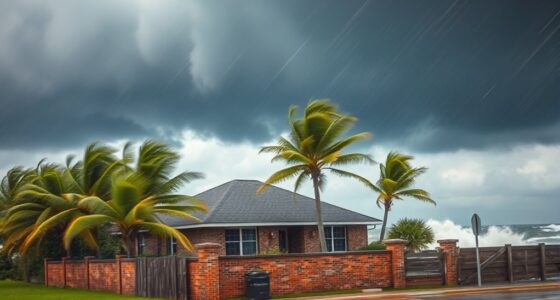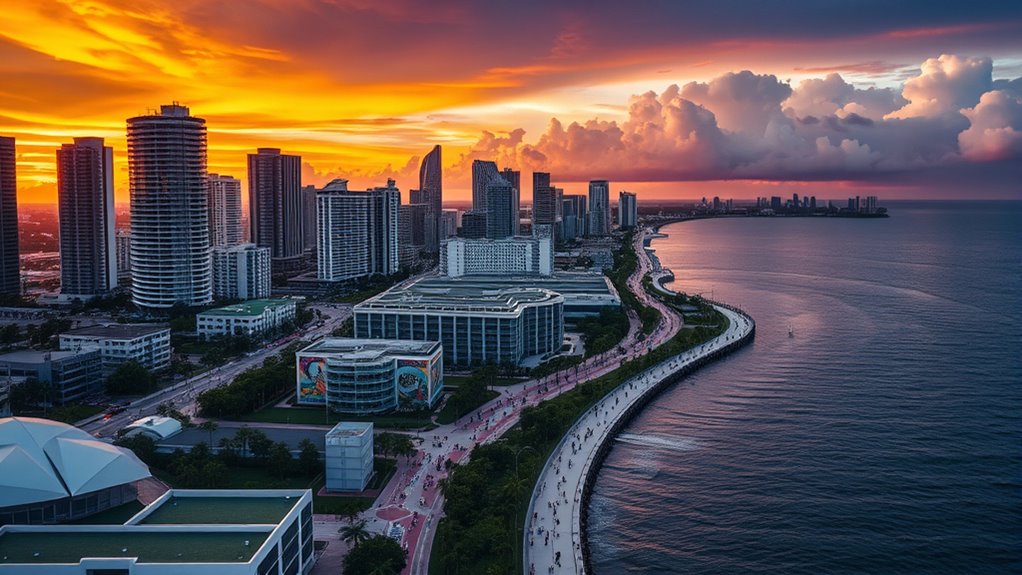

In coastal cities like Miami, building urban resilience means adopting a mix of structural defenses, natural buffers like mangroves, and smart urban design. You’ll find seawalls, elevated infrastructure, and advanced pumping systems working together to protect against rising sea levels and stronger storms. Community engagement also plays a crucial role through green infrastructure and personal flood prevention measures. To fully understand how these strategies create a safer, more adaptable city, keep exploring the innovative approaches shaping Miami’s future.
Key Takeaways
- Implementing structural defenses like seawalls, levees, and advanced pumping systems to prevent floodwaters from inundating urban areas.
- Utilizing natural buffers such as mangroves and wetlands to absorb storm surge energy and slow water progression.
- Incorporating green infrastructure and permeable surfaces to reduce urban flooding and manage excess stormwater runoff.
- Engaging communities through awareness campaigns and encouraging personal flood mitigation measures.
- Continuously updating and innovating flood mitigation strategies to adapt to climate change and enhance city resilience.
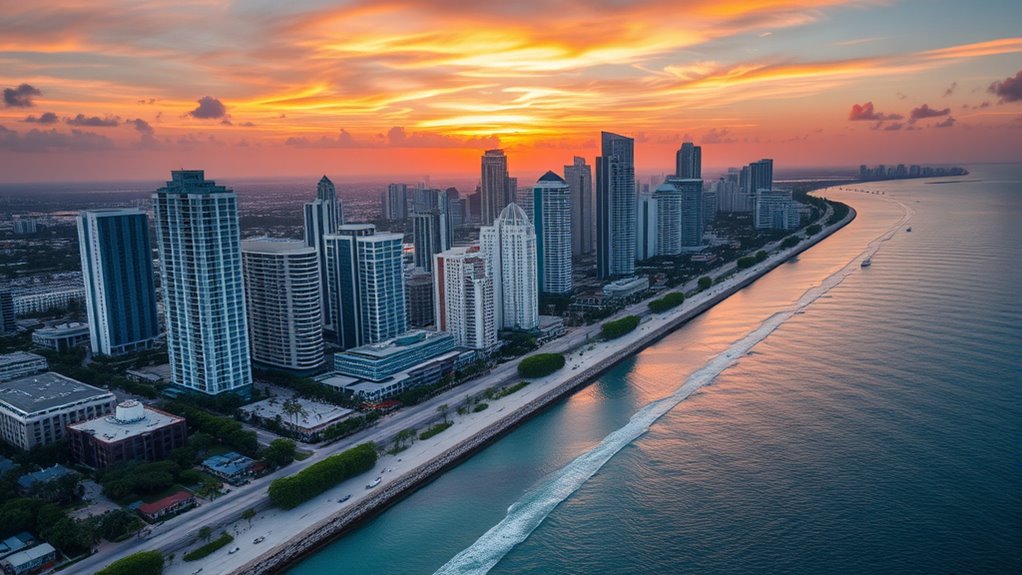
Coastal cities like Miami face increasing threats from climate change, including rising sea levels, stronger storms, and flooding. As water levels climb and storms grow more intense, you’re on the front lines of a changing environment. One of the most immediate dangers is storm surge—those powerful, towering walls of water pushed inland by hurricanes and tropical storms. Storm surge can inundate neighborhoods, overwhelm drainage systems, and cause catastrophic damage in a matter of hours. Because of this, flood mitigation becomes a crucial part of your city’s resilience strategy. It’s not just about building higher seawalls or levees; it’s about adopting an all-encompassing approach that minimizes damage and speeds recovery.
Coastal cities face rising sea levels and storms, making flood mitigation essential for resilience and recovery.
In Miami, flood mitigation involves multiple measures designed to protect both infrastructure and communities. You might see the installation of advanced pumping systems that quickly remove floodwaters from streets and low-lying areas, reducing the time residents spend in floodwaters and limiting property damage. Elevated roads and buildings are becoming more common, giving critical infrastructure the necessary height to stay above floodwaters during storm surges. These structural changes are essential, but they’re only part of the solution. You also need natural defenses like mangroves and wetlands, which absorb storm surge energy and slow the advance of floodwaters, providing an additional buffer against extreme weather events. Recognizing the importance of climate adaptation strategies is vital for long-term resilience.
Your city’s planning efforts increasingly focus on integrating flood mitigation into urban design. This includes creating green infrastructure such as rain gardens and permeable pavements that help absorb excess water during heavy rains and storm surges. These systems reduce the burden on traditional drainage and help prevent urban flooding. Public awareness campaigns play a crucial role, encouraging residents to elevate electrical systems, install flood barriers, and adopt other personal flood mitigation measures. When everyone participates, your city becomes more resilient and better prepared for future storms.
Investing in resilient infrastructure isn’t just about immediate protection; it’s about ensuring long-term sustainability. As climate change accelerates, you’ll need to stay ahead of rising seas and intensifying storms. This means continuously updating flood mitigation strategies, incorporating new technology, and strengthening community engagement. Miami’s experience shows that proactive planning and adaptive measures are key to safeguarding lives, property, and economic vitality. While you can’t control the weather, you can build a resilient city capable of withstanding the impacts of storm surge and flooding, securing Miami’s future against the challenges of climate change.
Frequently Asked Questions
How Do Local Communities Participate in Resilience Planning?
You actively participate in resilience planning through community engagement, sharing your concerns and ideas with local officials. Your involvement helps shape policies that address climate risks and improve infrastructure. By attending public meetings, joining neighborhood groups, and providing feedback, you influence policy development directly. This collaborative effort guarantees that resilience strategies reflect your community’s needs, making coastal cities more prepared and adaptable to climate challenges.
What Innovative Technologies Are Used for Flood Prevention?
Think of flood prevention as building a digital fortress against relentless storm surge. You rely on innovative technologies like smart flood barriers that adjust dynamically, and early warning systems that act as your digital radar. These tools work together to hold back rising waters, turning chaos into control. By integrating sensors and automated barriers, you create a proactive defense, transforming vulnerability into resilience amid the unpredictable coastal storm dance.
How Is Climate Change Shaping Urban Planning Policies?
Climate change drives you to rethink urban planning policies by prioritizing green infrastructure and zoning reforms. You’re encouraged to incorporate green spaces, permeable surfaces, and flood-resistant designs to reduce risk and enhance resilience. Zoning reforms help you control development in vulnerable areas, ensuring sustainable growth. These strategies enable you to adapt cities to rising sea levels, stronger storms, and unpredictable weather, creating safer, more resilient urban environments for future generations.
What Funding Sources Support Resilience Projects?
Think of resilience projects as a sturdy bridge connecting hope and action. You can access funding through public-private partnerships that blend resources and expertise. Federal grants act like the wind beneath your wings, fueling your efforts. These sources empower you to build stronger defenses against climate impacts, ensuring your community’s future remains secure and vibrant. Together, these tools help turn resilience dreams into realities, safeguarding your city for generations to come.
How Do Resilience Efforts Impact Property Values?
Resilience efforts can boost your property values by improving green infrastructure and implementing smart zoning regulations. When these measures are in place, your property becomes more protected from flooding and storm damage, making it more attractive to buyers. Additionally, resilient neighborhoods often see increased investment and community pride, which can further elevate property values over time. So, supporting resilience initiatives benefits your property’s worth and long-term sustainability.
Conclusion
As you navigate Miami’s future, remember that the city invests over $2 billion annually in resilience measures. This commitment highlights the crucial importance of adaptive infrastructure in safeguarding coastal communities. With sea levels rising by approximately 3.3 millimeters each year, your city’s proactive efforts are essential. Embracing innovative solutions now ensures Miami can withstand climate challenges, protect its residents, and maintain its vibrant coastal identity for generations to come.