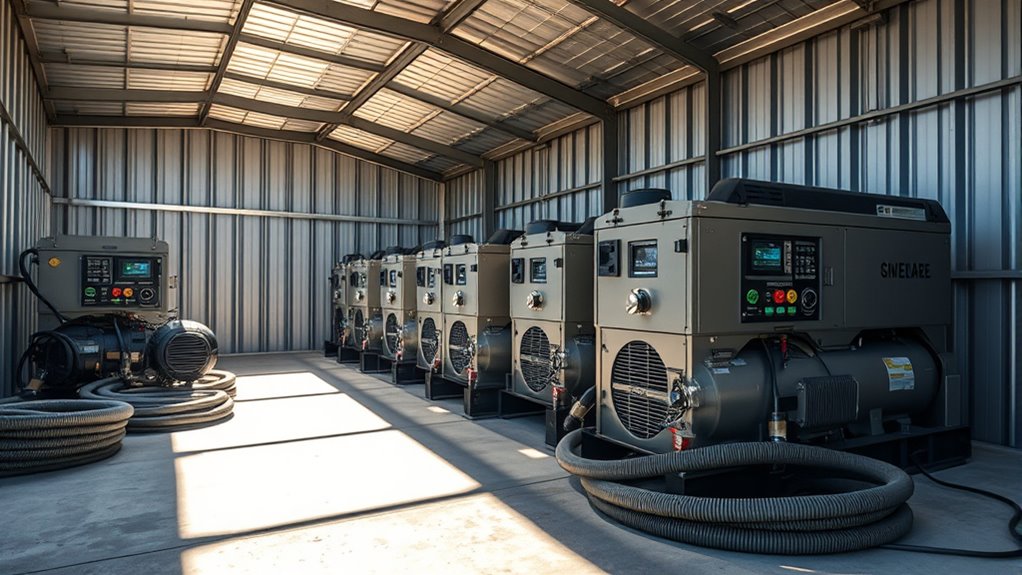

To store and use your backup generator safely, keep fuel in approved, tightly-sealed containers and store it in a cool, dry, ventilated area away from heat or sunlight. Place the generator on a flat surface, away from windows and vents, to prevent exhaust fumes from entering your home. Regular maintenance, proper fueling, and noise reduction measures help guarantee safe, efficient operation. If you want to learn more about protecting your home and safety tips, keep exploring this important topic.
Key Takeaways
- Store fuel in approved, tightly-sealed containers in cool, dry, well-ventilated areas away from heat sources.
- Place the generator on a flat, stable surface, away from windows and vents to prevent exhaust fumes from entering indoor spaces.
- Operate the generator within its capacity to avoid damage, overloading, and excessive fuel consumption.
- Use noise reduction features or soundproof enclosures and position the unit away from outdoor living areas to minimize noise disturbance.
- Regularly perform maintenance, including oil changes and filter replacements, to ensure safe, efficient operation.
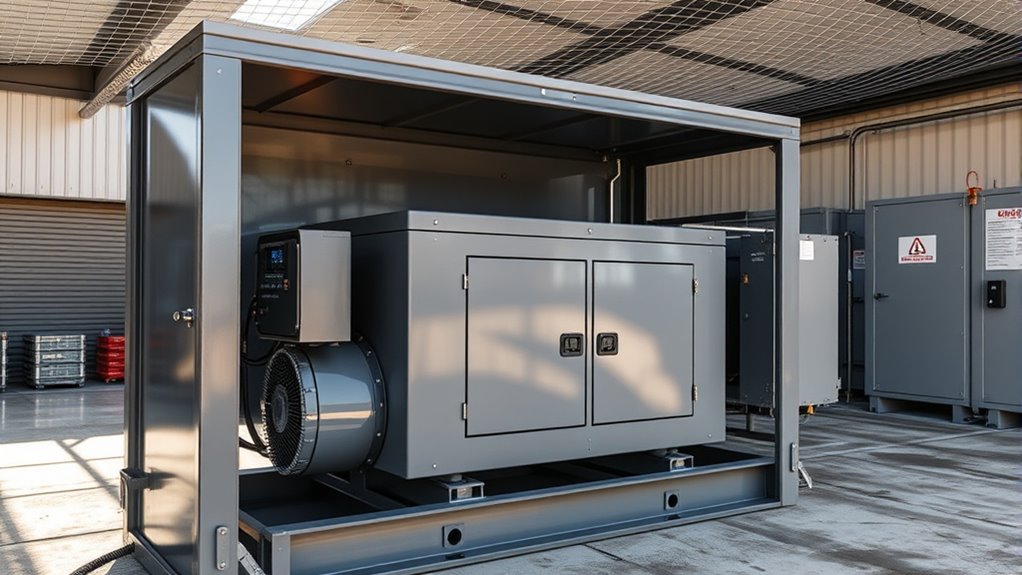
When the power goes out unexpectedly, backup generators become essential for keeping your home or business running smoothly. A reliable generator ensures that your lights stay on, appliances keep functioning, and your daily routines aren’t disrupted. As you contemplate installing one, it’s important to understand how to store and use it safely, especially when it comes to fuel management and noise levels. Proper storage helps prevent accidents and extends the lifespan of your generator, while mindful operation minimizes disturbances to your household or neighbors.
Fuel efficiency is a key factor to think about when storing and operating your backup generator. You want a unit that consumes fuel wisely, especially during prolonged outages. To optimize fuel efficiency, store your fuel in approved containers that seal tightly to prevent leaks and deterioration. Keep fuel in a cool, dry, well-ventilated area away from direct sunlight or heat sources, reducing the risk of fire or explosion. When using the generator, run it under a load that matches its capacity; overloading can waste fuel and strain the engine, leading to costly repairs. Regular maintenance, such as changing oil and replacing filters, also boosts efficiency, ensuring your generator runs smoothly when needed most.
Noise reduction is another critical aspect of safe generator use. Backup generators can be loud, which may disturb your household or neighbors if not managed properly. To minimize noise, choose a model with built-in noise reduction features or consider installing soundproof enclosures designed specifically for generators. When operating your unit, place it on a flat, stable surface away from windows, vents, or outdoor living spaces. This not only helps contain noise but also prevents exhaust fumes from creeping into your home. Running your generator during designated times and informing neighbors beforehand can further reduce potential conflicts. Regular maintenance, such as tightening loose parts and checking mufflers, also helps keep noise levels down.

YITAMOTOR Fuel Caddy 15 Gallon, Fuel Transfer Tank, Portable Gasoline Fuel Caddy with Manual Transfer Nozzle, Fuel Container, Red
CAPACITY UPGRADE: The 15-gallon upgraded fuel caddy holds enough fuel to last a long time; It can refuel…
As an affiliate, we earn on qualifying purchases.
As an affiliate, we earn on qualifying purchases.
Frequently Asked Questions
How Often Should I Perform Maintenance on My Backup Generator?
You should perform maintenance on your backup generator at least every 6 to 12 months, depending on your maintenance schedule. Regular maintenance helps guarantee peak performance and extends your generator’s lifespan. Check oil levels, filters, and connections routinely. If you use it frequently or in harsh conditions, consider more frequent inspections. Staying consistent with maintenance keeps your generator reliable when you need it most and prolongs its overall lifespan.
What Are the Best Locations for Storing a Backup Generator Safely?
You’ll want to stash your backup generator outdoors, where it’s exposed to the open sky and won’t turn your garage into a smoky danger zone. Make sure it’s in a well-ventilated spot, free from debris, and away from windows and vents to prevent carbon monoxide buildup. Proper outdoor placement with good ventilation keeps you safe, lets your generator breathe easy, and ensures it’s ready when you need it most, without any worries.
Can I Operate a Backup Generator Indoors? Why or Why Not?
You should never operate a backup generator indoors because indoor operation is dangerous. Generators produce carbon monoxide, a deadly gas that can quickly fill enclosed spaces. Proper generator ventilation is essential; always place your generator outdoors in a well-ventilated area, away from windows and vents. Never compromise safety by trying indoor operation, as it puts you at serious risk of poisoning or carbon monoxide poisoning.
What Fuel Types Are Safest and Most Efficient for Backup Generators?
You should choose propane or natural gas for backup generators, as they’re safer and cleaner options. These fuels have safer storage requirements and produce fewer harmful emissions. To maximize efficiency, store fuel in approved containers, keep them away from heat sources, and regularly inspect for leaks. Using these fuels guarantees reliable power while minimizing risks, making your backup generator both safe and efficient during emergencies.
How Do I Ensure My Generator Is Environmentally Compliant?
To guarantee your generator is environmentally compliant, you should choose eco-friendly fuels like biodiesel or propane, which help reduce emissions. Regularly maintain your generator to keep it running efficiently and meet emission standards. Additionally, follow local regulations on emission reduction measures, such as installing catalytic converters or using cleaner fuels. Staying informed about evolving environmental policies ensures your generator operates responsibly and minimizes its impact on the environment.

Hudson Generator Box, SD Aluminum Generator Enclosure with Ventilation, Heat Dissipation & Reduce Noise, Accommodates The Maximum Size of 39.4"x32"x31.7", White
【Efficient Ventilation, Goodbye Overheating】Still dealing with your generator overheating during long hours of operation? Our generator enclosure features…
As an affiliate, we earn on qualifying purchases.
As an affiliate, we earn on qualifying purchases.
Conclusion
Remember, handling backup generators is like tending to a garden—you need to care for them properly to keep everything thriving. Store fuel safely, follow the manufacturer’s instructions, and never run the generator indoors. When used correctly, your backup generator becomes a reliable shield against power outages. By treating it with respect and caution, you ensure it’s always prepared to stand guard when you need it most—like an old friend watching over your home.

Westinghouse 12500 Watt Dual Fuel Home Backup Portable Generator, Remote Electric Start, Transfer Switch Ready, Gas and Propane Powered
9500 Running Watts and 12500 Peak Watts (Gasoline); 8500 Running Watts, 11200 Peak Watts (Propane); Remote Start with…
As an affiliate, we earn on qualifying purchases.
As an affiliate, we earn on qualifying purchases.

Generac 5W-20 Maintenance Kit for 20Kw-26Kw 999cc Generators (Replaces A0002074712)
Generac SAE 5W-20 Full Synthetic Engine Oil (2 Quarts)
As an affiliate, we earn on qualifying purchases.
As an affiliate, we earn on qualifying purchases.