

To charge devices safely without the risk of fires, choose reputable power banks with built-in safety features like overcharge, short circuit, and temperature protections. Look for models certified by trusted brands that comply with safety standards, and avoid cheap, unverified options. Keep your power bank in cool, dry places, and avoid exposing it to heat or moisture. If you continue exploring, you’ll discover more tips to keep your devices charged and secure.
Key Takeaways
- Use power banks from reputable brands with built-in safety features like overcharge, short-circuit, and temperature protection.
- Avoid exposing power banks to extreme temperatures or moisture to prevent battery damage and fire risk.
- Regularly recharge and store power banks in a cool, dry place; avoid leaving them in hot environments like cars.
- Ensure proper use of compatible cables and avoid overloading multiple devices simultaneously to prevent overheating.
- Follow manufacturer instructions and check for safety certifications to ensure safe charging and reduce fire hazards.
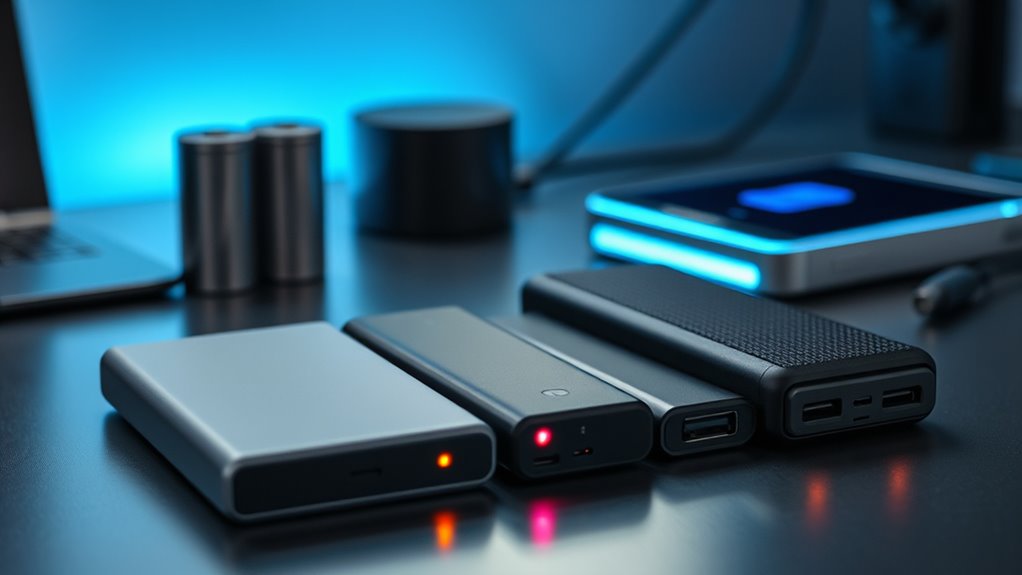
In today’s digital world, batteries and power banks have become essential for keeping your devices charged on the go. Whether you’re navigating a busy city, traveling abroad, or simply trying to stay connected during a long day, having a reliable power source ensures you won’t be left helpless when your phone, tablet, or other gadgets run out of juice. Power banks are compact, portable, and designed to be your backup energy, so you can focus on what matters without worrying about finding an outlet or risking damage from traditional charging methods.
When choosing a power bank, you’ll want to consider its capacity, which is typically measured in milliamp-hours (mAh). A higher capacity means more charges before needing to recharge the bank itself. For everyday use, a 10,000mAh power bank can keep your phone alive through several charges, while larger capacities, like 20,000mAh or more, are great for extended trips or multiple devices. Keep in mind, though, that larger capacity models tend to be heavier and bulkier, so balance your needs and portability.
Charging your power bank is straightforward. Most models feature a USB input port, where you connect a charging cable from a wall outlet or power source. Some high-capacity power banks even support fast-charging technologies, allowing you to replenish their energy more quickly. Once charged, you simply connect your device to the power bank using a compatible cable, and the power bank will transfer its stored energy to your device. Many models have multiple output ports, letting you charge several devices at once, which is especially handy if you’re traveling with friends or family.
One of the key benefits of power banks is their safety features. Reputable models include protections against overcharging, short circuits, and overheating, so you don’t have to worry about damaging your devices or risking fire hazards. It’s always wise to buy from trusted brands and check reviews before making a purchase, ensuring your power bank meets safety standards and delivers reliable performance. Additionally, understanding battery chemistry can help you choose models with longer lifespan and better safety profiles.
To maximize your power bank’s lifespan and safety, avoid exposing it to extreme temperatures or moisture. Don’t leave it in direct sunlight or in a hot car, as heat can degrade the battery over time. When not in use, store it in a cool, dry place, and recharge it every few months if you’re not planning to use it regularly. Proper maintenance ensures your device remains ready whenever you need it, giving you peace of mind during your busy days or long adventures.
Ultimately, a good power bank is more than just a backup; it’s a vital tool that keeps your digital life running smoothly without the risk of fires or damage caused by improper charging methods. With the right choice, you gain a dependable, safe companion for all your mobile needs.
Frequently Asked Questions
How Can I Identify Counterfeit Batteries or Power Banks?
You can identify counterfeit batteries or power banks by checking for poor build quality, such as uneven seams or loose parts. Look for misspelled labels, low-quality logos, or suspicious packaging. Genuine products often have certification marks and serial numbers you can verify online. If a device charges too quickly, heats up excessively, or has a low capacity, it’s likely fake. Trust reputable brands and buy from authorized sellers to avoid counterfeits.
What Are the Environmental Impacts of Battery Disposal?
When you dispose of batteries improperly, you risk releasing harmful chemicals into the environment, contaminating soil and water. These toxic substances can harm wildlife, plants, and even human health. Additionally, improper disposal contributes to landfill waste and reduces the recyclability of valuable materials like lithium and cobalt. To minimize environmental impact, always recycle batteries at designated facilities and avoid throwing them in regular trash.
Can Batteries Be Recycled Safely at Home?
Think of recycling batteries like nurturing a tiny garden—carefully and responsibly. You can’t safely recycle batteries at home because they contain hazardous materials. Instead, you should take them to designated recycling centers or collection points. This guarantees they’re handled properly, protecting you and the environment. Don’t risk DIY methods; entrust professionals to manage these materials safely, turning potential hazards into opportunities for reuse and sustainability.
How Do Temperature Fluctuations Affect Battery Performance?
Temperature fluctuations can considerably impact your battery’s performance. When it’s too hot, your battery may drain faster, overheat, or even get damaged, reducing its lifespan. Cold temperatures slow down chemical reactions inside the battery, causing it to hold less charge temporarily. To keep your battery performing well, avoid exposing it to extreme temperatures and store it in a cool, dry place. Proper care ensures longer-lasting, safer use.
Are There Safer Alternatives to Traditional Lithium-Ion Batteries?
Yes, you can consider safer alternatives like solid-state batteries, which use a solid electrolyte instead of liquid, reducing fire risk. Another option is lithium iron phosphate (LiFePO4) batteries, known for stability and thermal safety. You might also explore sodium-ion batteries, which are eco-friendly and less flammable. These options provide safer, reliable power sources, helping you avoid the dangers associated with traditional lithium-ion technology.
Conclusion
Now that you know how to keep your batteries and power banks safe, you’re like a skilled captain steering clear of stormy fires. Think of your devices as delicate flames that need gentle tending, not reckless wildfires. By following these tips, you’re lighting up your tech life without risking a fiery crash. Stay vigilant, treat your batteries with care, and let your gadgets shine brightly—safe, reliable, and ready whenever you need them.