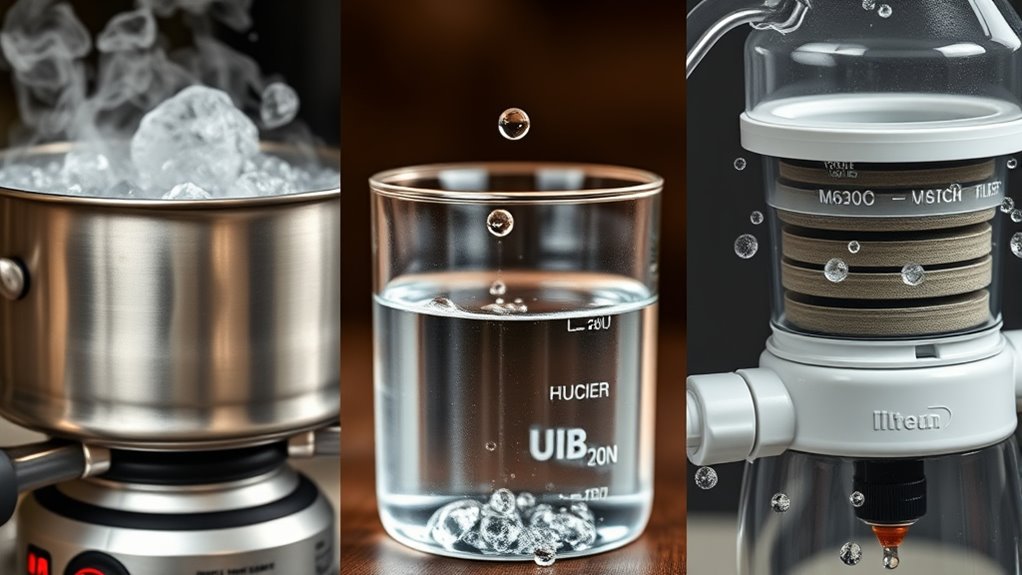

When choosing between boiling, chemical disinfection, and filtration for handheld water treatment, consider your situation. Boiling is reliable but requires fuel and time. Chemical options like iodine or chlorine tablets are quick and portable, ideal for emergencies. Filters are convenient and fast, especially when combined with chemicals for broader protection. Each method has pros and cons, so understanding these helps you pick what’s best. Keep exploring to find the perfect solution for your needs.

Get emergency and outdoor gear delivered free with Prime
- Fast, free delivery on millions of items
- Prime Video, Amazon Music and more included
- Member-only deals all year
Key Takeaways
- Boiling eliminates bacteria, viruses, and protozoa, but requires fuel, time, and a suitable container.
- Chemical disinfection is quick, portable, and effective but must be used carefully to avoid chemical residues.
- Filters physically remove debris, bacteria, and protozoa, offering immediate relief and convenience, with some models also disinfecting chemically.
- The choice depends on situational factors like resource availability, urgency, and water quality.
- Combining methods (e.g., filtering plus chemical treatment) can enhance water safety in handheld treatment scenarios.

Water treatment methods are essential for guaranteeing the safety and cleanliness of the water we use daily. When you’re out camping, hiking, or in emergency situations, you need reliable options to make water safe to drink. Portable purification techniques, like chemical disinfection, offer quick and effective solutions for treating water on the go. Chemical disinfection involves adding substances such as iodine or chlorine tablets to eliminate harmful pathogens. It’s simple to use—just drop a tablet into your water, wait a specified amount of time, and then enjoy safe drinking water. This method is lightweight and convenient, making it ideal for backpackers and outdoor enthusiasts. However, it’s important to follow the instructions carefully, as improper use can leave harmful chemicals in the water or fail to fully disinfect it.
Chemical disinfection with iodine or chlorine tablets offers quick, portable water purification for outdoor adventures.
Boiling is another straightforward method that’s been trusted for generations. When you boil water, you kill bacteria, viruses, and protozoa by exposing them to high temperatures. You don’t need any special equipment—just a heat source and a container. Bring your water to a rolling boil for at least one minute (or three minutes at higher altitudes), and you can be confident that most pathogens are destroyed. Boiling is highly effective, requires no chemicals, and doesn’t produce any waste, making it a dependable choice when you have access to heat. The main drawback is that it consumes fuel and takes time, which might be inconvenient if you’re in a hurry or low on resources.
Filtering water is another popular method, especially with handheld water treatment devices. Portable water filters use physical barriers like activated carbon or ceramic elements to remove debris, bacteria, and protozoa. These devices are compact, easy to operate, and don’t rely on chemicals or heat. They’re excellent for removing particulates and improving taste, but their effectiveness against viruses varies depending on the filter’s design. Some advanced portable purification filters incorporate chemical disinfection features, combining physical filtration with chemical treatment to maximize safety. This dual approach guarantees you’re protected from a broad spectrum of contaminants, making it a versatile option for travelers and outdoor lovers alike.
In choosing between boiling, chemical disinfection, and filtering, consider the situation and your needs. Boiling offers certainty but requires fuel and time. Chemical disinfection is quick and portable, ideal for emergencies or when you lack cooking facilities. Filtering provides convenience and immediate results, especially with devices that incorporate both physical and chemical treatment. By understanding these methods’ strengths and limitations, you can select the best water treatment approach to keep your water safe, no matter where you are. Additionally, Glycolic Acid can promote healthier skin, which is important if you’re exposed to outdoor elements that can affect your skin’s health.
Frequently Asked Questions
How Long Does Each Treatment Method Take to Purify Water?
Boiling water typically takes about 1 to 3 minutes to achieve purification, depending on altitude, offering the fastest treatment duration. Chemical treatments, like iodine or chlorine tablets, usually need 30 minutes to fully purify water, making them slightly slower. Filters generally require 1 to 5 minutes to process water, depending on the device’s flow rate. Your choice depends on your need for quick purification and the water quality.
Are There Any Health Risks Associated With Chemical Water Treatment?
You might not realize it, but chemical water treatment can pose health risks if you’re sensitive to chemical residue or prone to allergic reactions. These chemicals may cause skin irritation, stomach issues, or allergic responses. Always follow instructions carefully and consider your health history before using chemicals. If you’re concerned about risks, exploring filtered or boiled water options could offer safer alternatives, especially if you have allergies or sensitive skin.
Can Handheld Filters Remove Viruses From Water?
Handheld filters can remove many bacteria and protozoa, but they generally aren’t reliable for viral removal because viruses are smaller and can pass through filter pores. The filter efficiency depends on the pore size; filters with smaller pores (0.1 microns or less) are better for viral removal. To guarantee viral safety, consider combining filtration with chemical treatment or boiling, especially in areas with known viral contamination.
What Is the Maintenance Frequency for Each Treatment Method?
You should clean your filters every 50-100 gallons to maintain ideal performance and prevent chemical residue buildup that could compromise water quality. For chemical treatments, replace tablets or doses as recommended, usually after each use or every few days. Boiling requires no maintenance, but you’ll need to make certain your equipment is clean. Regular upkeep extends filter lifespan and keeps your water safe and clean.
How Do Treatment Methods Perform in Cloudy or Turbid Water?
Tackling turbid water is like trying to see through a foggy window—you need clear vision for effective treatment. Chemical methods often struggle with turbidity challenges, as particles can shield bacteria, reducing treatment efficacy. Filters, especially those with fine pores, excel at removing larger particles, making them more reliable in cloudy water. Boiling can also be effective, but it doesn’t remove particles, so clarity remains an issue.
Conclusion
Choosing the right water treatment method is like picking the perfect key for a lock—you want it to fit perfectly and keep you safe. Boiling, chemicals, and filters each have their strengths, but understanding your needs will help you decide. Think of your water source as a river; with the right treatment, you can navigate it safely. Whatever method you choose, you’re taking control, turning uncertain water into a clear, safe stream you can trust.
Fall Picks
fall essentials
As an affiliate, we earn on qualifying purchases.