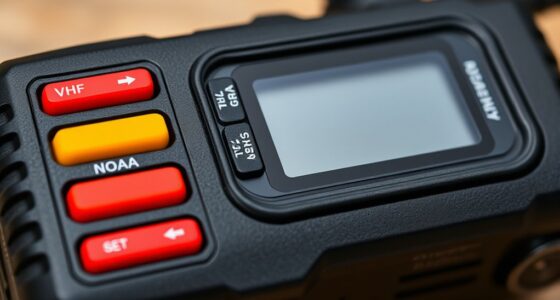
GPS outages can leave you vulnerable, emphasizing the need for manual navigation training. Relying too heavily on GPS might mean you lack essential navigation skills. By learning to read maps and using a compass, you boost your situational awareness and confidence in the wild. Practicing dead reckoning can help you calculate your position without technology. Developing these skills guarantees you’re prepared for unexpected challenges and enhances your overall navigation experience. Discover more ways to improve your navigation skills and stay safe.
Key Takeaways
- GPS outages can leave users vulnerable, making manual navigation skills essential for safety and reliability.
- Learning to read maps and use a compass enhances situational awareness and reduces dependency on technology.
- Practicing dead reckoning techniques equips individuals to calculate their position based on distance traveled.
- Integrating manual navigation skills with GPS fosters resilience against potential signal disruptions.
- Offline navigation tools, like high-resolution maps and personal locator beacons, complement manual skills during GPS failures.

While you might rely heavily on GPS for navigation, outages can occur unexpectedly, leaving you vulnerable in unfamiliar territories. Interference, whether intentional or unintentional, can disrupt GPS signals, leading to potentially dangerous situations. Jamming, a malicious form of interference, blocks these signals, while spoofing tricks devices into thinking they’re somewhere they’re not. Even weather conditions can play a role; severe storms might weaken GPS reception, and poor satellite positioning can further reduce accuracy, increasing the risk of navigation errors.
When GPS fails, the consequences can be serious. You might find yourself lost, increasing the risk of accidents, especially if you’re driving or hiking in complex geographies. In aviation, the stakes are even higher; pilots depend on accurate navigation for safety. Stranded individuals often face harsh realities in remote areas when GPS fails, and relying solely on these devices can distract you from the need for basic navigation skills.
Recognizing the importance of manual navigation training is essential for your safety. By learning how to navigate without GPS, you reduce your dependence on technology and prepare yourself for situations where GPS may not work. Manual skills provide backup methods that enhance your overall navigation experience. You’ll find that understanding how to read maps and use a compass increases your situational awareness, making you a more competent navigator.
Training methods can include basic map reading techniques, compass use, and even dead reckoning, which involves calculating your position based on distance traveled. Celestial navigation might sound challenging, but it can be invaluable when other methods fail. Practicing in various environmental conditions will boost your proficiency and confidence, ensuring you’re ready for any situation.
While technology is important, there are alternatives that complement your manual skills. Inertial navigation systems track motion without GPS, while radiolocation techniques utilize radio signals from known sources. High-resolution maps and smartphones with offline capabilities can further support your navigation efforts. Personal locator beacons also provide safety, transmitting your location independently of GPS.
Integrating manual navigation with GPS creates a hybrid system that enhances reliability. By developing your manual navigation skills, you not only prepare for potential outages but also enrich your overall navigation experience. In a world increasingly dependent on technology, being equipped with manual skills can be your best safeguard against the unexpected.
Top picks for "outag prompt manual"
Open Amazon search results for this keyword.
As an affiliate, we earn on qualifying purchases.
Frequently Asked Questions
How Often Do GPS Outages Occur in Urban Areas?
GPS outages in urban areas don’t happen frequently, but they’re often underreported.
You might notice disruptions more in densely built environments or during specific weather conditions. While official databases show limited cases, user reports suggest these outages are a real concern.
Factors like multipath effects or interference can also contribute to signal degradation. Staying aware of these potential issues helps you prepare and adapt when maneuvering in urban settings.
What Are the Primary Causes of GPS Outages?
Imagine relying on your GPS during a heavy storm, only to find it’s lost signal.
GPS outages stem from various factors. Weather conditions like rain and snow scatter signals, while natural terrain, like dense forests or mountains, obstruct them.
Buildings can block signals too, and even atmospheric delays disrupt accuracy.
Additionally, human errors, device malfunctions, and intentional jamming or spoofing can all cause GPS systems to fail, leaving you steering blind.
Can Smartphone Apps Assist in Manual Navigation Training?
Yes, smartphone apps can definitely assist in manual navigation training. They often include offline maps, compass tools, and tutorials on map reading, which enhance your skills.
You can practice navigation anywhere, as these apps are portable and user-friendly. Additionally, features like celestial navigation insights can deepen your understanding of traditional techniques.
Just remember, while apps are helpful, relying solely on them might hinder your ability to navigate without technology.
Are There Specific Tools Recommended for Manual Navigation Practice?
For fantastic manual navigation practice, you’ll find several specific tools useful.
Start with stunning topographic maps to understand the terrain, and grab a basic baseplate compass for easy navigation.
Consider carrying photocopies of important maps and utilizing navigation books for guidance.
Don’t forget to explore celestial navigation techniques and practice with landmarks.
Engaging in navigation courses can also sharpen your skills and boost your confidence in the great outdoors!
How Can I Maintain My Navigation Skills Over Time?
To maintain your navigation skills over time, practice regularly in various environments, from urban to wilderness.
Analyze past experiences to identify areas for improvement, and review techniques periodically.
Stay informed about new tools and trends, integrating technology when necessary.
Attend workshops to learn fresh strategies and engage with communities to share insights.
Finally, cultivate a mindful approach, recognizing patterns and adapting to challenges, which will enhance your overall navigation proficiency.
Conclusion
In a world where we’ve become so reliant on GPS, these outages serve as a wake-up call, like a sudden storm revealing the strength of a sturdy ship. It’s time to dust off those old maps and sharpen your navigation skills, steering away from the digital tide. Embracing manual navigation not only equips you for unexpected detours but also reconnects you with the landscape around you, reminding you that the journey is just as essential as the destination.