
To effectively protect your indoor air from wildfire smoke, you need both HEPA and carbon filters. HEPA filters trap tiny particles like ash and smoke dust, while carbon filters absorb harmful gases and odors. Using them together offers thorough protection from both particulate matter and gaseous pollutants during wildfire season. Proper setup and regular maintenance boost their efficiency, ensuring cleaner air inside. Keep going to discover how to choose and care for your filters for ideal safety.

Get emergency and outdoor gear delivered free — and shop member deals
- Fast, free delivery on millions of items
- Access to Prime Big Deal Days deals on October 6–7
- Prime Video, Amazon Music and more included
Key Takeaways
- HEPA filters effectively trap tiny particulate matter from wildfire smoke, preventing lung penetration.
- Carbon filters absorb harmful gases, odors, and volatile organic compounds released during wildfires.
- Combining HEPA and carbon filters offers comprehensive protection against both particulates and gaseous pollutants.
- Regular maintenance and timely filter replacement are essential to maintain filtration efficiency during wildfire season.
- Proper placement and continuous air circulation maximize indoor air quality by enhancing filter performance.
HEPA air purifier for wildfire smoke
As an affiliate, we earn on qualifying purchases.
As an affiliate, we earn on qualifying purchases.
What Is Wildfire Smoke and Why Does It Matter?

Wildfire smoke is a mixture of tiny particles and gases released when forests or grasslands burn. These microscopic particles, known as particulate matter, can penetrate deep into your lungs, affecting your wildfire health. Breathing in smoke can cause coughing, shortness of breath, and aggravate existing respiratory conditions. That’s why smoke mitigation is vital during wildfire events. It helps reduce your exposure to harmful pollutants and protects your well-being. Smoke mitigation strategies include both air filtration systems and proper building sealing to prevent outdoor smoke infiltration. Proper air filtration is especially important because it can actively remove harmful particles from indoor air, providing relief and protection during smoky conditions. Wildfire smoke doesn’t just stay outdoors; it can infiltrate your home and workplace, making air quality hazardous even indoors. Understanding what wildfire smoke is and why it matters empowers you to take proactive steps to safeguard your health. Effective smoke mitigation strategies are essential to minimize risks and maintain better wildfire health for you and your family. Additionally, choosing the right air filtration system can significantly improve indoor air quality during smoky conditions. Furthermore, implementing proper building sealing techniques can help prevent outdoor smoke from entering indoor spaces, enhancing your overall protection. Regularly inspecting and maintaining your air filtration equipment ensures it functions effectively when needed most.
How Do HEPA Filters Trap Smoke Particles?
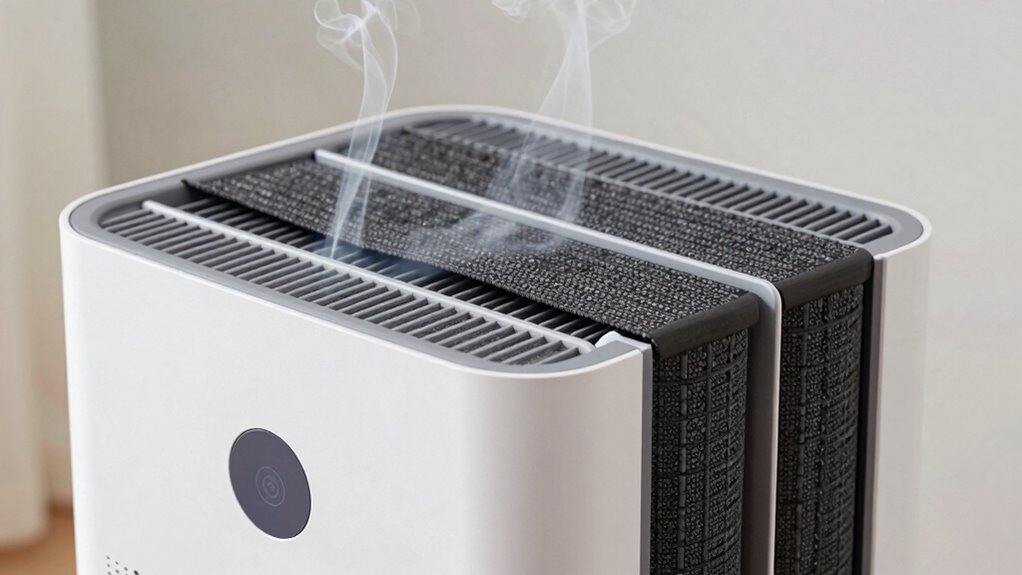
Ever wonder how HEPA filters effectively trap tiny smoke particles? It all comes down to particle size and filtration mechanisms. HEPA filters are designed to capture particles as small as 0.3 microns, which includes many smoke particles from wildfires. They use three main methods: interception, where particles stick to fibers as they pass by; impaction, where larger particles collide with fibers and get trapped; and diffusion, for the tiniest particles, which move randomly and bump into fibers. These combined mechanisms allow HEPA filters to efficiently remove harmful smoke particles from the air. Additionally, filter media composition plays a crucial role in enhancing their ability to trap fine particles. The filtration efficiency of HEPA filters is tested and rated to ensure they meet high standards for particle removal. The particle size range targeted by HEPA filters makes them especially effective against wildfire smoke. By targeting a wide range of particle sizes, HEPA filters provide powerful protection against wildfire smoke, helping you breathe cleaner, safer air indoors. Furthermore, air filtration standards ensure that these filters maintain their performance over time, providing consistent protection. Regular maintenance and filter replacement also contribute to sustaining their filtration performance, ensuring ongoing safety and efficiency.
Why Are Carbon Filters Necessary for Wildfire Smoke?

Wildfire smoke contains harmful toxins that HEPA filters can’t fully remove, making carbon filters essential for cleaner air. They excel at absorbing odors and neutralizing chemical pollutants, improving your indoor environment. By using carbon filters, you’ll notice a significant boost in air quality and freshness during wildfire events. Additionally, incorporating a dehumidifier can help control moisture levels, which may reduce dust and mold growth that can further degrade indoor air quality. Proper ventilation strategies and air purification strategies further enhance indoor air safety during such events. Using advanced filtration technologies can also optimize your indoor air quality by targeting a broader range of pollutants. Understanding the different filter types and their specific roles can help you choose the most effective solutions for your home.
Toxin Absorption Capabilities
Why are carbon filters indispensable when dealing with smoke from wildfires? They excel at toxins neutralization through chemical absorption, targeting harmful gases and volatile organic compounds (VOCs) that HEPA filters can’t trap. Smoke from wildfires contains dangerous chemicals like benzene, formaldehyde, and other toxins that linger in the air. Carbon filters capture these gases by attracting and binding them to their porous surface, effectively removing them from your environment. This chemical absorption process provides a crucial layer of protection against invisible, hazardous pollutants. Without carbon filters, these toxins can remain airborne, posing health risks. Enhanced filtration materials can further improve the ability of these systems to remove complex pollutants from wildfire smoke. By combining HEPA’s particle filtration with carbon’s toxin absorption, you ensure a thorough defense against both particulate matter and harmful gases in wildfire smoke. Additionally, understanding the role of AI ethicists can help develop safer, more responsible air purification technologies in the future.
Odor Filtration Effectiveness
Carbon filters are vital for effectively removing odors caused by wildfire smoke because they trap and neutralize volatile organic compounds (VOCs) responsible for persistent, unpleasant smells. While HEPA filters excel at capturing particles like ash and soot, they don’t address odors. That’s where carbon absorption comes in, as activated carbon effectively absorbs VOCs, reducing smoke odors. The combination of high HEPA efficiency and carbon filters ensures both particulate removal and odor control. Without carbon filters, you may still notice lingering smells even if the air feels cleaner. For wildfire smoke, this dual approach provides all-encompassing filtration, making your indoor environment more comfortable and safer. Additionally, incorporating natural filtration methods can further enhance air quality during such events. Effective filtration relies on the synergy between particle removal and odor neutralization, which is crucial for comprehensive indoor air purification during wildfire incidents. Using proper filter maintenance ensures these systems continue functioning optimally over time, maximizing their effectiveness. Furthermore, regular filter replacement is essential to maintain optimal filtration performance and prevent the buildup of contaminants that can reduce efficiency. Incorporating air purifiers with carbon pre-filters can also provide an extra layer of odor control.
Air Quality Improvement
Have you ever noticed lingering smoke smells even after your air purifier runs for a while? That’s because air purifier design matters—HEPA filters alone often can’t fully remove harmful gases from wildfire smoke. Carbon filters are essential for improving air quality because they trap volatile organic compounds and airborne chemicals that contribute to persistent odors and health risks. Without a proper carbon filter, your air purifier might struggle to clean the air effectively. Regular filter replacement is vital to maintain this performance, ensuring the activated carbon remains effective at absorbing contaminants. By combining HEPA and carbon filters, you can greatly enhance your indoor air quality, making your environment safer and more comfortable during wildfire season.
How Combining HEPA and Carbon Filters Provides Better Protection

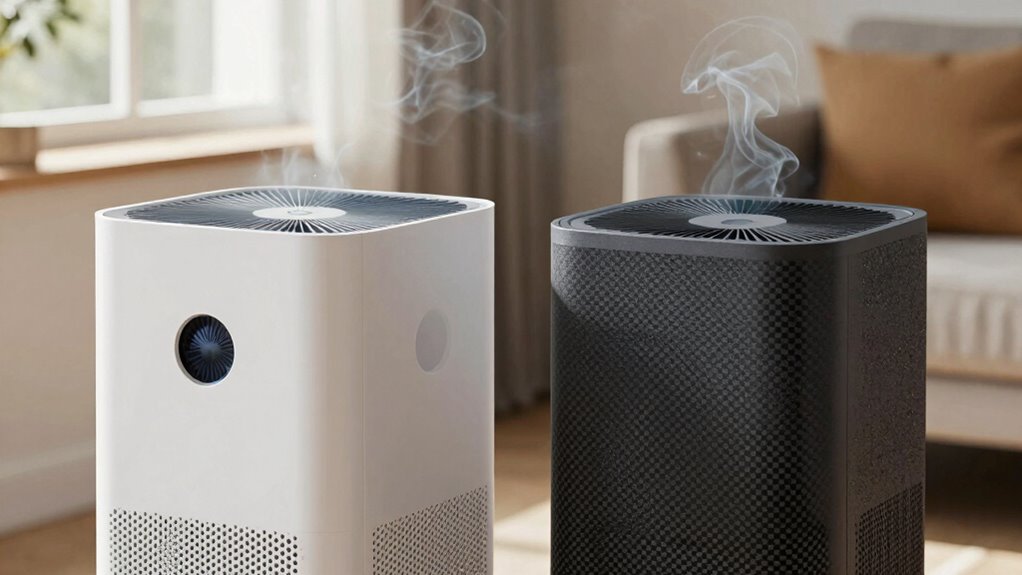
Combining HEPA and carbon filters creates a more effective filtration system by addressing a wider range of airborne contaminants. This filter synergy guarantees you’re protected from both particulate matter and gaseous pollutants, like smoke odors and chemicals. HEPA filters capture tiny particles such as dust, pollen, and wildfire ash, while carbon filters absorb odors and volatile organic compounds. To maintain peak performance, follow maintenance tips like regular filter replacements and cleaning schedules. This approach keeps airflow efficient and prevents clogging, ensuring continuous protection. By integrating these filters, you get extensive defense against airborne hazards, especially during wildfire seasons. The combined system maximizes filtration efficiency, giving you peace of mind knowing your indoor air quality is well-protected against diverse pollutants.
Choosing the Best Filter Setup for Your Home
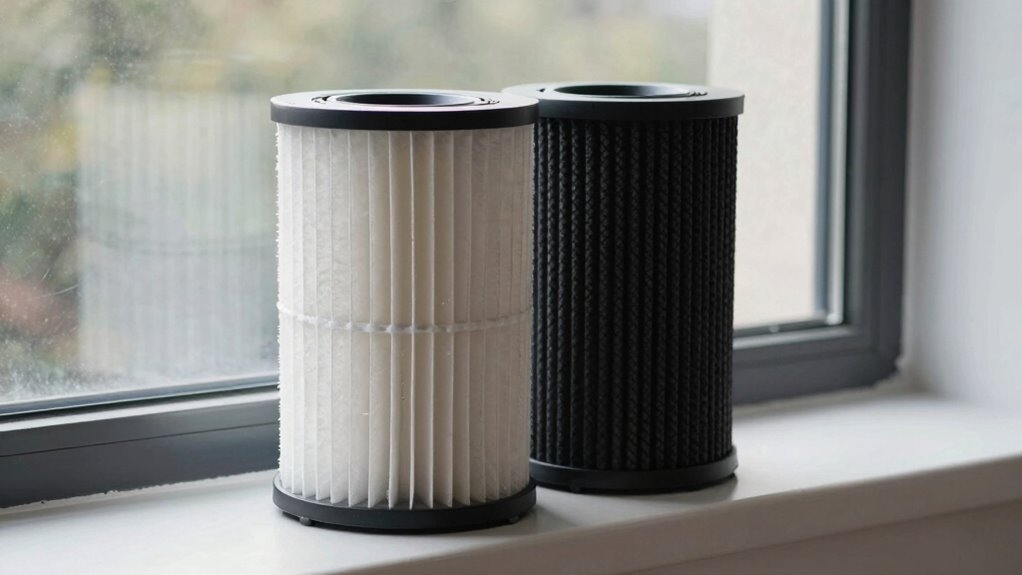
Choosing the right filter setup for your home depends on your specific air quality concerns and the environment you live in. To optimize effectiveness, consider proper filter placement—placing filters where air circulation is strongest ensures better air exchange and cleaner indoor air. If you’re dealing with wildfire smoke, a combination of HEPA and carbon filters provides extensive protection. Think about your space’s layout and airflow patterns to maximize filter efficiency. Proper setup means placing filters near sources of pollution or in central locations to improve air exchange. Remember, the goal is to reduce pollutants quickly and effectively by ensuring consistent air movement through your filters. This strategic approach helps you maintain healthier indoor air and minimizes wildfire smoke intrusion.
How to Maintain Your Filters During Wildfire Season
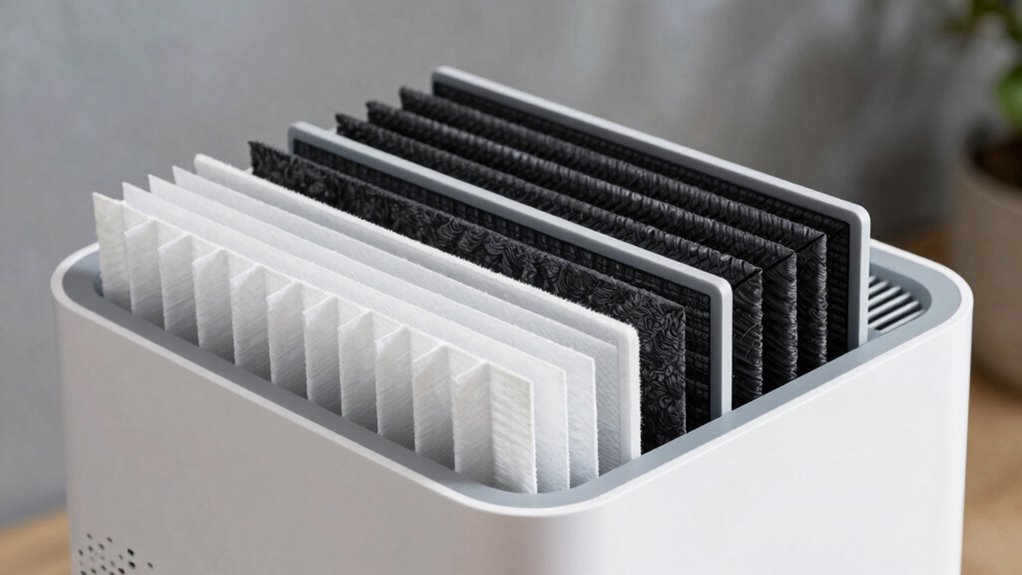
During wildfire season, it’s crucial to regularly check your filters for dirt and damage to guarantee they’re working effectively. Be sure to replace filters promptly when they’re clogged or worn out, so your air stays clean. Keeping air circulating continuously also helps reduce airborne particles and maintains good indoor air quality.
Regular Filter Inspection
Regularly inspecting your filters is vital to guarantee they function effectively during wildfire season. Proper check-ups help you monitor the filter lifespan and ensure correct filter installation, both essential for peak performance. A well-maintained filter captures more particles, keeping indoor air safer. During inspections, look for signs of dirt buildup or damage that could reduce efficiency. Remember, filters need to be clean and properly installed to work as intended. Neglecting this can lead to decreased air quality and increased strain on your HVAC system. A regular inspection schedule ensures you catch problems early, maintaining strong filtration during high-smoke periods.
- Confirm filters are securely fitted to prevent leaks
- Check for excessive dirt or clogging
- Note when filters are nearing the end of their lifespan
Replace Filters Promptly
To keep your indoor air clean during wildfire season, it’s crucial to replace your filters promptly when they become dirty or clogged. Over time, filters reach the end of their filter lifespan, reducing their effectiveness against smoke particles and harmful pollutants. Sticking to a consistent replacement schedule ensures your air purifier works efficiently and maintains peak filtration. Check your filter’s manufacturer recommendations, as some filters need changing every 3 to 6 months, while others may last longer with less frequent use. Don’t wait until you notice a decline in air quality—regular replacement prevents buildup of trapped particles that can circulate back into your indoor space. Staying proactive with timely filter changes keeps your home safer and your air cleaner during wildfire season.
Keep Air Circulating
Keeping your air filters in good shape is key to maintaining clean indoor air during wildfire season. Proper air circulation helps guarantee your filters work efficiently and extends their lifespan. To keep air moving smoothly, regularly run your ventilation system, even when indoor air feels clean. This prevents stagnant air and reduces pollutant buildup. Additionally, avoid blocking air vents with furniture or curtains, which can hinder airflow and strain your filters. Consider setting your fan to circulate air continuously, especially during high smoke days. Remember, consistent air circulation not only keeps pollutants at bay but also helps your filters perform at their best, ultimately protecting your indoor environment.
- Guarantee unobstructed vents for optimal airflow
- Use fans strategically to boost circulation
- Monitor and replace filters before they become overloaded
Frequently Asked Questions
Can HEPA and Carbon Filters Eliminate Odors From Wildfire Smoke?
Yes, HEPA and carbon filters can effectively eliminate odors from wildfire smoke. HEPA filters trap tiny particles, improving your air quality, while activated carbon filters absorb smoke odors and harmful gases. To keep your air clean, guarantee proper filter maintenance and replace filters regularly. This combo works best when used together, providing thorough protection against both smoke particles and odors, creating a safer, healthier indoor environment during wildfire events.
How Long Do Wildfire-Specific Filters Typically Last?
Wildfire-specific filters usually last about 3 to 6 months, depending on usage and air quality. Did you know that filter lifespan can decrease considerably if you run your air purifier continuously? To keep your indoor air clean, check the manufacturer’s recommended replacement frequency. Regularly replacing your filters ensures peak odor and smoke removal, especially during wildfire season, so you stay protected and breathe easier.
Are There Any Health Risks From Using Inadequate Filtration?
Using inadequate filtration can pose health risks, especially affecting your respiratory health. Poor air quality allows smoke particles and harmful pollutants to linger indoors, increasing your chances of breathing issues, allergies, or asthma attacks. To protect yourself, verify your filters are effective against wildfire smoke, like HEPA and carbon filters, and replace them regularly. Proper filtration is essential for maintaining good indoor air quality and safeguarding your respiratory well-being during wildfire season.
Do Portable Air Purifiers Effectively Protect Entire Homes?
An ounce of prevention is worth a pound of cure, so you ask if portable air purifiers can protect your whole home. While they help improve indoor air quality, they usually can’t fully protect entire homes, especially without HVAC integration. For extensive coverage, built-in systems are more effective, but portable units are a good supplement. Choose wisely based on your home’s size and your specific needs for cleaner air.
What’s the Most Cost-Effective Filtration Setup for Wildfire Seasons?
For wildfire seasons, the most cost-effective setup is combining a HEPA filter with a carbon filter. This combo offers better air quality and long-term savings through efficient filtration and minimal maintenance. HEPA filters capture tiny particles, while carbon filters absorb smoke odors and gases. Though initial costs may be higher, you’ll save on filter replacements over time, making it a smart investment for protecting your indoor air without breaking the bank.
Conclusion
Now that you understand how HEPA and carbon filters work together, you’ll realize the true power behind this combo. But the real question is—are you prepared for the next wildfire season? Your home’s air quality depends on the choices you make today. Don’t wait until it’s too late to upgrade your filtration system. The next wildfire could catch you unprepared, or you could be the one breathing easier—if you act now.
Fall Picks
fall essentials
As an affiliate, we earn on qualifying purchases.