Industrial air scrubbers outshine standard air purifiers when you need to control widespread, hazardous pollutants like fumes, VOCs, or heavy dust in large environments. They use multiple advanced filtration stages, including HEPA and activated carbon, to trap complex contaminants effectively. Their higher capacity, durability, and specialized features make them ideal for factories, construction sites, or chemical plants. To understand why these units are essential beyond typical purifiers, explore the details that follow.

Get emergency and outdoor gear delivered free — and shop member deals
- Fast, free delivery on millions of items
- Access to Prime Big Deal Days deals on October 6–7
- Prime Video, Amazon Music and more included
Key Takeaways
- Industrial air scrubbers handle larger volumes and more complex pollutants than standard purifiers, ensuring comprehensive contamination control.
- They incorporate multi-stage filtration technologies like HEPA and activated carbon for targeted removal of fumes, VOCs, and hazardous particles.
- Designed for continuous operation in demanding environments, they meet strict safety and environmental standards better than typical air purifiers.
- Industrial units are more cost-effective long-term for large spaces, requiring less frequent maintenance and offering higher operational capacity.
- Their advanced airflow control and pollutant neutralization make them essential for workplaces with hazardous emissions that regular purifiers cannot effectively manage.
As an affiliate, we earn on qualifying purchases.
What Are Industrial Air Scrubbers and How Do They Differ From Standard Purifiers
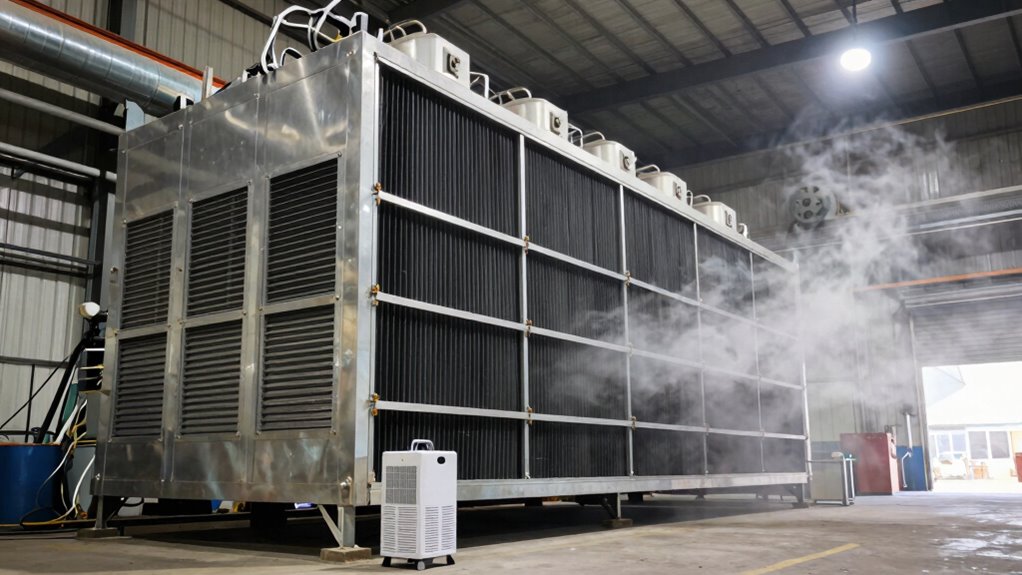
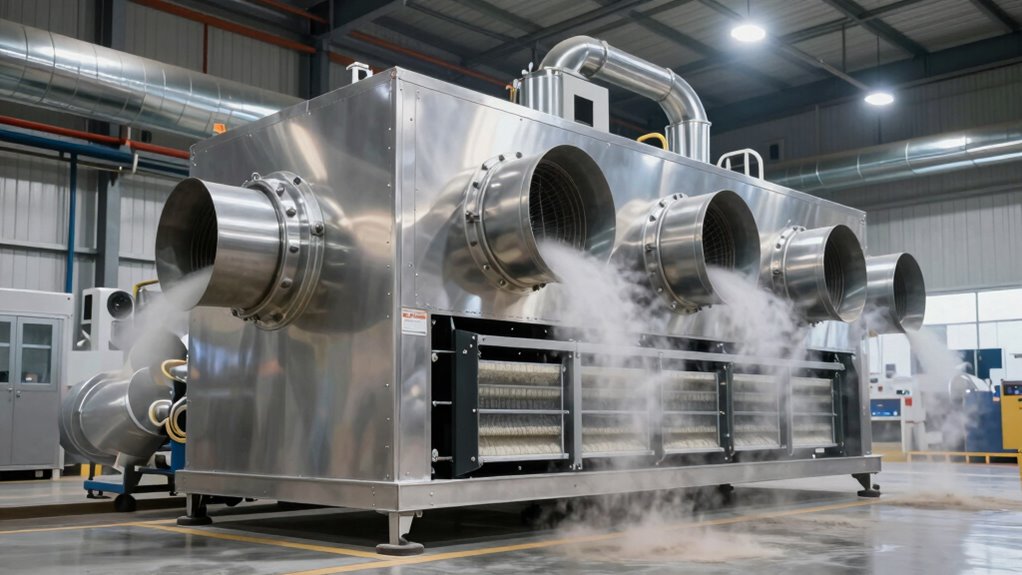
Industrial air scrubbers are specialized equipment designed to remove pollutants and contaminants from the air in large-scale or industrial settings, which sets them apart from standard purifiers. Unlike typical air purifiers meant for residential use, these units focus on improving air quality and pollution control in environments with high toxin levels. They handle a wide range of airborne hazards, including dust, fumes, volatile organic compounds, and chemical vapors. You’ll find them in factories, manufacturing plants, and waste treatment facilities where air quality management is critical. Their advanced filtration systems and large capacity enable continuous operation and effective removal of pollutants, ensuring safer working conditions and compliance with environmental standards. This makes industrial air scrubbers essential for maintaining healthy air in demanding industrial environments. Their advanced filtration systems are designed to handle the high-volume air processing required in these settings, often incorporating high-capacity filters that maximize pollutant removal efficiency.
How Do Air Scrubber Components and Filtration Technologies Work
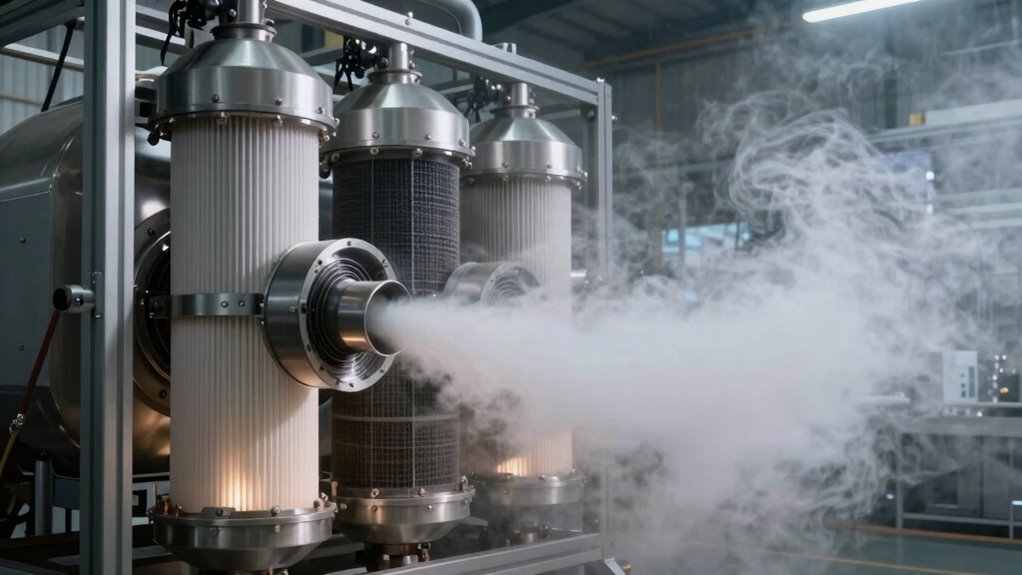
Air scrubbers work by using a combination of components and advanced filtration technologies to remove pollutants from the air effectively. The core of their operation lies in airflow dynamics, which control how air moves through the unit. Fans draw contaminated air into the scrubber, where it passes through various stages of filtration media. These media are designed to trap particles, gases, and odors, ensuring cleaner air exits the system. The filtration media often include HEPA filters, activated carbon, or specialized media tailored for specific pollutants. As air flows through these components, pollutants are captured and neutralized. This process allows air scrubbers to handle complex contaminants more efficiently than standard purifiers, making them ideal for industrial environments. Understanding airflow dynamics plays a crucial role in optimizing the effectiveness of air scrubbers.
How Air Scrubbers Remove Complex and Harmful Pollutants
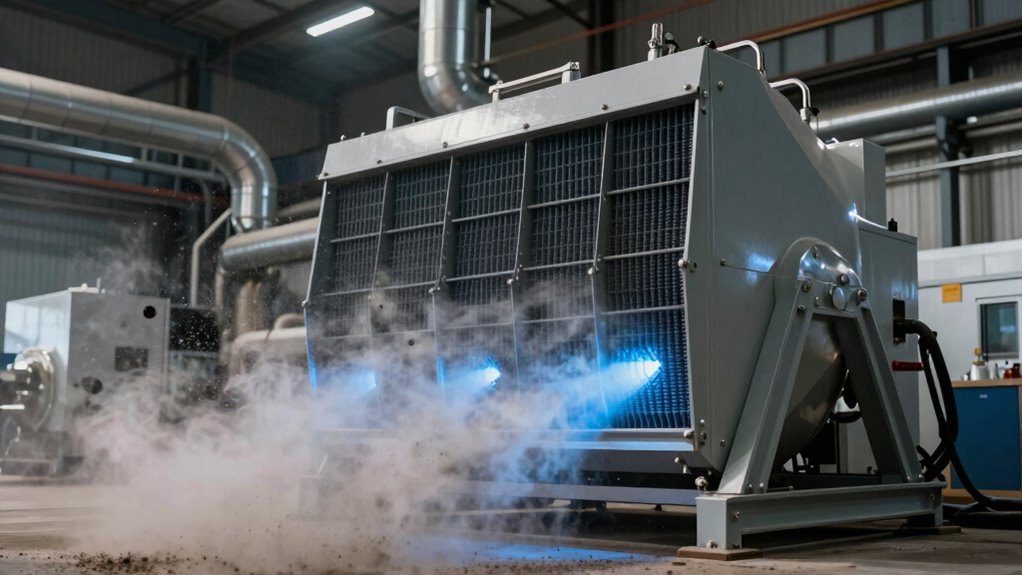
Air scrubbers use advanced filtration techniques to trap even the most complex pollutants. They target specific contaminants, ensuring harmful particles don’t slip through. This focused approach helps improve air quality quickly and effectively. Additionally, their design allows for efficient removal of stubborn residues, such as paint fumes or chemical vapors, which are common in industrial settings. Air filtration techniques play a crucial role in achieving cleaner and safer environments. Incorporating essential oil properties, such as antimicrobial and decongestant benefits, can further enhance indoor air quality in these settings. Utilizing eco-friendly materials in the construction of air scrubbers can also minimize environmental impact while maintaining high performance. Properly designed home ventilation systems can complement air scrubbers, optimizing overall air purification efforts.
Advanced Filtration Techniques
To effectively eliminate complex and harmful pollutants, advanced filtration techniques in air scrubbers employ a combination of specialized media and multi-stage processes. These methods markedly enhance air quality by capturing a wide range of contaminants. High-efficiency particulate air (HEPA) filters trap tiny particles, including dust, allergens, and pathogens, improving filtration efficiency. Activated carbon filters absorb volatile organic compounds (VOCs), odors, and chemical fumes. Some systems incorporate electrostatic precipitators that charge particles, causing them to cling to oppositely charged plates. Multi-stage filtration ensures that even the most stubborn pollutants are removed before the air is released back into the environment. Proper maintenance of filters is essential for sustaining optimal performance and ensuring continued removal of pollutants. Additionally, filtration efficiency can be further improved through the use of advanced media and innovative design, which often incorporate multi-stage processes for comprehensive pollutant removal. The use of advanced filtration media can significantly enhance the removal of ultrafine particles and chemical vapors, leading to cleaner air. Incorporating energy-efficient components can also optimize system performance while reducing operational costs. As a result, these advanced techniques deliver superior air quality, making air scrubbers far more effective at managing complex pollutants than standard air purifiers.
Targeted Pollutant Removal
Because complex and harmful pollutants vary widely in their composition and behavior, targeted removal strategies in air scrubbers are essential for effective purification. Air scrubbers are designed to meet air quality standards by focusing on specific pollutants identified through pollutant monitoring. This process allows you to adjust the scrubber’s operation to target particular contaminants, such as volatile organic compounds (VOCs), heavy metals, or chemical fumes. Techniques like activated carbon adsorption, chemical scrubbing, or biotrickling filters are employed to remove these complex substances efficiently. Additionally, air quality standards help guide the optimization of removal techniques to ensure compliance. Understanding pollutant behavior further enhances the ability to select appropriate removal methods. Implementing real-time monitoring can provide ongoing data to dynamically adjust scrubber settings for optimal performance. Staying informed about pollutant characteristics enables operators to better tailor the system to changing environmental conditions. Furthermore, considering system maintenance ensures sustained effectiveness of the scrubbers over time, reducing the risk of breakthrough or system failure. This targeted removal enhances overall system performance and compliance with health and safety regulations.
Why Are Industrial Air Scrubbers More Effective Than Typical Air Purifiers
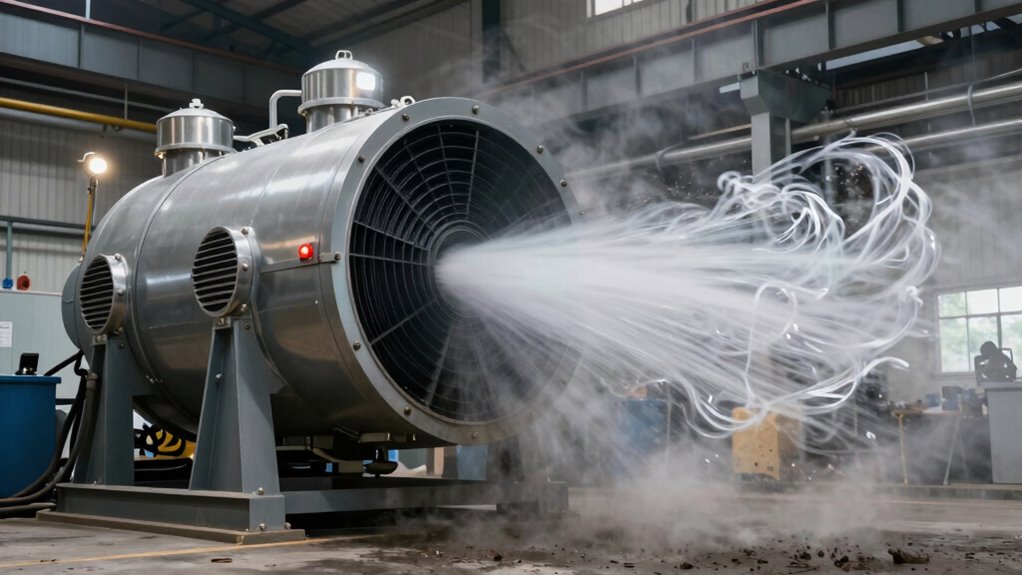
Industrial air scrubbers outperform typical air purifiers by handling larger volumes of contaminated air and removing a wider range of pollutants. This makes them much more effective at improving air quality in industrial settings. Unlike standard purifiers, which are designed for small spaces and limited pollutant types, scrubbers can process entire rooms or facilities, ensuring thorough pollution control. They target airborne particles, gases, and chemical vapors that standard units often miss. Because of their scale and specialized filtration, industrial air scrubbers provide better overall air quality, especially where hazardous emissions are involved. You get more reliable pollutant removal, better safety, and compliance with health standards, making them the clear choice for industrial environments that demand robust pollution control. Additionally, their ability to handle large-scale air filtration makes them indispensable for maintaining safe and compliant workplace environments. Furthermore, advancements in sound healing science contribute to better operational environments by reducing noise pollution and supporting worker well-being.
When Do You Need an Industrial Air Scrubber : Common Use Cases
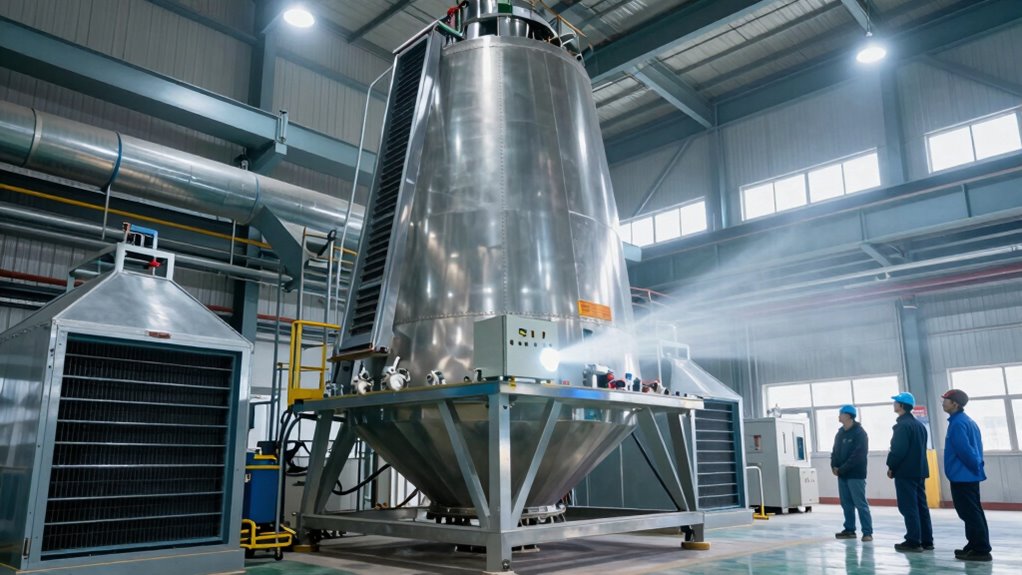
You should consider an industrial air scrubber whenever your facility generates significant amounts of airborne pollutants that standard air purifiers can’t handle. These units are essential when maintaining high air quality in environments with hazardous fumes, dust, or chemical vapors. Common use cases include manufacturing plants, construction sites, and painting operations where ventilation design alone isn’t enough to control emissions. If airborne contaminants pose health risks or violate regulations, an industrial air scrubber effectively captures and removes pollutants before they disperse. They are also beneficial in confined spaces or areas with poor airflow, ensuring cleaner air and safer working conditions. In such scenarios, relying solely on traditional filtration won’t suffice, making an industrial air scrubber a necessary investment. Indoor plant care techniques can also improve air quality in enclosed spaces, complementing the use of industrial units. Additionally, understanding air quality standards can help determine when an industrial scrubber is required to meet safety and environmental regulations. Considering emission control strategies can further optimize air quality management in your facility. Implementing proper maintenance ensures these units operate efficiently and prolongs their lifespan.
How to Choose the Right Industrial Air Scrubber for Your Needs

Selecting the right industrial air scrubber involves understanding your specific air quality challenges and operational requirements. Start by evaluating the pollutants you need to remove and the size of your space. Focus on filtration systems that target your contaminants effectively. Consider the airflow capacity to ensure adequate coverage. To help you choose, here’s a quick comparison:
| Feature | Best Fit |
|---|---|
| Pollutant Type | Chemical fumes or dust |
| Space Size | Large industrial areas |
| Filtration System | HEPA filters for particulates, activated carbon for odors |
| Maintenance | Easy-to-service units |
Matching these factors will help you select an air scrubber that improves air quality efficiently and suits your operational needs.
What Are the Maintenance and Operating Costs of Air Scrubbers Compared to Purifiers

When comparing air scrubbers and purifiers, you’ll notice differences in initial costs and ongoing expenses. Air scrubbers often require a larger upfront investment but may save money over time with lower maintenance and energy use. Understanding these cost factors helps you choose the most efficient option for your needs.
Initial Investment Differences
Air scrubbers typically require a higher initial investment than portable air purifiers due to their larger size and more complex filtration systems. When considering the cost comparison, you’ll notice that upfront expenses are significant but reflect the unit’s capacity and durability. Here are four key points:
- Purchase Price: Air scrubbers often cost several thousand dollars, unlike smaller purifiers.
- Equipment Complexity: Their advanced systems demand more engineering and materials.
- Installation Costs: Larger units may need professional setup, adding to initial expenses.
- Longevity and Quality: Higher-quality units justify the initial investment through durability and efficiency.
While the initial investment is substantial, the long-term benefits often outweigh the upfront costs, especially in industrial environments where air quality is critical.
Ongoing Maintenance Expenses
Although air scrubbers require a higher initial investment, their ongoing maintenance and operating costs can vary considerably from portable air purifiers. Over time, scrubbers often prove more cost-effective due to less frequent filter replacements and durable components. The cost analysis shows that while purifiers might be cheaper upfront, maintenance expenses can add up, especially with frequent filter changes. Additionally, scrubbers tend to have a lower environmental impact, as they often use sustainable materials and require less disposable parts. Regular upkeep involves inspecting and replacing filters or adsorbers, but these costs are generally predictable. Here’s a quick comparison:
| Maintenance Aspect | Air Scrubber | Portable Purifier |
|---|---|---|
| Filter Replacement | Less frequent | More frequent |
| Cost of Parts | Moderate | Lower |
| Environmental Impact | Lower | Higher |
Energy Consumption Variances
While ongoing maintenance costs for air scrubbers tend to be lower than those of portable purifiers, energy consumption plays a significant role in their overall expenses. Air scrubbers are generally more energy-efficient due to their larger, industrial-grade design, which optimizes power consumption. This means you may see higher upfront energy costs, but they often result in better long-term efficiency. Factors influencing energy consumption include:
- The size and capacity of the unit
- The efficiency of the air filtration system
- Operating hours per day
- The technology used to reduce power consumption
Understanding these variances helps you compare the total cost of ownership, ensuring you select an air scrubber that balances energy efficiency with operational needs.
Should You Use an Industrial Air Scrubber or a Standard Air Purifier?
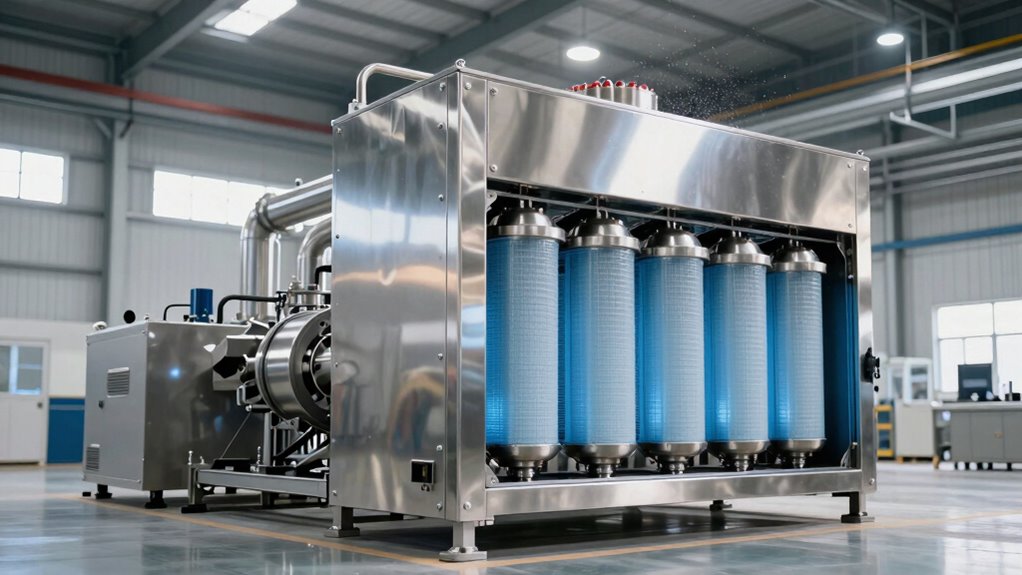
Choosing between an industrial air scrubber and a standard air purifier depends on your specific needs and the environment you’re trying to clean. If you need to meet strict air quality standards or reduce hazardous pollutants, an industrial air scrubber is often the better choice. These units are designed for large, complex spaces and can handle heavy-duty contaminants, minimizing health impacts. Standard air purifiers work well for small areas or general odor removal but may fall short in environments with airborne chemicals, fumes, or high particulate levels. Consider your space size, pollutant type, and desired health impact. If air quality standards are high and safety is a priority, an industrial air scrubber provides a more extensive and effective solution.
Frequently Asked Questions
Can Industrial Air Scrubbers Eliminate Odors Effectively?
Yes, industrial air scrubbers are highly effective at odor removal, thanks to their advanced filtration systems. They use powerful media to trap and eliminate airborne odors, ensuring a fresher environment. With their industrial efficiency, these units can handle large spaces and persistent smells better than typical air purifiers. You’ll notice a significant improvement in air quality, making your space more comfortable and odor-free quickly.
Are Air Scrubbers Suitable for Residential Use?
Air scrubbers are like the Swiss Army knives of air quality tools, but they’re often too powerful for home use. While they boost home safety and improve air quality by removing pollutants and odors, their size and ventilation needs can make them impractical for residential settings. For most homes, portable air purifiers are better suited, offering effective air cleaning without the heavy-duty features that aren’t necessary in everyday living spaces.
How Long Does It Take to See Results After Installing an Air Scrubber?
You’ll notice improvements in air quality within a few hours after installing an air scrubber. The installation timeline is quick, often just a day or two, depending on your setup. As the unit runs continuously, it captures airborne contaminants and reduces odors, making your environment healthier. Keep in mind, the full benefits become more evident over several days as the air scrubber filters out pollutants effectively.
Do Air Scrubbers Produce Harmful Emissions or Ozone?
You might wonder if air scrubbers produce harmful emissions or ozone. Most modern units are designed to prevent ozone generation, addressing emission concerns. High-quality air scrubbers use advanced filtration instead of ozone-generating methods, making them safer for indoor environments. However, always check the specifications, as some models could produce low levels of ozone. Overall, choosing certified units reduces risks and ensures cleaner, healthier air without harmful emissions.
What Are the Environmental Impacts of Using Industrial Air Scrubbers?
Think of industrial air scrubbers as the gardeners of our environment, tending to pollution reduction. They substantially cut harmful emissions, helping to protect ecosystems and improve air quality. While they consume energy, their benefits—like reducing airborne toxins—outweigh potential environmental impacts. By using scrubbers, you actively contribute to healthier ecosystems, making a positive difference in pollution control and environmental sustainability.
Conclusion
Ultimately, choosing between an industrial air scrubber and a standard purifier depends on your unique needs. While scrubbers offer a refined touch for challenging environments, purifiers suit everyday spaces. Consider your specific air quality concerns carefully. By selecting the right solution, you’ll subtly elevate your environment’s well-being, creating a space that feels as pristine as it is protected—with a touch of sophistication that speaks volumes about your commitment to quality.
Fall Picks
fall essentials
As an affiliate, we earn on qualifying purchases.