
To do more and risk less with knives and multitools, always prioritize safety. Inspect your tools for damage, keep blades sharp, and handle them with a firm grip. Cut away from your body, use controlled motions, and store tools safely when not in use. Wearing protective gear and maintaining a clutter-free workspace also reduce hazards. Mastering these habits will make your tasks safer; this guide will show you how to fine-tune your safety skills.
Key Takeaways
- Regularly inspect and maintain tools to ensure they are sharp, damage-free, and functioning properly.
- Use a firm grip and controlled motions, cutting away from your body to prevent slips and injuries.
- Engage locking mechanisms and open/close tools carefully to avoid accidental cuts.
- Wear protective gear like gloves and keep your work area clean to minimize hazards.
- Store knives and multitools safely in sheaths or clips, and follow manufacturer instructions for care.
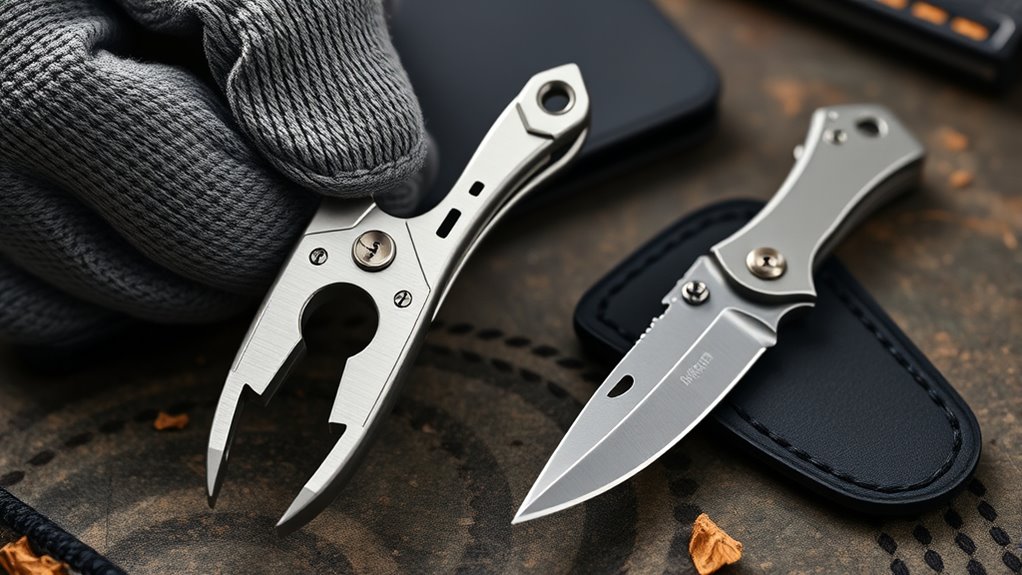
Using a knife or multitool safely is essential to prevent injuries and make sure you’re prepared for any task. Whether you’re camping, working on a project, or just tackling everyday chores, knowing how to handle your tools properly keeps you safe and efficient. The first step is always to inspect your knife or multitool before use. Check for any damage, loose parts, or rust that could compromise its integrity. A well-maintained tool is less likely to slip or break during use, reducing the risk of accidents.
When you’re about to use your knife or multitool, always make sure your grip is firm and controlled. Hold the handle securely, avoiding any awkward angles that could cause slipping. Keep your fingers away from the blade’s edge and focus on your task. If cutting through tough material, use a steady, controlled motion rather than forcing the blade. Applying excessive pressure can cause the blade to slip or break, leading to potential injury. Remember, patience and smooth movements are more effective and safer than rushing.
Proper technique also involves knowing when to cut away from your body. Always direct the blade away from yourself and others, especially when applying force. This simple habit can save you from serious cuts if the blade slips. When you’re finished with your task, carefully retract the blade or close the multitool, making sure it’s securely secured in place. An unlocked or partially open tool can accidentally cause cuts or injuries later on. Store your knife or multitool in a safe, accessible place, ideally in a sheath or pocket clip, to prevent accidental contact.
Always cut away from your body and ensure tools are securely closed and stored properly.
Sharpening your tools regularly is another key safety measure. Dull blades require more force to cut and are more prone to slipping, increasing injury risk. Use a sharpening stone or tool designed for your blade type, and follow manufacturer instructions. A sharp, well-maintained blade allows for cleaner cuts with less effort, which enhances control and safety. Additionally, using proper protective equipment such as gloves can significantly reduce the risk of cuts during handling. A sharp, well-maintained blade allows for cleaner cuts with less effort, which enhances control and safety. Also, be cautious when opening or closing your multitool; many models have locking mechanisms that should be engaged before use to prevent accidental folding or closure.
Finally, always practice good hygiene and personal protective measures. Gloves can provide an extra layer of protection, especially during heavy-duty tasks. Keep your work area clean and free of clutter to avoid accidental slips or falls. By following these safety habits, you can do more with your knives and multitools while risking less injury. Proper handling, maintenance, and awareness turn a potentially hazardous tool into a safe and reliable companion for any task.
Frequently Asked Questions
How Should I Store Knives and Multitools Safely at Home?
You should store knives and multitools in a secure, designated spot like a knife block, magnetic strip, or a drawer with a safety cover. Always keep blades folded or sheathed when not in use, and avoid loose storage that could lead to accidental cuts. Keep them out of reach of children and regularly check for damage. Proper storage helps prevent injuries and keeps your tools in good condition.
What Is the Best Way to Clean and Maintain My Blades?
You should clean your blades after each use with warm, soapy water and a soft cloth to prevent rust and buildup. Avoid soaking or using abrasive materials that can damage the edge. Regularly lubricate moving parts with a light oil to keep everything functioning smoothly. If you think maintenance is too tedious, remember that proper care prolongs your blades’ life and ensures safe, reliable use every time.
Are There Specific Safety Gear Recommendations for Using Knives?
You should always wear cut-resistant gloves to protect your hands, especially when handling or cleaning knives. Safety goggles are also recommended to shield your eyes from any unexpected slips or debris. Make certain you use a stable cutting surface, and keep your fingers clear of the blade’s path. Always handle your knives with care, avoid rushing, and store them properly to reduce risk during use and maintenance.
How Can I Identify a Defective or Dangerous Multitool?
Did you know that nearly 10% of tool-related injuries involve defective equipment? To identify a dangerous multitool, check for loose or damaged blades, rust, or cracks in the handles. make certain all parts move smoothly without excessive play. If you notice any corrosion, missing parts, or if the tool feels unstable, avoid using it. Regularly inspect your multitool to prevent accidents and make certain safe, reliable performance.
What Are the Legal Considerations for Carrying Knives in Public?
You need to check your local laws before carrying a knife in public. Some places ban certain blade types or have length restrictions, while others require a valid reason for carrying a knife. Always carry your knife responsibly, keep it concealed if required, and avoid prohibited areas. Familiarize yourself with laws to avoid fines or arrest, and consider consulting local regulations or legal experts for specific rules in your area.
Conclusion
By following proper safety tips, you can greatly reduce the risk of injuries when using knives and multitools. Remember, nearly 70% of tool-related injuries happen because of improper handling or lack of awareness. Staying alert and practicing safe techniques keeps you protected and ensures your tools serve you well. So, take the time to learn and stay cautious—your safety is worth the effort, and safer use means fewer accidents.