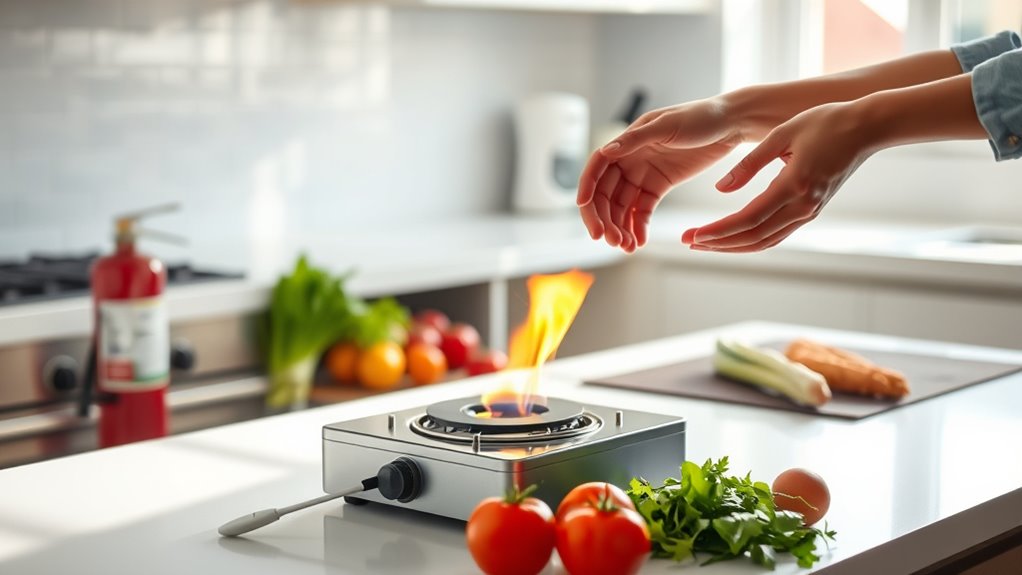

When using a portable stove, always place it on a level, non-flammable surface and away from flammable materials. Secure fuel canisters, and detach them when not in use. Keep an eye on the stove’s temperature to prevent overheating, and maintain a safe distance from kids and pets. Always have a fire extinguisher nearby and guarantee proper ventilation. Monitoring your setup helps avoid accidents, and there’s more valuable advice waiting to guarantee your safety.
Key Takeaways
- Always set up your portable stove on a stable, non-flammable surface and in a sheltered area to minimize fire risks.
- Ensure proper ventilation and avoid indoor use to prevent carbon monoxide buildup.
- Keep a fire extinguisher within reach and maintain a safe distance from children and pets while cooking.
- Secure and detach fuel canisters when not in use, and store them in a dry area away from heat sources.
- Regularly inspect your stove and clean it after each use to prevent accidents and ensure safe operation.

When you’re ready to cook outdoors, guaranteeing your portable stove is safe to use is vital for preventing accidents and enjoying your experience. Start by consulting the manufacturer’s instructions for proper setup and operation. Inspect your stove and fuel canisters for any signs of damage before you begin. Assemble the stove according to the guidelines, and double-check that all connections are secure to avoid gas leaks or malfunctions. Familiarizing yourself with how the stove operates before hitting the field can make a significant difference in your cooking experience.
Choosing the right location for your portable stove is also essential. Always place it on a level, flat, and sturdy non-flammable surface to reduce the risk of accidents. If possible, set it up in a sheltered area to shield it from the wind, which can interfere with cooking and increase cooking times. Avoid using your stove inside tents to prevent dangerous situations like fires or carbon monoxide poisoning. Keep flammable materials far away from the stove, and guarantee there’s adequate ventilation.
When handling fuel, secure the canisters properly before igniting your stove. It’s a good idea to detach the fuel canisters when you’re not using them to minimize hazards. After cooking, wait for the stove to cool before removing any fuel cartridges. Store your canisters in a dry place, well away from heat sources, and always follow local regulations regarding fuel handling and disposal.
During use, keep a fire extinguisher nearby just in case. Avoid cooking during strong winds or unfavorable weather conditions, and always maintain a safe distance from children and pets. Monitor the stove’s temperature to prevent overheating, and keep a clear escape route ready in case of emergencies.
For ignition and shutdown, ignite your stove gently, using the manufacturer’s recommended method. Turn off the stove at the knob once you’re done cooking, and guarantee it’s completely extinguished before leaving it unattended. Store knives and cooking utensils safely to prevent accidents, and consider using safety gloves when handling hot parts.
It’s important to note that indoor cooking is strongly discouraged due to the risks of carbon monoxide poisoning and fires. If you must cook indoors, guarantee the area is well-ventilated by opening windows. Prioritize outdoor cooking whenever possible.
After your cooking session, clean the stove thoroughly and regularly inspect it for wear and damage. Proper maintenance extends your stove’s lifespan and keeps your cooking safe and efficient.
Frequently Asked Questions
What Types of Fuel Are Safe for Portable Stoves?
When choosing fuel for your portable stove, you’ve got several safe options.
White gas performs well in cold weather, while kerosene can be a reliable alternative. If you prefer convenience, propane and butane canisters are popular choices.
Isobutane works similarly in canister stoves, and denatured alcohol offers a lightweight solution.
Just remember to handle all fuels with care, ensuring proper storage and transportation to minimize risks. Safety first!
Can Portable Stoves Be Used Indoors?
Using a portable stove indoors is like inviting a wolf into your home; it can be dangerous if you don’t take precautions.
Yes, you can use them indoors, but only in well-ventilated areas to avoid carbon monoxide buildup. Keep flammable materials away, and guarantee the stove sits on a sturdy surface.
Always supervise it while in use, and follow the manufacturer’s instructions to stay safe. Your safety’s worth the extra care!
How Do I Properly Clean My Portable Stove?
To properly clean your portable stove, start by turning it off and letting it cool.
Tap out any food debris, then wipe it down with a soft cloth.
For stubborn residue, soak the burner heads in warm, soapy water, and use a gentle brush to scrub jets.
Avoid abrasive materials to prevent damage.
After cleaning, rinse thoroughly and guarantee it’s completely dry to avoid rust.
Regular maintenance keeps your stove in top shape!
What Should I Do if My Stove Catches Fire?
If your stove bursts into flames, it can feel like a scene from a disaster movie!
First, don’t panic—turn off the heat and grab a metal lid to smother the flames. If that doesn’t work, sprinkle baking soda or salt over the fire.
Always avoid water; it can make things worse. If the fire’s out of control, evacuate immediately and call for help.
Stay safe and remember your escape plan!
Are There Specific Brands Recommended for Safety?
When choosing a portable stove, look for brands known for safety features. KOVEA, for instance, offers models with anti-flare tubes and adheres to strict safety standards.
Always check for certifications like the European Standard EN417, which indicates safe manufacturing.
Avoid cheaper options that might lack essential safety features.
Prioritizing reliable brands can notably reduce risks while ensuring you enjoy your cooking experience without unnecessary worries about safety.
Conclusion
Using a portable stove can be a convenient way to cook, but it also carries risks if you’re not careful. Imagine the warmth of a cozy meal in your hands, but then picture a fire or gas leak ruining the moment. By following safety tips, you can enjoy delicious meals without worry. Keep your stove stable, guarantee proper ventilation, and always stay alert. With a little caution, you can savor the joy of cooking safely wherever you are.