TL;DR
Solar-powered emergency radios combine radio reception with backup power, often adding a flashlight, hand crank, or phone charging. A small built-in solar panel usually works best as a slow top-up, so check supported stations, alert functions, battery details, and other charging options before you rely on one. Test the radio and learn its controls as part of your emergency-kit routine.
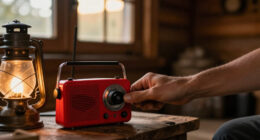
When the lights go out, the first thing you may miss is not the lamp. It is knowing what is happening outside: whether a storm is moving closer, roads are closed, or power crews have an estimate. A solar-powered emergency radio can give you a way to hear updates when normal charging and internet access are limited.

Get emergency and outdoor gear delivered free with Prime
- Fast, free delivery on millions of items
- Prime Video, Amazon Music and more included
- Member-only deals all year
These radios pair a receiver with one or more backup power options. Some also include a flashlight, a hand crank, a siren, or USB output for a phone. That bundle can be handy, but the label “emergency radio” does not promise a particular level of reception, battery life, or water protection.
This guide explains what the features do, where their limits show up, and what to check before buying. You’ll also get a simple routine for testing a radio before you need it. Think of it like keeping a spare tire: having one helps, but you still want to know where it is and whether it works.
Check that the radio receives the warning bands and services used where you live.
Treat a small solar panel as a gradual top-up; combine it with other power options.
Use crank power and USB phone charging sparingly because they can take effort or drain the radio’s stored energy.
Test reception, controls, alert settings, and battery condition during routine emergency-kit checks.
A radio supports preparedness but does not replace water, medication, lighting, or official emergency instructions.
What a solar-powered emergency radio can tell you during an outage
A solar-powered emergency radio is a portable receiver with backup charging options, designed to help you hear news, weather, or public safety updates when ordinary power is unavailable. In the United States, many models receive AM/FM and NOAA Weather Radio; other countries use different warning services. Whether you receive a useful signal depends on the radio, local coverage, terrain, and where you place it.
Those factors determine whether the radio can serve as a source of timely information or merely pick up a faint, unreliable signal. A radio that crackles on a basement shelf may sound much clearer near an upstairs window, especially if nearby hills or buildings block a transmitter. Try more than one location at home and write down the station or frequency that works best. That small test tells you where to listen before an outage makes it harder to experiment.
Some models can stay in an alert mode and sound when they receive supported weather alerts. Others need you to tune in and listen yourself. Alert standby can reduce the chance that you miss an announcement while doing something else, but it only helps if the radio supports the right alert system, is configured correctly, and can receive a local signal. Check the model’s instructions and confirm that the alert system and frequencies match your location; the word “emergency” alone does not mean every alert will arrive automatically.
These devices are one piece of a household plan. A radio can carry information, but it does not provide water, medication, lighting, or a way to contact others. The distinction matters because hearing a warning is useful only if you also have what you need to act on it. If an official agency issues instructions, follow those directions. During a storm, for example, a radio may help you hear an evacuation notice, while your household kit handles light, water, and essential supplies.
Popular right now

KitchenAid Artisan 5-Quart Tilt-Head Stand Mixer, Almond Cream

Breville Barista Express Manual Espresso Machine with Built-In Grinder, Brushed Stainless Steel

Bose QuietComfort Ultra Earbuds (2nd Gen), Wireless Noise-Cancelling Earbuds, Black
As an affiliate, we earn on qualifying purchases.
Why the solar panel works best as a slow top-up
A built-in panel on a solar-powered emergency radio is usually best for topping up stored energy over time, not rapidly charging a depleted battery. Charging speed changes with the panel’s size, sunlight strength, angle, cloud cover, and battery capacity. A palm-sized panel behind a window can take a long time to make a substantial difference. In practice, this means the panel can help preserve a charge or add some listening time, but it may not restore the radio quickly when you need it most.
Imagine a winter outage with gray skies. Setting the radio on a windowsill for an hour may help a little, but it may not give you enough power for a long listening session or a phone charge. In bright sun, aim the panel toward the light and check the charge indicator if the device has one. Don’t assume that a short sunny spell will refill the battery. The tradeoff is convenience versus predictability: solar needs no cable or outlet, but its output depends on conditions you may not control.
More power options add flexibility. A radio may have a built-in rechargeable battery, USB input, replaceable batteries, or a hand crank alongside its solar panel. Each option solves a different problem: USB can provide a more direct recharge when you have power available, replaceable batteries can be stored separately, and a crank can produce some power without sun. Those options also involve tradeoffs in charging access, spare supplies, or physical effort. Read the manual for charging instructions and whether the radio can operate while it charges.
When comparing models, look for battery capacity and how the maker reports runtime. A capacity number alone cannot tell you exactly how many hours you’ll get, since volume, lighting, alerts, battery age, and use all matter. Runtime figures are most useful when you know what the stated conditions were; a result with the light off may not represent how long the radio lasts when you also use its other features. If the radio is part of your kit, keep it charged according to the maker’s guidance and treat solar as a useful supplement, not your only plan.
How to choose features that fit your local risks
To choose a solar-powered emergency radio, first match its bands and alert functions to the warning services available where you live, then compare its power sources, battery details, controls, and durability. A long feature list matters less than being able to hear a local station and operate the radio when you’re tired or the room is dark. Matching the receiver to local services is the first decision because extra power or lighting features cannot make an unsupported broadcast understandable.
For instance, a household in a U.S. area served by NOAA Weather Radio may value a compatible receiver and alert standby. A traveler elsewhere should check the local public warning system rather than assume NOAA coverage applies. Reception can vary indoors, so look for clear instructions and test the device at home before packing it. This test also helps reveal practical limits, such as a signal that works only near a particular window or controls that are difficult to read.
Use this short checklist when comparing radios:
- Check the supported bands and alert modes against local services.
- Compare power options, including rechargeable or replaceable batteries, USB input, solar charging, and a crank.
- Read battery details: capacity, charge indicator, replacement options, and stated runtime conditions.
- Try the controls: tune a station, change volume, turn on the light, and find the alert setting.
- Review durability claims, including any stated water-resistance rating and what it covers.
These checks help you compare usefulness rather than count features. For example, a hand crank may sound reassuring but be less useful to someone who cannot comfortably operate it; replaceable batteries may be more practical if you can store spares and remember to check them. “Weather resistant” does not automatically mean waterproof, so a radio left beside a leaky window may still need a dry bag or other protection. A clear display and independently controlled flashlight can also make a real difference when you’re helping a child find a coat in a dim hallway.
What the hand crank and phone charger can realistically do
A hand crank can generate some power without sunlight, but it takes sustained effort and usually supplies limited energy. USB phone charging can be helpful too, yet it may drain the radio’s stored power quickly. These features give you options when other sources are unavailable, but using them shifts effort or energy away from the radio’s main job. Treat both as emergency backups rather than substitutes for a wall charger or dedicated power bank.
Picture a short outage after a storm: you crank the handle to get enough power to hear a local update, then use the flashlight to check the breaker panel. That is a plausible use for a multifunction device because each task is brief. Expecting the same small unit to run a radio for hours and substantially recharge a nearly empty phone may leave you disappointed. If the radio battery is also the phone’s power source, charging the phone can shorten the time available for listening later.
Feature combinations also vary. Some radios combine radio reception with backup power and, in many models, a flashlight or siren. Check which functions can run at the same time and whether the manual gives specific charging or runtime figures. Simultaneous use can matter: a light or phone output may compete for the same stored energy, so you may need to prioritize one function at a time. A siren may be useful for signaling, but it does not replace calling emergency services when you can do so.
Spend stored power on the job that matters most. If you need updates, lower the volume to a comfortable level and turn off the light when you don’t need it. If your phone has a little charge left, reserve it for messages or calls and use the radio for longer listening. In a household plan, a separate power bank can carry the phone-charging load while the radio stays ready to receive broadcasts. Thinking through that division in advance helps prevent one convenient feature from consuming the power you need for another.
How to keep your emergency radio ready to use
A solar-powered emergency radio is only useful if it still works when you need information. A discharged or degraded battery, unfamiliar controls, and an untested alert setting can turn a promising gadget into a quiet box. A quick routine helps you catch those problems before a power outage. It also gives you a chance to confirm that the radio’s features match the way you expect to use it, rather than relying on packaging claims alone.
For example, add the radio to a seasonal kit check when you replace batteries in a smoke alarm or change your clocks. Power it on, tune to a station, check the light, inspect the cable and crank, and recharge the battery as directed by the manufacturer. If reception is weak, try a different spot and note the best location. Repeating the same basic checks makes changes easier to spot: a shorter runtime or a loose crank can signal a problem before an emergency.
During the check, confirm the basics:
- Power: Does the device turn on, and does its charge indicator behave normally?
- Reception: Can you tune to a local station or warning broadcast?
- Controls: Can another household member find the volume, light, and alert settings?
- Condition: Are the panel, ports, handle, and casing intact and dry?
Each check answers a different readiness question: whether the radio has usable power, whether it can receive information where you plan to use it, whether someone else can operate it, and whether its physical parts are in working order. Follow the manufacturer’s guidance for charging and storage, since batteries and products differ. Put the radio where household members can find it quickly, with any needed cable or spare batteries. In an outage, knowing its location and controls can save more time than trying to learn them by flashlight while rain taps against the windows.
Frequently Asked Questions
Will a solar emergency radio work without sunlight?
Usually, if the model has another available power source, such as a charged internal battery, replaceable batteries, USB charging, or a hand crank. Check the specific device, since features differ.
How long does solar charging take?
There is no single charging time. Panel size, sunlight, angle, weather, and battery capacity all affect it, and small integrated panels often charge slowly. Use the manufacturer’s guidance and treat solar as a top-up.
Can I charge my phone with an emergency radio?
Many models offer USB output, but the charge may be modest and can use up the radio’s stored energy quickly. It is a backup for a pinch, not a replacement for a power bank.
Do emergency radios receive weather alerts automatically?
Some models support alert standby; others require you to tune in manually. Confirm the function, supported frequencies, local coverage, and setup instructions for your radio.
Are solar emergency radios waterproof?
Not necessarily. Check the stated water-resistance rating and what conditions it covers; “weather resistant” does not mean waterproof. Protect the radio from rain unless its documentation says otherwise.
How often should I test my emergency radio?
Follow the manufacturer’s maintenance guidance. As part of routine emergency-kit checks, power it on, tune a station, inspect its battery and controls, and recharge it as needed.
Conclusion
Choose a radio you can use easily, that can receive local broadcasts, and that has more than one practical way to get power. Keep it charged, test it with your household, and let the solar panel serve as one part of the plan. That preparation turns a compact device into a steady voice when the house goes quiet and the weather keeps moving outside.