TL;DR

Get emergency and outdoor gear delivered free — and shop member deals
- Fast, free delivery on millions of items
- Access to Prime Big Deal Days deals on October 6–7
- Prime Video, Amazon Music and more included
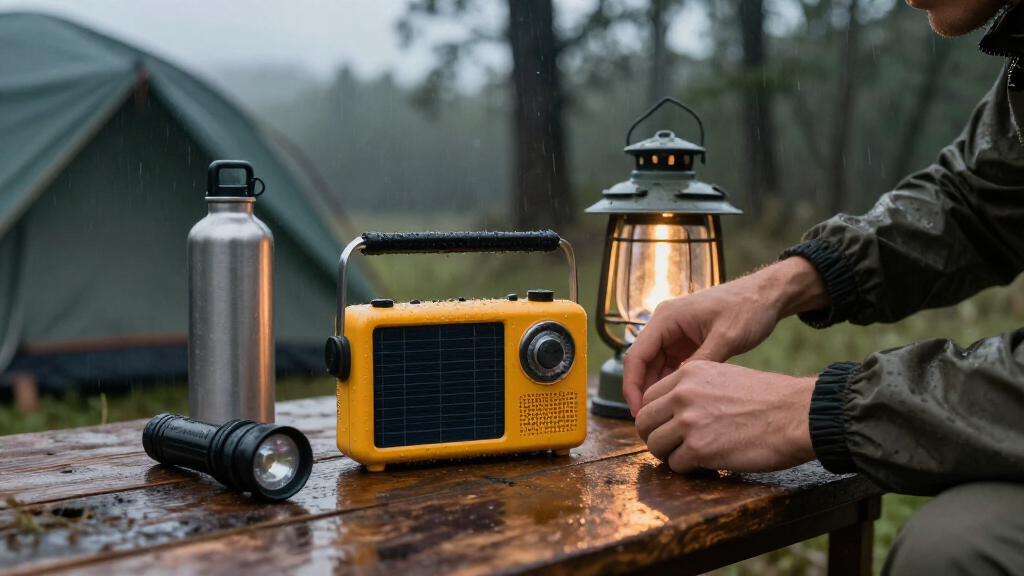
Solar-powered emergency radios are portable radios designed to receive local information during power outages and other emergencies, often with battery, solar, and hand-crank power options. Their small solar panels and cranks usually provide limited energy, so keep the battery charged, check local alert compatibility, and treat phone charging as a bonus rather than a promise.
When the lights go out, a phone can become a bright rectangle with no signal and a battery that drains by the hour. A small radio can still bring local weather alerts and evacuation information into your kitchen, even when home internet and cellular service fail.
Solar-powered emergency radios add ways to replenish their power, but the word “solar” can make a modest panel sound more capable than it is. This guide explains what these radios can receive, how their power options compare, what to check before you buy, and how to test one before bad weather arrives.
The aim is practical: choose a radio that works with the alerts used in your area, learn its controls, and keep it ready. It is a useful tool in a broader emergency kit, not a replacement for official guidance or a complete backup power system.
Confirm that the radio receives the bands and alert system used by your local authorities.
Keep the rechargeable battery charged; treat solar and hand-crank power as limited backups.
Compare manufacturer runtime figures carefully and separate radio use from flashlight use.
Test reception in the room or shelter area where you expect to use the radio.
Use a dedicated power bank for phone charging when possible, and follow official local emergency guidance.
What a solar-powered emergency radio can do when the power goes out
A solar-powered emergency radio is a portable radio designed to receive broadcasts during outages, severe weather, and other emergencies. Many models pair a rechargeable battery with a small solar panel and a hand crank, and some add a flashlight, USB output, or siren. Its central job is receiving information—not powering your whole household.
That distinction matters because emergencies can affect communications differently. A power outage may leave local radio stations operating on backup power even as home internet and cellular networks become unavailable or congested. But reception is not guaranteed simply because a device is labeled “emergency radio”: the radio must support the relevant broadcasts, and its signal must reach the place where you plan to use it. Confirming both before an outage turns a general-purpose gadget into a useful part of your plan.
Depending on your location and the radio’s supported bands, broadcasts may include weather alerts, evacuation instructions, or emergency-service announcements. These are information channels, not personalized messages: you still need to know which local station or alert system applies to your area and how to tune in. A radio that receives ordinary stations but not the local alert system may be useful for news, but it will not provide the specific warning function you expected.
For example, during a winter outage, you might tune in from a warm room to hear whether roads are closing, then switch the flashlight on to find a bag of batteries. That is a realistic use: useful information and a little light, rather than a device that replaces a phone, generator, or emergency plan.
A radio’s most valuable feature is the broadcast you can actually receive. A long feature list cannot make up for incompatible frequencies or confusing controls.
Some products call themselves “emergency radios,” but that label does not guarantee compatibility with every country’s alert system. Check the model’s manual and your local emergency-management guidance. Know which station to tune in and whether alerts sound automatically or only when the radio is set up in a particular way. Practicing this in ordinary conditions also matters: it reduces the chance that an unfamiliar control or weak signal will cost you time when you need information quickly.
solar-powered emergency radio with NOAA weather alerts
As an affiliate, we earn on qualifying purchases.
As an affiliate, we earn on qualifying purchases.
How solar, hand-crank, and battery power compare
Solar-powered emergency radios use several power sources because each solves a different problem. A charged battery offers energy when you need it without extra effort; sunlight may gradually replenish it when conditions are suitable; a crank can provide some power when you have neither sun nor an outlet. The tradeoff is convenience versus independence: stored power is easiest to use, while solar and manual charging depend on conditions or effort. None should be assumed to provide unlimited runtime, so start an outage with the battery charged and regard other sources as ways to extend use.
| Power option | What it is good for | What to watch for |
|---|---|---|
| Rechargeable battery | Routine listening with stored power | Charge and inspect it before an emergency |
| Solar panel | Slowly replenishing a battery in suitable sunlight | Small panels may charge slowly; indoor light is usually weak |
| Hand crank | A backup when sunlight and outlets are unavailable | Requires effort and generally supplies limited energy |
| Replaceable batteries or USB input | Extra flexibility on supported models | Check accepted battery types and charging requirements |
Imagine a cloudy afternoon after a storm. Leaving a radio on a windowsill may add some charge, but the result depends on panel size, sun angle, weather, and battery capacity. This uncertainty is why solar charging is better treated as a slow top-up than a plan to refill a depleted radio on demand. A crank avoids reliance on sunshine, but the energy comes from your effort: it can be useful for a brief listening period, while extended cranking may be tiring and still may not produce much stored power.
Manufacturer runtime and charging figures also depend on test conditions. A runtime measured at low volume with the display and light off may not match real use when you need those features. Compare radio runtime with flashlight runtime, and do not assume the same battery estimate covers both. A USB port may charge a phone on some models, but a small radio can surrender much of its stored energy to a phone; using it that way could leave less reserve for receiving updates. A dedicated power bank is generally better for phone charging.
For practical planning, check the manual for how the battery is charged, whether the radio can operate while charging, and what the maker’s runtime figures include. If you depend on replaceable batteries or USB input as alternatives, confirm the exact type and charging requirements in advance. These details determine whether the advertised flexibility will actually help your household.
How to check whether a radio will receive your local alerts
To check local alert reception, match the radio’s supported frequencies and alert features to the system used by your local authorities, then test its tuning and alert behavior. “Emergency radio” is not a universal compatibility standard. A radio that receives ordinary stations may still lack the specific band or alert function you expect, so the name on the box cannot substitute for checking the documentation.
- Find your local source. Check your emergency-management agency’s website or printed preparedness guide for recommended stations and alert systems.
- Compare the radio’s documentation. Look for supported bands, frequencies, and any named alert-system compatibility; do not rely on a vague product description.
- Learn how alerts activate. Some radios need to be tuned to a station, while others can sound automatically under specified conditions. Read the instructions.
- Test reception where you plan to keep it. Try the radio in your bedroom, basement, or shelter area, since walls and location can affect reception.
For instance, a radio may work clearly beside a sunny kitchen window but produce static in a basement. Testing in the spot where you would shelter tells you whether you need to move the radio, adjust its antenna, or identify another listening location. This is more than a sound-quality check: a weak or intermittent signal can make spoken instructions difficult to understand, especially when you are tired or distracted.
Alert features can also differ by region and model. Follow official local instructions for alert tests rather than triggering or interpreting alerts on your own. Keep the station information with your household emergency plan so another person can tune in if you are away or busy. If you discover that reception is unreliable in your preferred shelter area, decide on a workable alternative location before an emergency rather than assuming a different setting will fix it later.
Which features are worth paying attention to
Choose features that make the radio dependable and easy to use: verified reception, flexible power, clear controls, and durability information. These affect whether it can deliver information when you need it and whether you can keep it working over time. Extra functions can help, but each may use stored energy or complicate operation. A rugged-looking case is not the same as a published water-resistance or drop rating, so distinguish a tested claim from a visual impression.
Picture a dim hallway during a nighttime outage. Large buttons, a readable display, and a simple tuning method can matter more than a menu packed with settings. In ordinary conditions, a complicated interface may seem manageable; under stress or low light, extra steps can slow you down or make it easier to select the wrong mode. A lock that prevents accidental button presses is useful if the radio lives in a crowded emergency bag, where a flashlight or food tin might rub against the controls.
- Reception: Confirm the supported bands work with local broadcasts. This is the feature that determines whether the radio can provide relevant information at all.
- Power flexibility: Check charging inputs, battery capacity, replaceable batteries, and whether the radio can operate while charging. More options can improve resilience, but only if you can supply the right batteries or charging source when needed.
- Durability: Look for clear water, dust, drop, and temperature ratings rather than relying on appearance. A rating helps you judge whether the radio suits your likely storage and use conditions, though it does not mean the device is indestructible.
- Usability: Favor controls you can understand quickly in low light or under stress. Simple tuning and clear labels may be more valuable than advanced features that take time to learn.
- Extra functions: Treat a flashlight, reading light, siren, and USB output as useful additions, not the main reason to buy. They can save space in a kit, but using them may consume energy needed for listening.
- Support: Check warranty terms, battery availability, instructions, and alert-testing guidance. A radio is only maintainable if you can find the correct information and keep its power source in usable condition.
There is a tradeoff between compact size and capacity. A tiny radio is easy to store, while a larger one may offer a bigger battery or controls that are easier to grip. Consider where it will be stored, who may need to operate it, and how long you may need to listen. Compare what the manual confirms—not just the number of features listed on the box—because documented performance is more useful than a promise you cannot verify.
How to keep your radio ready instead of letting it gather dust
Keep an emergency radio ready by charging it according to the manufacturer’s instructions, testing its reception and functions periodically, and storing it where your household can find it. This routine checks several potential failure points before they matter: a depleted battery, a signal blocked by the chosen location, or controls no one remembers how to use. A radio left untouched in a closet may have any of these problems when you need it.
Set a simple reminder, such as checking the radio when you test smoke alarms or change clocks. Turn it on, tune to a local station, test the flashlight, and confirm any alert settings using the manufacturer’s instructions and local guidance. If you store replaceable batteries, check their condition and keep the correct type nearby. The purpose is not to run the battery down with frequent testing, but to confirm that the radio and its controls still work and that you know what to do.
For example, during a quarterly household check, you could move the radio to the basement, tune it to the recommended local station, and confirm that you can hear the broadcast. If reception is poor, try another location or antenna position; do not wait for a storm to discover that the basement blocks the signal. Record the location that works, so household members have a simple fallback instead of troubleshooting from scratch.
Indoor light is usually much weaker than direct sunlight, so a windowsill indoors may not charge a small panel effectively. Follow the manual on charging and storage rather than leaving the unit plugged in indefinitely. Add the radio to a broader kit that follows official preparedness guidance, alongside water, essential medicines, and other supplies your household needs. Keeping it maintained makes the radio more dependable, but it remains one part of a plan that should not depend on a single device.
When a solar radio helps—and when another tool is better
A solar-powered emergency radio is most useful for receiving broadcasts and extending access to information when normal power is unavailable. It is less suitable as a rapid charger for a phone or as a guaranteed source of continuous power. The distinction is about energy capacity: a small panel and crank are designed to support a compact radio, not to replace a larger battery or generator. Match the tool to the job, and you will avoid expecting a compact radio to do work its panel and crank cannot sustain.
During a multi-hour outage, a radio can help you hear local updates while you save your phone battery for calls or messages. A dedicated power bank is a better choice when your priority is keeping a phone charged, because it stores energy for that task without drawing down the radio’s reserve. If you need substantial household electricity, a radio’s USB output and small panel are not substitutes for equipment designed for that purpose. Choosing a tool with the right capacity also avoids having to ration a radio’s listening time just to power another device.
Think of the radio as a dependable messenger, not a power station: it brings news in a small, portable package. The light and siren can be handy during a search for supplies or to attract attention, but their use also draws energy. If you are listening for updates, keep the screen and extra lights off when you do not need them. Prioritizing the radio function helps preserve its main value—access to information—while leaving optional features available for situations when they matter.
Make the choice around your likely needs, local broadcasts, household size, and budget. A less expensive model with compatible reception, clear controls, a battery you can maintain, and honest documentation may serve you better than a costlier unit with a longer list of untested claims. The best fit is the one your household can operate and keep ready, not necessarily the model with the most power options or accessories.
Frequently Asked Questions
Can a solar emergency radio charge itself indoors?
Usually not effectively. Indoor light is much weaker than direct sunlight, and charging depends on the panel, the light, and the radio’s battery. Check the manufacturer’s instructions and treat the panel as a slow backup.
How long does it take to charge one with sunlight?
There is no single charging time for every model. Panel size, sun angle, weather, battery capacity, and the amount of charge needed all affect the result. Compare the manufacturer’s test conditions instead of assuming a sunny windowsill will quickly refill the battery.
Can I rely on the hand crank to run the radio?
A hand crank can provide backup energy when you lack sunlight or an outlet, but it takes ongoing effort and usually supplies limited power. It can help with short listening periods or extend a charge; it is not the same as starting with a full battery.
Will an emergency radio charge my phone?
Some models have USB output, but the charge may be limited and can use much of the radio’s stored energy. Keep the radio’s main purpose in mind: receiving information. A dedicated power bank is generally a better phone-charging option.
Does every emergency radio receive weather alerts automatically?
No. Models differ in supported bands and alert behavior; some require manual tuning, while others sound alerts only under specified conditions. Check the exact model documentation against the alert system and stations recommended by your local authorities.
Conclusion
Choose a radio for the broadcasts it can receive, the power you can realistically maintain, and controls your household can use in the dark. Charge it, test it where you might shelter, and keep local station information beside your emergency plan.
When the house is silent and the windows are black, a charged radio can turn a faint voice from the air into your next clear step.
Fall Picks
fall essentials
As an affiliate, we earn on qualifying purchases.