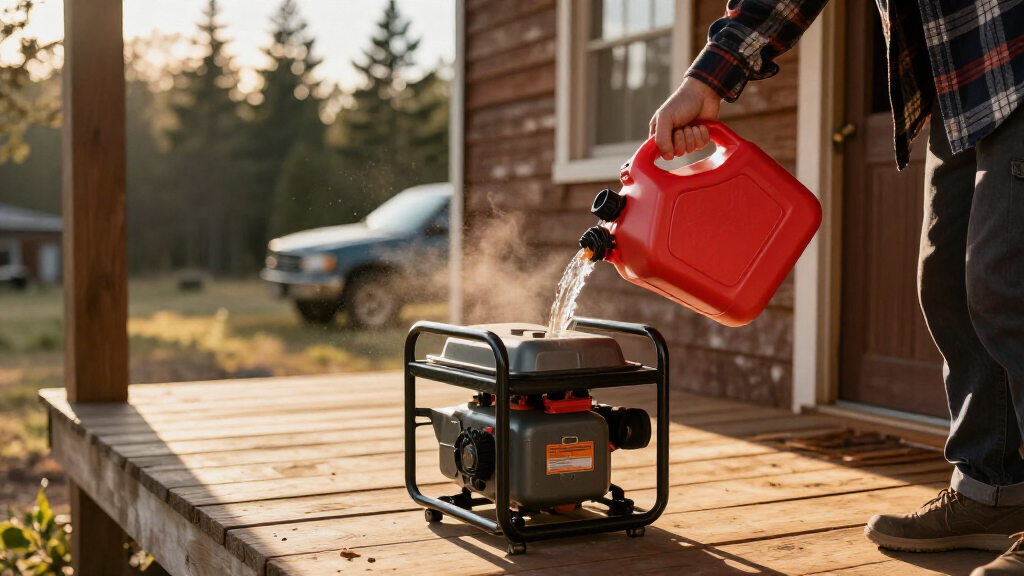

The best fuel container for most people is the Scepter 5-Gallon Gas Can with SmartControl Spout, because it balances compliance, spill control, and everyday portability better than anything else in this lineup. If you move larger volumes of fuel for equipment or generators, the BreAro 50-Gallon Portable Fuel Transfer Tank with 12V Pump is the standout choice, while the Eagle 5-Gallon Type I Red Safety Can remains the benchmark for workshop-grade metal safety construction. The core tradeoff in this category is capacity versus convenience: small cans pour cleanly and store easily, while big caddies and transfer tanks save trips to the gas station but demand more space, more money, and often a vehicle to move them when full. Spout design matters as much as size — the difference between a controlled pour and a soaked shoe comes down to the nozzle, not the can. Read on for the full breakdown of all 14 containers and which one fits your fuel needs.

Get emergency and outdoor gear delivered free — and shop member deals
- Fast, free delivery on millions of items
- Access to Prime Big Deal Days deals on October 6–7
- Prime Video, Amazon Music and more included
Key Takeaways
- Spout design separated the winners from the losers more than any other feature — the Scepter SmartControl and No Spill 1405 nozzles turned pouring into a one-handed, thumb-controlled task, while basic bayonet spouts on budget cans caused more spill complaints than any capacity tradeoff.
- The 15-gallon caddy category (Garvee, plus two unbranded caddies) is crowded with near-identical products; the differentiators are wheel quality, hose length, and pump stroke effort, not gallon count.
- Metal safety cans like the Eagle Type I cost noticeably more per gallon of capacity than plastic, but they are the only options here appropriate for workshop and jobsite compliance settings.
- The 50-gallon 12V transfer tanks (BreAro and the generic diesel version) only make sense if you regularly fuel multiple machines or remote equipment — for occasional generator top-ups they are overkill in both price and footprint.
- VP Racing’s 3-pack square motorsport jugs are the only pick purpose-built for transport in a vehicle, with a square footprint that resists tipping — round caddies and tall cans can’t match that stability.
| Garvee 16-Gallon Fuel Can with 10-Foot Manual Siphon Pump |  | Best for Rough-Terrain Refueling | Capacity: 16 gallons | Material: Industrial-grade HDPE | Pump: Manual fuel transfer pump | VIEW LATEST PRICE | See Our Full Breakdown |
| Eagle 5-Gallon Type I Red Safety Gas Can |  | Best Steel Safety Can | Capacity: 5 gallons | Can type: Type I safety can | Color: Red | VIEW LATEST PRICE | See Our Full Breakdown |
| Eagle 5-Gallon Type I Yellow Safety Can for Diesel |  | Best for Diesel Storage Standards | Capacity: 5 gallons | Can type: Type I | Intended liquid: Diesel | VIEW LATEST PRICE | See Our Full Breakdown |
| BreAro 50-Gallon Portable Fuel Transfer Tank with 12V Pump |  | Best for High-Volume Powered Transfer | Capacity: 50 gallons | Material: Polyethylene | Pump voltage: 12V | VIEW LATEST PRICE | See Our Full Breakdown |
| Scepter 5-Gallon Diesel Fuel Can with Spill-Proof SmartControl Spout, Yellow |  | Best for Controlled Diesel Pouring | Capacity: 5 gallons | Fuel type: Diesel | Color: Yellow | VIEW LATEST PRICE | See Our Full Breakdown |
| Garvee 15-Gallon Fuel Caddy with Manual Transfer Pump |  | Best Mid-Size Wheeled Caddy | Capacity: 15 gallons | Material: Industrial-grade HDPE | Pump: Manual transfer pump with T-grip handle | VIEW LATEST PRICE | See Our Full Breakdown |
| Scepter 2 Gallon Gasoline Can with SmartControl Spill-Proof Spout and Funnel, Red |  | Best Small Can for Lawn Equipment | Capacity: 2 gallons | Fuel type: Gasoline | Material: 5-layer high-density polyethylene | VIEW LATEST PRICE | See Our Full Breakdown |
| ZechJinghool 30-Gallon Red Gas Can with Manual Siphon Pump and Wheels |  | Best High-Capacity Manual Caddy | Capacity: 30 gallons | Pump type: Manual reversible rotary siphon pump | Compatible fuels: Gasoline, diesel, kerosene | VIEW LATEST PRICE | See Our Full Breakdown |
| No Spill 1405 2.5 Gallon Gas Can |  | Best for Precise Small-Tank Filling | Capacity: 2.5 gallons | Pouring mechanism: Thumb button control | Spout size: 7/8 inch funnel spout | VIEW LATEST PRICE | See Our Full Breakdown |
| Scepter 5-Gallon Gas Can with SmartControl Spout and Extender, Red |  | Best 5-Gallon All-Rounder | Capacity: 5 gallons | Spout: SmartControl controllable-flow spout with extender | Flow rate: Up to 3 gallons per minute | VIEW LATEST PRICE | See Our Full Breakdown |
| Portable 50-Gallon Diesel Fuel Transfer Tank with 12V Electric Pump and 15 ft Hose |  | Best for High-Volume Diesel Work | Capacity: 50 gallons | Pump: 12V electric fuel transfer pump | Flow Rate: 11.9 GPM (45 L/min) | VIEW LATEST PRICE | See Our Full Breakdown |
| VP Racing 3522-CA 5.5-Gallon Square Motorsport Jug with 14-Inch Deluxe Hose, White, 3-Pack |  | Best Heavy-Duty Utility Jug (Non-Fuel) | Capacity: 5.5 gallons per jug | Pack Count: 3 | Shape: Square | VIEW LATEST PRICE | See Our Full Breakdown |
| 15-Gallon Portable Fuel Caddy with Manual Pump |  | Best Wheeled Caddy for Multi-Fuel Flexibility | Capacity: 15 gallons (57 L) | Material: UV- and chemical-resistant HDPE | Compatible Fuels: Gasoline, kerosene, biofuel | VIEW LATEST PRICE | See Our Full Breakdown |
| 15 Gallon Gas Can Fuel Tank Caddy with 10 ft Manual Siphon Pump |  | Best Long-Reach Manual Transfer | Capacity: 15 gallons | Material: Industrial-grade HDPE | Hose Length: 10 ft | VIEW LATEST PRICE | See Our Full Breakdown |
| fuel container | Capacity | Material |
|---|---|---|
| Garvee 16-Gallon Fuel Can with | 16 gallons | Industrial-grade HDPE |
| Eagle 5-Gallon Type I Red Safe | 5 gallons | 24-gauge galvanized steel |
| Eagle 5-Gallon Type I Yellow S | 5 gallons | — |
| BreAro 50-Gallon Portable Fuel | 50 gallons | Polyethylene |
| Scepter 5-Gallon Diesel Fuel C | 5 gallons | — |
| Garvee 15-Gallon Fuel Caddy wi | 15 gallons | Industrial-grade HDPE |
| Scepter 2 Gallon Gasoline Can | 2 gallons | 5-layer high-density polyethylene |
| ZechJinghool 30-Gallon Red Gas | 30 gallons | — |
| No Spill 1405 2.5 Gallon Gas C | 2.5 gallons | — |
| Scepter 5-Gallon Gas Can with | 5 gallons | — |
| Portable 50-Gallon Diesel Fuel | 50 gallons | High-density PE |
| VP Racing 3522-CA 5.5-Gallon S | 5.5 gallons per jug | Reinforced plastic |
| 15-Gallon Portable Fuel Caddy | 15 gallons (57 L) | UV- and chemical-resistant HDPE |
| 15 Gallon Gas Can Fuel Tank Ca | 15 gallons | Industrial-grade HDPE |
More Details on Our Top Picks
Garvee 16-Gallon Fuel Can with 10-Foot Manual Siphon Pump
The Garvee 16-Gallon Fuel Can suits buyers who need to move a substantial reserve across a worksite without lifting it by hand. Its wheels, collapsible pull handle, and side grips make it easier to position than the Eagle 5-Gallon Type I Red Safety Gas Can, though the Eagle’s steel construction and listed safety approvals suit a different kind of storage setup. Here, the 10-foot manual pump hose gives reach for transferring fuel to equipment, while dual shut-off valves and vapor-tight seals help limit spills during storage and dispensing. The tradeoff is weight: 16 gallons becomes cumbersome when full, and manual pumping takes effort. Its broad stated compatibility is useful for buyers managing several liquid types, but this is a poor fit for anyone who needs a compact can to carry by hand.
Pros:- Six-inch heavy-duty wheels, collapsible handle, and side grips support transport over rough terrain.
- Ten-foot manual pump hose and rotating nozzle allow controlled transfer with extra reach.
- Dual shut-off valves, vapor-tight seals, and a child-resistant cap help manage spills and storage.
- Industrial-grade HDPE is described as corrosion- and UV-resistant.
Cons:- Manual pumping requires physical effort.
- The full 16-gallon container can be cumbersome to move despite its wheels.
Best for: Property owners and work crews who need to roll a larger fuel supply over uneven ground to equipment.
Not ideal for: Drivers seeking a compact container to lift into a vehicle or carry when full; its 16-gallon capacity adds substantial weight.
- Capacity:16 gallons
- Material:Industrial-grade HDPE
- Pump:Manual fuel transfer pump
- Hose length:10 feet
- Wheels:6-inch heavy-duty wheels
- Fuel compatibility:Gasoline, diesel, kerosene, water, and biodiesel
- Safety features:Dual shut-off valves, vapor-tight seals, child-resistant cap, and anti-static grounding
Our verdict“Choose this Garvee when rolling a large reserve to equipment matters more than easy lifting or powered transfer.”
Eagle 5-Gallon Type I Red Safety Gas Can
For buyers who prioritize a steel safety can over a wheeled fuel caddy, the Eagle pairs a 5-gallon capacity with a non-sparking flame arrestor, automatic vapor vent, and self-closing gasketed spout. Its galvanized steel body and baked-on powder coat make it a more rigid storage choice than the Scepter 5-Gallon Diesel Fuel Can, which instead emphasizes a controlled plastic spout and diesel-specific use. Eagle also lists OSHA and NFPA compliance and FM, UL, and ULC approvals, giving buyers concrete standards to check against their storage requirements. The main compromise is the single opening: it handles filling and pouring, so access is less convenient than a design with separate openings. The included funnel helps, but this can is still a heavier, more traditional option than molded plastic containers.
Pros:- Galvanized steel body with a baked-on powder coat.
- Non-sparking flame arrestor, self-closing gasketed spout, and automatic vapor vent.
- Includes a funnel for filling and pouring.
- Listed as meeting OSHA 1910.106 and NFPA 30, with FM, UL, and ULC approvals.
Cons:- A single opening serves both filling and pouring.
- Steel construction is less convenient to carry than a comparable molded plastic can.
Best for: Shops and property owners seeking a five-gallon steel can with documented safety standards for gasoline and other flammable liquids.
Not ideal for: Buyers who want a lightweight container, a separate fill opening, or an extended hose for reaching awkward equipment tanks.
- Capacity:5 gallons
- Can type:Type I safety can
- Color:Red
- Material:24-gauge galvanized steel
- Finish:Baked-on powder coat
- Safety features:Non-sparking flame arrestor, self-closing gasketed spout cap, and automatic vapor vent
- Compliance and approvals:OSHA 1910.106 and NFPA 30; FM, UL, and ULC approved
- Origin:Made in the USA
Our verdict“Pick the Eagle if you want a standards-listed steel safety can and can work with its single-opening design.”
Eagle 5-Gallon Type I Yellow Safety Can for Diesel
The yellow Eagle is the lineup’s diesel-focused steel safety can, with Type I construction, a self-closing gasketed cap, automatic venting, and a non-sparking flame arrestor. It shares much of its design with the Eagle 5-Gallon Type I Red Safety Gas Can, but the yellow color coding gives buyers a clear way to keep diesel separate in a mixed-fuel workspace. Its HDPE funnel supports controlled filling and pouring, while the double interlock no-weld bottom seam adds a specific construction detail absent from the Scepter diesel can’s supplied description. Those features come with the Type I format’s single opening, and no flexible pour hose is included. Buyers wanting faster controlled pouring may prefer the Scepter’s SmartControl spout; this Eagle is better suited to those who value steel construction and listed approvals.
Pros:- Yellow color coding distinguishes the diesel can in a mixed-fuel storage area.
- Galvanized steel body has a baked-on powder coat and double interlock no-weld bottom seam.
- Self-closing gasketed cap, automatic venting, and non-sparking flame arrestor.
- Includes an HDPE funnel and lists OSHA, NFPA, FM, UL, and ULC credentials.
Cons:- Single-opening Type I design is less convenient than separate fill and pour openings.
- No flexible pour hose is included.
- Diesel-specific color coding limits its fit for buyers seeking a general-purpose can.
Best for: Diesel equipment owners and workshops that want a dedicated, color-coded steel can with listed safety approvals.
Not ideal for: Mixed-fuel users who need one can for different liquids, or anyone who needs a flexible hose to reach recessed filler openings.
- Capacity:5 gallons
- Can type:Type I
- Intended liquid:Diesel
- Material and finish:24-gauge galvanized steel with baked-on powder coat
- Funnel:HDPE
- Opening:Single opening for filling and pouring
- Safety features:Self-closing gasketed spout cap, automatic vapor venting, and non-sparking flame arrestor
- Standards and approvals:OSHA 1910.106, NFPA 30; FM, UL, and ULC approved
- Bottom seam:Double interlock no-weld
Our verdict“Choose this Eagle for dedicated diesel storage where steel construction and listed approvals matter more than hose-based reach.”
BreAro 50-Gallon Portable Fuel Transfer Tank with 12V Pump
When five-gallon cans mean too many refills, the BreAro’s 50-gallon tank and 12V pump shift the job toward bulk transfer. Its stated flow rate of up to 10.6 GPM and 13.1-foot hose offer a much faster, longer-reach setup than the manual pump on the Garvee 16-Gallon Fuel Can. An automatic shutoff nozzle, built-in filter, and fuel level indicator add useful controls while fueling equipment. Forklift pockets help with moving the tank, but they do not remove the need for suitable lifting equipment once it is loaded. The key tradeoff is dependence on a 12V power source; buyers without one cannot use the powered pump as intended. This tank is aimed at fleet, farm, and jobsite refueling, not routine hand-carried storage.
Pros:- Fifty-gallon capacity reduces repeat trips for refills.
- 12V pump is rated up to 10.6 GPM with a 13.1-foot hose.
- Automatic shutoff nozzle helps limit overflow during transfer.
- Built-in filter, fuel level indicator, and forklift pockets support bulk fueling and handling.
Cons:- Pump operation requires a 12V power source.
- A full 50-gallon tank requires suitable equipment and planning to move.
- Large capacity is excessive for buyers with occasional, low-volume fueling needs.
Best for: Farm, fleet, and jobsite operators who need to transfer large fuel volumes and have access to a 12V power source and suitable tank-handling equipment.
Not ideal for: Homeowners needing a small reserve for occasional use, or buyers without a 12V source or a way to handle a loaded 50-gallon tank.
- Capacity:50 gallons
- Material:Polyethylene
- Pump voltage:12V
- Pump flow rate:Up to 10.6 GPM
- Hose length:13.1 feet
- Fuel types:Diesel, gasoline, and kerosene
- Nozzle:Automatic shutoff
- Additional features:Built-in filter, fuel level indicator, and forklift pockets
Our verdict“Choose the BreAro for frequent bulk fueling when powered transfer and equipment-assisted handling are available.”
Scepter 5-Gallon Diesel Fuel Can with Spill-Proof SmartControl Spout, Yellow
The Scepter is a five-gallon diesel can for buyers who want more control at the nozzle than the Eagle Type I cans provide. Its SmartControl spout and rear handle are designed to help guide the pour when refueling lawn equipment, ATVs, or motorcycles, while the integrated vent supports a stated flow of up to 3 gallons per minute. Compared with the Eagle 5-Gallon Type I Yellow Safety Can for Diesel, this plastic can prioritizes pouring control and flow; the Eagle instead offers galvanized steel construction and specific listed safety approvals. The Scepter’s five-layer body, flame mitigation device, and child safety compliance address storage and handling concerns, but the diesel-only design limits flexibility. Buyers should also expect to handle its safety-focused spout as designed rather than the simpler pour arrangement of a basic container.
Pros:- SmartControl spout and rear handle support controlled pouring.
- Integrated vent supports flow of up to 3 gallons per minute.
- Five-layer construction is designed to limit vapor leaks.
- Flame mitigation device and child safety compliance are specified.
Cons:- Designed for diesel only, limiting fuel versatility.
- The safety-focused spout may take more deliberate handling than a basic container.
Best for: Diesel equipment owners who want a portable five-gallon can with a controlled spout for refueling small engines and recreational vehicles.
Not ideal for: Buyers who need a gasoline can, steel construction, or the specific OSHA, NFPA, FM, UL, and ULC credentials listed for the Eagle diesel can.
- Capacity:5 gallons
- Fuel type:Diesel
- Color:Yellow
- Spout:Spill-proof SmartControl spout
- Flow rate:Up to 3 gallons per minute
- Construction:Five-layer
- Safety features:Flame mitigation device and child safety compliant
- Compliance:EPA / CARB compliant
- Handle:Additional rear handle
Our verdict“Pick the Scepter for controlled pouring of diesel into smaller equipment when plastic construction suits your needs.”
Garvee 15-Gallon Fuel Caddy with Manual Transfer Pump
Between the small handheld cans and the heavy 30- and 50-gallon tanks elsewhere in this roundup, this Garvee caddy occupies a sensible middle ground. Fifteen gallons is enough to refuel a riding mower several times over or top off a generator through an outage, without the bulk that makes the ZechJinghool 30-gallon caddy awkward to maneuver on uneven ground. The 8-inch wheels and collapsible handle mean one person can move it around a shop or property, and the 10-foot hose reaches across a truck bed. Compared with the Scepter 5-gallon can, the manual pump transfers fuel without lifting and tilting a full container — a real back-saver. The tradeoff is effort: hand-pumping 15 gallons takes time and arm work, and a full tank still makes this a two-handed job to roll.
Pros:- Wheels and collapsible handle make 15 gallons manageable for one person
- 10-foot hose and rotating nozzle reach vehicles and equipment without repositioning
- Dual shut-off valves and vapor-tight seals reduce spill and fume risk
- Handles gasoline, diesel, kerosene, and biodiesel
Cons:- Manual pumping demands physical effort for every gallon transferred
- Bulky and heavy when full, requiring flat, solid ground for easy rolling
Best for: Homeowners with multiple gas-powered machines who want pump-dispensed fuel without a full-size transfer tank
Not ideal for: Anyone refueling only a push mower or trimmer — a 2-gallon can like the Scepter is far easier to grab and pour
- Capacity:15 gallons
- Material:Industrial-grade HDPE
- Pump:Manual transfer pump with T-grip handle
- Hose length:10 feet
- Wheels:8-inch heavy-duty
- Fuel compatibility:Gasoline, diesel, kerosene, biodiesel
- Safety features:Dual shut-off valves, vapor-tight seals, child-resistant cap, anti-static grounding
Our verdict“A strong pick for buyers who want pumped, multi-fuel dispensing at a capacity that one person can still move.”
Scepter 2 Gallon Gasoline Can with SmartControl Spill-Proof Spout and Funnel, Red
For small-engine work, a big caddy is overkill. This Scepter 2-gallon can is built around one idea: controlled, spill-free pouring. The SmartControl spout releases fuel only when you squeeze, so filling a chainsaw tank or a trimmer’s narrow opening doesn’t become a splash fest — a genuine advantage over basic ventless cans that glug and burp. Its 5-layer HDPE construction resists vapor leaks and cracking, and the included funnel plus dust cap round out a thoughtful package. Compared with the No Spill 1405, this model trades the thumb-button mechanism for a squeeze spout and adds an included funnel, which helps with awkward filler necks. The obvious limit is size: two gallons empties fast if you’re fueling an ATV fleet or a generator, where the Scepter 5-gallon version makes more sense.
Pros:- Squeeze-controlled spout delivers fuel only when you want it, preventing overfills
- 5-layer HDPE walls resist vapor leaks, dents, and breakage
- Funnel and storage ring included for awkward filler necks
- EPA/CARB compliant with child safety lock and flame mitigation device
Cons:- Gasoline only — no diesel or kerosene compatibility
- 2-gallon capacity requires frequent refills for anything beyond small equipment
Best for: Suburban homeowners who fuel a mower, trimmer, or chainsaw a few times per season
Not ideal for: Anyone fueling generators, ATVs, or multiple vehicles — 2 gallons means constant refill trips to the station
- Capacity:2 gallons
- Fuel type:Gasoline
- Material:5-layer high-density polyethylene
- Spout:SmartControl spill-proof spout
- Compliance:EPA/CARB compliant
- Safety features:Child safety lock, flame mitigation device, dust cap
- Included components:Funnel with storage ring
- Warranty:2-year manufacturer
Our verdict“The easiest way to fill small engines without spills, as long as two gallons covers your typical workload.”
ZechJinghool 30-Gallon Red Gas Can with Manual Siphon Pump and Wheels
When 5-gallon cans stop cutting it but a 50-gallon electric transfer tank is more than you need, this 30-gallon caddy fills the gap. Doubling the capacity of the Garvee 15-gallon caddy, it suits rural properties, small farming operations, or anyone fueling several vehicles between station trips. The reversible rotary siphon pump is the standout: it moves fuel in either direction without electricity, and the fill gauge lets you check levels at a glance instead of rocking the tank. The wide-diameter neck speeds up filling at the pump, and the kink-resistant hose with nozzle keeps dispensing tidy. Be realistic about the tradeoffs — 30 gallons of gasoline weighs around 180 pounds, so even with wheels and a push handle, this stays on relatively firm, level ground, and rotary pumping still takes effort.
Pros:- 30-gallon capacity cuts fuel-station trips substantially
- Reversible manual pump transfers fuel without any power source
- Fill gauge shows fuel level at a glance
- Heavy-duty wheels and push handle handle rougher terrain than smaller caddies
Cons:- Roughly 180+ pounds when full — maneuvering is limited to solid surfaces
- Rotary hand pumping is slower and more tiring than the 12V electric pumps on 50-gallon tanks in this roundup
Best for: Rural property owners and small farm operators who store fuel for multiple machines between town trips
Not ideal for: Suburban users with deck storage limits or HOA restrictions — a full 30-gallon tank is heavy, bulky, and rarely necessary at that scale
- Capacity:30 gallons
- Pump type:Manual reversible rotary siphon pump
- Compatible fuels:Gasoline, diesel, kerosene
- Mobility:Heavy-duty wheels with push handle
- Hose:Kink-resistant hose with nozzle and hanger
- Features:Fill gauge, wide-diameter fill neck
- Color:Red
Our verdict“The right capacity point for serious fuel storage when you want pumped dispensing but not an electric transfer system.”
No Spill 1405 2.5 Gallon Gas Can
Precision is what separates this can from everything else here. The thumb button control starts and stops flow instantly, which matters most when the target is tiny — a chainsaw tank, a string trimmer, or a mix container where an ounce too much means spilled gas on a hot engine. The 7/8-inch funnel spout fits openings that standard spouts can’t enter cleanly, and the integrated stainless steel screen filters debris that could clog small carburetors — a feature no other can in this lineup offers. Compared with the Scepter 2-gallon SmartControl can, the No Spill’s button mechanism gives faster, more decisive shutoff, though Scepter counters with an included funnel and child safety lock. The half-gallon capacity bump over Scepter helps slightly, but this is still a small-job can, and buyers fueling mowers or vehicles weekly will refill it often.
Pros:- Thumb button provides instant start/stop flow control
- 7/8-inch spout fits narrow small-engine filler openings
- Integrated 20-mesh stainless screen filters debris before it reaches carburetors
- Attached dust cover keeps the spout clean in truck beds and sheds
Cons:- Small capacity means frequent refills for anything beyond handheld equipment
- Slim spout makes filling large vehicle tanks slow
Best for: Landscapers and homeowners who fill chainsaws, trimmers, and other small tanks where drip-free accuracy counts
Not ideal for: Buyers fueling riding mowers, generators, or vehicles — the 2.5-gallon size and slim spout slow down larger fills
- Capacity:2.5 gallons
- Pouring mechanism:Thumb button control
- Spout size:7/8 inch funnel spout
- Screen:Integrated 20-mesh stainless steel
- Spout cover:Attached dust cover
- Fuel type:Gasoline
Our verdict“The most precise pouring can in this roundup, ideal for small engines where a single spill is costly.”
Scepter 5-Gallon Gas Can with SmartControl Spout and Extender, Red
Five gallons is the sweet spot for most gasoline users — enough for a mower season or a roadside emergency, still liftable — and this Scepter executes the format better than most. The integrated air vent enables flow rates up to 3 gallons per minute, which means a 5-gallon fill takes under two minutes instead of the slow glugging typical of cheap ventless cans. The SmartControl spout with extender handles both wide vehicle necks and tighter equipment openings, making it more versatile than the No Spill 1405, whose narrow spout is small-engine specific. Compared with the Scepter 2-gallon model, you get 2.5 times the fuel per station trip at the cost of a heavier, two-handed lift when full. With EPA, CARB, and child safety compliance plus a flame mitigation device, it covers the regulatory bases most buyers never think to check.
Pros:- Vented flow up to 3 gallons per minute empties the can quickly
- Spout extender adapts to both wide and narrow filler openings
- Funnel stores on an integrated ring so it’s never lost
- Flame mitigation device and five-layer vapor-resistant construction
Cons:- A full can weighs 30+ pounds, making it hard to pour one-handed for some users
- Gasoline only — diesel owners need the yellow Scepter diesel version instead
Best for: Households fueling a mix of vehicles and lawn equipment from one versatile can
Not ideal for: Anyone with strength or mobility limits — a full 5-gallon can weighs over 30 pounds and pours best with a steady two-hand grip
- Capacity:5 gallons
- Spout:SmartControl controllable-flow spout with extender
- Flow rate:Up to 3 gallons per minute
- Construction:Five-layer HDPE
- Compliance:EPA, CARB, and child safety compliant
- Included accessories:Funnel with storage ring
- Fuel type:Gasoline
Our verdict“The default recommendation for most gasoline buyers: fast, controlled pouring at the most practical capacity.”
Portable 50-Gallon Diesel Fuel Transfer Tank with 12V Electric Pump and 15 ft Hose
When a jobsite or farm needs serious fuel throughput, hand-pumping 50 gallons is simply not realistic, and that is where this 12V electric pump system earns its place. Moving diesel at up to 11.9 GPM, it dispenses in minutes what a manual caddy like the Garvee 15-Gallon Fuel Caddy would take an hour to move. The automatic shut-off nozzle and mechanical gauge bring real pumping-station control to a portable format. The tradeoffs are real, though: a 30-minute duty cycle limits marathon sessions, it handles diesel only, and a full 50-gallon tank is heavy enough that transport really does mean a truck bed or forklift. Compared with the similarly sized BreAro 50-Gallon Transfer Tank, the longer 15-foot hose here gives more reach around equipment.
Pros:- 12V electric pump delivers up to 11.9 GPM for fast high-volume dispensing
- 15 ft hose reaches around trucks and machinery without repositioning the tank
- Automatic shut-off nozzle and anti-static aluminum construction improve safety
- Forklift-compatible HDPE body simplifies transport and placement
Cons:- 30-minute continuous duty cycle limits extended dispensing sessions
- Diesel only — not rated for gasoline or other fuels
- Full tank weight requires truck or forklift handling
Best for: Farmers, contractors, and fleet operators who dispense large volumes of diesel to machinery in the field
Not ideal for: Homeowners or anyone needing gasoline storage — the pump is diesel-only, and the capacity is overkill for weekend equipment
- Capacity:50 gallons
- Pump:12V electric fuel transfer pump
- Flow Rate:11.9 GPM (45 L/min)
- Hose Length:15 ft
- Material:High-density PE
- Nozzle:Automatic shut-off aluminum alloy
- Duty Cycle:30 minutes continuous
- Applications:Agriculture, industry, construction
Our verdict“This pick makes the most sense for crews fueling diesel equipment daily, where electric pumping speed outweighs the capacity and fuel-type restrictions.”
VP Racing 3522-CA 5.5-Gallon Square Motorsport Jug with 14-Inch Deluxe Hose, White, 3-Pack
Here is the honest caveat up front: this VP Racing jug is not rated for fuel storage, so it earns its spot in this roundup as a rugged companion container rather than a gas can. What it does better than any dedicated fuel can in this lineup — including the Scepter 5-Gallon Gas Can — is general-purpose hauling of automotive fluids, feed, and water, thanks to reinforced high-stress areas and a square footprint that stores efficiently. The extra-wide bottom grip makes a full 5.5-gallon lift far more controllable than a standard round jug, and the close-trimmed caps keep contents sealed during transport. The white finish will show grime over time, and buyers wanting actual gasoline storage should look at the Eagle or Scepter cans instead.
Pros:- Heavy-duty construction with reinforced high-stress areas survives rough transport
- Square shape stores and stacks more efficiently than round jugs
- Wide bottom handgrip makes lifting a full jug noticeably easier
- 3-pack includes 14-inch hoses and close-trimmed caps for sealing
Cons:- Not intended for fuel or kerosene, limiting its role in a fuel-focused setup
- White surface shows dirt and staining over time
- Three 5.5-gallon jugs demand meaningful storage space
Best for: Motorsport paddocks, farms, and workshops needing tough containers for fluids, feed, and water alongside their fuel cans
Not ideal for: Anyone who actually needs to store or dispense gasoline or kerosene — the jug is explicitly not rated for fuel
- Capacity:5.5 gallons per jug
- Pack Count:3
- Shape:Square
- Hose:14-inch deluxe hose
- Material:Reinforced plastic
- Intended Use:Non-fuel and non-kerosene products
Our verdict“A smart add-on buy for buyers who already own a proper gas can and need equally tough containers for everything else they haul.”
15-Gallon Portable Fuel Caddy with Manual Pump
This 15-gallon caddy stands out for fuel flexibility: gasoline, kerosene, and biofuel are all in play, which immediately separates it from single-fuel cans like the Eagle 5-Gallon Yellow Diesel Safety Can. The gravity-fed option at 2.5 GPM is the smarter mode when you can position it above a tank, while the manual pump at 2 GPM covers lower situations. Compared with the Garvee 15-Gallon Fuel Caddy, this model leans on 8-inch wheels and a collapsible tow handle to make uneven-ground transport practical, and its vapor-sealed gaskets and shut-off valves genuinely reduce the spillage that plagues basic spout cans. The compromises: manual flow is slow for large equipment, and at 25.3 pounds empty plus fuel, lifting it into a vehicle is a two-person judgment call.
Pros:- Handles gasoline, kerosene, and biofuel in one container
- Gravity or manual transfer gives two dispensing modes
- 8-inch wheels and collapsible tow handle manage uneven ground
- Shut-off valves, twist caps, and vapor-sealed gaskets reduce leaks
Cons:- Manual transfer tops out at 2 GPM, which feels slow for big fill-ups
- 25.3-pound empty weight makes vehicle loading awkward
Best for: Homeowners and small-property owners who fuel a mix of mowers, generators, and small equipment in multiple fuel types
Not ideal for: High-volume users fueling tractors or fleets — 2 GPM manual transfer is too slow for big tanks
- Capacity:15 gallons (57 L)
- Material:UV- and chemical-resistant HDPE
- Compatible Fuels:Gasoline, kerosene, biofuel
- Transfer Rate:2.5 GPM gravity; 2 GPM manual
- Hose Length:18 inches
- Wheels:8 inches
- Temperature Range:-30°F to 120°F
Our verdict“The most sensible choice for multi-fuel home and hobby use where portability matters more than pumping speed.”
15 Gallon Gas Can Fuel Tank Caddy with 10 ft Manual Siphon Pump
The defining feature here is the 10-foot siphon hose — double the reach of the 15-Gallon Portable Fuel Caddy’s 18-inch line — which means you can park the caddy at a safe distance and still fill a boat tank or remote equipment. Add dual brass shut-off valves and a 3.3 GPM flow rate, and this model out-pumps most manual rivals in the roundup, including the ZechJinghool 30-Gallon Gas Can at similar effort-per-gallon. The industrial-grade HDPE with UV and impact resistance is built for farm and jobsite abuse, and force-feed plus siphon modes add flexibility. The honest tradeoff is that everything is arm-powered: transferring a full 15 gallons takes sustained pumping that an electric option like the Wolive transfer tank eliminates entirely, and even wheeled, a full tank is cumbersome on slopes.
Pros:- 10 ft hose doubles the reach of typical caddies for remote filling
- 3.3 GPM flow beats most manual competitors
- Dual brass shut-off valves enable precise, controlled dispensing
- Industrial-grade HDPE resists UV, corrosion, and impact
Cons:- Manual pumping demands real physical effort for large transfers
- Full 15-gallon tank remains bulky to move despite wheels and handle
Best for: Boat owners and remote-equipment operators who need long-hose reach without an electrical power source
Not ideal for: Anyone with access to 12V power or high daily volumes — manual siphoning gets tiring fast compared with electric pumping
- Capacity:15 gallons
- Material:Industrial-grade HDPE
- Hose Length:10 ft
- Pump:Manual siphon pump
- Flow Rate:3.3 GPM
- Valves:Dual brass shut-off valves
- Compatible Fuels:Gasoline, kerosene, biofuel
- Wheels:8-inch heavy-duty
Our verdict“The right pick when reach and fuel control matter more than powered convenience — as long as your arms are up to the work.”
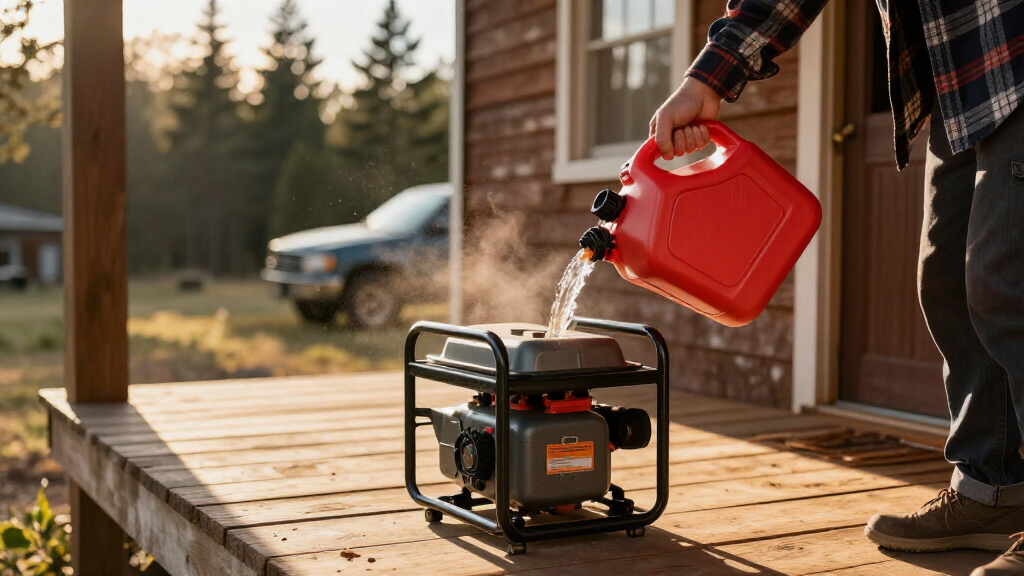
How We Picked
My ranking logic starts with what the container is actually for: a weekend lawnmower user, a diesel truck owner, and someone fueling a fleet of chainsaws have completely different needs. I grouped the 14 products into four functional tiers — small portable cans (under 3 gallons), standard 5-gallon cans, wheeled caddies in the 15-to-30-gallon range, and electric 50-gallon transfer tanks — and judged each against its intended job rather than against unrelated formats. Within each tier, the criteria that mattered most were pour control, build material and durability, portability when full, and compliance with safety and emissions regulations.
Spout and dispensing design carried the most weight because it is where cheap fuel cans fail in real use — a 5-gallon can you cannot pour without splashing is a bad product regardless of price. I also factored in long-term value: a metal safety can that lasts decades can justify a higher cost than a plastic can replaced every few seasons. Finally, I penalized redundancy — where three 15-gallon caddies were functionally identical, I favored the one with the better pump, hose, and wheel assembly. The result is a ranking ordered by how confidently I could recommend each container to its ideal buyer, from versatile everyday picks down to niche and near-duplicate options.
Factors to Consider When Choosing Best Fuel Containers
Choosing a fuel container is less about finding the “best” product and more about matching the container to how much fuel you move, how often, and where you store it. These are the factors that actually change what you should buy.Capacity: Buy for Your Real Consumption, Not Your Worst Case
The most common mistake in this category is overbuying capacity. A 15-gallon caddy sounds appealing until you realize fuel degrades over time — gasoline begins losing volatility within a few months, and a half-full caddy of stale gas is worse than a second trip to the station. Match capacity to what you burn in 30 to 60 days: a homeowner running a mower and string trimmer rarely needs more than 5 gallons on hand, while someone fueling a generator through storm season or running diesel equipment justifies a caddy or transfer tank. Also remember that fuel is heavy — roughly 6.3 pounds per gallon — so a full 15-gallon caddy weighs nearly 100 pounds and needs wheels, and a full 50-gallon tank is over 300 pounds and is effectively stationary once filled.
Spout Design: The Feature That Decides Your Daily Experience
Since modern regulations forced the retirement of old-style open vents, spout design has become the single biggest satisfaction factor in this category. Thumb-controlled nozzles like the Scepter SmartControl and the No Spill push-button design let you start and stop flow mid-pour with one hand, which matters most when filling small tanks with narrow openings. Siphon pumps on caddies trade speed for effort-free gravity work, but cheap siphon balls can lose prime and frustrate users. If you buy a can with a poor stock spout, factor in that aftermarket spout kits exist — but a good spout from day one is cheaper than replacing a bad one. Test the spout logic before you buy: if you cannot picture yourself pouring one-handed into your actual equipment tank, keep looking.
Plastic vs. Metal: Material Determines Where You Can Store It
HDPE plastic cans are lighter, cheaper, won’t rust, and are fine for most home use — but they are not accepted on many jobsites, in commercial workshops, or anywhere OSHA-style safety can standards apply. Metal safety cans, like the Eagle Type I models in this roundup, have flame arresters, leak-tested seams, and self-closing lids, which is why they cost more per gallon. There is also a durability tradeoff in both directions: plastic becomes brittle after years of UV exposure, while steel dents and rusts if the coating is scratched through. Diesel fuel is harder on cheap plastics than gasoline, so diesel buyers should lean toward purpose-built diesel cans with proper color coding (yellow) and materials rated for the higher density. Whatever you choose, never store any can in direct sunlight or inside a living space.
Color Coding and Fuel Types: A Safety Issue, Not a Style Choice
Industry convention is red for gasoline, yellow for diesel, and blue for kerosene, and following it prevents the single most expensive mistake in fuel handling: putting diesel in a gas engine or vice versa. Several products in this roundup exist in multiple colors for exactly this reason, including the Eagle Type I in red and yellow versions. Beyond color, never repurpose a container between fuel types — residue contamination can damage small engines even in small amounts, and a gas can that has held diesel should be retired, not rinsed. If you store both fuel types, buying visibly distinct containers costs nothing extra and eliminates cross-filling risk in low light or when someone else grabs a can.
Pumps, Hoses, and Wheels: What Separates Caddies From Cans
Once you move past 10 gallons, the dispensing system becomes the product. Manual siphon pumps are simple and need no power, but they demand physical effort and can be slow — fine for occasional use, tedious for frequent transfers. 12V electric pumps, like those on the 50-gallon transfer tanks, move fuel fast but add a battery connection, wiring maintenance, and a failure point. Hose length determines whether you can reach a tractor or truck bed from where the caddy sits, so measure your real reach before buying; a 10-foot hose covers most equipment, while a 15-foot hose adds flexibility at the cost of coiling and storage. Wheels sound minor until the first time you move a full caddy across gravel — small solid wheels that crack under load are the most common caddy complaint.
Regulatory Compliance and Where You Live
Fuel container regulations vary by state, with California’s standards being the strictest and most widely adopted by manufacturers. Most major-brand cans sold today are compliant everywhere, but cheap unbranded imports sometimes cut corners on flame arresters and vapor sealing. If you transport fuel in a vehicle, note that some motorsport-style jugs are sold as utility containers rather than certified fuel cans, which matters legally in some jurisdictions. Storage rules matter too: many local fire codes cap how much fuel a residence can store (commonly 25 gallons total) and require it to be in approved containers kept away from ignition sources and out of reach of children. Checking your local rules takes five minutes and can void an otherwise sensible purchase.
Frequently Asked Questions
Is a 15-gallon fuel caddy worth it if I only own a generator and a lawn mower?
For most homeowners in that situation, no — a pair of 5-gallon cans covers the same fuel with far less bulk, lower cost, and easier pouring into small tanks. Caddies earn their keep when you fuel equipment that is hard to bring to a spout, like a tractor, boat, or stationary generator, because the hose lets gravity do the work. They also make sense if your equipment tanks are large enough that 5-gallon refills feel constant. The other factor is fuel freshness: if your combined monthly consumption is under 15 gallons, you risk storing fuel long enough to degrade before you use it. If those scenarios don’t apply to you, put the savings toward better spouts rather than more capacity.
Are metal gas cans actually safer than plastic ones?
Metal safety cans are safer in specific, well-defined ways: they have built-in flame arresters that stop fire from flashing back into the can, spring-loaded lids that close themselves, and seams rated to survive being knocked over. That combination is why commercial shops and many workplaces require them. For typical home storage and transport, a quality HDPE plastic can is entirely acceptable and has advantages — it won’t rust, it’s lighter to carry, and it flexes instead of cracking when dropped. The honest tradeoff is that metal cans protect better against external fire and workplace mishandling, while plastic cans resist the everyday abuse of home use better. Buy metal if your storage location or workplace rules demand it; otherwise a well-designed plastic can from a reputable brand is a reasonable choice.
Do I really need a different can for diesel versus gasoline?
Yes, and not just because of the color convention. Diesel and gasoline have different solvent properties, and residue from one fuel in a container labeled for the other can cause real damage — even small amounts of gasoline mixed into diesel can alter combustion, while diesel in a gas engine fouls plugs and injectors. Dedicated diesel cans also use seals and materials rated for diesel’s higher density and longer storage life, and the yellow color coding prevents anyone else in your household from grabbing the wrong can. If you handle both fuels, two clearly distinct cans cost little more than one and remove the most expensive mistake in fuel handling. Never try to rinse and repurpose a can between fuel types.
What’s the real difference between the manual siphon pumps on caddies and the 12V electric pumps on transfer tanks?
Manual siphon pumps are completely self-contained — no battery, no wiring, nothing to fail except the pump diaphragm — but they move fuel slowly and take physical effort, which adds up when filling a large tank. 12V electric pumps transfer fuel several times faster with the push of a button, but they need a power source (usually your vehicle battery via clamps or a plug), and the wiring adds both cost and a maintenance point. If you transfer fuel once a month or less, a manual pump is the more dependable choice; if you fuel multiple machines weekly, the electric pump pays for itself in time saved. Flow rate is the number to compare: a slow manual setup can take ten minutes to move what an electric pump moves in two.
How long can I safely store fuel in one of these containers?
Gasoline starts degrading within about three months in a sealed container, losing the volatile compounds that make small engines start easily; with a fuel stabilizer added at fill-up, you can reasonably extend that to six to twelve months. Diesel lasts longer — often six months to a year untreated — but grows algae and sludge if water gets in, so keep cans sealed and full to minimize condensation space. This timeline is the main argument against buying more capacity than you use, and it favors rotating your stock: use the old fuel in your car or mower and refill the container rather than letting it sit. Store containers in a cool, shaded spot, because heat accelerates degradation in both fuel types. If fuel smells varnish-like or has darkened noticeably, dispose of it properly rather than running it through equipment.
Conclusion
The right pick here depends entirely on how much fuel you move and where you store it. For best overall, the Scepter 5-Gallon Gas Can with SmartControl Spout handles the most common job — clean, controlled, everyday fueling — better than any other container in the lineup. The No Spill 1405 takes best value for small-engine owners who want the finest pour control at a modest price, while the Eagle Type I safety cans are the best premium choice for workshop and jobsite use where metal construction and compliance matter. Best for beginners is the Scepter 2-Gallon Can, small enough to pour confidently on day one. For specific needs: the Garvee 15-Gallon Caddy suits generator and tractor owners, the BreAro 50-Gallon Transfer Tank is the pick for heavy diesel users and remote equipment, and the VP Racing 3-pack is unmatched for motorsport and in-vehicle transport. Whatever you choose, match capacity to what you actually burn in a couple of months — the safest, cheapest fuel container is always the one sized to real use, not worst-case fantasies.
Fall Picks
fall essentials
As an affiliate, we earn on qualifying purchases.