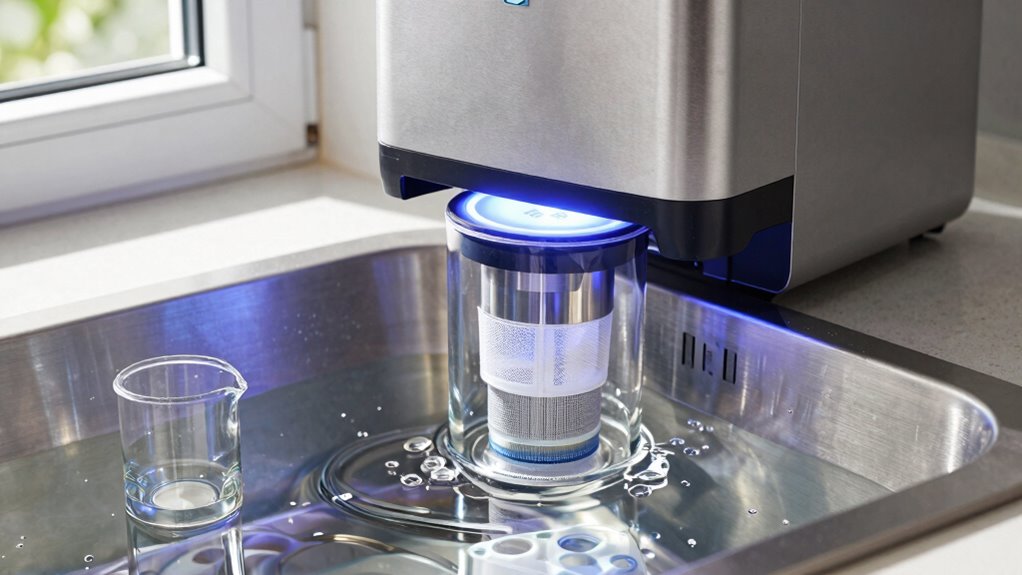

UV water purifiers are excellent at killing bacteria, viruses, and protozoa, but they can’t eliminate chemicals, sediments, or heavy metals from your water. These contaminants require pre-filtration to prevent damage and guarantee safe, clean water. Installing the right filters, like sediment or activated charcoal, protects your system from clogs and corrosion. If you want to know how to choose and install effective pre-filters, keep going for all the essential tips.
Key Takeaways
- UV purifiers cannot remove chemical contaminants like pesticides, pharmaceuticals, or heavy metals from water.
- Pre-filtration with sediment and activated charcoal filters is necessary to eliminate sediments, chlorine, and organic debris.
- Proper pre-filter installation prevents clogging, damage, and reduces shadowing, ensuring UV effectiveness.
- Regular maintenance and timely replacement of pre-filters extend UV system lifespan and maintain water safety.
- Combining UV with appropriate pre-filters addresses chemical, sediment, and heavy metal issues that UV alone cannot resolve.

HQUA-TWS-12 Ultraviolet Water Purifier Filter for Whole House Water Purification,12GPM 120V, 1 Extra UV Lamp + 1 Extra Quartz Sleeve
12GPM 55W 21 inch long and 3.5 inch diameter. MNPT Inlet/Outlet: 3/4" Inch.
As an affiliate, we earn on qualifying purchases.
As an affiliate, we earn on qualifying purchases.
What Contaminants Can UV Water Purifiers Remove Effectively?
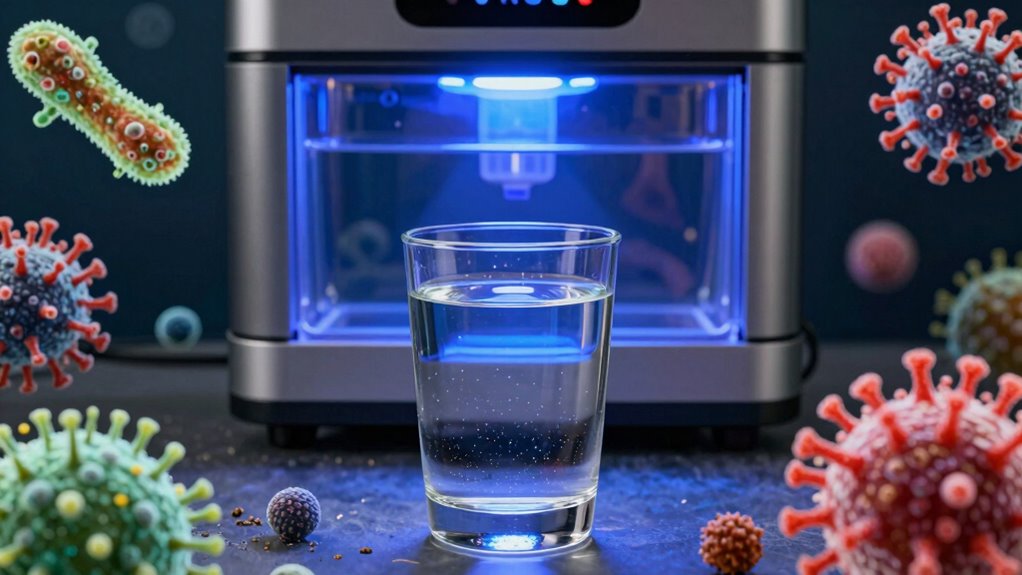
UV water purifiers are highly effective at neutralizing a variety of microorganisms, making your water safer to drink. They excel at destroying waterborne pathogens like bacteria, viruses, and protozoa, which can cause illness. When exposed to UV light, these microorganisms’ DNA is damaged, preventing them from reproducing or causing infection. However, UV purifiers don’t remove chemical contaminants such as pesticides, herbicides, pharmaceuticals, or heavy metals. These substances are not affected by UV light because they are dissolved chemicals, not living organisms. Consequently, while UV systems are excellent for disinfecting microbial threats, they should be used alongside other filtration methods if your water contains chemical contaminants. Proper Pre-filtration techniques can help remove many of these chemical substances before UV treatment. Additionally, selecting the right filtering system tailored to your water quality can significantly improve overall purification. Incorporating multi-stage filtration can further enhance the safety and quality of your drinking water. Implementing chemical removal methods can provide an extra layer of protection against dissolved contaminants that UV alone cannot address. To ensure comprehensive water safety, it is important to understand the specific contaminant profile of your water supply and choose appropriate treatment options.

Lounsweer 100 Pcs Activated Charcoal Water Filter Coconut Shell Distiller Filters Activated Charcoal Sachets for Most Replacement Countertop Water Distillers
Package List: these activated charcoal sachets come in a large pack of 100 pieces, each weighing 2g, providing…
As an affiliate, we earn on qualifying purchases.
As an affiliate, we earn on qualifying purchases.
What Contaminants Do UV Purifiers Miss? Sediments, Metals, and Chemicals
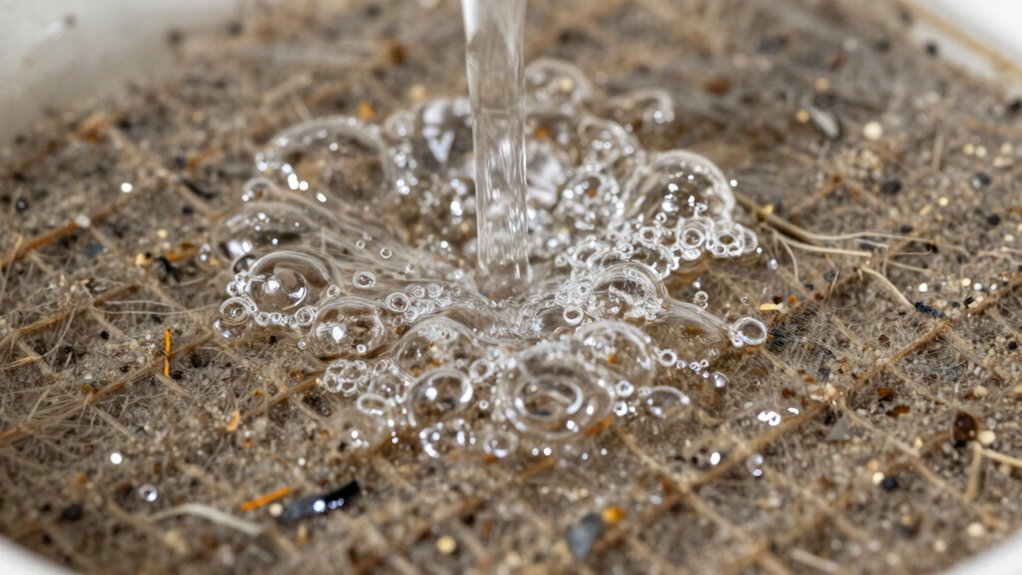
While UV water purifiers are excellent at neutralizing microorganisms, they do not remove sediments, metals, or chemicals from your water. These contaminants can carry industrial pollutants, biological threats, and other harmful substances that UV light alone can’t address. Imagine your water containing:
- Fine sediments that cloud clarity and clog filters
- Heavy metals like lead or arsenic that pose health risks
- Chemical residues from pesticides or industrial waste
These impurities can damage your plumbing, reduce water quality, or pose serious health hazards. UV purifiers treat only biological threats, leaving sediments, metals, and chemicals behind. To ensure safe, clean water, you’ll need pre-filtration or additional treatment methods to tackle these contaminants effectively. Effective water treatment methods are essential to address contaminants that UV purifiers cannot remove. Additionally, understanding the specific types of contaminants present in your water can help you choose the most appropriate filtration system. Considering water testing can provide valuable insights into your water’s composition and guide your filtration choices.
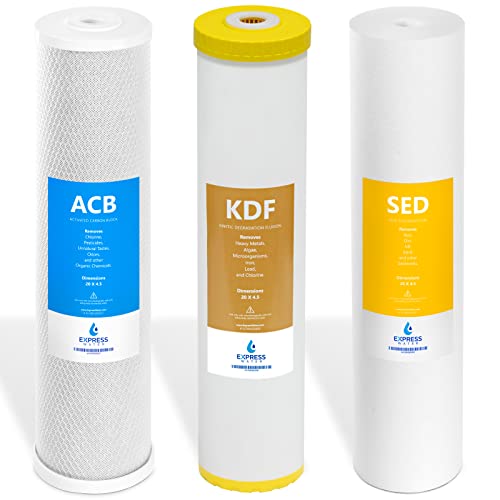
Express Water Whole House Heavy Metal Water Filter Set – 3 Stage Water Filtration Replacement Kit – Sediment, Carbon Block, KDF High Capacity Cartridge Filters – 5 Micron Water Filter 4.5” x 20” inch
Whole House Water Filter System: Reduce harmful impurities from your entire home’s water with Express Water’s 3 Stage…
As an affiliate, we earn on qualifying purchases.
As an affiliate, we earn on qualifying purchases.
How Sediments and Heavy Metals Can Damage Your UV Water Purifier

Sediments and heavy metals can considerably damage your UV water purifier by clogging its components and reducing effectiveness. Sediment buildup can block the quartz sleeve, decreasing UV light transmission, while heavy metals like iron and copper cause metal corrosion inside the unit. Over time, this corrosion weakens parts and leads to costly repairs. To better understand, see the table below:
| Contaminant | Damage Type | Prevention Tip |
|---|---|---|
| Sediments | Clogs, reduced flow | Pre-filter water |
| Heavy Metals | Metal corrosion | Use sediment and metal filters |
| Organic Debris | Buildup, clogging | Regular maintenance |
| Minerals | Scale formation | Water softening |
Proper pre-filtration helps prevent sediment buildup and metal corrosion, keeping your UV purifier running smoothly. Additionally, understanding water quality is essential for choosing the right filtration system to extend the lifespan of your purifier. Incorporating pre-filtration techniques can significantly reduce the risk of damage caused by sediments and heavy metals. Investing in advanced filtration technologies can further protect your device from various contaminants. Many Gold IRA providers recommend including sediment and metal removal steps in your water treatment routine to protect your investment in water purification systems.

weAQUA Heavy Duty Shower Filter Family 2 PACK – 99% Removal for Hard Water, Chlorine, Fluoride, Heavy Metals, Micro-life, Organics and More (Chrome)
2 PACK – Get more with this performance-driven double pack. Includes two high-quality shower water filters for extended…
As an affiliate, we earn on qualifying purchases.
As an affiliate, we earn on qualifying purchases.
Best Pre-Filters for UV Water Purifiers: Which Ones Work Best?
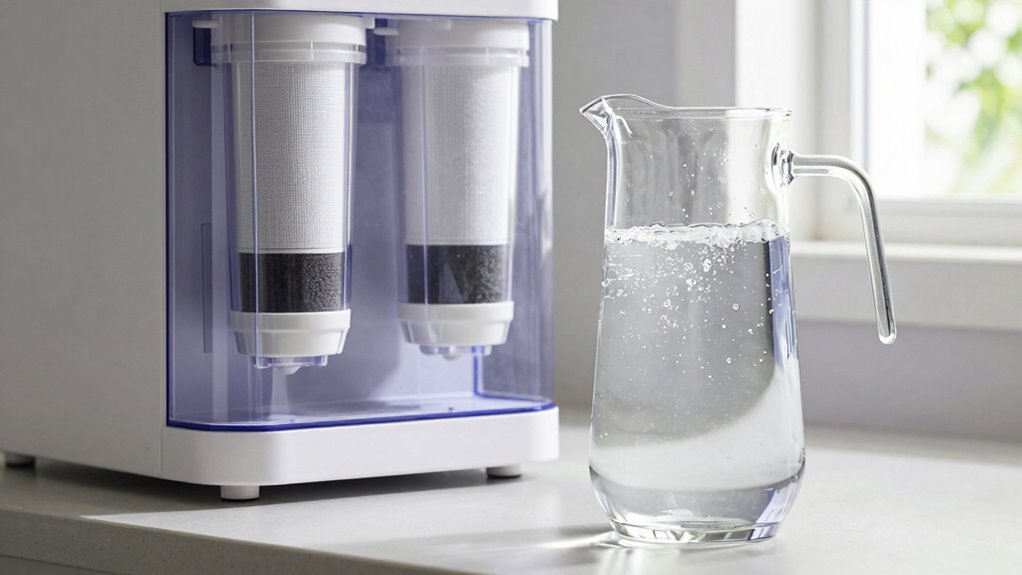
Choosing the right pre-filter is vital to protect your UV water purifier and guarantee clean, safe water. You should look for effective filtration materials that remove sediments and heavy metals and are compatible with your UV system. Let’s explore which pre-filters work best to keep your purifier functioning at its best. Incorporating humidity control basics can also help maintain optimal indoor air quality and prevent potential issues caused by excess moisture.
Effective Filtration Materials
Selecting the right pre-filter is essential to guarantee your UV water purifier works efficiently and lasts longer. Effective filtration materials remove debris, improve water clarity, and protect the UV system. Consider these options:
- Sediment filters trap dirt, sand, and rust, creating a crystal-clear flow.
- Activated charcoal absorbs chlorine, odors, and chemicals, enhancing taste and safety.
- Multi-stage filters combine sediment and charcoal, offering thorough protection.
Sediment filters are your first line of defense, preventing clogging and damage. Activated charcoal is excellent for chemical removal, ensuring your water is clean and fresh. Choosing the right combination depends on your water source, but investing in quality filtration materials guarantees ideal performance and prolongs your UV system’s lifespan. Incorporating filtration techniques can also help ensure optimal water quality, especially when combined with proper maintenance. Properly selected filter materials are vital for effective purification and system longevity. Additionally, incorporating filtration materials techniques into your recovery routine can help improve circulation and HRV, supporting overall water and physical health. Using high-quality filter media can further enhance the removal of contaminants and extend filter life.
Compatibility With UV Systems
The effectiveness of your UV water purifier depends heavily on using the right pre-filter that’s compatible with your system. UV system compatibility is essential because not all pre-filters integrate seamlessly with UV units. You need a pre-filter designed to handle the specific water conditions and flow rates of your UV system. Proper pre filter integration prevents particles and sediments from shadowing the UV light, guaranteeing maximum disinfection. Look for filters that are compatible with your purifier’s specifications, such as size, flow capacity, and filtration material. Using incompatible filters can reduce UV exposure, compromise water quality, and damage your system over time. Select pre-filters recommended by the manufacturer or consult a professional to ensure ideal UV system compatibility and effective water purification.
How to Install a Pre-Filter in Your Water System

Installing a pre-filter in your water system is a straightforward process that can substantially improve water quality and extend the life of your UV purifier. To start, locate your main water line and shut off the water supply. Next, follow these installation tips:
- Attach the pre-filter housing to the cold water line, ensuring a tight seal to prevent leaks.
- Connect the pre-filter cartridge, making sure it’s secured properly to avoid bypassing unfiltered water.
- Turn on the water supply and check for leaks, then flush the filter for a few minutes to clear out any debris.
- Be aware of ethical considerations related to water filtration choices, such as environmental impact and material safety, to make an informed decision.
Maintaining Your Pre-Filter and UV Purifier for Long-Term Safety
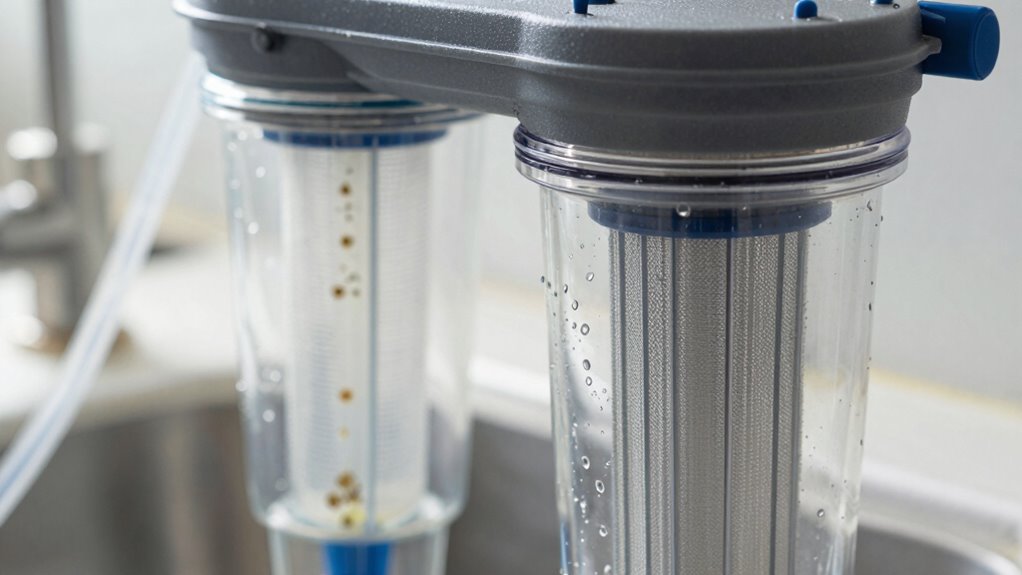
Regular maintenance of your pre-filter and UV purifier is essential to guarantee they function effectively and deliver safe, clean water over time. Proper upkeep extends filter longevity and ensures peak performance. To maintain your system, check and replace the pre-filter as recommended—usually every 6 to 12 months—depending on water quality. Keep the UV lamp clean and replace it annually to prevent bacteria buildup and maintain UV intensity. Follow maintenance tips like inspecting for leaks, cleaning connections, and monitoring flow rates. Regularly sanitizing your system also prevents microbial growth. Staying proactive with these steps guarantees your purifier operates at maximum efficiency, providing long-term safety and peace of mind. Incorporating air purifier maintenance practices can further enhance your system’s longevity. Additionally, understanding the limitations of UV water treatment helps set realistic expectations for what this method can achieve. Recognizing system lifespan and proper replacement schedules can prevent unexpected failures and ensure consistent water quality. Performing routine system inspections and keeping detailed maintenance records can help catch potential issues early. Consistent maintenance is the key to reliable water purification.
Frequently Asked Questions
Can UV Purifiers Remove Bacteria and Viruses Effectively?
UV purifiers are highly effective at bacteria removal and viruses, as their UV effectiveness destroys the DNA of microorganisms. You can rely on them for disinfecting your water, but remember they don’t remove sediments or chemicals. To guarantee complete safety, pre-filter your water to eliminate particles that can shield bacteria and viruses from UV light. This combo guarantees cleaner, safer water for your household.
What Are the Signs My UV Purifier Needs Maintenance?
Your UV purifier might be waving a red flag if water flow slows down, or if the water starts tasting or smelling off. Regularly check your maintenance checklist, especially the lamp’s condition and the filter lifespan. If the UV light flickers or dims, it’s time for a replacement. These signs indicate your device needs attention to keep it working efficiently and ensure your water remains safe and clean.
How Often Should I Replace My Pre-Filter?
You should replace your pre-filter every 6 to 12 months, depending on your water quality and usage. The pre-filter lifespan varies based on the sediment load, so check it regularly. Follow the replacement schedule recommended by your purifier’s manufacturer, and inspect the filter periodically. If you notice a decrease in water flow or increased sediment, it’s time for a replacement to keep your system working efficiently.
Do UV Purifiers Remove Chemical Contaminants?
UV purifiers don’t effectively remove chemical contaminants because chemical interference can block UV light, reducing its ability to disinfect. They mainly target microorganisms, breaking down biological contaminants. To guarantee chemical pollutants are removed, you should pre-filter your water with activated carbon or other chemical-specific filters. This approach helps eliminate chemicals before the UV treatment, ensuring safer, cleaner water and better overall purification.
Can UV Systems Treat Well Water With High Mineral Content?
Well water with high mineral content, including hardness and buildup, isn’t ideal for UV systems. You can’t rely solely on UV purification because mineral buildup can clog or reduce effectiveness. To treat such water, you need to pre-filter with a water softener or sediment filter to reduce hardness and mineral deposits. This pre-treatment guarantees your UV system works efficiently, delivering clean, clear water without mineral-related issues.
Conclusion
To keep your water pure and your purifier powerful, prioritize pre-filters that prevent particles, metals, and chemicals from compromising your system. Regularly replace and maintain your filters to prevent problems before they start. By blending proper pre-filtration with proactive upkeep, you’ll ensure safe, sparkling water every sip. Stay savvy, stay safe, and safeguard your system — your water’s health hinges on your helpful pre-filter habits.