
TL;DR

Get emergency and outdoor gear delivered free with Prime
- Fast, free delivery on millions of items
- Prime Video, Amazon Music and more included
- Member-only deals all year
This article explores core Amish farming methods, including draft horse systems and sustainable practices, offering preppers practical, resilient strategies for self-sufficient food production in grid-down scenarios.
Amish farming methods, which rely entirely on traditional, non-mechanized practices, demonstrate a resilient, self-sufficient approach to agriculture that does not depend on electricity, fuel, or supply chains. These methods are increasingly relevant for preppers seeking reliable food production systems in grid-down scenarios, as confirmed by experts and ongoing community practices.
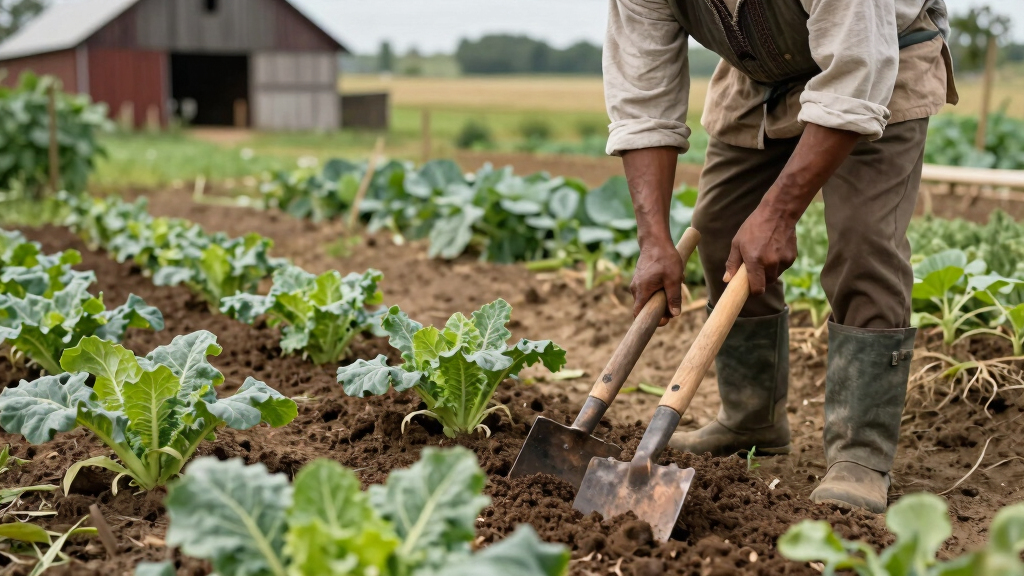
Amish farms operate without modern machinery, using draft animals such as horses and mules for plowing, planting, cultivating, and harvesting. They maintain soil health through crop rotation, cover cropping, and manure management, ensuring sustainable productivity. Their seed saving practices preserve local varieties adapted to their environment, reducing reliance on external seed supplies. Hand tools and simple mechanical equipment are repaired and passed down through generations, fostering resilience and independence.
Research from institutions like Penn State highlights that Amish farms produce comparable yields per acre to small tractor farms, with the key difference being their ability to function without fuel or electricity. Their community-based approach supports shared knowledge transfer, collective labor, and resource pooling, making their system robust against supply chain disruptions.
Why Amish Farming Methods Are Relevant for Preppers
Amish farming practices exemplify a resilient, self-sufficient model that preppers can adapt to maintain food security during disruptions to modern supply chains and energy sources. Their reliance on draft animals, manual tools, and sustainable soil management makes their system inherently resistant to fuel shortages, power outages, and supply chain failures, offering a practical blueprint for long-term independence.
As an affiliate, we earn on qualifying purchases.
Background on Amish Agricultural Resilience
The Amish have maintained traditional farming methods for over 300 years, developing systems that operate independently of modern technology. Their communities, primarily in Pennsylvania, Ohio, and Indiana, produce enough food to sustain large families and local markets without fossil fuels or industrial inputs. Recent discussions among preppers emphasize that these methods offer valuable lessons for building resilient, grid-independent food systems, especially in the face of potential societal disruptions.
“Draft animal systems can produce yields comparable to small tractor farms, with the added advantage of operating independently of fuel and electricity.”
— Penn State Small Farms Program
Unanswered Questions About Amish Farming Adoption
While Amish methods are proven within their communities, it remains unclear how easily these practices can be adopted by individual preppers outside Amish contexts, especially regarding training, land management, and community support. The economic feasibility of transitioning to draft animal systems for larger-scale operations also requires further analysis.
Next Steps for Preppers Interested in Amish Methods
Preppers should consider researching draft animal handling and sustainable soil practices, seek mentorship or training from experienced farmers, and experiment with small-scale implementations. Further studies and community exchanges could facilitate broader adoption of these resilient practices, enhancing preparedness for grid-down scenarios.
Key Questions
Can I start Amish farming practices on a small homestead?
Yes, beginning with draft animals, soil management, and seed saving can be adapted to small-scale farms, but training and community support are beneficial.
What animals are best for Amish-style farming?
Draft breeds like Belgian Draft horses, Percherons, Clydesdales, Haflingers, and hardy mules are commonly used for their strength and resilience.
Are Amish farming methods more productive than modern mechanized farms?
Not necessarily more productive in terms of yield per acre, but they are more resilient and sustainable in scenarios lacking fuel, electricity, or supply chains.
What are the main challenges in adopting Amish farming techniques?
Learning curve, acquiring appropriate draft animals, and developing community or mentorship support are key challenges for newcomers.
Source: Ask a Prepper
Halloween Picks
halloween
As an affiliate, we earn on qualifying purchases.