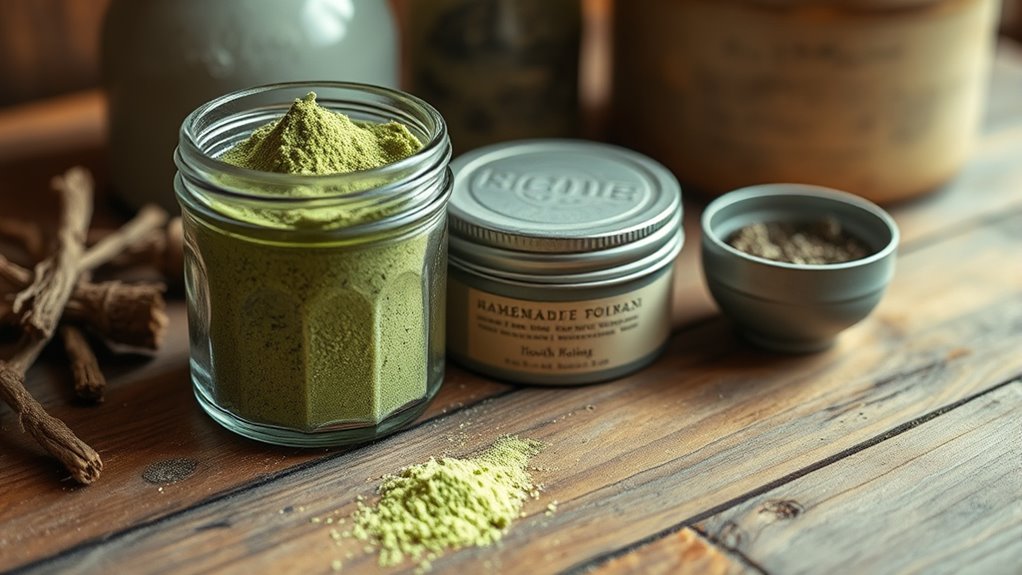

Creating your own hygiene products like toothpowder and deodorant allows you to control ingredients, avoiding harmful chemicals and preservatives. You can customize these solutions with natural ingredients like baking soda, xylitol, coconut oil, essential oils, and herbs for freshness and antibacterial benefits. These homemade options are effective, eco-friendly, and help you reduce plastic waste. If you want to explore simple recipes and tips to make your personal care routine safer and more sustainable, keep exploring.
Key Takeaways
- Homemade toothpowder and deodorant allow customization with natural ingredients, reducing exposure to chemicals and preservatives.
- DIY toothpowder typically combines baking soda, natural sweeteners, and optional whitening agents like activated charcoal.
- Natural deodorants use coconut oil, baking soda or arrowroot powder, and essential oils for antibacterial and moisture-absorbing properties.
- Creating personal care products at home promotes sustainability by minimizing plastic waste and chemical use.
- DIY hygiene solutions empower individuals to maintain health with simple, safe ingredients tailored to personal needs.

Have you ever wondered how you can maintain good hygiene without relying solely on store-bought products? Making your own hygiene essentials not only gives you control over the ingredients but also allows you to customize solutions to suit your preferences and needs. It’s surprisingly simple to create effective alternatives like toothpowder, deodorant, and other personal care items using natural ingredients commonly found at home or in local stores.
When it comes to oral hygiene, traditional toothpaste often contains artificial additives, preservatives, and foaming agents that might bother sensitive mouths. Instead, you can craft your own toothpowder by mixing baking soda with a small amount of xylitol or a natural sweetener for flavor, and adding a pinch of cinnamon or peppermint powder for freshness. You might also include activated charcoal for whitening, but use it sparingly to avoid overly abrasive effects. This mixture can be stored in a small jar and applied with a wet toothbrush. Not only does this reduce exposure to chemicals, but it also provides an effective cleaning action that neutralizes acids and eliminates bacteria. Regular use can help keep your teeth clean and breathe fresh without the need for commercial toothpaste.
Deodorant is another area where DIY solutions shine. Commercial deodorants often contain aluminum compounds and synthetic fragrances, which some prefer to avoid. A simple homemade deodorant involves combining coconut oil with baking soda or arrowroot powder, which absorbs moisture and neutralizes odor. You can add essential oils like tea tree, lavender, or eucalyptus for antibacterial properties and a pleasant scent. To use, scoop a small amount onto your fingers and apply it to your underarms. This natural alternative not only keeps you feeling fresh but also avoids harmful chemicals. Because coconut oil melts at body temperature, it helps the deodorant glide smoothly and provides some moisturizing benefits.
Beyond toothpowder and deodorant, you can explore other safe alternatives such as homemade facial cleansers, scrubs, and moisturizers. Using natural ingredients like honey, oatmeal, and aloe vera, you can create gentle, effective products tailored to your skin type. Making your own hygiene products encourages mindfulness about what goes on your body and often results in fewer irritations and allergies. Plus, it’s satisfying to know that you’re reducing plastic waste and chemical exposure by opting for DIY solutions. With a little experimentation and common ingredients, maintaining good hygiene becomes a simple, empowering process that aligns with a healthier, more sustainable lifestyle.
Frequently Asked Questions
Are DIY Hygiene Products as Effective as Commercial Ones?
DIY hygiene products can be effective if you choose the right ingredients and use them properly. While they might not always match the consistency or long-lasting effects of commercial products, many people find homemade options work well for their needs. You have the advantage of controlling ingredients, avoiding chemicals, and customizing formulas. Just be patient, experiment, and stay informed to guarantee your DIY products meet your hygiene standards.
How Long Do Homemade Hygiene Products Last?
You probably wonder how long your homemade hygiene magic lasts—well, it varies! Toothpowder stays fresh for about a month if kept airtight, while deodorant might last two to three months, depending on ingredients. If you’re feeling adventurous, keep an eye out for changes in smell or texture. Remember, DIY doesn’t mean forever—so check your creations regularly or risk turning into a science experiment!
Can Homemade Deodorant Cause Skin Irritation?
Yes, homemade deodorant can cause skin irritation, especially if you have sensitive skin or use ingredients like baking soda or essential oils that may be too harsh. To minimize irritation, test a small amount first and choose gentle ingredients. If you notice redness, itching, or burning, discontinue use and try milder alternatives or adjust the recipe. Always patch-test before applying extensively to avoid discomfort.
Are Natural Ingredients in DIY Hygiene Safe for All Skin Types?
Natural ingredients in DIY hygiene are like a gentle breeze—generally safe, but not for everyone. You might find that ingredients like baking soda or essential oils cause irritation if you have sensitive skin. It’s wise to patch-test new recipes first. If you experience redness or itching, discontinue use and consult a dermatologist. Always listen to your skin’s signals and adjust ingredients to suit your unique needs.
What Are the Environmental Benefits of DIY Hygiene Products?
By making your own hygiene products, you reduce plastic waste from packaging and avoid harmful chemicals that can pollute waterways. You also cut down on the carbon footprint associated with manufacturing and transportation of commercial products. Plus, using natural ingredients means fewer synthetic substances are released into the environment, helping to protect ecosystems. Overall, your DIY choices promote a more sustainable lifestyle and lessen environmental impact.
Conclusion
By making your own hygiene products, you’re taking control of your well-being, like a captain steering your ship through calm waters. With simple ingredients and a little effort, you can craft safe, effective alternatives that nurture your body and the planet. Embrace these DIY solutions as your secret arsenal for a healthier, more sustainable lifestyle. After all, your self-care routine should be as unique as you are—crafted with love, care, and a touch of ingenuity.