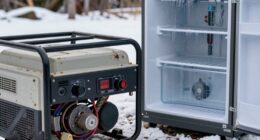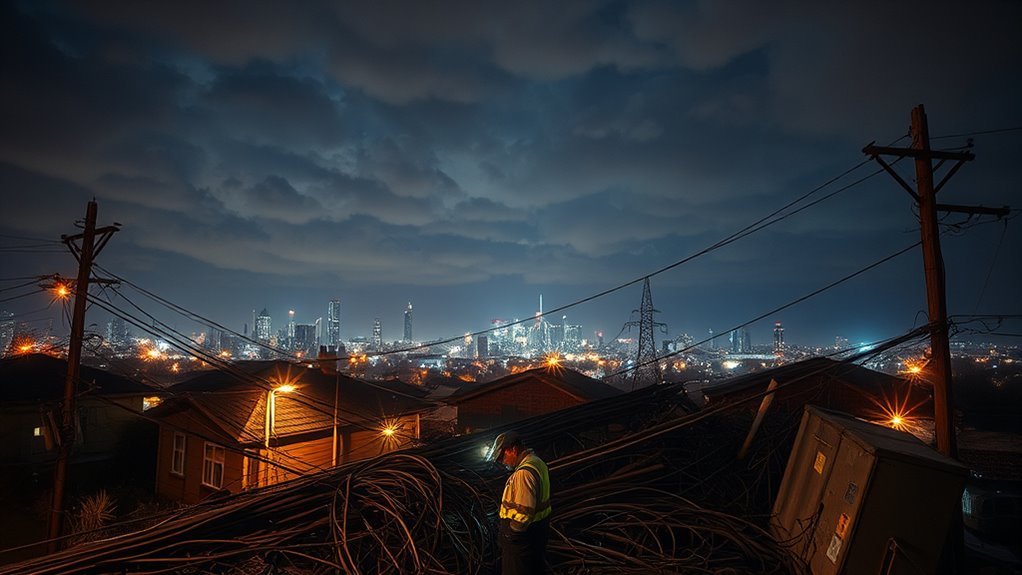

To deal with power grid failures, stay safe by turning off non-essential devices to prevent surges when power is restored. Keep emergency supplies like flashlights, batteries, and water handy. Sign up for alerts from your utility provider for updates and recovery times. Be patient as crews work to fix the problem. Understanding the causes and solutions can help you prepare better, so continue exploring ways to stay resilient during outages.
Key Takeaways
- Implement real-time monitoring and automated control systems to quickly detect and isolate issues.
- Invest in energy storage and smart grid technologies to manage supply fluctuations effectively.
- Develop and regularly update emergency response and recovery protocols for outages.
- Diversify energy sources, including renewable options, to enhance grid resilience and reduce failure risks.
- Strengthen infrastructure through modernization, maintenance, and cybersecurity measures to prevent technical faults.

Have you ever wondered what happens when the power grid fails? When the lights go out unexpectedly, it reveals just how dependent we are on a complex, interconnected system that keeps our homes, workplaces, and communities running. Power grid failures can stem from a variety of causes—severe weather, technical faults, cyberattacks, or aging infrastructure. Amid these challenges, one critical aspect often overlooked is how the integration of renewable energy sources impacts grid resilience. As more renewable energy, like wind and solar, joins the grid, it offers cleaner power but also presents new complexities. Balancing these variable resources requires a smarter, more adaptable grid that can handle fluctuations without risking widespread outages.
Renewable energy integration enhances grid complexity and resilience, demanding smarter systems to prevent outages and ensure reliable power.
Renewable integration is essential for a sustainable future, but it can make the grid more vulnerable if not managed properly. The intermittent nature of renewable sources means that electricity supply can suddenly drop or spike, especially during cloudy days or calm nights. To prevent these disruptions from escalating into full-blown failures, modern grids need to be more resilient. Resilience isn’t just about bouncing back after a failure; it’s about designing a system that can adapt in real-time, handle unexpected shocks, and maintain continuous service. This involves deploying advanced technologies like energy storage, smart grid controls, and real-time data analytics, which help balance supply and demand even when renewable inputs fluctuate.
You can think of grid resilience as your system’s immune response—its ability to detect, respond to, and recover from disturbances swiftly. When renewable energy is integrated thoughtfully, it enhances resilience by reducing reliance on fossil fuels and diversifying power sources. But without proper infrastructure, the variability of renewables can strain the system, leading to power surges or blackouts. That’s why strengthening grid resilience is vital. It means investing in grid modernization—adding sensors, automation, and flexible resources that can quickly respond to changes. It also involves creating protocols for rapid response and recovery, so outages are minimized and restored faster.
Being prepared for grid failures, especially in a landscape increasingly dominated by renewables, requires understanding these dynamics. Implementing measures to improve renewable integration and bolster grid resilience isn’t just an option; it’s a necessity. As you rely more on renewable energy, ensuring your local grid can handle its variability will protect your electricity supply during outages. By supporting policies and investments aimed at smarter, more resilient grids, you’re contributing to a future where power failures are less frequent and less disruptive. Ultimately, a resilient, renewable-friendly grid is the backbone of a sustainable, reliable energy system for everyone.
Frequently Asked Questions
How Can I Tell if My Home Is Affected by a Power Grid Failure?
You can tell if your home is affected by a power grid failure by checking for power outage indicators like flickering lights, dead outlets, or a complete loss of electricity. Household impact signs include appliances not working, no internet connection, and your alarm clock being dead. If these signs occur simultaneously, it’s likely a grid failure. Confirm by checking neighbors or utility updates to see if the issue is widespread.
Are There Government Programs to Assist During Widespread Outages?
Yes, government assistance programs can help during widespread outages. You should check with local or federal agencies for outage compensation options that might include financial aid or resources like emergency supplies. Some utility companies also partner with government programs to provide support. Stay informed by visiting official websites or signing up for alerts, so you can quickly access assistance and understand available options during large-scale power failures.
What Are the Most Common Causes of Power Grid Failures?
You should know that over 60% of power grid failures are caused by weather disruptions, highlighting how vulnerable our grid infrastructure is. Common causes include severe storms, hurricanes, and extreme temperatures that damage equipment or cause outages. Additionally, aging infrastructure and technical faults also contribute. These factors can lead to widespread blackouts, so understanding these causes helps you prepare for potential disruptions and supports efforts to strengthen power systems.
How Long Do Power Grid Failures Typically Last?
Power outage duration varies depending on the cause and severity of the failure. Typically, outage recovery times can range from a few minutes to several hours, with severe failures sometimes lasting days. You should prepare for unpredictable power outage durations, especially during extreme weather or large-scale issues. Staying informed through utility updates helps you understand expected outage recovery times and plan accordingly to minimize inconvenience during power grid failures.
Can Power Grid Failures Cause Damage to My Appliances?
Power grid failures can cause damage to your appliances, especially if sudden power surges occur when electricity is restored. Without surge protection, your devices are vulnerable to voltage spikes that can fry circuits or shorten their lifespan. To safeguard your appliances, use surge protectors and unplug sensitive electronics during outages. This proactive approach helps prevent appliance damage and guarantees your devices stay safe until power is fully restored.
Conclusion
Remember, a chain is only as strong as its weakest link. When power grid failures strike, your preparedness and quick thinking make all the difference. Stay informed, have backup plans, and keep safety in mind. By working together and staying vigilant, you can help minimize disruptions and keep things running smoothly. After all, a stitch in time saves nine—address issues early before they turn into bigger problems. Stay prepared and stay safe.