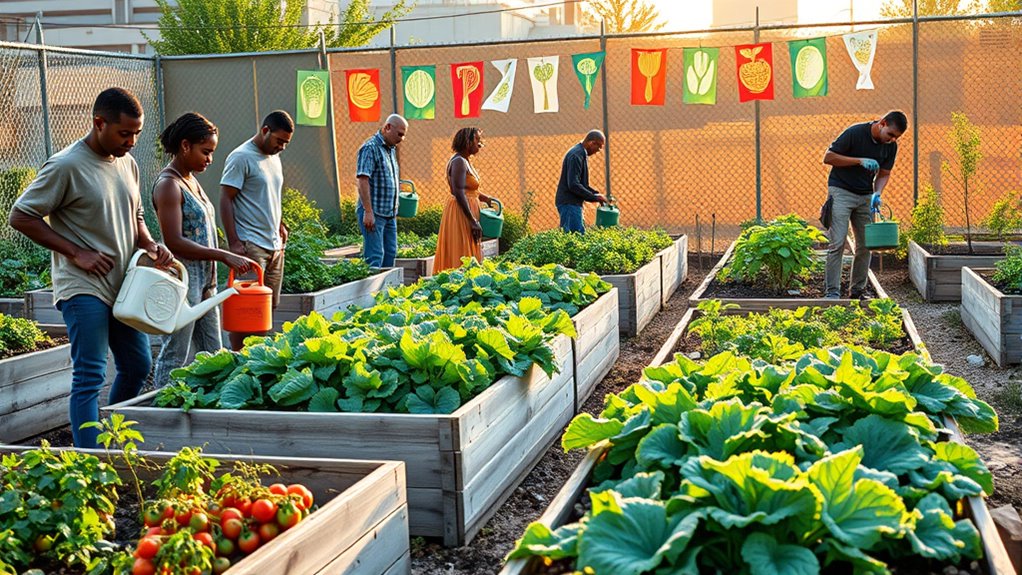
Community gardens play a vital role in survivalism by helping you grow food locally, which reduces dependence on outside sources. They give you hands-on skills in planting, pest management, and soil health, essential for self-sufficiency. Sharing seeds and resources builds strong support networks, boosting resilience. Plus, these gardens serve as practical training grounds for emergency preparedness. Keep exploring how these community efforts can strengthen your survival plan.
Key Takeaways
- Community gardens enable urban survivalists to grow fresh, local food, reducing reliance on external supply chains.
- They facilitate seed saving, ensuring crop resilience and long-term food security during disruptions.
- Gardens serve as practical training grounds for essential survival skills like soil management and pest control.
- They promote resource sharing and community support, enhancing collective resilience and knowledge exchange.
- Community gardens help develop self-sufficiency, empowering survivalists to sustain themselves in emergency situations.
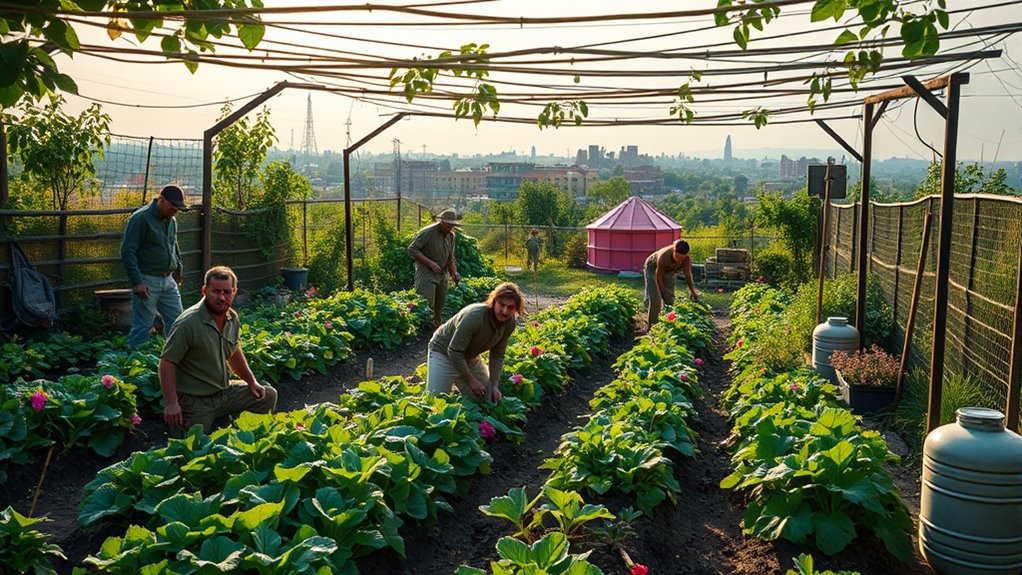
Community gardens have become a essential resource for survivalists seeking sustainable food sources and self-sufficiency. These shared spaces serve as key hubs where you can practice urban farming, transforming small plots of land into productive, food-growing areas. Urban farming in community gardens allows you to grow fresh vegetables, herbs, and fruits right in your neighborhood, reducing dependence on store-bought supplies and lowering your overall food costs. By participating in these gardens, you learn how to cultivate crops efficiently, even in limited space, which is fundamental for long-term survival planning.
One of the most valuable skills you can develop within a community garden is seed saving. Instead of continuously purchasing seeds, you learn to select the best plants for your environment and harvest their seeds for future planting. Seed saving gives you control over your food supply, making your garden more resilient to supply chain disruptions or economic downturns. When you save seeds from your healthiest plants, you ensure that your crops adapt better to local conditions, increasing your chances of a successful harvest year after year. This practice also fosters self-sufficiency, as you’re not reliant on external seed companies or suppliers.
Seed saving boosts self-sufficiency and resilience by controlling your food supply and adapting crops to local conditions.
Urban farming within community gardens encourages you to experiment with different planting techniques, crop rotations, and composting methods. As you grow your own food, you gain invaluable knowledge about plant care, pest management, and soil health. This hands-on experience boosts your confidence in managing a sustainable food system, which is critical during emergencies or shortages. Additionally, community gardens provide opportunities to exchange seeds, tips, and plants with fellow survivalists, creating a network of support and shared resources.
The social aspect of community gardens shouldn’t be overlooked either. By working alongside others who share your survivalist mindset, you build relationships based on mutual knowledge and resource sharing. These connections can be instrumental when scaling your food production or seeking advice on seed varieties best suited for your environment. Ultimately, community gardens serve as practical training grounds where you can hone your urban farming skills and master seed saving techniques—both of which are fundamental for achieving long-term self-reliance. Additionally, understanding how to shift gears smoothly on your bike can improve your mobility during emergencies, allowing quick access to resources or escape routes.
Frequently Asked Questions
How Do Community Gardens Improve Long-Term Food Security?
Community gardens boost your long-term food security by promoting urban agriculture, allowing you to grow fresh, nutritious produce close to home. You can save seeds from your harvest, ensuring a sustainable supply of plants for future seasons. This practice reduces reliance on store-bought food, increases resilience during disruptions, and helps you develop self-sufficiency. Ultimately, community gardens empower you to take control of your food sources and build a more secure, sustainable future.
What Skills Are Needed to Start a Community Garden?
You might think starting a community garden just means planting seeds, but it’s more about skillful garden planning and seed saving. You’ll need to understand soil preparation, crop rotation, and pest management. Communication and organization skills help coordinate with neighbors. Ironically, the most overlooked skills are patience and adaptability, ensuring your garden thrives despite unpredictable weather and pests, turning your small effort into a sustainable food source.
Can Community Gardens Help in Urban Survival Scenarios?
Yes, community gardens boost urban resilience during survival scenarios. They provide a reliable food source, helping you stay nourished when supply chains break down. By engaging in seed sharing, you can diversify crops and guarantee sustainability. These gardens foster cooperation, build local networks, and increase your self-sufficiency, making them crucial for urban survival. You’ll develop skills, share resources, and strengthen community bonds, all essential during challenging times.
How Do Community Gardens Support Mental Health During Crises?
Community gardens support your mental health during crises by providing mental health benefits like reducing stress and anxiety. When you participate, you foster social connection with others, which combats feelings of isolation. Tending plants and sharing this space gives you a sense of purpose and normalcy. These activities boost your mood, help you stay resilient, and remind you that you’re not alone, even in tough times.
What Legal Considerations Exist for Community Garden Initiatives?
Your community garden faces big legal hurdles—think of zoning regulations as the gatekeepers you must navigate carefully. You need to guarantee proper permits and adherence to local laws to avoid fines or shutdowns. Liability concerns also loom large; protecting yourself with insurance and clear rules for participants is essential. Ignoring these legal aspects could turn your garden dream into a legal nightmare, so stay informed and proactive.
Conclusion
So, next time society crumbles and grocery stores are just distant memories, you can thank community gardens for your survival skills. Who knew that digging in the dirt could turn you into a pioneer, right? As it turns out, cultivating carrots might just be the ultimate act of rebellion against chaos. So go ahead, embrace your inner survivalist—after all, nothing says “prepared” like a well-tended tomato patch.