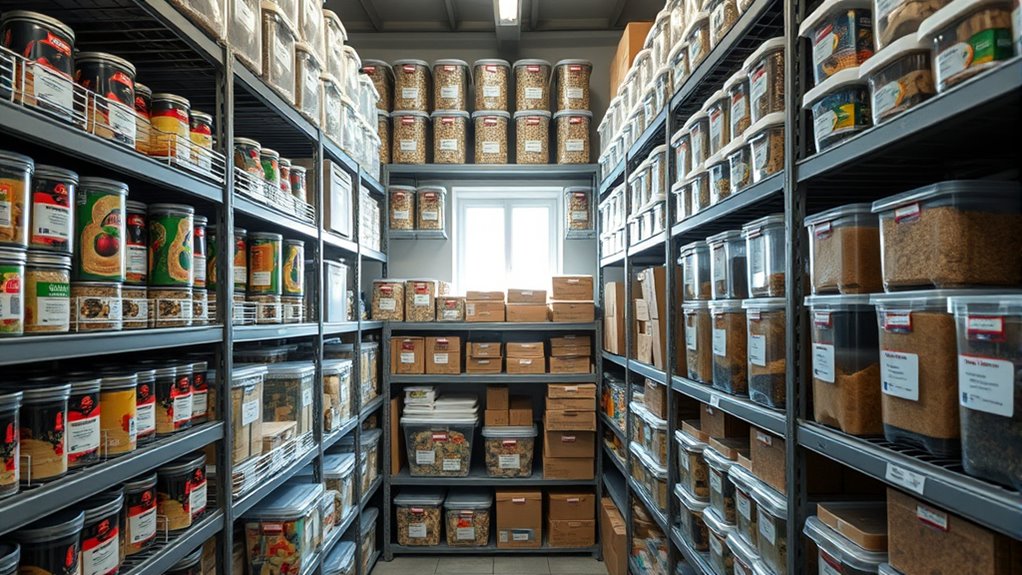
To guarantee your supplies stay fresh and safe for long-term use, organize and store them in a cool, dry, dark space. Regularly check expiration dates, label items with purchase and expiration info, and use the FIFO method to rotate older items first. Proper packaging, like airtight containers, helps preserve quality. Staying on top of inventory and replacing expired items keeps your stock reliable. Keep exploring for more tips to master storage and rotation effectively.
Key Takeaways
- Store supplies in a cool, dry, dark environment to extend shelf life and prevent spoilage.
- Regularly check expiration dates and organize items to facilitate first-in, first-out (FIFO) rotation.
- Use airtight containers, vacuum-sealing, or oxygen absorbers to preserve food quality over time.
- Incorporate older items into meals promptly to prevent waste and ensure freshness.
- Maintain a varied stockpile to meet nutritional needs and replace supplies as they expire.

Proper long-term storage and rotation of supplies are essential to guarantee you always have fresh, usable resources when you need them. When you’re building a stockpile, understanding the shelf life of various items and implementing effective stockpiling strategies will ensure your supplies remain reliable over time. Many food and emergency supplies have a limited shelf life, meaning they can degrade, lose nutritional value, or become unsafe to consume if not rotated regularly. Knowing the expiration dates on your stored items helps you plan when to use or replace them, preventing waste and ensuring you always have access to dependable resources.
Regularly rotating and monitoring supplies ensures freshness and safety over time.
Effective stockpiling strategies involve more than just accumulating supplies. You should organize your storage space to easily identify which items need to be used first. Use clear labels with purchase and expiration dates, and arrange items so the oldest stock is at the front for quick rotation. This simple system minimizes the risk of forgetting about expired products and keeps your supply chain fresh and functional. Regularly reviewing your inventory allows you to stay aware of what’s approaching its shelf life and plan accordingly, whether that means incorporating these items into your meals or replacing them with new stock.
To maximize shelf life and reduce waste, consider the storage conditions of your supplies. Most non-perishable foods and emergency supplies should be kept in a cool, dry, dark environment. Fluctuations in temperature, humidity, and exposure to sunlight can accelerate deterioration. Investing in airtight containers, vacuum-sealing, or oxygen absorbers can extend the usability of your items, especially for grains, dried fruits, and powders. Proper storage techniques also protect against pests and contamination, which can compromise the safety and longevity of your supplies. Additionally, understanding how storage conditions impact shelf life helps you optimize your storage environment for maximum longevity.
When implementing your stockpiling strategies, focus on variety and balance. Don’t stockpile only one type of food or supply. Instead, include a range of items that meet your nutritional needs and preferences. Rotate your stock regularly, incorporating older items into your daily meals and replacing them with newer stock. This not only keeps your supplies fresh but also helps you become familiar with your inventory, reducing the chance of overlooking expired items during emergencies.
Frequently Asked Questions
What Are the Best Temperature Conditions for Storing Supplies Long-Term?
You should store supplies at a temperature between 50°F and 70°F to guarantee longevity. Proper temperature control prevents spoilage and extends shelf life. Additionally, humidity regulation is vital; keep humidity levels around 50% to prevent mold and moisture damage. Consistently monitoring these conditions helps maintain your supplies’ quality over time, reducing waste and ensuring readiness when you need them most.
How Often Should Supplies Be Inspected for Safety and Usability?
You should inspect your supplies at least every six months to guarantee safety and usability. Skipping supply rotation and safety inspections can lead to unnoticed deterioration or contamination. Regular checks help identify expired items or compromised packaging, preventing potential hazards. Stay vigilant, and don’t wait for visible problems—routine safety inspections are your best defense against unseen risks, ensuring your supplies remain reliable when you need them most.
Are There Specific Packaging Materials Recommended for Long-Term Storage?
You should use vacuum sealed packaging for long-term storage, as it removes air and prevents spoilage. Incorporate oxygen absorbers inside the packaging to further protect your supplies from moisture and oxidation. These materials help extend shelf life and preserve quality. Make certain your packaging is durable, airtight, and made of food-grade materials to maintain safety and usability over time. Regularly check seals and replace oxygen absorbers as needed for ideal storage.
How Can I Prevent Pest Infestation in Stored Supplies?
Did you know pests can invade stored supplies in just days? To prevent pest infestations, use rodent-proof containers that seal tightly and keep pests out. Incorporate natural repellents like peppermint oil or cloves around storage areas to deter rodents and insects. Regularly inspect your supplies, maintain cleanliness, and remove any food debris. These steps help guarantee your supplies stay pest-free, saving you time and resources in the long run.
What Are Signs That Stored Supplies Have Expired or Degraded?
You can tell your supplies have expired or degraded by checking their shelf life and performing a visual inspection. Look for signs like discoloration, mold, or a foul odor, which indicate spoilage. If packaging is damaged or bulging, discard those items immediately. Regularly inspecting your supplies helps guarantee they remain safe and effective, preventing the use of compromised items during emergencies. Always adhere to expiration dates for maximum safety.
Conclusion
By regularly rotating your supplies, you keep your stockpile fresh and ready, like a well-tended garden. This way, you prevent waste and make certain you’re always prepared for whatever comes your way. Think of your supplies as a steady drumbeat—consistent care keeps everything in sync. With a little effort now, you’ll build a resilient safety net that supports you through any storm, turning chaos into calm and uncertainty into confidence.