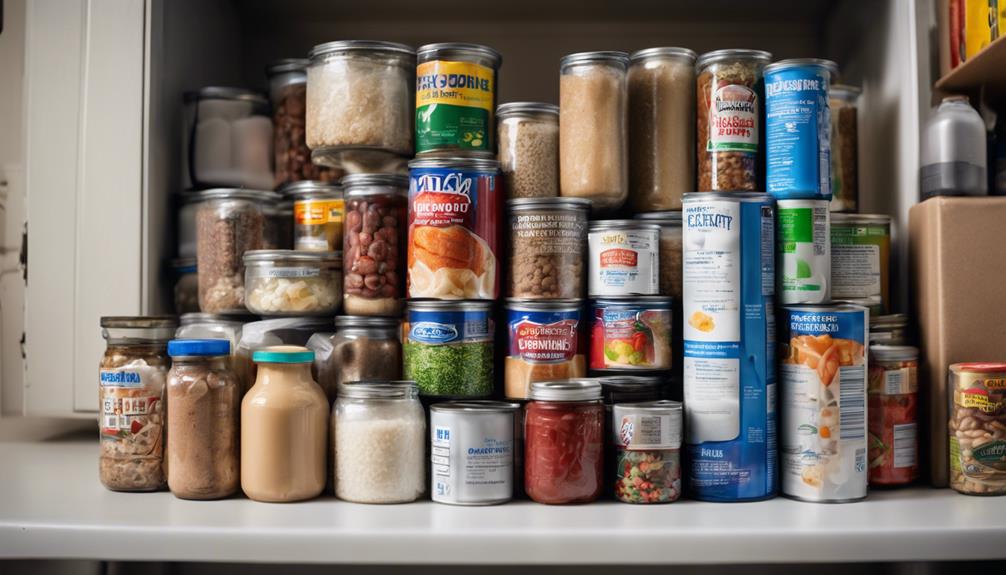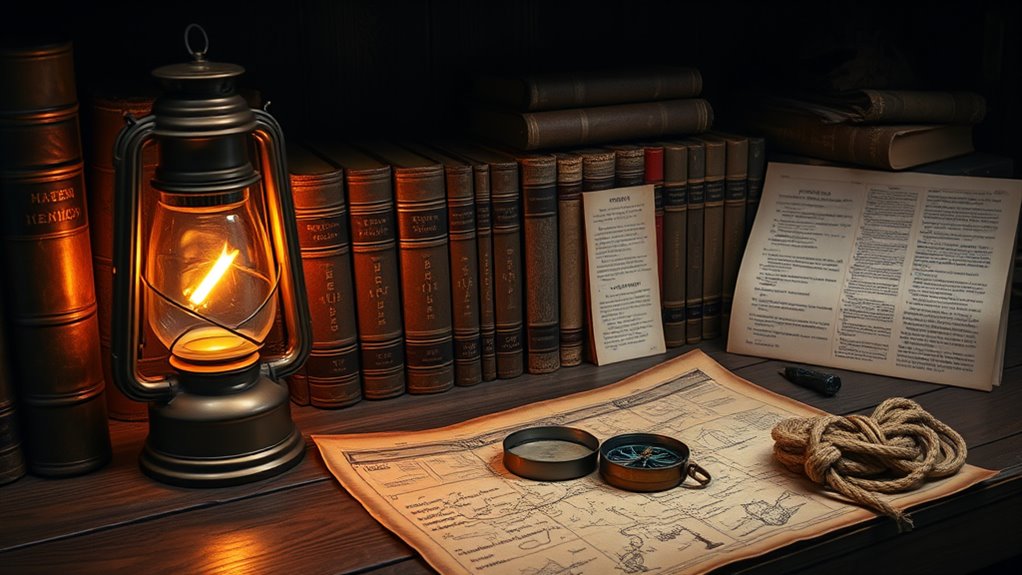
Building a library of survival knowledge is crucial for confidently handling emergencies. Start by gathering indispensable topics like shelter building, water purification, fire starting, and basic first aid. Use books, videos, podcasts, and online resources to expand your understanding continually. Focus on practical skills and environmental awareness, including local flora and fauna. As you grow your knowledge base, you’ll become more prepared. Keep exploring these areas further to enhance your readiness even more.
Key Takeaways
- Collect reliable resources such as books, manuals, videos, and podcasts focused on survival skills and scenarios.
- Organize your materials by categories like shelter, water, fire, navigation, and first aid for easy access.
- Regularly update and expand your library with new information, techniques, and current best practices.
- Practice applying knowledge through hands-on exercises and practical scenarios to reinforce learning.
- Join survival communities or forums to share resources, gain insights, and stay informed about latest developments.

Creating a thorough library of survival knowledge is essential for anyone wanting to be prepared for emergencies. When you build this knowledge base, you’re equipping yourself with the tools needed to handle unpredictable situations confidently. One of the first steps is understanding the importance of emergency gear. Your survival kit isn’t just about throwing together a few items; it’s about selecting the right gear that suits various scenarios. Think about sturdy water bottles, a reliable flashlight, a multi-tool, first aid supplies, and durable clothing. These items can make all the difference when you’re stranded or facing a crisis. Knowing how to use each piece of emergency gear effectively is just as crucial as having it on hand. For example, understanding how to operate a compass or purify water can be lifesaving skills that turn basic gear into powerful tools for survival.
Building your survival skills is equally vital. This means more than just knowing what to do—it’s about practicing those skills regularly so they become second nature. Skills like building a shelter, starting a fire without matches, finding and purifying water, and signaling for help are foundational. The more you practice, the more natural these actions will feel when you’re in a stressful situation. Consider taking courses or workshops that teach wilderness survival techniques, as hands-on experience often surpasses book knowledge. As you study, keep notes or create checklists to reinforce your understanding. This way, your knowledge isn’t just theoretical but ready to be applied in real-life circumstances. Additionally, investing in portable and efficient survival gear can significantly enhance your preparedness and response capabilities.
Additionally, your library of survival knowledge should include learning about local environments. Knowing the flora and fauna of your area helps you identify safe plants for foraging and potential hazards. Coupled with your understanding of survival skills, this environmental awareness can greatly enhance your chances of overcoming challenges. Expand your library by reading books, watching instructional videos, or listening to survival podcasts. Each resource adds a new perspective or technique that you might not have considered. The goal is to develop a well-rounded understanding of both the gear you need and the skills you must acquire, ensuring that you’re prepared for a broad range of emergencies.
Frequently Asked Questions
How Do I Prioritize Which Survival Topics to Include?
You should prioritize survival topics based on risk assessment and skill development. Identify the most likely emergencies you might face and focus on mastering essential skills like first aid, fire-starting, and shelter-building. Consider your environment and personal strengths to determine which topics will be most useful. By addressing high-risk scenarios first and continuously developing your skills, you’ll build a practical, effective survival library tailored to your needs.
What Sources Are Most Reliable for Survival Information?
Like seeking a lighthouse in a storm, you should rely on expert opinions and peer reviews for survival info. Trusted sources include government agencies, established survival experts, and verified publications. Avoid unverified online claims, as they can mislead you. Cross-reference multiple reputable sources, and stay updated with recent research. This approach helps guarantee you get accurate, reliable advice, so you’re better prepared when it counts most.
How Often Should I Update My Survival Library?
You should update your survival library at least once a year. Follow a maintenance schedule that includes a content review to guarantee all information remains accurate and relevant. Regular updates help you stay prepared with the latest techniques, best practices, and new resources. Set reminders to review and refresh your materials periodically, especially after any significant changes in technology or survival strategies, so your library stays reliable and all-inclusive.
Can Digital Resources Replace Physical Books in Survival Prep?
Digital resources can replace physical books in survival prep, but only if you consider accessibility concerns, durability, and reliability. Digital offers instant updates and portability, yet print provides a tangible backup during power outages or device failures. You need both for an extensive library—digital for quick access and updates, print for durability and offline use. Balancing these options ensures you’re prepared, regardless of circumstances.
How Do I Organize a Portable Survival Knowledge Kit?
To organize a portable survival knowledge kit, start with inventory management by listing essential topics like shelter, water, and navigation. Use compact storage solutions such as waterproof cases or zipper pouches to keep your materials protected and accessible. Prioritize durability and easy access, and consider dividing content into categories for quick reference. Regularly review and update your kit to make certain all information stays current and relevant for any emergency.
Conclusion
Now, imagine your mind as a sturdy shelter, each piece of survival knowledge like a essential brick, ready to withstand any storm. With your library of skills, you become a lighthouse guiding you through darkness and doubt. Keep adding to your collection, and watch your confidence grow strong as roots deep in the earth. This library isn’t just a collection—it’s your fortress, your map, and your refuge when the wilderness tests you.