Understanding the difference between series and parallel wiring helps you build safer, more efficient battery systems. Series wiring increases voltage, making it ideal for high-voltage needs, while parallel wiring boosts capacity, providing longer runtime and redundancy. Your choice depends on what your application requires—higher voltage or longer use. To make sure you’re on the right track, explore further; you’ll discover how to wire batteries correctly and safely.
Key Takeaways
- Series wiring increases voltage while keeping capacity constant; parallel wiring increases capacity while maintaining voltage.
- Proper wiring diagrams ensure safe connections and prevent hazards like short circuits or sparks.
- Choose series for high-voltage applications; choose parallel for longer runtime and system redundancy.
- Matching battery capacity, chemistry, and age is crucial to avoid uneven charging and system failures.
- Regular inspection and following safety standards extend battery lifespan and ensure reliable system performance.
What’s the Difference Between Series and Parallel Battery Wiring?
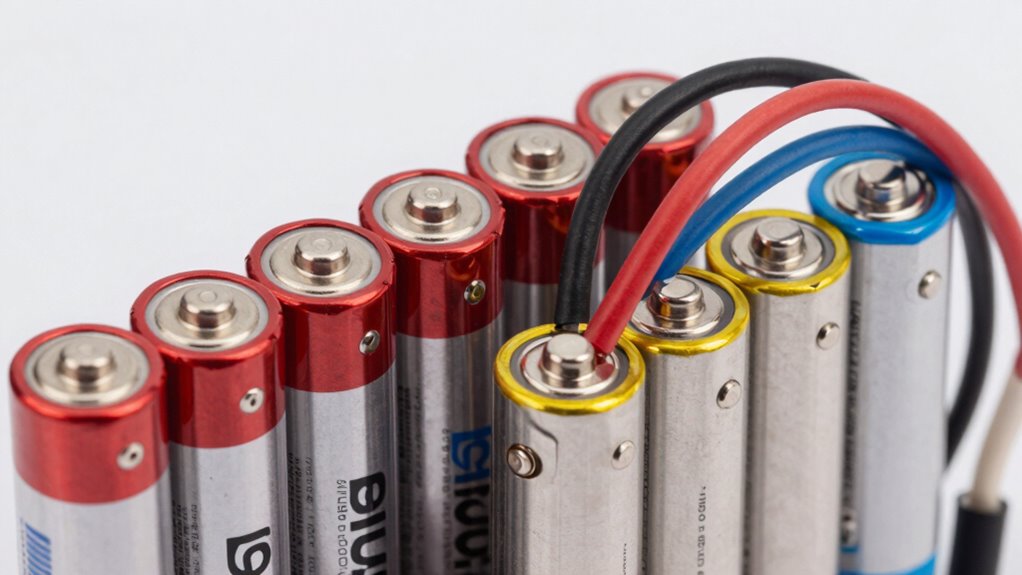
Understanding the difference between series and parallel battery wiring is essential for setting up your power system correctly. Your choice depends on how you want to manipulate voltage, capacity, and overall system size. In series wiring, you connect the positive terminal of one battery to the negative of the next, which increases voltage while keeping capacity the same. Parallel wiring, on the other hand, connects all positive terminals together and all negatives together, boosting capacity without changing voltage. Your wiring diagrams will show these configurations clearly. Additionally, battery chemistry influences how you wire your batteries—some chemistries handle series or parallel arrangements better. Knowing these differences helps you design a safe, efficient setup suited to your specific power needs. Proper understanding of battery configurations ensures your system functions optimally and safely. Considering voltage and capacity requirements is crucial when choosing the appropriate wiring method. Being aware of battery chemistry compatibility can prevent potential issues and optimize performance. Moreover, understanding system safety considerations is vital to prevent hazards during installation and operation.
How Does Series Wiring Change Voltage, Capacity, and Size?
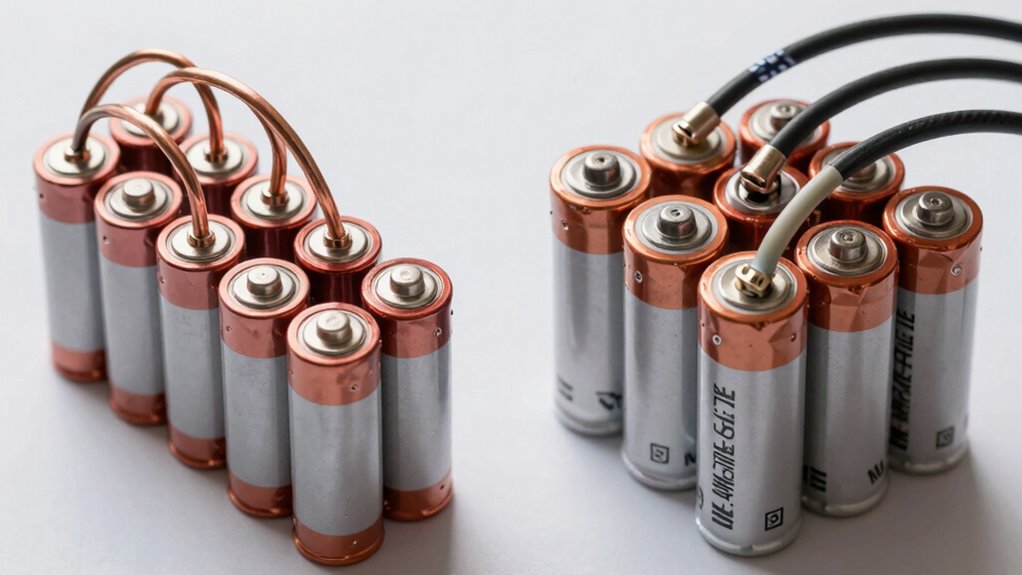
When you connect batteries in series, the total voltage increases while the capacity remains the same. This means your system delivers higher voltage without affecting how much energy it can store. The size of the battery pack also grows in length because you’re adding batteries end-to-end. The capacity impact stays constant, so the overall capacity matches that of a single battery. Here’s a quick overview:
| Configuration | Voltage | Capacity | Size (Length) |
|---|---|---|---|
| Single Battery | 12V | 100Ah | 5 inches |
| Two in Series | 24V | 100Ah | 10 inches |
| Three in Series | 36V | 100Ah | 15 inches |
| Four in Series | 48V | 100Ah | 20 inches |
This setup boosts voltage but keeps capacity steady, impacting overall size. Additionally, understanding series wiring principles helps optimize your system for specific voltage and capacity needs. Proper series connection techniques are essential to ensure safety and efficiency in your battery system. Mastering these concepts can prevent common wiring mistakes and prolong your battery lifespan. Moreover, adhering to extension cord standards and weatherproofing your tools can further enhance safety and reliability in your power setups. Correct battery configuration is crucial for tailored energy solutions and system performance.
How Does Parallel Wiring Affect Current, Capacity, and Redundancy?

When you connect batteries in parallel, the current can flow more freely, supplying more power to your system. This setup also increases the overall capacity, allowing your batteries to last longer between charges. Plus, parallel wiring offers redundancy, so if one battery fails, the others can keep the system running smoothly. Additionally, understanding nutritional information about your components can help optimize their performance and longevity. Recognizing the comedogenic ratings of materials used in your system can also prevent potential issues over time. Consulting specification verification guidelines can ensure that your battery setup adheres to safety and performance standards. Being aware of leadership principles can also help you make better decisions in designing your system, ensuring reliability and efficiency. Furthermore, considering microplastics in dust can be important for maintaining system cleanliness and preventing contamination.
Current Flow Dynamics
Ever wondered how wiring batteries in parallel changes the way current flows? When you connect batteries this way, current can flow more freely, impacting voltage stability and current regulation. Here’s what happens:
- Current from multiple batteries combines, increasing total available current.
- Voltage remains stable across all batteries, helping maintain consistent power.
- The system can supply higher current without overloading individual batteries.
- Redundancy improves because if one battery fails, others can still supply current, ensuring reliable operation.
- Proper parallel wiring also requires attention to battery safety to prevent issues like short circuits or uneven charging. Understanding affiliate disclosure can also help you make informed decisions about components and safety measures.
This setup enhances capacity and current flow, making your power system more resilient. Proper parallel wiring guarantees steady voltage, efficient current regulation, and better overall performance. Just remember, correct wiring is key to avoiding issues and maximizing these benefits.
Enhanced System Redundancy
Connecting batteries in parallel considerably enhances system redundancy because it allows multiple power sources to share the load. If one battery fails, others can continue supplying power, reducing system downtime. This setup increases overall capacity without changing the voltage, making it ideal for larger applications. The choice of battery chemistry plays a role here; some chemistries, like lithium-ion, offer higher cycle life and efficiency, boosting reliability. Parallel wiring also impacts environmental impact by enabling the use of batteries with longer lifespans, reducing frequent replacements and waste. It’s essential to contemplate how different chemistries respond under load to optimize redundancy. Additionally, understanding water-cooled systems can help in managing battery temperature and extending lifespan. Proper temperature management is crucial for maintaining battery performance and safety. Overall, parallel wiring creates a more resilient system, minimizing the risk of total power loss while supporting sustainable practices through longer-lasting, environmentally friendly batteries.
Which Wiring Method Is Better for My Battery System?
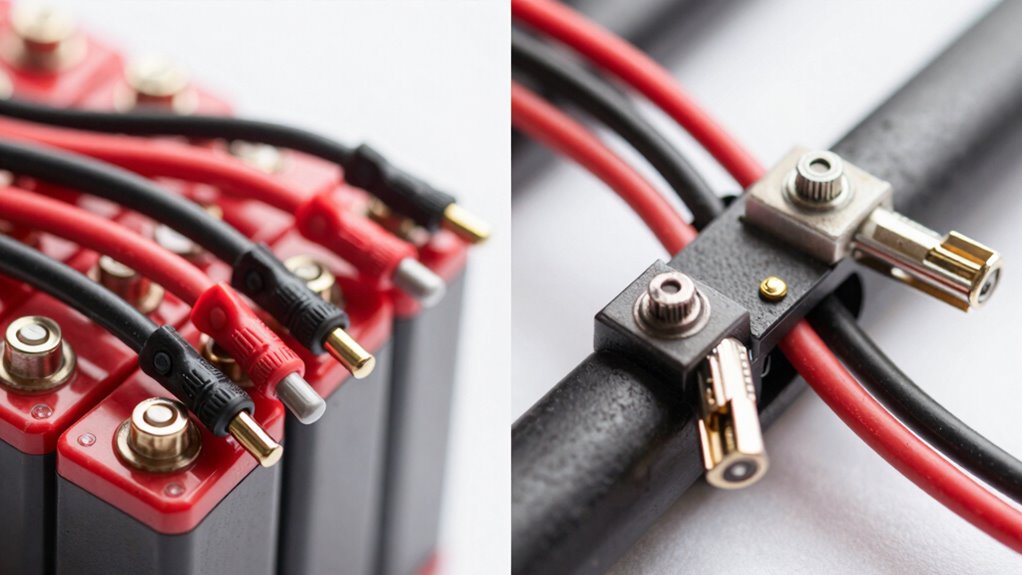
Choosing the right wiring method depends on your power needs, safety concerns, and future plans. You’ll want to contemplate how each approach affects power output, the risks involved, and whether you can easily expand your system later. Let’s compare these factors to find the best fit for your battery setup.
Power Output Differences
Have you ever wondered which wiring method delivers more power—series or parallel? The answer depends on your goals and battery chemistry. In a series setup, you increase voltage while keeping capacity constant, which boosts overall power output for high-voltage needs. In parallel, you increase capacity while maintaining voltage, enabling longer run times. Understanding battery chemistry is crucial because it influences how batteries respond to different wiring configurations and their overall performance. Additionally, safety considerations are vital when configuring batteries to prevent hazards. Here’s what to contemplate:
- Series wiring doubles voltage but keeps capacity the same, ideal for high-voltage applications.
- Parallel wiring doubles capacity but keeps voltage constant, perfect for longer usage.
- Wiring diagrams show clear differences in how batteries connect, affecting power output.
- Your choice depends on whether you need more voltage or more runtime, influencing your system’s overall power performance. Properly assessing battery capacity helps ensure your system operates safely and efficiently.
Safety Considerations
While both series and parallel wiring have their advantages, safety considerations often influence which method is better for your battery system. Series wiring can increase voltage, but if one cell fails or is damaged, it may lead to battery fire hazards or electrical shock risks. Parallel wiring maintains a consistent voltage but can pose risks if connections aren’t secure, increasing the chance of short circuits or sparks. Proper insulation, correct fuse placement, and regular maintenance are essential regardless of your choice. Avoid shortcuts, and always follow manufacturer guidelines to minimize safety hazards. Your goal is to prevent electrical shocks and fire risks while ensuring safe operation. Carefully evaluate your system’s design and safety features to choose the wiring method that offers the safest environment for your batteries.
System Expansion Flexibility
When planning to expand your battery system, the wiring method you select plays a key role in how easily you can add more cells or modules later on. With a parallel setup, expansion is straightforward:
- You simply connect new batteries alongside existing ones, maintaining voltage.
- This preserves compatibility with your current charging methods.
- It allows you to increase capacity without affecting system voltage.
- However, adding batteries in series can complicate expansion, as voltage increases require compatible chargers and may impact battery lifespan.
Choosing parallel wiring offers greater flexibility, making future upgrades simpler and preserving battery health. It ensures consistent charging and reduces the risk of mismatched cells, extending overall battery lifespan. Ultimately, parallel wiring supports scalable growth and easier system management.
What Factors Should I Consider When Choosing Series or Parallel Wiring?

Choosing between series and parallel wiring depends on several important factors that directly impact your battery system’s performance and safety. First, consider voltage scaling: series wiring increases voltage, which is ideal if your application needs higher voltage output. Parallel wiring, on the other hand, maintains voltage but increases capacity, extending runtime. Capacity matching is also crucial; ensure batteries are of similar age, capacity, and type to prevent uneven charging or discharging. Safety is another key factor—incorrect wiring can lead to short circuits or damage. Think about your system’s power requirements and future expansion plans. By understanding these factors, you can select the wiring method that best suits your needs, ensuring optimal performance, longevity, and safety for your battery setup.
What Common Mistakes Should I Avoid When Wiring Batteries?

One of the most common mistakes when wiring batteries is mixing different types, ages, or capacities of batteries in the same bank. This can lead to uneven charging, reduced lifespan, and potential safety hazards. To avoid this, keep these points in mind:
Mixing different battery types, ages, or capacities can cause safety hazards and reduce lifespan.
- Use batteries with the same battery chemistry (e.g., AGM, lithium-ion) to ensure consistent performance.
- Match capacities to prevent overloading weaker batteries.
- Choose appropriate connector types that fit securely and are rated for your current load.
- Avoid mixing old and new batteries, as the older ones can drag down the entire bank.
Sticking to uniform batteries and proper connectors helps maintain balance, safety, and efficiency in your wiring setup.
How Can I Safely Wire Batteries in Series or Parallel?

Wiring batteries in series or parallel can be safe and effective if you follow proper procedures. First, understand your battery chemistry, as different types (like lithium-ion or lead-acid) have unique requirements. Use detailed wiring diagrams to plan your setup, guaranteeing correct connections and polarity. Always connect batteries of the same voltage, capacity, and chemistry to prevent imbalances. Before wiring, disconnect all batteries from power sources and wear appropriate safety gear. Double-check all connections against your wiring diagram, and avoid mixing different battery types or ages. Use proper gauge wiring and secure terminals tightly. Regularly inspect your setup for loose connections or corrosion. Following these steps helps ensure safety and longevity for your battery bank.
Troubleshooting Tips for Wiring Batteries Correctly and Safely
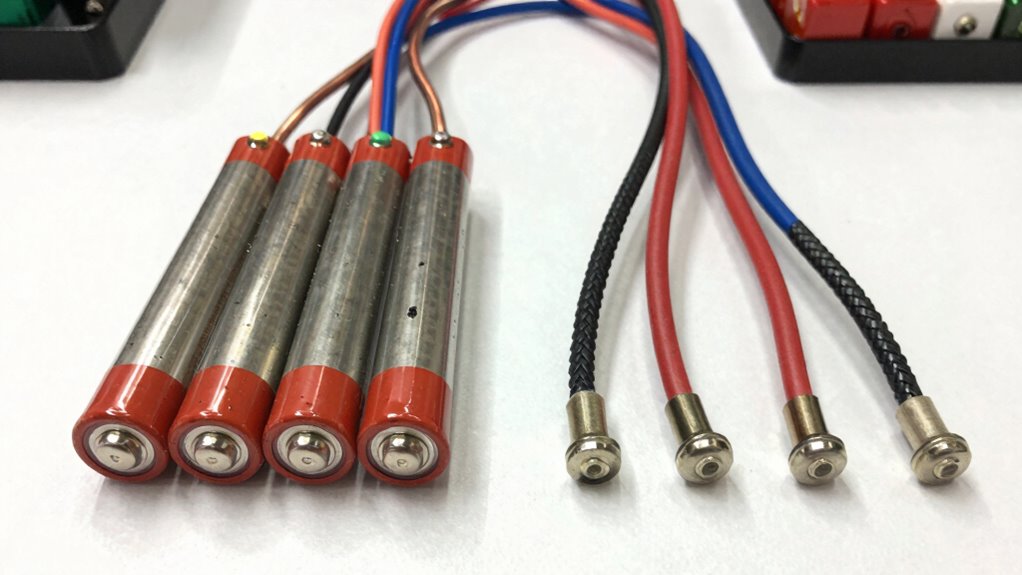
Even with careful planning, wiring batteries correctly and safely can encounter issues. To troubleshoot effectively, follow these steps:
- Check connections for corrosion or looseness, which can disrupt battery maintenance and cause voltage fluctuations.
- Measure voltage across batteries regularly to ensure proper voltage regulation, especially in series setups.
- Inspect wiring for damage or frayed insulation, which could lead to shorts or sparks.
- Confirm proper polarity before connecting, avoiding reverse wiring that can damage batteries or pose safety hazards.
Frequently Asked Questions
Can I Combine Both Series and Parallel Wiring in One Battery Bank?
Yes, you can combine both series and parallel wiring in one battery bank, but you need to guarantee battery compatibility. Mixing wiring configurations requires careful planning to balance voltage and capacity. You should connect batteries of the same type, capacity, and age to prevent issues. Properly wiring batteries in series and parallel allows you to achieve your desired voltage and capacity, but pay close attention to wiring configurations to avoid damaging your batteries or affecting performance.
How Do Temperature Variations Affect Series and Parallel Wiring Safety?
When it comes to temperature variations, you’re walking a tightrope. Thermal expansion can cause resistance fluctuations, impacting the safety of both series and parallel wiring. In series setups, increased resistance can lead to overheating, while in parallel configurations, uneven temperature effects might cause imbalance. Always watch for temperature changes and guarantee proper insulation and ventilation to keep your battery bank safe and functioning efficiently.
What Are the Long-Term Maintenance Considerations for Each Wiring Method?
You should regularly check your battery connections to guarantee connection stability in both series and parallel wiring. Over time, corrosion or loose terminals can reduce battery capacity and cause uneven charging. For long-term maintenance, clean terminals, tighten connections, and monitor voltage levels. In parallel wiring, watch for imbalances between batteries, while in series, ensure all batteries are equally charged to prevent capacity loss and maintain safe, reliable operation.
Are There Specific Battery Types Better Suited for Series or Parallel Wiring?
You’ll find that lithium-ion batteries are generally better suited for series wiring because of their stable chemistry and high voltage compatibility, allowing you to build larger voltage systems. Conversely, lead-acid or AGM batteries work well in parallel setups since they’re designed for voltage compatibility, providing increased capacity without changing voltage. Always check your battery chemistry and verify voltage compatibility to avoid damage and optimize performance in your wiring configuration.
How Does Wiring Impact Battery Lifespan and Overall System Reliability?
Wiring your batteries is like tuning an orchestra—proper setup ensures harmony. When you wire batteries correctly, you maintain voltage stability and prevent uneven battery balance, which extends lifespan and boosts system reliability. Poor wiring causes stress on individual cells, like discord disrupting the tune. By guaranteeing proper wiring, you keep the system stable, protecting your batteries from premature wear and ensuring consistent performance over time.
Conclusion
Think of wiring batteries like building a bridge—each connection needs to be solid and deliberate. When I first wired my batteries, I learned that rushing or skipping safety checks can lead to costly mistakes. By understanding series and parallel setups, you can avoid those pitfalls and create a reliable power system. Remember, careful wiring is the key to keeping your energy flowing smoothly—just like a well-constructed bridge holds strong for years.