
Microgrids and smart grids boost your energy system’s resilience by localizing power generation, storage, and management. They use advanced communication and automation to quickly respond to disruptions, isolating faults and maintaining supply during outages. Distributed generation from renewable sources makes the grid more flexible and less vulnerable to failures. With real-time monitoring and intelligent controls, you can guarantee continuous, reliable energy for your community. Keep exploring to discover how these technologies are shaping the future of resilient energy systems.
Key Takeaways
- Microgrids and smart grids enable local energy generation and storage, enhancing resilience during outages or extreme weather events.
- Advanced control systems and real-time monitoring facilitate rapid response and adaptive management of energy systems.
- Decentralized energy sources reduce dependence on centralized power plants, increasing overall grid robustness.
- Microgrids can isolate themselves during disruptions, maintaining continuous power supply locally.
- Integration of renewable energy and storage promotes sustainable, reliable, and disaster-resilient energy infrastructure.
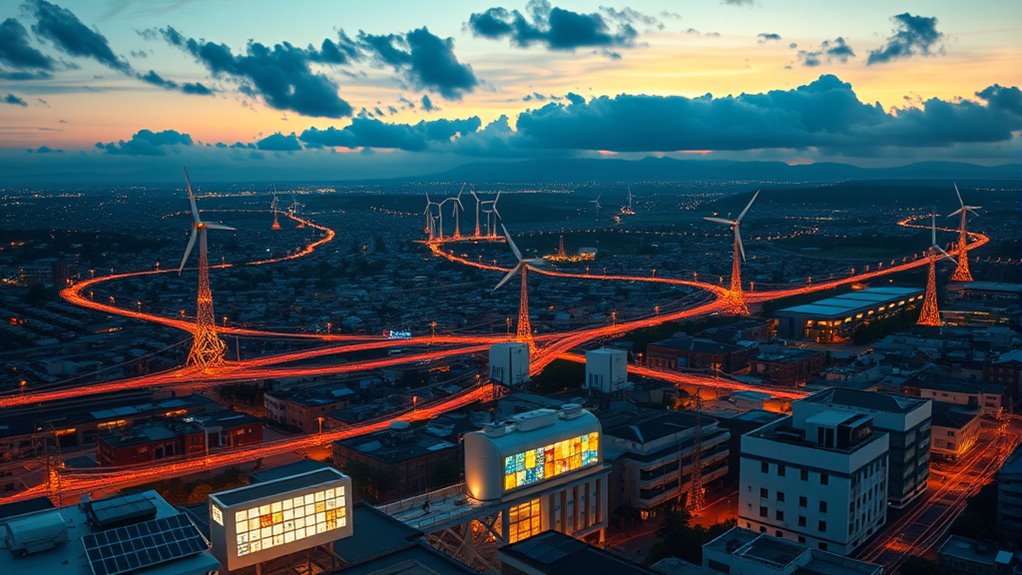
Have you ever wondered how modern energy systems are becoming smarter and more resilient? The answer lies in the integration of technologies like distributed generation and energy storage, which are transforming traditional power grids into adaptable microgrids and smart grids. Distributed generation allows you to produce electricity close to where it’s used, rather than relying solely on centralized power plants. This setup can include solar panels, wind turbines, or small-scale hydro systems installed locally or within communities. By generating power on-site, you reduce transmission losses and increase the system’s flexibility, making the grid more robust against outages or disruptions. When combined with energy storage solutions—such as batteries or other storage technologies—you gain the ability to store excess energy during periods of low demand or high production. This stored energy can then be released during peak times or outages, ensuring a continuous supply of power and enhancing overall grid stability.
In a smarter grid, these components work seamlessly together through advanced control systems and digital communication. You can monitor energy production, storage levels, and consumption in real time, allowing for better management and rapid response to changing conditions. For example, if a storm knocks out a section of the grid, the microgrid can isolate itself and rely on its local energy sources and stored energy to maintain service, even if the main grid is down. This decentralization not only improves resilience but also reduces reliance on distant power plants, which can be vulnerable to weather events or technical failures. Additionally, with distributed generation and energy storage, you can incorporate renewable sources more easily, making the entire system more sustainable and environmentally friendly. Furthermore, the use of high contrast ratios in smart grid displays allows operators to visualize system data more clearly, improving decision-making and system responsiveness.
The integration of these technologies also encourages energy independence within communities or facilities. You’re empowered to generate your own power, store excess for later use, and participate actively in managing your energy needs. As smart grids evolve, they leverage automation and data analytics to optimize energy flows, reduce waste, and predict future demands. This means fewer outages, lower costs, and a more resilient infrastructure capable of adapting to both everyday fluctuations and unexpected emergencies. By embracing distributed generation and energy storage within smart grids, you’re helping to create a future where energy systems are not only more reliable but also more efficient and sustainable. This interconnected approach ensures that communities can withstand disruptions better, all while advancing towards cleaner, greener energy solutions.

Energy Management Systems for Microgrids with Wind, PV and Battery Storage (Energy Engineering)
As an affiliate, we earn on qualifying purchases.
As an affiliate, we earn on qualifying purchases.
Frequently Asked Questions
How Do Microgrids Impact Local Economic Development?
You see that microgrids boost local economic development by creating jobs and supporting small businesses. As they require local installation, maintenance, and operation, you can expect increased local job creation. Small businesses benefit from new opportunities in energy services and infrastructure. By investing in microgrids, you help foster a resilient economy, attract investments, and promote sustainable growth within your community.
What Are the Cybersecurity Risks for Smart Grids?
You face cybersecurity vulnerabilities in smart grids, risking data privacy breaches and system disruptions. Hackers can exploit weak points, leading to unauthorized access, manipulation of data, or outages. It’s vital you implement strong encryption, regular updates, and secure authentication methods to protect sensitive information and guarantee grid resilience. Staying vigilant against these cybersecurity risks helps maintain reliable service and safeguards your infrastructure from evolving cyber threats.
Can Microgrids Operate Independently During Grid Failures?
Yes, microgrids can operate independently during grid failures thanks to their islanding capability. This feature allows you to disconnect from the main grid and maintain power supply, ensuring grid autonomy. When a failure occurs, you can rely on your microgrid to continue functioning seamlessly, providing stability and resilience. By managing energy locally, you reduce dependence on the larger grid and enhance your system’s reliability during outages.
How Do Smart Grids Integrate Renewable Energy Sources?
They say “the proof of the pudding is in the eating,” and with smart grids, you get to see it firsthand. You actively facilitate renewable integration by using advanced sensors, real-time data, and automation. These innovations enable seamless grid modernization, allowing renewables like solar and wind to connect smoothly and operate efficiently. As a result, your energy system becomes more sustainable, resilient, and adaptable to future demands.
What Is the Cost-Benefit Analysis of Implementing Smart Grids?
You’ll find that implementing smart grids offers significant cost savings over time, despite initial technological investments. While upfront expenses include upgrading infrastructure and deploying advanced sensors, these costs are offset by improved efficiency, reduced energy waste, and better integration of renewable sources. Ultimately, the long-term benefits—such as lower operational costs and increased reliability—make smart grid investments financially worthwhile, providing resilience and sustainability benefits for your energy system.
Conclusion
Embracing microgrids and smart grids can greatly boost your community’s resilience, allowing you to adapt quickly to disruptions. These innovations turn challenges into opportunities, making your energy system more reliable and sustainable. Remember, “a chain is only as strong as its weakest link,” so investing in these technologies strengthens your entire infrastructure. By staying ahead with smart solutions, you guarantee a more secure and resilient future for all.