Choosing the wrong inverter waveform can silently damage your devices over time. Modified sine wave inverters produce a jagged, less stable power that may cause overheating, noise, and eventual failure, especially for sensitive electronics like computers or medical equipment. Pure sine wave inverters offer smooth, grid-like power, reducing stress and prolonging device lifespan. If you want to learn how waveform differences impact your gear and how to protect it, keep exploring this important topic.
Key Takeaways
- Modified sine wave inverters produce jagged signals that can cause long-term overheating and damage to sensitive electronics.
- Pure sine wave inverters provide smooth, clean power that minimizes harmonic distortion and preserves device longevity.
- Using a modified sine wave inverter on sensitive devices increases the risk of subtle, silent damage over time.
- Incompatible waveform quality may lead to voltage fluctuations, resets, flickering, and accelerated component wear.
- Proper inverter selection (preferably pure sine wave) is crucial to prevent silent, cumulative damage to your electronic devices.
What Are Pure Sine Wave and Modified Sine Wave Inverters?
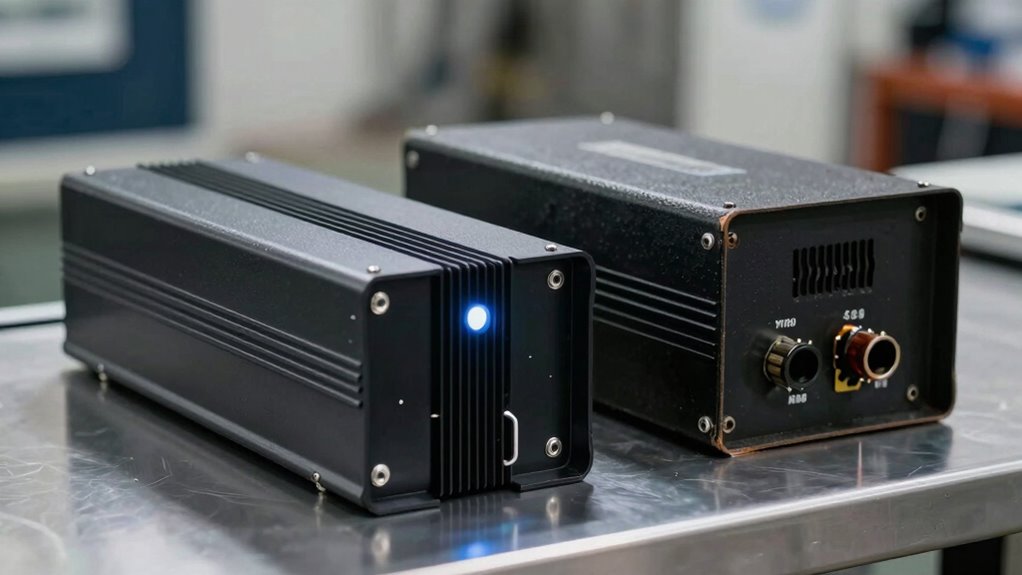
When choosing an inverter, understanding the difference between pure sine wave and modified sine wave inverters is essential. These are two main inverter types based on their waveform comparison. Pure sine wave inverters produce a smooth, consistent waveform similar to grid power, making them ideal for sensitive electronics. Modified sine wave inverters generate a stepped, more jagged waveform, which is simpler and usually more affordable. The waveform comparison reveals that pure sine wave inverters deliver cleaner power, reducing potential issues with devices that rely on stable signals. Additionally, waveform quality is a critical factor to consider, as it impacts device performance and longevity. Proper power quality management can help prevent damage to your devices and ensure efficient operation. Maintaining device compatibility is also important, as some equipment may not function properly with certain waveform types. On the other hand, modified sine wave inverters work well for basic appliances but may cause problems or noise in more delicate equipment. Recognizing the waveform differences can assist in selecting the most suitable inverter for your specific needs and prevent potential device damage. Understanding these inverter types helps you choose the right option for your power needs and protects your devices.
How Power Quality Affects Sensitive Electronics?
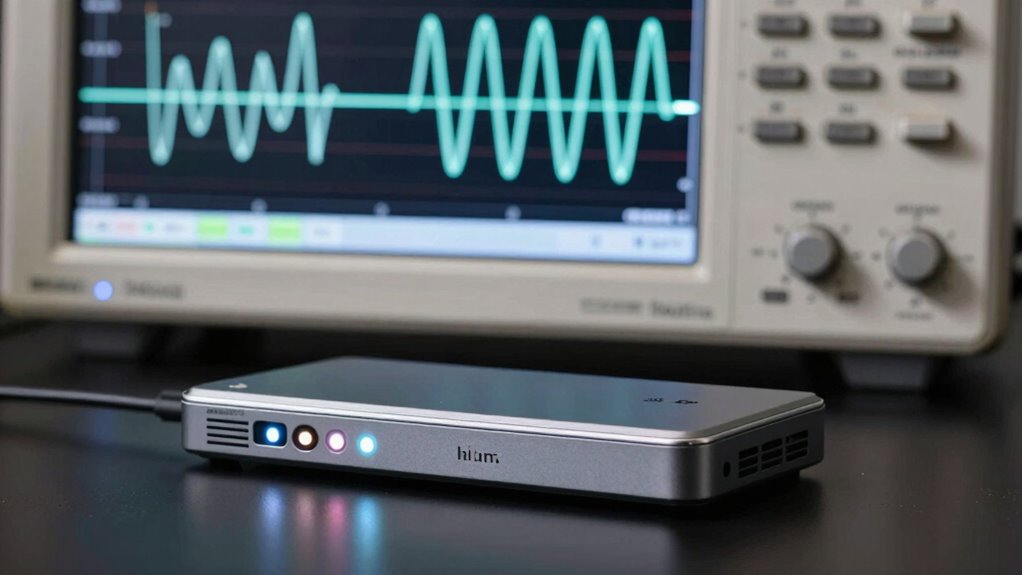
Poor power quality can cause voltage fluctuations that damage sensitive electronics over time. Harmonic distortions from subpar waveforms can lead to overheating and erratic behavior. As a result, your equipment’s lifespan drops, and costly repairs become more likely. Understanding power waveforms and how they influence beverage choices can also help in selecting the right appliances and accessories to protect your devices. Additionally, waveform quality plays a significant role in ensuring consistent device performance and longevity. Recognizing the impact of power quality on electronic performance is essential for maintaining device longevity and preventing unnecessary failures. Variations in electrical signals can also stress components, accelerating wear and tear.
Voltage Fluctuations Impact
Voltage fluctuations can cause significant problems for sensitive electronics, leading to unexpected resets, data loss, or even hardware damage. When voltage stability isn’t maintained, power fluctuations strain your devices, causing them to operate outside their ideal range. These fluctuations can result in inconsistent performance, shorten your equipment’s lifespan, or cause complete failure. Sensitive electronics depend on steady voltage levels to function correctly, so even minor dips or surges can have serious consequences. If your power supply isn’t consistent, your devices are more vulnerable to damage over time. Using a reliable power source or an uninterruptible power supply (UPS) with stable output helps protect your equipment. Ensuring voltage stability minimizes the risks associated with power fluctuations, keeping your electronics safe and functioning smoothly. Additionally, Power quality issues can be worsened by poor electrical wiring or unstable power sources, making it crucial to address these factors for optimal device longevity. Proper power conditioning solutions can further enhance your system’s resilience against fluctuations.
Harmonic Distortions Rise
Harmonic distortions can considerably compromise the quality of power delivered to your sensitive electronics. When harmonic distortions rise, your devices face increased inverter noise and unstable power signals that can disrupt performance. This distortion causes subtle, yet damaging, effects over time, impairing circuit functions and reducing efficiency. You might notice unexplained resets, flickering screens, or audio static, all signs of compromised power quality.
Be aware that:
- Harmonic distortions increase with non-sinusoidal waveforms
- Inverter noise amplifies electrical interference
- Sensitive electronics are vulnerable to signal degradation
- Power supplies work harder to compensate for distortions
- Long-term exposure accelerates component wear
- Power quality issues can lead to unexpected device failures and costly repairs.
Understanding these risks helps you safeguard your devices from hidden damage caused by poor power quality.
Equipment Longevity Risks
When your sensitive electronics operate under fluctuating or distorted power conditions, their lifespan can be considerably shortened. Poor power quality leads to increased stress on components, reducing equipment longevity. Modified sine wave inverters can cause higher thermal stress, impacting battery efficiency and forcing your batteries to work harder, which shortens their lifespan. An improper inverter installation may result in voltage spikes or dips that damage delicate circuitry over time. Continuous exposure to inconsistent power can cause premature failure of devices like computers, medical equipment, and audio systems. Upgrading to a pure sine wave inverter can help maintain stable power, protecting your investments and ensuring your equipment lasts longer. Power quality improvements can also prevent the buildup of electrical noise that degrades device performance over time. Additionally, understanding measurement accuracy is crucial for diagnosing and addressing power-related issues effectively. By improving power quality, you reduce the risk of costly repairs and replacements down the line, especially since electrical disturbances can accelerate component wear and tear.
How Modified Sine Wave Inverters Can Damage Your Devices Over Time
While modified sine wave inverters are often more affordable and easier to use, they can cause long-term damage to your electronic devices. Over time, the inconsistent power output may strain components, reducing battery lifespan and lowering inverter efficiency. This irregular waveform can lead to overheating, premature capacitor failure, and degraded performance of sensitive electronics. Additionally, the essential safety tips outlined for portable oil radiators highlight the importance of proper device handling and maintenance to prevent hazards. Consider these points:
Modified sine wave inverters may cause long-term damage and reduce device lifespan.
- Increased heat stress on internal components
- Accelerated wear on capacitors and transformers
- Reduced overall device lifespan
- Higher energy consumption due to inefficiency
- Potential for subtle, cumulative damage
Furthermore, waveform quality plays a crucial role in maintaining device health, as poor-quality power can gradually diminish electronic performance over time. A consistent power supply is vital to ensure the longevity and safe operation of your devices, especially when using modified sine wave inverters. Poor waveform compatibility issues can also cause unexpected malfunctions and increased repair costs, emphasizing the importance of choosing the right inverter type for your needs. Neglecting these factors may lead to hidden damage that becomes apparent only after extensive use.
Signs Your Devices Are Failing Because of Your Inverter
If your devices start acting up or showing signs of trouble, it could be a result of the inconsistent power output from a modified sine wave inverter. You might notice irregular operation, overheating, or unexplained noise, which signal potential damage. Poor battery maintenance can exacerbate these issues, as failing batteries struggle to provide stable power. Additionally, inverter placement matters; placing it near sensitive electronics or in areas with excessive heat or moisture can worsen device performance. Over time, this can lead to hardware failure, reduced lifespan, or data loss. Keep an eye on unusual device behavior, regularly check your batteries, and ensure your inverter is correctly positioned to prevent these problems. These steps help protect your equipment from silent damage caused by subpar power quality.
How to Choose the Best Sine Wave Inverter to Protect Your Equipment
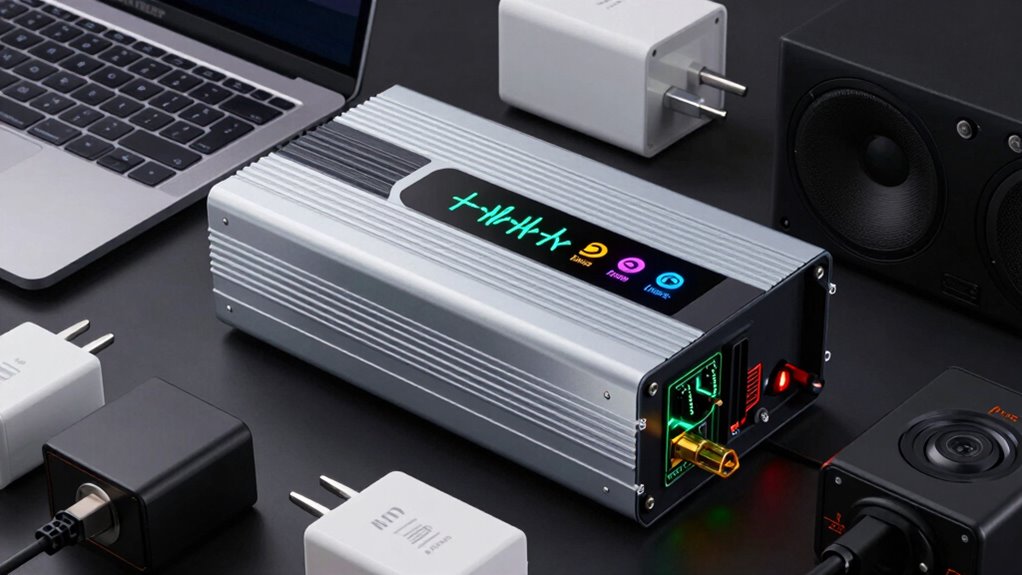
To select the best sine wave inverter, you need to take into account your equipment’s power quality needs and sensitivity levels. Think about your budget and find a model that offers good value without compromising protection. Making the right choice ensures your devices run smoothly and last longer.
Power Quality Compatibility
Choosing the right sine wave inverter is essential for maintaining power quality and ensuring your equipment operates smoothly. To protect sensitive devices, like those in renewable energy setups or home automation systems, you need to take into account your inverter’s compatibility with your power demands. A pure sine wave inverter offers cleaner power, reducing risks of damage and interference. When selecting one, keep these factors in mind:
- Compatibility with your specific devices’ power requirements
- Ability to support sensitive electronics
- Voltage stability for consistent operation
- Efficiency in handling fluctuating loads
- Suitability for renewable energy or smart home systems
Matching your inverter’s output with your equipment’s needs ensures long-term reliability, minimizes risks, and keeps your power clean and stable.
Device Sensitivity Levels
Understanding your equipment’s sensitivity levels is crucial when selecting a sine wave inverter because different devices react differently to power quality. Some electronics, like sensitive medical or audio equipment, require a pure sine wave for proper operation, ensuring device compatibility and longevity. Other devices, such as simple power tools, can often handle modified sine wave inverters without issues. Knowing your equipment’s sensitivity helps you choose an inverter that protects your devices from damage and maintains user safety. For high-sensitivity equipment, investing in a pure sine wave inverter is the best choice, minimizing risks of malfunction or reduced lifespan. Conversely, less sensitive devices may tolerate modified sine wave inverters, saving costs. Always check your device specifications to match your inverter’s output with your equipment’s sensitivity levels.
Budget and Value
Selecting the right sine wave inverter involves balancing your equipment’s sensitivity needs with your budget. When evaluating options, consider the cost comparison between pure and modified sine wave inverters, which can considerably impact your investment. While pure sine inverters tend to be pricier, they offer better compatibility and longer-lasting protection, reflecting strong brand reliability. To maximize value, look for reputable brands known for durability and customer support. Keep in mind:
- Higher initial cost may save you money long-term
- Cheaper inverters might compromise device safety
- Brand reliability ensures consistent performance
- Feature-rich models can add value
- Balance budget with your equipment’s sensitivity needs
Practical Tips to Prevent Damage From Inverter Mismatches
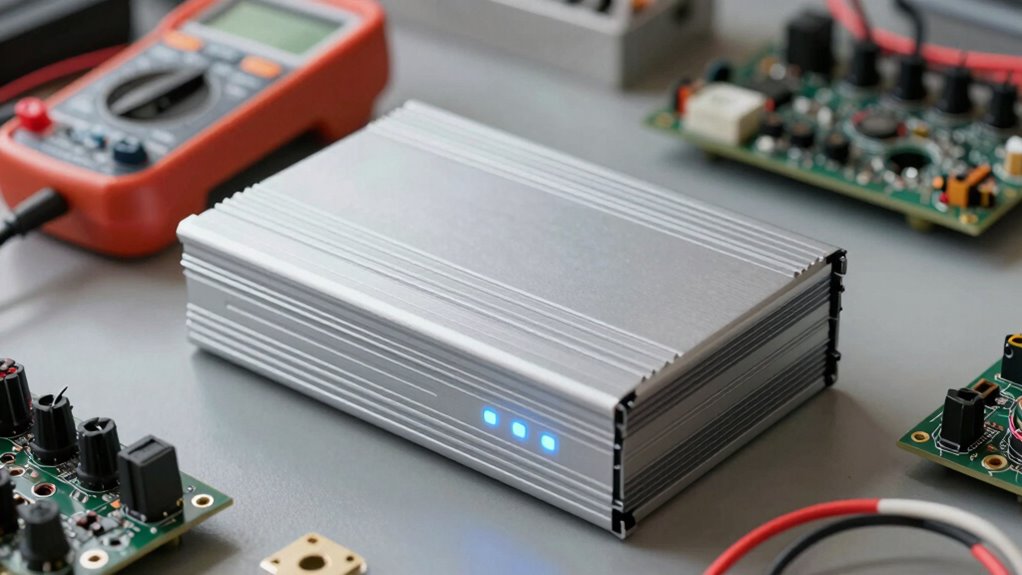
To prevent damage from inverter mismatches, it’s essential to verify compatibility between your inverter and your connected devices. Make sure your inverter provides stable voltage regulation to protect sensitive electronics and prolong your battery lifespan. Use the following tips:
| Tip | What to Check | Why It Matters |
|---|---|---|
| Match Power Ratings | Confirm inverter wattage matches device needs | Prevents overload and damage |
| Use Surge Protectors | Protect against voltage spikes | Avoids device stress |
| Regular Maintenance | Clean and inspect connections | Ensures consistent voltage regulation |
| Check Battery Compatibility | Use appropriate batteries | Extends battery lifespan |
| Monitor Usage | Avoid running incompatible devices | Prevents inverter strain |
Frequently Asked Questions
Can All Electronic Devices Handle Modified Sine Wave Inverters?
Not all electronic devices can handle modified sine wave inverters. You need to verify your device’s battery compatibility and sensitivity to noise levels. Some electronics, like sensitive audio equipment or medical devices, may malfunction or suffer damage with a modified sine wave. Generally, simpler electronics such as lights and chargers handle it well, but always confirm manufacturer recommendations to prevent potential issues and ensure your devices operate smoothly.
What Are the Long-Term Costs of Using Modified Sine Wave Inverters?
Using modified sine wave inverters long-term can increase your costs due to decreased battery efficiency and potential device wear. You might find yourself replacing batteries more often and dealing with inconsistent power stability, which can harm sensitive electronics. While they’re cheaper upfront, the cumulative expenses from energy loss, repairs, and replacements can outweigh initial savings. Consider investing in a pure sine inverter for better long-term reliability and lower maintenance costs.
Are There Specific Brands Known for Better Inverter Quality?
Sure, some brands stand out for inverter quality, like Victron, Outback, and Renogy, thanks to their stellar reputation and reliable inverter certifications. You might think all inverters are created equal—until your devices start acting up. These brands have a reputation for durability, ensuring your investment isn’t just a gamble. Choosing wisely means avoiding the silent device killer and keeping your electronics safe for the long haul.
How Do Inverter Features Impact Device Safety and Longevity?
Inverter features directly impact your device safety and longevity. High inverter efficiency guarantees less heat and power loss, reducing stress on your devices. Power stability, provided by advanced features like voltage regulation and surge protection, prevents damage from fluctuations. By choosing an inverter with these features, you safeguard your devices from potential harm, extending their lifespan and maintaining ideal performance over time.
Is It Possible to Upgrade From a Modified to a Pure Sine Wave Inverter?
Upgrading from a modified to a pure sine wave inverter is often feasible if your inverter’s model supports it. Think of it like upgrading your phone’s software—compatibility is key. Check your inverter’s specifications for compatibility and consult the manufacturer. Many units allow a straightforward upgrade, saving you from replacing the entire system. This guarantees your devices get cleaner power, extending their lifespan and performance without hassle.
Conclusion
Choosing the right inverter is like steering your ship through calm waters instead of stormy seas. Pure sine wave inverters act as gentle rainbows, safeguarding your electronics’ health, while modified sine waves can be lurking wolves in sheep’s clothing. By understanding the difference, you’re armed to protect your devices from silent, sneaky damage. Don’t let a poor choice be the quiet assassin of your valuable gear—navigate wisely and keep your tech thriving.