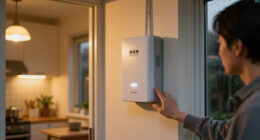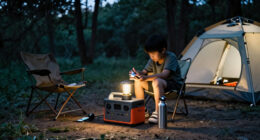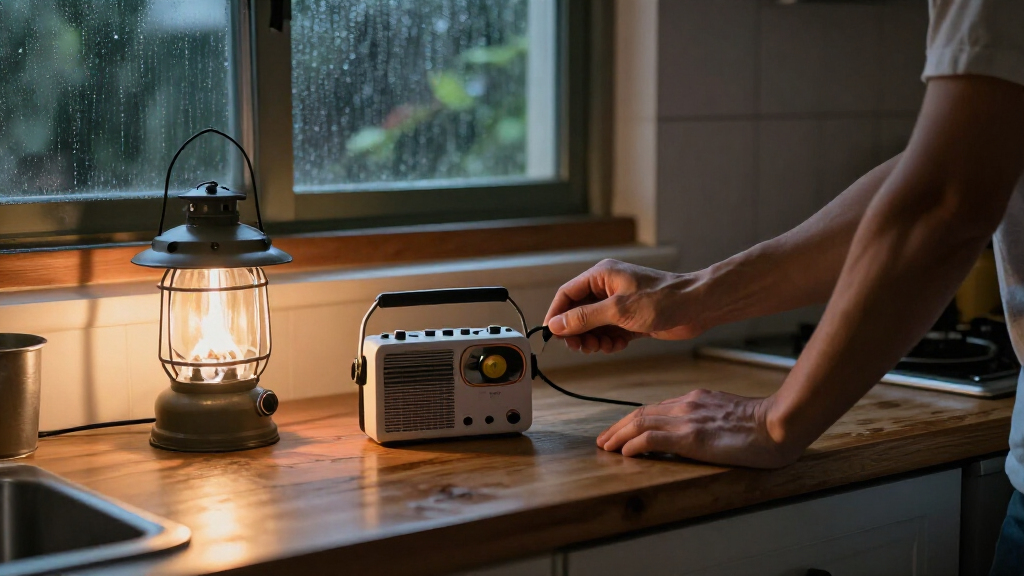

Hand crank emergency radios combine weather and broadcast reception with backup power, but battery size, charging ports, and ease of use vary widely. My best overall pick is the Midland ER310, a recognizable emergency-radio choice with a focused feature set; the Midland ER310PRO adds Bluetooth, while the 12,000mAh Raynic is a strong fit for buyers prioritizing stored power. Larger batteries add flexibility but can make a radio less compact, and cranks and solar panels are best treated as backup charging methods rather than fast power sources. Read on for the full comparison, including the best options for different needs.

Get emergency and outdoor gear delivered free with Prime
- Fast, free delivery on millions of items
- Prime Video, Amazon Music and more included
- Member-only deals all year
Key Takeaways
- The Midland ER310 and ER310PRO stand apart from the battery-capacity-focused models: the ER310PRO adds Bluetooth, while the standard ER310 keeps the emphasis on emergency radio use.
- Several radios offer 10,000–12,000mAh batteries, including models from Raynic, Leaton, and other brands; compare their full port and radio features rather than choosing by battery number alone.
- Built-in charging cables distinguish the RunningSnail three-cable model and the 7,400mWh model from options that may require you to pack a separate charging lead.
- Raynic appears in multiple battery configurations, from a 5,000mAh model to 12,000mAh versions, giving buyers a choice between a smaller stated capacity and more stored reserve.
- Feature lists do not make crank or solar charging a substitute for preparation: the lineup pairs those backups with batteries, lights, alerts, and radios, so buyers should match the complete setup to their outage plan.
| Emergency Weather Radio with Hand Crank, Solar Charging, and 10,000 mAh Battery |  | Best for Emergency Kit Extras | Battery capacity: 10,000 mAh / 37,000 mWh | Power sources: Rechargeable battery, hand crank, solar | Radio bands: AM, FM, WB, NOAA | VIEW LATEST PRICE | See Our Full Breakdown |
| Solar Emergency Radio with 12,000mAh Battery, Hand Crank and NOAA/AM/FM Reception |  | Best for Multiple Backup Power Options | Battery capacity: 12,000 mAh lithium battery | Power sources: Solar, hand crank, USB-C input, or 3 AAA batteries | USB-C input: 5 V / 2 A | VIEW LATEST PRICE | See Our Full Breakdown |
| Hand Crank Emergency Radio with Solar Charging, 7,400 mWh Battery, and 3 Built-In Cables |  | Best for Charging Different Phone Types | Battery capacity: 7,400 mWh (2,000 mAh) | Charging methods: USB-C, hand crank, solar panel, or AAA batteries | Built-in charging cables: Lightning, USB-C, Micro USB | VIEW LATEST PRICE | See Our Full Breakdown |
| iRonsnow Solar Emergency Hand Crank Weather Radio, 2000mAh |  | Best Compact Pick | Model: IR-088 | Battery capacity: 2,000 mAh | Power sources: USB-C, solar, hand crank, rechargeable battery | VIEW LATEST PRICE | See Our Full Breakdown |
| Midland ER310 Emergency Crank Weather AM/FM Radio |  | Best for NOAA Alert Scanning | Model: ER310-MFN | Radio bands: AM/FM, 2-band | Weather alerts: NOAA weather scanning with alerts | VIEW LATEST PRICE | See Our Full Breakdown |
| RunningSnail Hand-Crank Emergency Weather Radio with Three Built-In Charging Cables |  | Best for Charging a Mix of Devices | Battery capacity: 7400mWh | Power sources: USB-C, solar, hand crank, or 3 AAA batteries (not included) | Radio bands: AM/FM/WB | VIEW LATEST PRICE | See Our Full Breakdown |
| Leaton Hand Crank Emergency Radio with NOAA, AM/FM, and 10,000mAh Battery |  | Best Compact Kit Radio | Battery capacity: 10,000mAh | Radio bands: AM 520–1710kHz, FM 87–108MHz, NOAA 162.400–162.550MHz | Charging methods: USB-C, solar, hand crank | VIEW LATEST PRICE | See Our Full Breakdown |
| Midland ER310PRO Portable Emergency Weather Radio with Bluetooth |  | Best for Extended Radio Listening | Model: ER310PRO | Power bank capacity: 10,000mAh | Battery life during radio use: Up to 200 hours | VIEW LATEST PRICE | See Our Full Breakdown |
| Raynic Emergency Weather Radio with Solar and Hand Crank Charging |  | Best for Automatic Weather Alerts | Battery capacity: 5000 mAh / 18500 mWh | Radio bands: AM, FM, SW, NOAA | Power options: Rechargeable battery, AC adapter, USB input, hand crank, solar panel, or 3 AAA batteries (not included) | VIEW LATEST PRICE | See Our Full Breakdown |
| Emergency Radio with Hand Crank, Solar Charging, NOAA Weather Band, AM/FM, and 12,000mAh Battery |  | Best for Outdoor Lighting and Backup Power | Battery capacity: 12,000mAh | Charging methods: Solar, hand crank, USB-C | Radio bands: NOAA weather, AM/FM | VIEW LATEST PRICE | See Our Full Breakdown |
| Raynic Emergency Weather Radio with 5000mAh Battery, Solar and Hand Crank Charging |  | Best for Multi-Function Emergency Lighting | Battery capacity: 5,000mAh / 18,500mWh | Radio bands: AM, FM, shortwave, NOAA weather | Charging options: Rechargeable battery, solar, hand crank, AAA batteries, corded electric | VIEW LATEST PRICE | See Our Full Breakdown |
| RunningSnail Hand Crank Emergency Radio with Flashlight |  | Best Lightweight Basic Pick | Battery capacity: 2,000mAh / 7,400mWh | Radio bands: AM, FM, NOAA | Power sources: Hand crank, solar panel, rechargeable battery | VIEW LATEST PRICE | See Our Full Breakdown |
| Raynic Emergency Weather Radio with 12,000 mAh Battery, Solar and Hand Crank Charging |  | Best for Longer Backup Power | Battery capacity: 12,000mAh / 44,400mWh | Radio bands: AM, FM, SW, WB | Power options: Rechargeable battery, AC adapter, USB input, hand crank, solar panel, three AAA batteries | VIEW LATEST PRICE | See Our Full Breakdown |
| Emgykit Hand Crank Emergency Radio with AM/FM/NOAA, Flashlight, and SOS Alarm |  | Best for a Compact Emergency Kit | Model: 086S | Radio bands: AM, FM, NOAA | Power sources: Hand crank, solar panel, USB-C | VIEW LATEST PRICE | See Our Full Breakdown |
| FosPower A1 NOAA Emergency Weather Radio with Solar and Hand Crank, Orange |  | Best for AAA Battery Backup | Model: FOSPWB-2376 | Radio bands: AM, FM, WB | Power sources: Solar, hand crank, AAA batteries, USB | VIEW LATEST PRICE | See Our Full Breakdown |
| hand crank emergency radio | Radio bands | Battery capacity | Water resistance | Weight |
|---|---|---|---|---|
| Emergency Weather Radio with H | AM, FM, WB, NOAA | 10,000 mAh / 37,000 mWh | Water resistant; rating not specified | — |
| Solar Emergency Radio with 12, | NOAA, FM, AM | 12,000 mAh lithium battery | Water resistant; rating not specified | 1.6 pounds |
| Hand Crank Emergency Radio wit | AM, FM, weather band | 7,400 mWh (2,000 mAh) | Listed as waterproof; rating not specified | — |
| iRonsnow Solar Emergency Hand | AM, FM, weather band | 2,000 mAh | Water resistant; rating not specified | 7.84 ounces |
| Midland ER310 Emergency Crank | AM/FM, 2-band | — | Not water resistant | — |
| RunningSnail Hand-Crank Emerge | AM/FM/WB | 7400mWh | Water resistant; rating not specified | — |
| Leaton Hand Crank Emergency Ra | AM 520–1710kHz, FM 87–108MHz, NOAA 162.400–162.550MHz | 10,000mAh | IPX6 | 1.1 lbs (500g) |
| Midland ER310PRO Portable Emer | AM, FM, NOAA weather | — | — | — |
| Raynic Emergency Weather Radio | AM, FM, SW, NOAA | 5000 mAh / 18500 mWh | IPX3 | 1.2 lb |
| Emergency Radio with Hand Cran | NOAA weather, AM/FM | 12,000mAh | IPX6 | 1.6 lb |
| Raynic Emergency Weather Radio | AM, FM, shortwave, NOAA weather | 5,000mAh / 18,500mWh | IPX3 | Listed as 1.2 lb and 16 oz |
| RunningSnail Hand Crank Emerge | AM, FM, NOAA | 2,000mAh / 7,400mWh | Water repellent | 0.5 lb |
| Raynic Emergency Weather Radio | AM, FM, SW, WB | 12,000mAh / 44,400mWh | IPX3 | 1.2 lb |
| Emgykit Hand Crank Emergency R | AM, FM, NOAA | 2,000mAh / 7,400mWh | — | 0.51 lb |
| FosPower A1 NOAA Emergency Wea | AM, FM, WB | — | — | 310 g |
More Details on Our Top Picks
Emergency Weather Radio with Hand Crank, Solar Charging, and 10,000 mAh Battery
This radio pairs hand-crank and solar backup with a 10,000 mAh battery, so it offers more stored capacity than the compact iRonsnow IR-088. Automatic scanning across seven NOAA weather channels helps simplify checking for alerts, while the flashlight, SOS alarm, and USB charging port cover basic emergency tasks. Its distinguishing extras are a thermal blanket and survival bracelet, which could add practical kit items without separate purchases. The tradeoff is that the provided information does not specify the level of water resistance or explain charging performance, so I would not treat it as proven protection for prolonged exposure or as a guaranteed phone power source. Compared with the more fully detailed Solar Emergency Radio with 12,000mAh Battery, this model has less battery capacity but includes the extra survival accessories.
Pros:- 10,000 mAh rechargeable battery with hand-crank and solar power options
- Automatically scans seven NOAA weather channels
- Flashlight, SOS alarm, and USB device-charging port
- Includes a thermal blanket and survival bracelet
Cons:- Water-resistance level is not specified
- No performance details are provided for radio reception or charging output
- Battery capacity is lower than the 12,000 mAh Solar Emergency Radio in this group
Best for: Emergency-kit builders who want a large built-in battery, NOAA scanning, and basic survival accessories together.
Not ideal for: Buyers who need a defined water-resistance rating or detailed evidence about real-world charging performance.
- Battery capacity:10,000 mAh / 37,000 mWh
- Power sources:Rechargeable battery, hand crank, solar
- Radio bands:AM, FM, WB, NOAA
- Weather channels:7
- Speaker output:2 W
- Display:LED tuner display
- Water resistance:Water resistant; rating not specified
- Included accessories:55 g thermal blanket and survival bracelet with 10 ft paracord
Our verdict“Choose this if you value included survival accessories alongside a substantial battery, but skip it if you need clearly documented weather protection.”
Solar Emergency Radio with 12,000mAh Battery, Hand Crank and NOAA/AM/FM Reception
Among these five radios, this model gives buyers the widest mix of power sources: hand crank, solar, USB-C input, a 12,000 mAh battery, and three AAA batteries. That flexibility matters when a battery is depleted and a wall outlet or replacement cells are easier to find than sunlight. The 5-watt speaker, two-level reading lamp, flashlight, phone-charging function, and SOS alarm make it a more utility-focused choice than the simpler iRonsnow IR-088. It is also rated water resistant, though the rating level is not stated. Its tradeoffs are its 1.6-pound weight and the need to charge it fully before first use; AAA cells are not included. Compared with the 10,000 mAh Emergency Weather Radio, it adds USB-C and AAA power options but omits that model’s bundled blanket and bracelet.
Pros:- Five power routes, including hand crank, solar, USB-C, internal battery, and AAA batteries
- 12,000 mAh battery and phone-charging function
- 5-watt speaker with NOAA, FM, and AM reception
- Separate flashlight and two-level reading lamp
Cons:- Weighs 1.6 pounds, making it less suited to minimal carry kits
- Three AAA batteries are not included
- Requires a full charge before first use for optimal performance
Best for: Campers and household emergency planners who want several ways to power a radio and useful lighting in one unit.
Not ideal for: Ultralight packers or buyers who need included AAA batteries and a clearly specified water-resistance rating.
- Battery capacity:12,000 mAh lithium battery
- Power sources:Solar, hand crank, USB-C input, or 3 AAA batteries
- USB-C input:5 V / 2 A
- Radio bands:NOAA, FM, AM
- Speaker output:5 W
- Lighting:LED flashlight and reading lamp, each with two brightness levels
- Dimensions:6.8 × 4.7 × 2.9 inches
- Weight:1.6 pounds
- Water resistance:Water resistant; rating not specified
Our verdict“Pick this for flexible power and useful lighting, provided its weight and missing AAA batteries fit your emergency plan.”
Hand Crank Emergency Radio with Solar Charging, 7,400 mWh Battery, and 3 Built-In Cables
The standout here is not battery size but three built-in charging cables—Lightning, USB-C, and Micro USB—so a household with mixed devices has fewer loose accessories to manage. It also combines hand crank, solar, USB-C, and AAA power, plus NOAA weather reception, an SOS alarm, and two types of lighting: a three-mode flashlight and six reading LEDs. That makes it more versatile for shared household use than the smaller-battery iRonsnow IR-088, though its listed 2,000 mAh capacity is modest beside the 12,000 mAh Solar Emergency Radio. The product data calls it waterproof, a stronger claim than the unspecified water resistance on several alternatives, but does not give an IP rating. AAA batteries are not included, and the analog display offers less precise tuning feedback than a digital display.
Pros:- Built-in Lightning, USB-C, and Micro USB charging cables
- Four power options, including hand crank, solar, USB-C, and AAA batteries
- Flashlight with three brightness modes plus six reading LEDs
- Product data describes the radio as waterproof
Cons:- 2,000 mAh battery capacity is far below the 12,000 mAh option in this group
- AAA batteries are not included
- Analog display may be less convenient for precise tuning
Best for: Households with Lightning, USB-C, and Micro USB devices that want built-in cables and flexible lighting.
Not ideal for: Buyers who prioritize long phone-charging reserves or want a digital tuner display and included AAA batteries.
- Battery capacity:7,400 mWh (2,000 mAh)
- Charging methods:USB-C, hand crank, solar panel, or AAA batteries
- Built-in charging cables:Lightning, USB-C, Micro USB
- Radio bands:AM, FM, weather band
- Lighting:Three-mode flashlight and six LED reading lights
- Display:Analog
- Speaker output:7.4 W
- Dimensions:6.49 × 1.9 × 2.9 inches
- Water resistance:Listed as waterproof; rating not specified
Our verdict“Choose this when built-in charging cables and flexible lighting matter more than a large battery reserve.”
iRonsnow Solar Emergency Hand Crank Weather Radio, 2000mAh
At 7.84 ounces and 5 inches long, the iRonsnow IR-088 is the most compact choice in this set, making it easier to keep in a day pack or small home emergency kit than the 1.6-pound Solar Emergency Radio with 12,000mAh Battery. It still covers the basics: AM/FM and NOAA weather-band reception, hand-crank and solar charging, a 2,000 mAh battery, a three-level flashlight, and an SOS alarm with flashing light. USB-C input adds a straightforward way to recharge it when power is available. The tradeoff is capacity: its battery is far smaller than the 10,000 and 12,000 mAh alternatives, so I would treat phone charging as a limited backup rather than a dependable reserve. The product notes also warn that flashlight configurations may vary by version.
Pros:- Compact 5 × 1.8 × 2.4-inch body and 7.84-ounce weight
- Hand-crank, solar, and USB-C power options
- AM/FM and NOAA weather-band reception
- Three-level flashlight, SOS alarm, and battery-level indicator
Cons:- 2,000 mAh battery is much smaller than the 10,000 and 12,000 mAh options
- Flashlight configurations may differ between versions
- Water resistance is stated without a rating
Best for: Day hikers and buyers assembling a compact emergency kit who want a light radio with crank and solar backup.
Not ideal for: Families seeking substantial phone-charging capacity, a reading lamp, or the widest range of built-in emergency accessories.
- Model:IR-088
- Battery capacity:2,000 mAh
- Power sources:USB-C, solar, hand crank, rechargeable battery
- Radio bands:AM, FM, weather band
- Flashlight:1 W LED with 3 brightness levels
- Dimensions:5 × 1.8 × 2.4 inches
- Weight:7.84 ounces
- Water resistance:Water resistant; rating not specified
- Warranty:Two-year exchange warranty
Our verdict“Choose the IR-088 for a lightweight radio you can carry regularly, not for high-capacity phone charging.”
Midland ER310 Emergency Crank Weather AM/FM Radio
The Midland ER310 is the clearest fit here for buyers who want a weather-alert-focused radio: it scans NOAA weather channels for alerts and adds an SOS emergency flashlight. Its included six AA batteries provide a ready power source, while solar power and USB connectivity give it alternatives when those cells are depleted. That makes its backup strategy different from the 10,000 mAh Emergency Weather Radio, which relies on a rechargeable battery, hand crank, and solar power but does not list included AA cells. The ER310 also includes an ultrasonic dog whistle, a specialized extra for people who may need to signal or locate a dog. Its key limitation is exposure: it is not water resistant, unlike the other radios reviewed here. The listed power-source details do not specify a hand crank, so buyers seeking crank capability should confirm the exact version before choosing it.
Pros:- Scans NOAA weather channels for alerts
- Six AA batteries are included
- Built-in SOS emergency flashlight
- Ultrasonic dog whistle adds a specialized signaling feature
Cons:- Not water resistant
- The listed power-source information does not specify a hand crank
- Larger dimensions than the compact iRonsnow IR-088
Best for: Households focused on NOAA alert scanning that want included AA batteries and an emergency signaling light.
Not ideal for: Buyers who need documented hand-crank charging or a radio that can tolerate wet conditions.
- Model:ER310-MFN
- Radio bands:AM/FM, 2-band
- Weather alerts:NOAA weather scanning with alerts
- Power sources:Solar; 6 included AA batteries
- Connectivity:USB
- Display:LED
- Flashlight:Built-in SOS emergency flashlight
- Dimensions and weight:9.61 × 2.95 × 6.85 inches; 16 ounces
- Water resistance:Not water resistant
Our verdict“Choose the ER310 for NOAA alert scanning and included AA cells, but verify crank capability and keep it protected from rain.”
RunningSnail Hand-Crank Emergency Weather Radio with Three Built-In Charging Cables
The three built-in charging cables are this RunningSnail’s clearest advantage: Lightning, Micro USB, and USB-C connections can reduce the scramble for a separate cable when you need to top up a compatible device. It also combines four power options with AM/FM/NOAA reception, an SOS siren, flashlight, and reading lamp. Compared with the Leaton, which has a larger stated battery capacity and a compass, this radio is better suited to households with devices using different connectors, but its capacity is listed in mWh rather than mAh, making direct comparison less straightforward. The main tradeoff is limited performance detail: the product data gives no battery runtime or charging speed. It is water resistant, but no protection rating is supplied, and the three AAA batteries are not included.
Pros:- Built-in Lightning, Micro USB, and USB-C cables support several common device types
- USB-C, solar, hand crank, or three AAA batteries provide multiple power paths
- Combines NOAA weather alerts, an SOS siren, a flashlight, and a reading lamp
- Three-level flashlight and six-LED reading lamp serve different lighting needs
Cons:- Three AAA batteries are not included
- Battery runtime and charging speed are not specified
- Water resistance is not backed by a stated rating
Best for: Households with a mix of Lightning, Micro USB, and USB-C devices who want fewer loose cables in an emergency kit
Not ideal for: Buyers who need a clearly rated water-resistance level or documented runtime and charging speeds
- Battery capacity:7400mWh
- Power sources:USB-C, solar, hand crank, or 3 AAA batteries (not included)
- Radio bands:AM/FM/WB
- Built-in charging cables:Lightning, Micro USB, and USB-C
- Lighting:3-level LED flashlight and 6-LED reading lamp
- Alerts:NOAA weather alerts and SOS siren
- Water resistance:Water resistant; rating not specified
- Warranty:18 months
Our verdict“Choose this RunningSnail if built-in cables for different devices matter more to you than documented runtime or a rated water-resistance level.”
Leaton Hand Crank Emergency Radio with NOAA, AM/FM, and 10,000mAh Battery
At 1.1 pounds and 6.3 inches long, the Leaton is a practical choice for a go-bag where space and weight count. Its 10,000mAh battery, USB-C output, and three charging methods make it useful for keeping a small device powered, while the compass and separate reading lamp add field-friendly touches. Against the Raynic, it is lighter and has IPX6 protection, but it gives up automatic NOAA alerts: you must tune to a weather broadcast yourself. That distinction matters if the radio may be left unattended during changing conditions. The hand crank and solar panel can support backup power, though their charging may be slow, and the 5V/1A output is modest. Treat IPX6 as splash and spray protection, not permission to submerge it.
Pros:- Compact 1.1-pound design is easier to pack than the 1.6-pound model in this batch
- USB-C, solar, and hand-crank charging provide backup power options
- Compass, flashlight, and reading lamp add practical kit functions
- IPX6 splash-resistant rating is specified
Cons:- Does not support automatic NOAA weather alerts
- 5V/1A USB output is limited for device charging
- Solar and hand-crank charging may be slow
Best for: Campers and emergency-kit planners who want a lightweight radio with a compass and can manually tune NOAA broadcasts
Not ideal for: People who need automatic weather alerts while the radio is unattended or faster USB charging
- Battery capacity:10,000mAh
- Radio bands:AM 520–1710kHz, FM 87–108MHz, NOAA 162.400–162.550MHz
- Charging methods:USB-C, solar, hand crank
- USB output:5V/1A
- Water resistance:IPX6
- Dimensions:6.3 x 3.5 x 3.1 in
- Weight:1.1 lbs (500g)
- Automatic NOAA alerts:Not supported
- Warranty:1 year
Our verdict“Pick the Leaton for a compact, splash-resistant kit with a compass, but choose the Raynic if automatic NOAA alerts matter more.”
Midland ER310PRO Portable Emergency Weather Radio with Bluetooth
The ER310PRO is the standout here for buyers who want a radio first and a backup power bank second: its stated up to 200 hours of radio use gives it a different emphasis from the other radios in this group. NOAA scan and alert functions, seven weather channels, a 10,000mAh power bank, and Bluetooth streaming make it more versatile for both alerts and ordinary listening. Compared with the Leaton, it adds Bluetooth and automatic weather functionality, while the Leaton is lighter and supplies a compass. The Midland’s tradeoff is its 8.1-inch length, which takes more room in a kit, and the product data does not give its weight or water-resistance rating. Solar and hand-crank charging are useful fallbacks, but no charging-speed figures are provided.
Pros:- Radio use is listed at up to 200 hours
- NOAA scan and alert functionality covers weather monitoring
- Bluetooth supports streaming beyond broadcast radio
- 10,000mAh power bank and solar or hand-crank charging add backup options
Cons:- At 8.1 inches long, it is less compact than the Leaton
- Weight and water-resistance rating are not specified in the supplied data
- Charging speed for solar and hand-crank power is not stated
Best for: Households wanting long stated radio runtime, automatic weather alerts, and Bluetooth listening in one emergency radio
Not ideal for: Ultralight kit builders or buyers who need a published water-resistance rating and weight before choosing
- Model:ER310PRO
- Power bank capacity:10,000mAh
- Battery life during radio use:Up to 200 hours
- Power sources:Solar panel, hand crank, lithium-ion battery
- Connectivity:Bluetooth
- Radio bands:AM, FM, NOAA weather
- Weather channels:7
- Flashlight brightness:130 lumens
- Dimensions:8.1 x 2.8 x 3.4 inches
Our verdict“Choose the Midland if long stated radio runtime and Bluetooth matter more than a compact footprint or a documented water-resistance rating.”
Raynic Emergency Weather Radio with Solar and Hand Crank Charging
The Raynic earns its place for buyers who want weather monitoring to happen without constant manual tuning: it automatically scans for NOAA alerts, a capability the Leaton lacks. Its reception also extends to shortwave, and the six power options include AC, USB, solar, hand crank, rechargeable battery, and three AAA batteries. That flexibility is useful when one charging route is unavailable, while the headphone jack lets you listen privately. Compared with the RunningSnail, the Raynic has a defined IPX3 rating and automatic alert scanning, but it does not offer the RunningSnail’s three built-in device cables. Its 1.2-pound body is still portable, though IPX3 provides only limited water protection. The AAA cells are not included, and the product data does not state runtime.
Pros:- Automatically scans for NOAA emergency alerts
- Receives AM, FM, shortwave, and NOAA broadcasts
- Six listed power options provide flexibility during outages
- Includes a headphone jack, flashlight, reading lamp, and SOS alarm
Cons:- IPX3 offers limited water protection
- Three AAA batteries are not included
- Battery runtime is not specified
Best for: Emergency-preparedness buyers who want automatic NOAA alert scanning, shortwave reception, and several ways to power a radio
Not ideal for: People expecting substantial rain protection or documented battery runtime, or who do not want to supply AAA batteries
- Battery capacity:5000 mAh / 18500 mWh
- Radio bands:AM, FM, SW, NOAA
- Power options:Rechargeable battery, AC adapter, USB input, hand crank, solar panel, or 3 AAA batteries (not included)
- Display:LCD
- Flashlight output:3 W
- Reading lamp output:2.5 W
- Water resistance:IPX3
- Weight:1.2 lb
- Connectivity:USB charging port and 3.5 mm headphone jack
Our verdict“Choose the Raynic if automatic NOAA scanning and broad power flexibility outweigh limited water protection.”
Emergency Radio with Hand Crank, Solar Charging, NOAA Weather Band, AM/FM, and 12,000mAh Battery
With a 12,000mAh battery, IPX6 water resistance, a 5W flashlight, and a 12-LED reading lamp, this radio is suited to a campsite or home kit where lighting and phone backup are part of the plan. Its 120dB SOS alarm adds a loud signaling option. Compared with the Raynic, it has a larger stated battery and stronger listed water protection, while the Raynic adds shortwave reception, a headphone jack, and automatic NOAA alert scanning. This model’s NOAA broadcasts require the radio to be powered on and tuned to a station, so it is less suited to unattended alert monitoring. Its 1.6-pound weight also makes it the heaviest option in this batch, and solar charging depends on available sunlight.
Pros:- 12,000mAh battery can provide backup charging for small USB devices
- IPX6 water-resistant design is specified
- 5W flashlight and 12-LED reading lamp support different lighting needs
- 120dB SOS alarm provides a loud emergency signal
Cons:- NOAA broadcasts require the radio to be powered on and tuned to a station
- At 1.6 pounds, it is heavier than the other radios in this batch
- Solar charging depends on available sunlight
Best for: Campers and home emergency-kit owners who prioritize a larger battery, robust lighting, and IPX6 water resistance
Not ideal for: Buyers who need automatic NOAA alerts, shortwave reception, a headphone jack, or a lighter pack
- Battery capacity:12,000mAh
- Charging methods:Solar, hand crank, USB-C
- Radio bands:NOAA weather, AM/FM
- Solar panel area:8,500mm²
- Flashlight:5W LED
- Reading lamp:12 LEDs
- SOS alarm:120dB
- Water resistance:IPX6
- Weight:1.6 lb
Our verdict“Pick this model for outdoor lighting, a larger stated battery, and IPX6 protection, but choose the Raynic for automatic NOAA alerts.”
Raynic Emergency Weather Radio with 5000mAh Battery, Solar and Hand Crank Charging
I’d choose this Raynic when a hand-crank radio also needs to serve as a small lighting and alert station. Its automatic NOAA alerts, SOS alarm, 3W flashlight, and 2.5W reading lamp cover more emergency tasks than the simpler RunningSnail Hand Crank Emergency Radio with Flashlight. The 5,000mAh battery offers more reserve than that RunningSnail’s 2,000mAh cell, while solar, hand crank, AAA batteries, and corded power give several ways to replenish it. AM, FM, and shortwave reception add listening options, and the headphone jack is useful when quiet matters. The tradeoff is a listed IPX3 rating, which is limited splash protection rather than a waterproof design. Product listings also conflict on dimensions and weight, so I wouldn’t pick it for a precisely sized kit.
Pros:- Automatically scans for NOAA emergency alerts
- Hand crank, solar, AAA, rechargeable battery, and corded charging offer flexible backup power
- Combines a 3W flashlight, 2.5W reading lamp, and SOS alarm
- Shortwave reception and headphone jack add listening flexibility
Cons:- IPX3 protection is limited and does not make the radio waterproof
- Listed dimensions and weight conflict, complicating pack planning
- The multiple functions may be more than buyers seeking a basic crank radio need
Best for: Preparedness-minded households that want automatic weather alerts, several charging routes, and both task and area lighting in one radio.
Not ideal for: Buyers who need dependable protection in heavy rain or need confirmed dimensions and weight before packing a tight emergency kit.
- Battery capacity:5,000mAh / 18,500mWh
- Radio bands:AM, FM, shortwave, NOAA weather
- Charging options:Rechargeable battery, solar, hand crank, AAA batteries, corded electric
- Display:LCD
- Lighting:3W flashlight; 2.5W reading lamp
- Connectivity:USB Type-C; 3.5mm headphone jack
- Water resistance:IPX3
- Weight:Listed as 1.2 lb and 16 oz
Our verdict“Choose this Raynic over the simpler RunningSnail if automatic alerts and stronger lighting matter more than straightforward sizing and a basic feature set.”
RunningSnail Hand Crank Emergency Radio with Flashlight
This RunningSnail is the straightforward choice for a go-bag where low weight and simple backup power matter more than a long list of extras. At 0.5 lb, it is lighter than the 1.2 lb Raynic 5,000mAh radio, and its AM, FM, and NOAA reception covers the main listening needs for weather updates and local stations. Hand-crank and solar charging can help keep it running when outlets are unavailable, while the built-in battery supports USB charging for compatible devices. That battery is only 2,000mAh, though, so phone charging is best treated as an emergency top-up rather than a reliable power source. Compared with the Emgykit, it has fewer flashlight details and no stated siren output, and its water resistance is described only as water repellent.
Pros:- Lightweight 0.5 lb design is easy to add to a compact kit
- Receives AM, FM, and NOAA weather broadcasts
- Hand crank, solar panel, and rechargeable battery provide multiple power routes
- USB output can provide emergency charging for compatible devices
Cons:- The 2,000mAh battery limits phone-charging capacity
- Water resistance is described as water repellent, not waterproof
- Provides fewer specified lighting and signaling features than the Emgykit
Best for: Hikers and emergency-kit builders who want a light radio for weather listening and occasional phone top-ups.
Not ideal for: Buyers who need a larger phone-charging reserve, an SOS siren, or clearly specified protection against rain and water exposure.
- Battery capacity:2,000mAh / 7,400mWh
- Radio bands:AM, FM, NOAA
- Power sources:Hand crank, solar panel, rechargeable battery
- Flashlight:1W LED
- Dimensions:5 × 1.8 × 2.4 in
- Weight:0.5 lb
- Connectivity:USB
- Water resistance:Water repellent
Our verdict“Pick this RunningSnail for a lightweight, basic weather radio, but choose the larger-battery Raynic if phone backup power is a priority.”
Raynic Emergency Weather Radio with 12,000 mAh Battery, Solar and Hand Crank Charging
Among these five, this Raynic makes the clearest case for buyers who want a larger built-in battery alongside hand-crank backup. Its 12,000mAh capacity is more than double the 5,000mAh Raynic’s, giving it more reserve for radio use and phone top-ups before recharging becomes urgent. I also like the breadth of its six power options, including hand crank, solar, USB input, AC adapter, and three AAA batteries, though the AAA cells are not included. Automatic NOAA alerts, an LCD, a flashlight, reading lamp, and SOS alarm make it a fuller emergency station than the compact Emgykit. The tradeoffs are its 1.2 lb weight and IPX3 water resistance: it is portable, but not a rainproof outdoor radio.
Pros:- 12,000mAh battery provides substantially more reserve than the 5,000mAh Raynic
- Six power options include hand crank, solar, AC adapter, USB input, and AAA batteries
- Automatic weather alerts, LCD, flashlight, reading lamp, and SOS alarm support emergency use
- USB output can charge compatible Android phones and iPhones
Cons:- Three AAA batteries are not included
- IPX3 water resistance offers limited protection from water
- At 1.2 lb, it is heavier than the compact RunningSnail and Emgykit options
Best for: Households preparing for extended outages who want a higher-capacity radio, phone charging, and multiple backup power sources.
Not ideal for: Minimalist hikers who prioritize low weight, or anyone who needs a radio rated for sustained exposure to rain or water.
- Battery capacity:12,000mAh / 44,400mWh
- Radio bands:AM, FM, SW, WB
- Power options:Rechargeable battery, AC adapter, USB input, hand crank, solar panel, three AAA batteries
- Lighting:3W flashlight; 2.5W reading lamp
- Display:LCD
- Water resistance:IPX3
- Weight:1.2 lb
- Connectivity:USB; 3.5mm headphone jack
Our verdict“Choose this Raynic if battery reserve and charging flexibility outweigh the extra weight and limited water protection.”
Emgykit Hand Crank Emergency Radio with AM/FM/NOAA, Flashlight, and SOS Alarm
The Emgykit earns its place for buyers who want a compact radio with a more clearly specified flashlight and audible SOS signal. It weighs 0.51 lb and measures just over five inches long, making it a close fit in a small emergency bag; its 140-lumen, three-LED light and siren rated above 80 dB add practical signaling beyond basic radio listening. Hand crank, solar, and USB-C charging provide three ways to restore power. Its 2,000mAh battery, however, is modest for charging a phone, and it cannot match the 12,000mAh Raynic’s reserve or wider power-source selection. The plastic enclosure is another compromise, and no water-resistance rating is listed, so I’d favor it for a packed kit rather than exposed outdoor use.
Pros:- Compact 0.51 lb body is easy to pack
- Three-LED flashlight is specified at 140 lumens
- SOS siren is rated above 80 dB
- Hand crank, solar, and USB-C provide three charging options
Cons:- The 2,000mAh battery offers limited phone-charging capacity
- Plastic enclosure may be less reassuring for rough handling
- No water-resistance rating is provided
Best for: Drivers and compact-kit builders who want NOAA reception, a bright flashlight, and an SOS siren in a small radio.
Not ideal for: People planning repeated phone charging or outdoor use where a specified water-resistance rating and tougher enclosure are priorities.
- Model:086S
- Radio bands:AM, FM, NOAA
- Power sources:Hand crank, solar panel, USB-C
- Battery capacity:2,000mAh / 7,400mWh
- Flashlight:Three LEDs; 140 lumens
- SOS siren:Over 80 dB
- Dimensions:5.16 × 2.09 × 2.6 in
- Weight:0.51 lb
Our verdict“Choose the Emgykit for a compact kit that benefits from a bright light and loud SOS siren, not for extended phone charging.”
FosPower A1 NOAA Emergency Weather Radio with Solar and Hand Crank, Orange
I’d pick the FosPower A1 for an emergency kit where replaceable AAA power is as useful as hand-crank charging. It can run from solar, a crank, USB, or four AAA batteries, giving owners a familiar battery option if the internal power bank is depleted. Its 2,000mAh capacity is similar to the RunningSnail and Emgykit, so it suits radio operation and occasional small-device charging better than repeated phone refills. The four-LED reading light, 1W flashlight, and SOS alarm round out its emergency functions, while the limited lifetime warranty is a useful ownership detail. Compared with the Emgykit, it trades a specified bright 140-lumen beam and USB-C for AAA backup and a reading light. The 2W speaker output and required AAA set may not suit every kit.
Pros:- Solar, hand crank, USB, and four AAA batteries give several power choices
- Built-in 2,000mAh power bank can charge phones and small tablets
- Includes a 1W flashlight, four-LED reading light, and SOS alarm
- Receives NOAA weather, AM, and FM broadcasts
Cons:- Four AAA batteries are required for battery-powered operation
- The 2,000mAh power bank is limited for repeated phone charging
- 2W speaker output may be modest for listeners who need louder audio
Best for: Preparedness planners who keep spare AAA batteries and want several ways to power a radio with both flashlight and reading-light functions.
Not ideal for: Buyers seeking a large phone-charging reserve, a specified high-output flashlight, or a radio that avoids carrying separate batteries.
- Model:FOSPWB-2376
- Radio bands:AM, FM, WB
- Power sources:Solar, hand crank, AAA batteries, USB
- Power bank capacity:7,400mWh / 2,000mAh
- Battery requirement:Four AAA batteries
- Lighting:1W flashlight; four-LED reading light
- Speaker output:2W
- Weight:310 g
- Warranty:Limited lifetime
Our verdict“Choose the FosPower A1 if you value replaceable AAA backup and a reading light more than a larger battery or stronger speaker.”
How We Picked
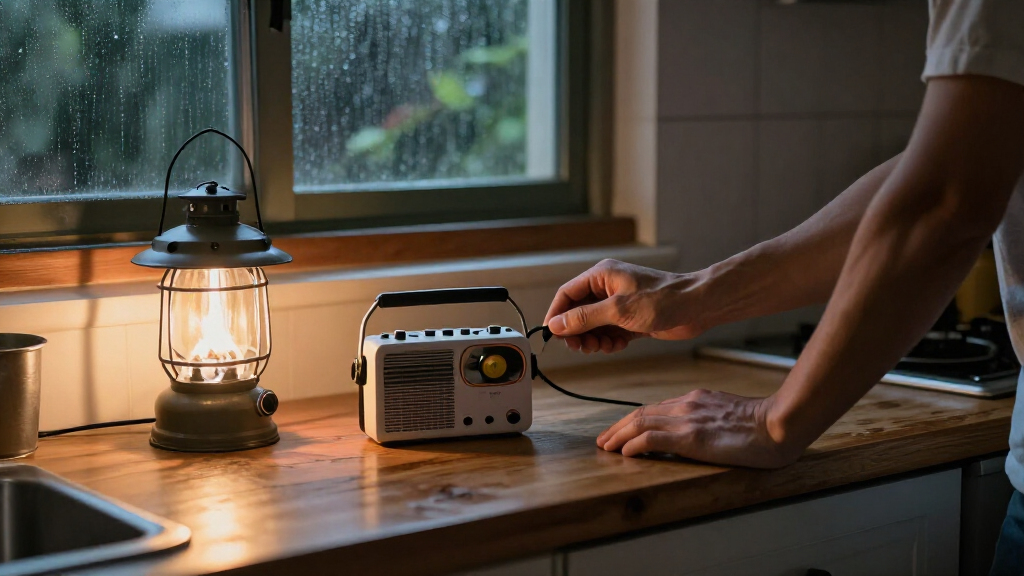
I compared the 15 radios on the features that change their usefulness during an outage: NOAA and AM/FM reception, built-in battery capacity, hand-crank and solar charging, phone-charging support, lighting and SOS functions, and how straightforward the listed controls and accessories appear to be. I also looked at portability and whether a model’s extras serve a clear emergency role, such as built-in charging cables or Bluetooth, rather than treating a longer feature list as an automatic advantage.
The ranking favors a balanced emergency setup over any single headline specification. The Midland ER310 leads as the best overall, while the ER310PRO earns a separate role for buyers who want Bluetooth; high-capacity models such as the Raynic 12,000mAh and other 10,000–12,000mAh options suit buyers who prioritize stored power. Models with built-in cables, compact stated capacities, or added alert and light functions rank for narrower needs. Because specifications alone cannot establish real-world reception, crank efficiency, or runtime, I focus on stated features and explain where buyers should verify details before purchase.
| hand crank emergency radio | Water resistance |
|---|---|
| Emergency Weather Radio with H | Water resistant; rating not specified |
| Solar Emergency Radio with 12, | Water resistant; rating not specified |
| Hand Crank Emergency Radio wit | Listed as waterproof; rating not specified |
| iRonsnow Solar Emergency Hand | Water resistant; rating not specified |
| Midland ER310 Emergency Crank | Not water resistant |
| RunningSnail Hand-Crank Emerge | Water resistant; rating not specified |
| Leaton Hand Crank Emergency Ra | IPX6 |
| Midland ER310PRO Portable Emer | — |
| Raynic Emergency Weather Radio | IPX3 |
| Emergency Radio with Hand Cran | IPX6 |
| Raynic Emergency Weather Radio | IPX3 |
| RunningSnail Hand Crank Emerge | Water repellent |
| Raynic Emergency Weather Radio | IPX3 |
| Emgykit Hand Crank Emergency R | — |
| FosPower A1 NOAA Emergency Wea | — |
Factors to Consider When Choosing Hand Crank Emergency Radios
Choosing among hand crank emergency radios is less about finding the longest feature list and more about building a workable outage kit. These broader checks can help you avoid paying for a feature that does not match how you plan to use the radio.
Treat Crank and Solar Power as Backup Methods
A hand crank can add some power when outlets are unavailable, but it is usually a labor-intensive way to recharge a device rather than a replacement for a charged battery. Solar charging also depends on available light, panel size, and placement, so performance may fall short indoors or during poor weather. A common mistake is buying a radio based on the presence of a crank or panel without checking what the manufacturer says those methods can power. Read the product specifications for charging time and expected output, and plan to keep the internal battery charged before an emergency. For longer outages, consider how you will ration phone charging and whether you have another power source.
Choose Battery Capacity for Your Actual Charging Needs
Battery capacity affects how much stored energy a radio may have for its own operation and device charging, but a larger number does not automatically mean more useful runtime in every situation. The roundup includes stated capacities from 2,000mAh and 5,000mAh to 10,000mAh and 12,000mAh, plus one model specified in milliwatt-hours. Check whether the stated capacity refers to the radio’s internal battery and whether the manufacturer provides realistic output and runtime details. If you mainly need alerts and a flashlight, a smaller battery may be easier to carry; if phone charging matters, extra reserve may be more appealing. Avoid assuming that every listed milliamp-hour is available at the phone’s charging port.
Check Alert Reception and Local Coverage
NOAA weather-band support is useful only if the radio can receive alerts where you plan to keep it. Reception depends on location, terrain, building materials, antenna design, and station coverage, so a feature label alone cannot promise reliable service. Before buying, check that the model supports the bands used in your area and learn how to tune or set alerts before an outage. If you expect to use the radio indoors, look for clear antenna and reception instructions and consider testing it from the intended room. AM/FM reception can also provide information or entertainment when weather alerts are not the main need.
Prioritize Cables and Ports You Will Actually Use
Built-in charging cables, like those listed for the RunningSnail three-cable model and the 7,400mWh option, can reduce the number of separate accessories you need to pack. They can also be a poor fit if their connector types do not match your devices or cannot be replaced when damaged. Check the port types, supported output, and whether a separate cable is still needed for your phone. Make a small compatibility list for the devices you expect to charge, including any connector or adapter requirements. A simpler radio with a suitable USB port may serve you better than several integrated leads that do not fit your gear.
Match Extra Features to the Emergency Plan
Flashlights, SOS alarms, and Bluetooth can add practical value, but every extra should solve a problem you expect to face. A light may help during a blackout, while an SOS alarm can matter if you need to signal for attention; Bluetooth is more useful when the radio also serves as an everyday speaker. Extra functions can add controls and create more settings to learn, so check how they are activated and whether they work independently of the radio. Do not let a long feature list distract from core needs such as alert reception, battery reserve, and a usable interface. Choose the extras that support your plan rather than treating every added feature as necessary.
Think About Storage, Durability, and Maintenance
An emergency radio needs to remain accessible and ready, not just have appealing specifications. Check the product dimensions and weight if you plan to store it in a compact kit, carry it outdoors, or keep it within reach at home. Review the manufacturer’s care guidance for battery storage, charging intervals, and protection from moisture, since a neglected rechargeable battery may not be ready when needed. Controls should be learnable before an emergency, especially tuning, alert modes, and charging functions. Store the radio with any needed cables and keep it charged according to its manual, then periodically confirm that it still powers on and receives stations.
Frequently Asked Questions
Can a hand-crank emergency radio fully charge my phone?
That depends on the radio, its stored battery, and the phone, so do not assume a few minutes of cranking will provide a full phone charge. A crank is generally better viewed as a way to add limited backup energy when other charging options are unavailable. Check the manufacturer’s stated output and crank-to-charge information, and compare it with your phone’s battery needs. Models with larger internal batteries may offer more stored energy, but their actual usable output still matters. For emergency planning, conserve phone power and keep a separate power bank if reliable phone charging is a priority.
Is a 12,000mAh radio a better buy than a smaller-capacity model?
It can be a better fit if you expect to use the radio to charge devices and want more stored reserve, but capacity alone does not settle the choice. The lineup includes 12,000mAh models alongside 10,000mAh, 5,000mAh, and 2,000mAh options, as well as a model described in milliwatt-hours. Compare output, charging ports, radio functions, and portability before deciding. A smaller unit may make more sense in a lightweight kit or when the radio is mainly for alerts and light. Check the stated runtime and charging details rather than inferring them from battery capacity alone.
Should I rely on the solar panel or crank during a long outage?
I would treat both as backup methods, not as the main plan for keeping a radio and phone powered through an extended outage. Solar charging depends on sunlight and panel performance, while hand cranking takes effort and may add power slowly. A charged internal battery and a separate power bank offer a more predictable starting reserve. Read the manufacturer’s charging estimates and keep the radio topped up before severe weather or travel. If you expect a long outage, plan how to conserve power and what other charging sources you can access.
What should I check before choosing a radio with built-in charging cables?
Confirm that the integrated connectors match the devices you own and that the radio supports the charging output those devices need. The built-in cables on some models can simplify packing, but they may not suit every phone or tablet, and an integrated lead can be inconvenient if it is damaged. Check whether the radio also has a standard USB port and whether you can use your own cable. Consider how many devices you may need to support and whether you are willing to carry adapters. Matching cables to your emergency kit before purchase can prevent a mismatch when the radio is needed.
Which features matter most for an emergency radio kept at home?
For home use, I would put dependable access to local weather and broadcast stations, clear controls, and a charged battery ahead of extras. NOAA and AM/FM support can help with different kinds of information, but reception varies by location and the radio should be checked where you plan to use it. A flashlight or SOS alarm may add value during a blackout, while Bluetooth is less central unless you also want everyday audio. Check where the radio will be stored and whether it can be reached quickly. Practice tuning and charging it before an outage rather than learning the controls under pressure.
Conclusion
Best overall: I’d start with the Midland ER310 for a focused emergency-radio setup. Best premium: choose the Midland ER310PRO if Bluetooth is a meaningful extra for you. Best for stored power: compare the Raynic 12,000mAh and other 10,000–12,000mAh models, checking output and ports rather than capacity alone. Best for beginners: pick the model whose controls, charging instructions, and alert setup are easiest for you to learn; the standard ER310 is a sensible place to begin. For specific needs, choose a built-in-cable model to simplify packing, or a smaller-capacity option such as the iRonsnow if portability matters more than phone-charging reserve. The right choice is the radio you can keep charged, operate confidently, and match to your local alert and charging needs.
Halloween Picks
halloween
As an affiliate, we earn on qualifying purchases.