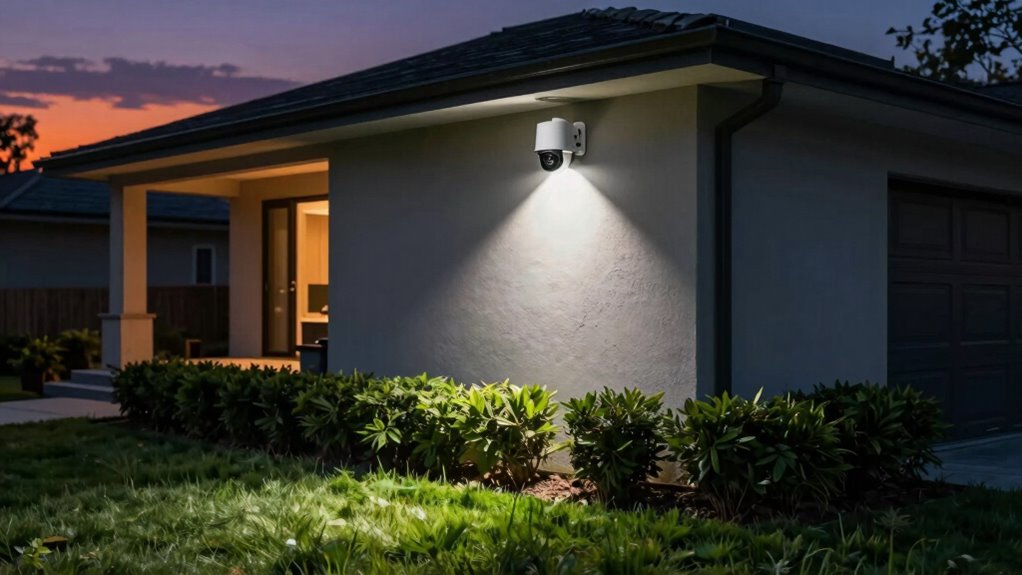

A security floodlight camera combo pairs bright motion-triggered lighting with surveillance video in a single unit, and the differences between models come down to three things: resolution, coverage, and whether you’re locked into a subscription. The aosu Wired Floodlight Camera earns the best overall spot for balancing 3K video with 2600 lumens of lighting without a mandatory monthly fee. If you want maximum coverage, the eufy E340 with its dual lenses and 360° tracking is the premium choice, while the Blink Outdoor 4 Floodlight is the easiest route in for renters or anyone avoiding wiring work. The main tradeoff in this category is power: wired models deliver brighter lights and continuous reliability, while battery models trade lumens for install flexibility. Keep reading for the full breakdown of all seven.

Get emergency and outdoor gear delivered free with Prime
- Fast, free delivery on millions of items
- Prime Video, Amazon Music and more included
- Member-only deals all year
Key Takeaways
- Resolution separated the field more than any other spec: the three 3K models (aosu, E340, and the generic 3K UHD) captured license plates and faces at distance, while both Blink wired models capped out at 1080p — a real limitation once footage is zoomed.
- Lumen output varied wildly: from 700 lumens on the Blink Outdoor 4 to 2600 lumens on the wired Blink, aosu, and 3K UHD models. The wireless options simply cannot match wired power for lighting driveways and large yards.
- Subscription economics favored eufy: local storage on the E340 and E30 avoids recurring fees, whereas the Blink lineup pushes cloud plans that can exceed the camera’s cost within two years.
- The eufy E340’s dual-lens 360° design was the only option that eliminates blind spots entirely — every fixed-lens competitor requires careful mounting angle decisions or leaves gaps near doorways.
- Two Blink wired models appeared with near-identical core hardware, differing mainly in bundled accessories — a reminder to check exactly what’s in the box before paying more for a familiar name.


| security floodlight camera combo | Power | Resolution | Floodlight brightness |
|---|---|---|---|
| Blink Wired Floodlight Camera | Connects to existing outdoor wiring | — | — |
| Wired 3K UHD Outdoor Floodligh | — | 3K UHD | 2,200 lumens |
| aosu Wired Floodlight Camera | Hardwired | 3K UHD | 2600 lumens |
| eufy Security Floodlight Camer | — | — | 2,000 lumens |
| Blink Outdoor 4 Floodlight Cam | — | — | — |
| Blink Wired Floodlight Camera | Existing outdoor wiring | 1080p HD | — |
| eufy Security Floodlight Camer | Hardwired | 2K HD | 2,000 lumens |
More Details on Our Top Picks
Blink Wired Floodlight Camera with 2600-Lumen Lighting, 1080p HD Live View, Motion Detection and Siren, Works with Alexa
This option stands out for Alexa integration done right — live view on Echo Shows, motion announcements, and arm/disarm by voice feel seamless rather than bolted on. The 2600-lumen floodlights match the brightness of the aosu pick, and the built-in siren plus dual-zone motion detection give it genuine deterrent capability. Compared with the Blink Outdoor 4 Floodlight, this wired version trades installation flexibility for reliability: no battery swaps and no worries about cold weather draining cells. The tradeoff is resolution. At 1080p, it captures noticeably less detail than the 3K Wired or eufy E340, which matters if you need to identify faces or plates. Person detection also sits behind a subscription, so the total cost of ownership creeps up unless you add a local storage accessory.
Pros:- Bright 2600-lumen floodlights matching pricier picks
- Deep Alexa integration with voice live view
- Customizable dual-zone motion detection with siren
- Wired power means no battery maintenance
Cons:- 1080p resolution trails the 3K competitors
- Person detection and cloud storage require a subscription
Best for: Homeowners already running Alexa who want a dependable hardwired floodlight cam with voice control
Not ideal for: Anyone wanting sharp forensic detail without a subscription — 1080p and paywalled person detection limit both
- Lighting:2600-lumen LED floodlights
- Video:1080p HD live view
- Night view:Color
- Audio:Two-way audio
- Motion detection:Dual-zone, customizable
- Siren:Built-in security siren
- Power:Connects to existing outdoor wiring
- Compatibility:Works with Alexa
Our verdict“A smart buy for Alexa-centric households that prioritize ecosystem fit and bright deterrence over maximum video detail.”
Wired 3K UHD Outdoor Floodlight Security Camera with Alexa Compatibility
This model makes the most sense for buyers who want premium specs without recurring costs. It records in 3K UHD — matching the aosu and beating the Blink Wired — and ships with a 64 GB SD card included, so 24/7 continuous recording works out of the box with no monthly fee. Full-color night vision and a 105 dB siren (louder than the eufy E340’s 95 dB) round out a strong deterrence package. The tradeoffs are in polish and flexibility: the Yoosee app is less refined than Blink’s or eufy’s ecosystems, coverage is a fixed 270° with no pan-tilt tracking like the aosu, and it needs AC wiring with no battery fallback. For a driveway or side gate where you want sharp footage and a loud siren on a budget, those compromises are easy to accept.
Pros:- 3K UHD recording at a budget price point
- 64 GB SD card included for fee-free local storage
- 24/7 continuous recording capability
- Loud 105 dB siren and full-color night vision
Cons:- App experience is less refined than Blink or eufy alternatives
- Requires hardwired AC power with no battery option
Best for: Budget-conscious homeowners who want 3K detail and continuous local recording with zero subscription fees
Not ideal for: Buyers who want a polished app experience or pan-tilt tracking — this is a fixed-camera setup with basic software
- Resolution:3K UHD
- Night vision:Full-color
- Adjustable coverage:270°
- Floodlight brightness:2,200 lumens
- Siren:105 dB
- Recording:24/7 continuous
- Storage:64 GB SD card included
- Weather resistance:IP65
Our verdict“The most feature-per-dollar pick here if you can live with basic software and a wired install.”
aosu Wired Floodlight Camera, 3K, 2600 Lumens
This is the pick I’d point most people toward, because it solves the biggest weakness of fixed floodlight cams: blind spots. With 360° pan and 90° tilt plus motion tracking, one unit can watch an entire yard where the Blink Wired or the 3K value pick would each cover a single arc. The 3K continuous recording and AI identification of people, pets, and vehicles come standard — no subscription, unlike Blink’s paywalled person detection. The 2600-lumen floodlight pairs with a loud alarm for layered deterrence. Compared with the eufy E340, its single lens means you give up the telephoto close-up detail, and the 6x zoom is digital only, so detail softens when you punch in. Hardwiring is also non-negotiable. Still, for whole-property coverage from one mounting point, nothing else in this lineup matches it.
Pros:- 360° pan and 90° tilt with motion tracking eliminates blind spots
- 3K continuous recording with no monthly fee
- AI detection for people, pets, and vehicles built in
- Bright 2600-lumen light with combined light-and-alarm deterrence
Cons:- Digital-only zoom loses detail at distance
- Hardwired installation required
Best for: Homeowners who want one camera to cover a wide yard with active tracking and no subscription costs
Not ideal for: Renters or anyone without existing junction-box wiring — there’s no battery or solar option
- Resolution:3K UHD
- Pan/Tilt:360° horizontal / 90° vertical
- Floodlight brightness:2600 lumens
- Detection:AI people/pet/vehicle ID with 3 PIR sensors
- Detection coverage:270°
- Recording:24/7 continuous
- Zoom:6x digital
- Power:Hardwired
Our verdict“The best all-around choice for coverage-hungry homeowners who can hardwire a camera and want subscription-free smarts.”
eufy Security Floodlight Camera E340 with Dual Lenses and 360° Coverage
This pick makes the most sense for buyers who refuse to compromise on identifiable detail. Its dual-lens design — a 3K wide-angle paired with a 2K telephoto and 8x hybrid zoom — lets you read a license plate or a delivery label that the aosu’s digital zoom would smear. AI tracking and 360° pan-tilt coverage keep it competitive on blind spots, and local recording with no subscription puts it in eufy’s fee-free tradition. The honest catch: resolution drops to 2K when AI tracking or dual-view modes are active, so you don’t always get the headline 3K. The 2,000-lumen light is also the dimmest in this lineup — the Blink Wired and aosu both output 2600. And local storage means buying a microSD card or the HomeBase S380, which pushes the real cost up. For evidence-grade footage, though, it earns its premium slot.
Pros:- Dual lenses deliver sharp zoomed detail rivals can’t match
- 8x hybrid zoom with AI auto-tracking
- Continuous local recording with no subscription
- Dual-band Wi-Fi 6 for reliable streaming
Cons:- Resolution drops to 2K during AI tracking or dual-view use
- Local storage requires a separately purchased microSD card or HomeBase
- 2,000-lumen light is the least bright in this lineup
Best for: Detail-obsessed homeowners who need zoomed footage sharp enough to identify faces and plates
Not ideal for: Buyers on a tight budget — storage accessories add real cost, and the floodlight is dimmer than cheaper rivals
- Wide-angle camera:3K
- Telephoto camera:2K
- Zoom:8x hybrid
- Coverage:360° pan-tilt
- Detection range:Up to 50 ft (15 m)
- Floodlight brightness:2,000 lumens
- Alarm volume:95 dB
- Storage:microSD up to 128 GB or HomeBase S380
- Wi-Fi:Dual-band Wi-Fi 6
Our verdict“The premium choice for buyers who value forensic zoom detail over raw brightness, provided they budget for storage.”
Blink Outdoor 4 Floodlight Camera, 700 Lumens, 1-Camera System
This model is better suited to anyone who can’t or won’t run wiring — sheds, fences, detached garages, or rental properties. It’s the only truly wire-free pick here, running up to two years on bundled batteries, where every other option demands a junction box. The catch is that the wire-free design forces real compromises: 700 lumens is a fraction of the 2,600 put out by its sibling, the Blink Wired Floodlight Camera, so it illuminates rather than floods. Night vision is infrared only — no color like the wired version — and 1080p trails the 3K picks. The subscription math also stings: cloud storage and AI detection both sit behind a plan, and local backup needs a separately sold Sync Module XR plus microSD card. As a set-and-forget supplemental camera, though, nothing else here installs this easily.
Pros:- Truly wire-free installation anywhere in Wi-Fi range
- Up to two-year battery life with included batteries
- Bundled Sync Module Core and full mounting kit
- Two-way audio and Alexa compatibility
Cons:- 700-lumen light is far dimmer than wired competitors
- Cloud storage and AI detection require a subscription
- Infrared-only night vision with no color mode
Best for: Renters and homeowners covering unwired spots like sheds, fences, or detached garages
Not ideal for: Anyone needing serious illumination or color night footage — 700 lumens and IR-only vision fall well short of wired rivals
- Lighting:700 lumens, motion-triggered LED
- Video:1080p HD live view
- Night vision:Infrared
- Audio:Two-way audio
- Battery life:Up to two years
- Motion detection:Dual-zone enhanced
- Compatibility:Alexa
- Local storage:Up to 256 GB with separately sold Sync Module XR and microSD
Our verdict“The only pick here for spots without wiring — just accept it’s a monitoring light, not a true floodlight deterrent.”
Blink Wired Floodlight Camera with 2600-Lumen LED Lighting
I’d pick this Blink when bright lighting and straightforward alerts matter more than wide-area tracking. Its 2,600-lumen LEDs outshine the eufy Security Floodlight Camera E30’s 2,000-lumen lights, which can help illuminate a driveway or entry when motion triggers the camera. Customizable motion zones let me narrow alerts around the areas I care about, while two-way audio and a built-in siren add ways to respond from the app. Compared with the E30’s 360° pan-and-tilt view and continuous recording, this Blink has a simpler fixed-camera approach and 1080p video. That keeps the choice clear, but it also means less detail and no automatic subject tracking. I’d also factor in the wiring requirement and that person detection and cloud storage need an optional subscription; local storage accessories are separate.
Pros:- 2,600-lumen LED lighting for bright motion-triggered illumination
- Customizable dual-zone motion detection helps focus alerts
- Two-way audio and a built-in siren provide ways to respond
- Works with Alexa
Cons:- Requires existing outdoor wiring
- Person detection and cloud storage require an optional subscription
- Local storage accessories are sold separately
Best for: Homeowners with existing outdoor wiring who want bright motion-triggered lighting, basic live viewing, and Alexa compatibility at an entry or driveway.
Not ideal for: Buyers seeking 360° coverage, 2K detail, or continuous recording; the eufy Security Floodlight Camera E30 offers those features in this lineup.
- Resolution:1080p HD
- Lighting:2,600 lumens
- Motion detection:Dual-zone, customizable
- Audio:Two-way audio
- Siren:Built-in
- Power:Existing outdoor wiring
- Compatibility:Alexa
- Included:1 camera and installation kit
Our verdict“Choose this Blink for bright, wired entryway or driveway coverage with Alexa support, provided 1080p fixed viewing meets your needs.”
eufy Security Floodlight Camera E30 (2K, AI Detection & Tracking, Outdoor)
The eufy E30 is the stronger fit when coverage across a broad yard matters more than maximum floodlight output. Its 360° pan-and-tilt view, scheduled patrols, and AI tracking can follow people and vehicles across the camera’s field of view; the Blink Wired Floodlight Camera instead offers a fixed view and brighter 2,600-lumen lighting. The E30’s 2K resolution gives me more image detail than Blink’s 1080p feed, while 2,000-lumen motion-activated lights support full-color night footage. Hardwired power enables 24/7 recording, and an IP65 rating suits outdoor installation. The tradeoff is that it still needs hardwired installation, and the product data doesn’t specify local storage capacity or subscription terms. I’d check those recording details before choosing it as a long-term camera system.
Pros:- 360° pan-and-tilt coverage with scheduled patrols or manual control
- AI detection tracks humans and vehicles
- 2K video and 2,000-lumen lights support detailed color footage at night
- Hardwired power supports 24/7 recording, with IP65 weather resistance
Cons:- Requires hardwired installation
- Local storage capacity and subscription details are not specified
Best for: Homeowners with hardwired power who need a camera to patrol and track activity across a wide yard or multiple approach paths.
Not ideal for: Buyers prioritizing the brightest floodlight or clearly stated storage options; Blink’s 2,600-lumen model is brighter, while E30 storage details aren’t provided.
- Resolution:2K HD
- Floodlight brightness:2,000 lumens
- Coverage:360° pan/tilt
- AI features:Human and vehicle detection with auto-tracking
- Connectivity:2.4GHz Wi-Fi with Power Amplifier (50% increased range)
- Power:Hardwired
- Recording:24/7 continuous
- Weather resistance:IP65
Our verdict“Choose the E30 for hardwired, wide-area monitoring with 2K AI tracking, after confirming its storage and subscription options suit you.”

How We Picked
I evaluated each combo against the four factors that actually determine long-term satisfaction: video quality (resolution, night performance, and whether detail survives digital zoom), lighting output (raw lumens plus how well the beam actually illuminates the camera’s own field of view), installation and power requirements (wired versus battery, mounting flexibility, and app setup difficulty), and ongoing cost (local storage versus forced subscriptions). Because a floodlight camera lives outdoors year-round, I also weighed weather resistance ratings and how each manufacturer handles motion detection false alarms from animals, passing cars, and shifting shadows.
The ranking logic follows a simple principle: a combo should be genuinely good at both jobs, not excellent at one and mediocre at the other. That’s why the aosu landed on top — its 3K sensor and 2600-lumen output are balanced, with no subscription dependency. The eufy E340 ranks as the premium pick because its 360° coverage solves a problem no other model here addresses, while the Blink models fill the value and beginner tiers on the strength of their simple Alexa integration, offset by lower resolution and cloud-plan pressure. Models with a single standout trait but a notable weakness — like the dim wireless Blink Outdoor 4 — rank lower despite their convenience.
| security floodlight camera combo | Power |
|---|---|
| Blink Wired Floodlight Camera | Connects to existing outdoor wiring |
| Wired 3K UHD Outdoor Floodligh | — |
| aosu Wired Floodlight Camera | Hardwired |
| eufy Security Floodlight Camer | — |
| Blink Outdoor 4 Floodlight Cam | — |
| Blink Wired Floodlight Camera | Existing outdoor wiring |
| eufy Security Floodlight Camer | Hardwired |
Factors to Consider When Choosing Security Floodlight Camera Combo
Before settling on a specific model, it helps to understand the structural decisions baked into every floodlight camera purchase. These factors determine whether your combo still fits your needs two years from now.Wired Power vs. Battery Convenience
The single biggest fork in the road is power. Wired models require an existing junction box or new electrical work, but they reward you with 2600-lumen output, unlimited recording duty cycles, and lights that never dim as a battery drains. Battery models like the Blink Outdoor 4 install in minutes anywhere, but you sacrifice roughly 75% of the lighting power and accept recharging cycles — which, in winter, can shrink dramatically. A common mistake is underestimating how often you’ll want to reposition or clean the unit; if it’s mounted at a height requiring a ladder anyway, the installation savings of battery power matter less than they seem. If you’re replacing an existing floodlight fixture, wiring is usually a straightforward swap. If you’re covering a detached shed or fence line with no power nearby, battery is the only realistic choice regardless of its lighting compromises.
Resolution and the Zoom Problem
Resolution matters more in this category than in indoor cameras because floodlight cameras are typically mounted high and pointed at large areas — driveways, side yards, front walks. A 1080p image looks fine on a phone screen in full frame, but the moment you need to read a plate or identify a face 30 feet from the lens, the detail collapses. 2K and 3K sensors hold usable detail at two to three times that distance. My advice: match resolution to the size of the area you’re covering. A small porch or narrow side entry is fine territory for 1080p, and paying for 3K there is wasted budget. But for a two-car driveway or a deep backyard, resolution is the feature most worth paying extra for — more than smart features, more than sirens, and more than marginal lumen gains.
Subscription Costs and Storage Ownership
The sticker price of a floodlight camera is rarely the full cost. Several major brands — Blink included — gate cloud recording, person detection, and even some alert features behind monthly subscription plans, and two years of fees can quietly double your total spend. Others, like eufy’s E30 and E340, store footage locally on the device or a base station, so you own your recordings outright with no recurring charge. The honest tradeoff: local storage can be stolen or damaged if the camera itself is destroyed, while cloud storage survives anything short of the provider shutting the service down. Read the fine print on free tier features too — some brands offer cloud clips without a plan, but only for 30 days on select models, and person detection is often the first feature locked behind payment. Decide your storage philosophy before you choose a brand, because switching ecosystems later means buying new hardware.
Field of View and Blind Spots
Most floodlight cameras advertise a wide field of view, but the number hides two practical problems. First, the lighting spread is often narrower than the camera’s view, so the edges of your footage can be dim or invisible at night even though the sensor technically captures them. Second, a fixed camera mounted on a wall sees almost nothing directly beneath itself — a classic blind spot exactly where package thieves stand. The eufy E340 answers this with a motorized 360° head that can track subjects and reorient, but fixed-lens models demand careful mounting: higher and more central is usually better, angled away from the wall plane. Before buying, walk your property at night and note where existing light falls. The best camera in the lineup can’t compensate for being pointed at the wrong slice of your yard.
Smart Detection Quality
Every camera here claims smart motion detection, but the experience ranges from calm to chaotic. Basic systems alert on any movement — leaves, headlights, cats — which trains you to ignore notifications, which defeats the purpose of the camera. AI-based person and vehicle detection dramatically cuts false alarms, and on models like the eufy E30 it includes subject tracking that follows movement across the frame. Check whether these features require a subscription on your chosen model, because they frequently do on entry-tier hardware. Also consider smart-home alignment: if your household runs on Alexa, Blink and aosu integrate natively, while mixed households should verify cross-platform support before committing. A loud siren is a nice deterrent on paper, but neighbors report that untriggered sirens from false alarms sour quickly — detection accuracy is what makes the siren feature usable.
Weather Resistance and Longevity
An outdoor camera lives through temperature swings, rain, dust, and UV exposure for years, and build quality varies more than spec sheets suggest. Look for at least an IP65 rating, which seals against water jets and dust — anything less is a gamble under an uncovered eave. Cold-weather performance deserves special attention for battery models: lithium cells lose substantial capacity below freezing, so a camera rated for six months per charge may need monthly attention in northern winters. Wired models dodge that problem but add their own long-term consideration — the LED floodlights are rated for tens of thousands of hours, yet cheaper housings can yellow, crack, or lose their gasket seals in direct sun. Position matters too: any camera under a deep eave will outlast one mounted fully exposed on a garage gable, regardless of rating.
Frequently Asked Questions
Can I install a wired floodlight camera myself without an electrician?
In most cases, yes — provided you’re replacing an existing fixture rather than adding a new one. A wired combo like the Blink or aosu models connects to the same wires an old floodlight used: line, neutral, and ground, typically secured with wire nuts behind the mounting plate. The process involves shutting off the breaker, verifying power is off, and following the manufacturer’s wiring diagram, which most homeowners complete in under an hour with basic tools. The exception is new installations, where no junction box exists — that requires running electrical line through your wall or attic, and permits in many jurisdictions, which is when an electrician earns their fee. If your existing fixture is on a switched circuit, note that the camera needs constant power to record, so you’ll want to leave the switch on or bypass it entirely.
Do any of these floodlight cameras work without a subscription?
Yes, and the difference between brands is substantial. The eufy E30 and E340 store footage locally, so core functions — recording, live view, AI detection — work fully with no monthly payment, and you can add a base station or microSD capacity if you want longer retention. The Blink lineup is the opposite: without a plan, you generally get live view and motion alerts but no saved clips, which means an incident that happens while you’re asleep leaves you with nothing to show police or insurers. The aosu and 3K UHD models sit in between, offering local storage options that cover the essentials. My recommendation is to price out three years of subscription fees before buying a cloud-dependent camera — that number, added to the purchase price, is the honest cost of comparison against a local-storage model.
Is 3K resolution worth paying more for over 1080p?
It depends almost entirely on the distance between your camera and what you want to identify. At 15 feet or less — a porch, a front door, a narrow side entry — 1080p is generally adequate for recognizing faces and reading package labels, and the extra resolution buys you little. Beyond 25 feet, the gap becomes decisive: a 3K sensor like those on the aosu or 3K UHD models holds facial detail and license plate characters where 1080p footage turns into a smear of pixels the moment you zoom. There’s also a night-vision benefit, since higher-resolution sensors paired with the floodlight’s illumination produce cleaner low-light images with less noise. If your primary concern is a long driveway or deep backyard, resolution is the first place I’d spend extra. For close-range coverage, save the money and invest in better mounting height instead.
Are 2600-lumen floodlight cameras too bright for neighbors?
They can be, and placement angle matters more than raw output. 2600 lumens is comparable to a traditional two-bulb floodlight — entirely normal for illuminating a driveway, but obnoxious if the fixture points across a property line into a neighbor’s window. Many models let you adjust brightness and motion sensitivity zones in the app, which solves most disputes: you can dim the light to a lower idle level, restrict motion triggers to your own property, and set schedules so it isn’t flaring at 3 a.m. from passing cars. Mounting height helps too, since a fixture aimed downward at 9–10 feet keeps light on your surfaces rather than scattering it sideways. If you live close to neighbors — townhouses, zero-lot-line homes — look for a model with configurable activity zones before buying, because a fixed-trigger camera at full brightness will generate complaints quickly.
Can a floodlight camera replace a full security system?
It covers the deterrent and evidence roles well, but not the full security picture. A floodlight camera does the two things most break-ins actually require — it illuminates the approach and captures identifying footage — and the built-in sirens on models like the Blink wired units add an active deterrent. What it can’t do is monitor entry points it can’t see, so a single camera on the driveway leaves doors, windows, and back entrances unwatched. A practical approach is starting with one combo at your most vulnerable approach, then expanding with cheaper wire-free cameras for blind spots rather than more floodlight units, since you rarely need multiple 2600-lumen fixtures on one property. Also know the limits on response: these cameras notify you, not a monitoring center, so if you want professional dispatch during an alarm, you’ll still need a separate monitored system or a brand that offers that service tier.
Conclusion
Mapping these seven picks to buyer types: the aosu Wired Floodlight Camera is my best overall recommendation because it refuses to compromise on either half of the combo — 3K footage, 2600 lumens, and no subscription dependency — which suits the largest number of homeowners. The eufy E340 is the premium pick for large properties or anyone frustrated by blind spots, since its 360° dual-lense design sees what every fixed camera here cannot. For value, the Blink Wired Floodlight Camera delivers serious lighting and Alexa integration at an accessible entry point, provided you accept 1080p and either budget for cloud storage or live with alerts-only. Beginners and renters should start with the Blink Outdoor 4 Floodlight — its tool-free install and gentle learning curve outweigh its dim 700-lumen output for a first camera. And if you want smart tracking without the E340’s premium price, the eufy E30 with AI subject following is the mid-range sweet spot for tech-forward buyers. Whatever you choose, decide your power situation, storage philosophy, and coverage area first — in that order — and the right pick from this lineup will be obvious.