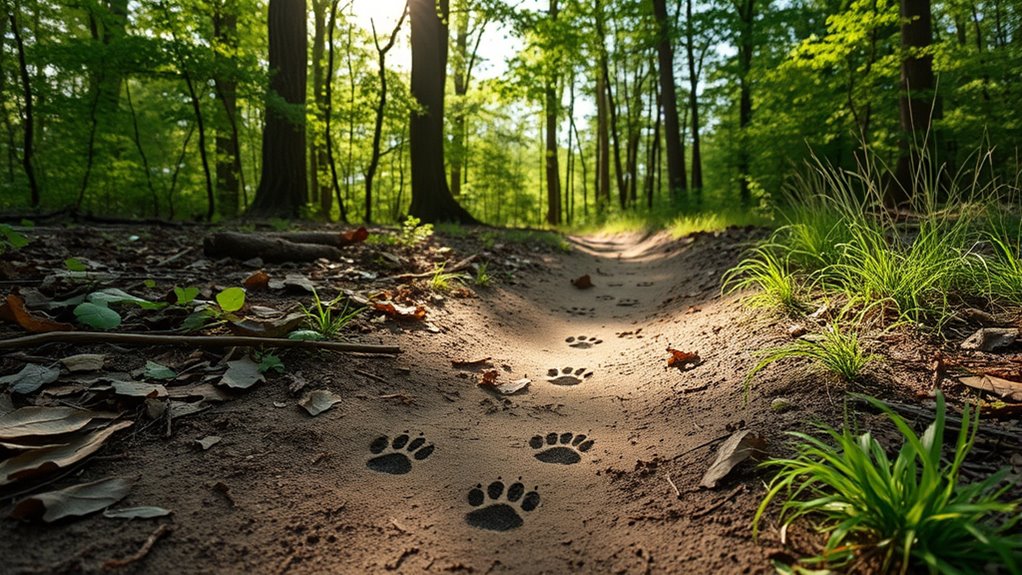

To track animals and understand signs, observe their movement patterns, such as track spacing and trail shape, to gauge speed and caution. Look for physical evidence like scat, bedding, chewed vegetation, or rubbed trees, which reveal feeding, resting, or territorial behaviors. Listening for sounds and noticing subtle landscape cues also help identify activity. With patience and practice, you’ll develop keen instincts and recognition skills. Keep going, and you’ll uncover even more ways nature shares its secrets.
Key Takeaways
- Study animal movement patterns, such as track spacing and trail shape, to determine activity level and direction.
- Recognize physical signs like scat, bedding sites, and rubbed trees to locate recent activity and behavior.
- Learn species-specific signs and regional clues to improve identification and tracking accuracy.
- Use auditory cues like bird calls and insect sounds to supplement physical sign observations.
- Practice patience, quietness, and pattern recognition to enhance overall tracking skills and understanding of animal signs.

Tracking animals and understanding their signs is a vital skill for anyone interested in wildlife observation or outdoor survival. When you focus on animal movement and sign interpretation, you gain the ability to read the landscape and uncover clues about the animals that inhabit it. Recognizing these signs helps you anticipate their behavior, find fresh tracks, and even predict where they might be headed. This skill isn’t just about spotting footprints; it’s about developing a keen eye for subtle cues that reveal an animal’s presence and activities.
Mastering animal signs and movement reveals their habits and pathways in the wild.
Your first step is to observe animal movement patterns. Notice how tracks are spaced out—closer together might mean the animal was resting or moving slowly, while wider spacing indicates faster movement. The direction of movement is vital; following fresh footprints can lead you to water sources, feeding areas, or resting spots. Look at the trail itself—are the tracks linear, winding, or interrupted? These clues tell you how the animal moves through its environment, whether it’s cautious, rushing, or meandering. Tracking animal movement involves patience and constant observation, as even small changes in direction or stride length can reveal a lot about their current activity. Additionally, understanding a variety of signs and behaviors enhances your ability to interpret what the animals are doing.
Sign interpretation goes beyond footprints. Scat, bedding sites, chewed vegetation, and rubbed trees all tell stories about animal behavior. For instance, fresh scat indicates recent activity, while the presence of multiple droppings suggests a popular feeding or watering site. Rubbing marks on trees often point to territorial behavior, especially among deer and elk, while broken branches or stripped bark reveal feeding habits. Learning to interpret these signs requires you to familiarize yourself with different species’ behaviors and signs specific to your region. Over time, you’ll start to recognize patterns and make educated guesses about what the animals are doing and where they might go next.
In addition to observing physical signs, listen to sounds and watch for movement. Birds, insects, and other creatures often give away the presence of larger animals nearby. Combining these observations with your understanding of animal movement and sign interpretation enhances your overall tracking skills. Remember, the key is to remain quiet, patient, and attentive, as animals are highly sensitive to noise and disturbance. As you practice, you’ll become more intuitive at reading the landscape, turning scattered clues into a clear picture of wildlife activity. This mastery of animal signs and movement not only enriches your outdoor experience but also deepens your connection with the natural world.
Frequently Asked Questions
What Are the Ethical Considerations in Tracking Animals?
You must prioritize wildlife privacy and follow conservation ethics when tracking animals. Avoid causing stress or harm, and guarantee your activities don’t disturb their natural behaviors. Respect territorial boundaries and minimize your presence to prevent disruption. Always seek necessary permissions and consider the impact on ecosystems. Ethical tracking balances research benefits with protecting animal welfare and preserving their habitats, fostering responsible and sustainable conservation efforts.
How Can Technology Improve Animal Tracking Accuracy?
Think of technology as a compass guiding your efforts. You can boost animal tracking accuracy by enhancing GPS precision, ensuring you get pinpoint location data. Sensor integration also plays a crucial role, combining multiple data streams like movement, temperature, and activity levels to create a detailed picture. This synergy helps you monitor animals more effectively, making your tracking efforts smarter, more reliable, and ultimately more impactful in understanding animal behavior.
What Are Common Mistakes Beginners Make in Sign Identification?
You often make common errors like misidentifying signs or confusing tracks, especially when you’re new. Misidentification challenges arise from ignoring environmental clues or rushing the process. To improve, take your time to observe details carefully, compare signs with reliable references, and consider context. Avoid jumping to conclusions and stay patient, as accurate sign identification improves with practice and attention to subtle differences.
How Does Weather Affect Animal Sign Visibility?
You notice how rain-soaked leaves cling to the ground, making animal signs harder to spot. Weather patterns like rain, snow, or wind create visibility challenges, washing away tracks or obscuring scent marks. Bright sunlight can cast harsh shadows, hiding subtle clues. Wind carries scent trails away, and moisture dulls the clarity of footprints. To succeed, adapt to these changes, paying close attention to subtle signs that weather temporarily masks.
Can Tracking Methods Be Used for Urban Wildlife Monitoring?
Yes, you can use urban tracking methods for wildlife monitoring. By observing footprints, scat, or other signs in city environments, you gather valuable data on urban wildlife activity. You’ll need to adapt your techniques to the unique landscape, like using smaller tracking tools or focusing on green spaces. Urban tracking helps you understand animal movement patterns, population health, and human-wildlife interactions, making it a crucial part of effective wildlife monitoring in cities.
Conclusion
So, next time you fancy yourself a wildlife expert, remember that deciphering animal signs isn’t just a noble pursuit but a masterclass in patience and humility. After all, nature’s clues are subtle, and your knack for interpretation might just rival Sherlock Holmes—if he had a penchant for mud and feathers. In the end, understanding animals’ signs reminds us we’re only visitors in their mysterious, often unimpressed world. Happy tracking—if you dare to decipher the wild’s cryptic messages.