
Urban heat-related health threats can harm your well-being through heat exhaustion, heatstroke, and respiratory issues worsened by poor air quality. You can respond by seeking shaded areas, staying hydrated, and wearing lightweight clothing. Supporting green infrastructure like parks and tree-lined streets helps reduce city temperatures. Building health-aware policies and community efforts further protect your health. To learn practical ways to defend yourself against these risks, keep exploring the strategies that can make your environment safer.
Key Takeaways
- Urban heat islands and limited green spaces amplify heat exposure and health risks during heatwaves.
- Poor air quality from traffic and industry worsens heat-related health effects.
- Implementing green infrastructure like parks and green roofs can reduce urban temperatures.
- Building codes promoting ventilation and shaded walkways enhance safety during extreme heat.
- Community policies and advocacy support resilient urban environments and health protection measures.
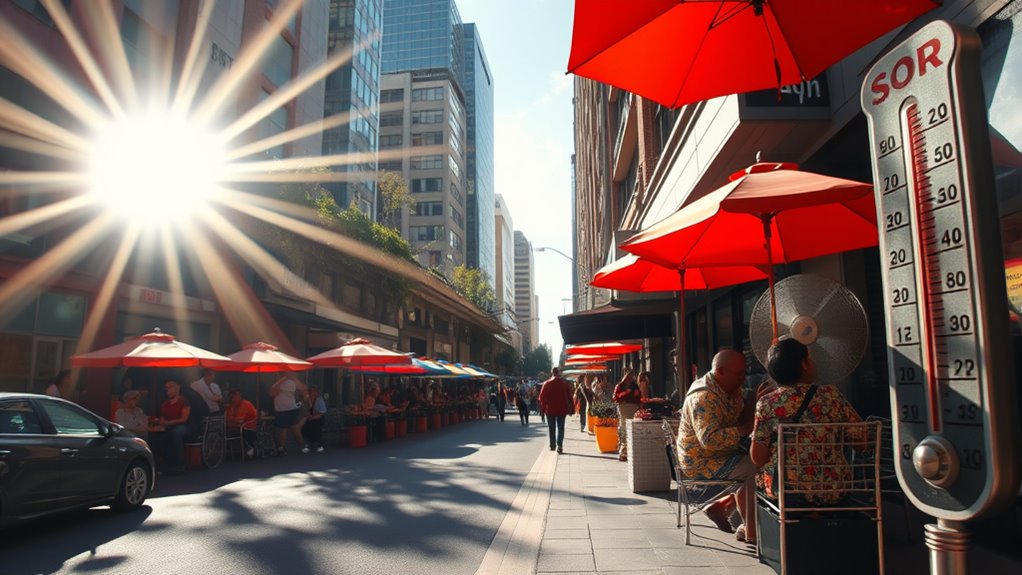
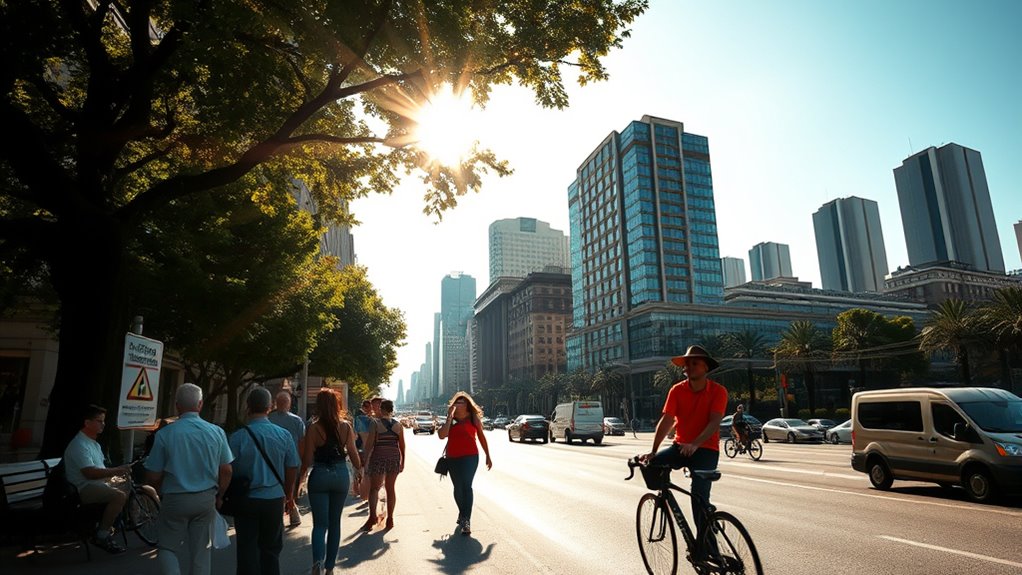
As temperatures rise due to climate change, urban areas are becoming increasingly dangerous for health because of intense heat. The design and layout of cities, known as urban planning, play a vital role in either mitigating or exacerbating these heat-related risks. Poorly planned urban environments often feature concrete, asphalt, and minimal green spaces, which absorb and radiate heat, creating the infamous urban heat island effect. This effect causes cities to be markedly hotter than surrounding rural areas, leading to higher temperatures that can threaten your health, especially during heatwaves. Additionally, urban planning influences air quality, which directly impacts how heat affects your body. For example, dense traffic, industrial zones, and limited ventilation trap pollutants like ozone, particulate matter, and nitrogen dioxide, all of which worsen the health impacts of extreme heat. Poor air quality can impair your body’s ability to cool down and increase the risk of heat exhaustion and heatstroke.
You can’t ignore the importance of urban planning when it comes to health risks during hot weather. Cities that prioritize green infrastructure—such as parks, tree-lined streets, and green roofs—help cool the environment and improve air quality. These natural features provide shade, reduce heat absorption by surfaces, and release moisture into the air, making urban spaces more comfortable and less hazardous during heatwaves. When urban planning incorporates these elements, you’ll notice a tangible difference in how oppressive the heat feels and how clean the air remains. Conversely, a lack of thoughtful planning can leave neighborhoods vulnerable, especially those with limited access to green spaces or with high traffic congestion that worsens pollution levels.
Addressing air quality alongside urban planning isn’t just about reducing pollution; it’s about protecting health in the face of rising temperatures. Implementing policies that encourage the creation of green corridors and restrict vehicle emissions can markedly lower heat stress and respiratory issues. Building codes that promote better ventilation, reflective surfaces, and shaded walkways further help keep you safer during heatwaves. As a resident or city dweller, understanding how urban planning decisions influence air quality and heat exposure empowers you to advocate for smarter development and resilient infrastructure. Protecting yourself from heat-related health threats requires a combination of personal precautions and community-wide planning efforts. By supporting initiatives that prioritize green spaces and cleaner air, you help create urban environments that are not only more livable but also better equipped to withstand the increasing risks posed by climate change.
Frequently Asked Questions
How Do Urban Heat Islands Form and Intensify Heat Risks?
You contribute to urban heat islands when you build or live in areas with lots of concrete, asphalt, and dark surfaces that absorb heat. To reduce this, cities can implement green roof initiatives and use reflective pavement, which bounce back sunlight instead of trapping heat. These measures help cool the environment, lowering heat risks, and making urban areas more comfortable and healthier for residents.
What Are the Long-Term Health Impacts of Heat Exposure?
Prolonged heat exposure can lead to serious long-term health effects, including chronic illnesses like cardiovascular and respiratory issues. You might also experience mental health impacts, such as increased stress, anxiety, and depression, especially during extreme heat events. Over time, these effects can reduce your overall quality of life, making it essential to take precautions and seek medical advice if you notice persistent symptoms.
How Can Vulnerable Populations Be Prioritized During Heat Waves?
During heat waves, you must prioritize vulnerable populations by actively engaging the community to identify those at greatest risk. You should allocate resources like cooling centers, hydration stations, and health services strategically, ensuring they reach at-risk groups first. By fostering community partnerships and understanding specific needs, you can effectively protect vulnerable populations, preventing serious health outcomes and saving lives when it matters most.
What Role Does City Planning Play in Mitigating Heat-Related Health Threats?
City planning plays a vital role in mitigating heat-related health threats by incorporating green roofs and increasing urban trees. These strategies reduce the urban heat island effect, cooling the environment and providing shade. By prioritizing green infrastructure, you help lower temperatures, improve air quality, and create healthier, more resilient communities. Implementing these plans guarantees vulnerable populations face less risk during heat waves, promoting overall public health and safety.
Are There New Technologies to Predict and Alert Communities About Heat Risks?
Yes, new technologies like heat warning systems and predictive modeling now help alert communities about heat risks. These systems analyze weather data, urban heat patterns, and health information to forecast dangerous heat events accurately. When you stay informed through these alerts, you can take timely precautions, such as seeking shade or staying hydrated. This proactive approach helps reduce heat-related health issues and keeps your community safer during heat waves.
Conclusion
To protect yourself from urban heat-related health threats, stay informed, stay hydrated, and stay cool. Recognize the signs of heat exhaustion and heatstroke, seek shade, and avoid strenuous activities during peak heat hours. Prepare your home with proper ventilation, plant trees around your surroundings, and support community cooling initiatives. By staying aware, taking action, and advocating for change, you can reduce risks, save lives, and build resilience against the growing threat of urban heat.