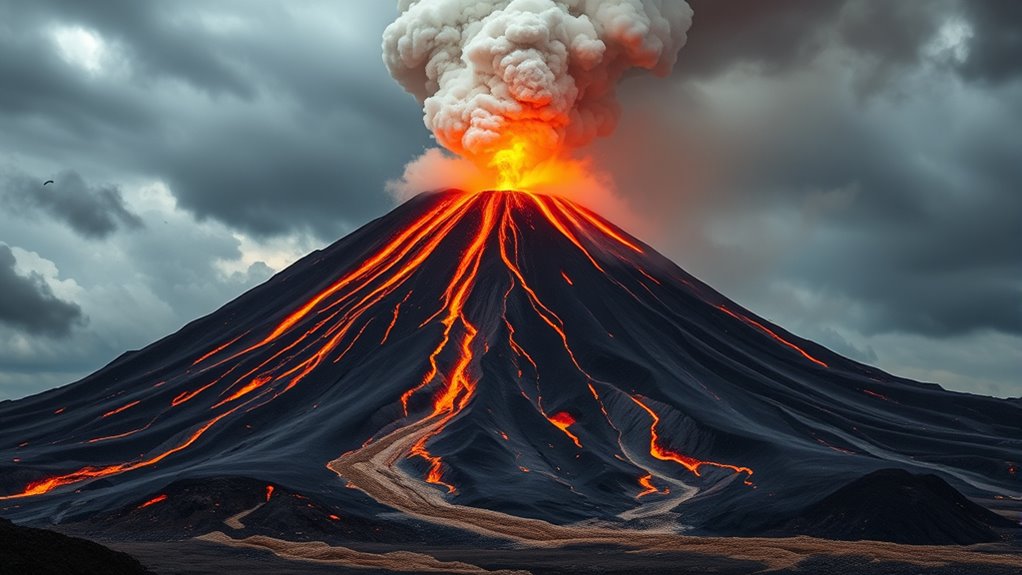

Volcano hazards like ash clouds, lava flows, and lahars can threaten your safety and property during eruptions. Ash clouds spread miles across the sky, causing respiratory problems and damaging water supplies. Lava flows move slowly but destroy everything in their path, including homes and forests. Lahars are fast-moving mudslides from volcanic debris, capable of sweeping away communities. Understanding these hazards helps you prepare and stay safe—continue exploring to learn how to protect yourself during such events.
Listen free for 30 days with Audible
Thousands of audiobooks and originals — cancel anytime.
As an affiliate, we earn on qualifying purchases.
Key Takeaways
- Ash clouds spread across large areas, causing respiratory problems, water contamination, and structural damage.
- Lava flows destroy landscapes, buildings, and infrastructure while reshaping the terrain.
- Lahars are fast-moving mudflows from ash and debris, devastating downstream communities with little warning.
- Long-term effects include crop damage, infrastructure loss, and community displacement from volcanic activity.
- Preparedness measures like early warning systems and evacuation plans are essential for safety near active volcanoes.
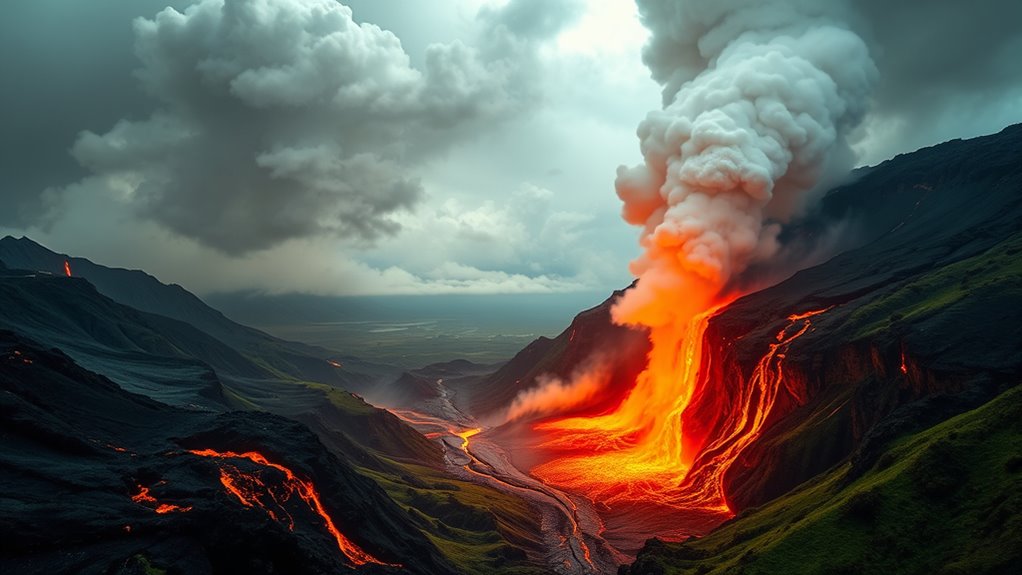
Have you ever wondered what dangers volcanoes can pose? When a volcano erupts, it releases a variety of hazards that can threaten lives, property, and the environment. Among the most immediate dangers are ash clouds, which can spread miles across the sky, blanketing areas in a thick layer of fine particles. Breathing in volcanic ash can cause severe respiratory problems, especially for children, the elderly, and those with pre-existing health conditions. Ash can also contaminate water supplies, clog engines, and damage crops, leading to widespread economic disruption. The weight of accumulated ash can cause roofs to collapse, adding to the risk of injury and destruction. Because ash can be carried by wind over long distances, even areas far from the volcano can experience hazardous conditions, making evacuation and safety measures essential.
Volcanic ash clouds threaten health, property, and safety over vast areas.
Lava flows are another prominent hazard during eruptions. These rivers of molten rock move slowly but relentlessly, destroying anything in their path. They can incinerate forests, obliterate homes, and block roads, isolating communities and complicating rescue efforts. While lava doesn’t usually pose an immediate threat to life unless you’re directly in its path, its destructive capacity can cause long-term displacement and economic hardship. Lava can also ignite fires, spreading destruction further, and alter landscapes permanently by creating new landforms. Its high temperature and relentless movement make it a formidable force that can reshape entire regions in a matter of hours or days.
Lahars, or volcanic mudflows, are perhaps the most dangerous of these hazards. When volcanic ash and debris mix with rainwater or melt snow and ice on the volcano’s slopes, they form fast-moving, slurry-like flows that race down valleys with destructive force. Lahars can sweep away everything in their path, including buildings, bridges, and bridges, burying entire communities under thick layers of mud and debris. Their speed and unpredictability make them especially deadly, often striking with little warning. Because they can travel many miles from the eruption site, they pose a persistent threat to downstream populations long after the volcano has quieted. Lahars have the power to reshape river valleys and flood plains, permanently altering the landscape and creating new hazards for future generations.
Understanding these volcano hazards is essential if you live near an active volcano. Preparedness, early warning systems, and evacuation plans are vital in reducing the risk posed by ash, lava, and lahars. Recognizing the signs of an impending eruption and knowing how to respond can make the difference between safety and tragedy.
Top picks for "volcano hazard lava"
As an affiliate, we earn on qualifying purchases.
Frequently Asked Questions
How Do Volcano Hazards Affect Local Wildlife and Ecosystems?
Volcano hazards can dramatically impact local wildlife and ecosystems by destroying habitats, contaminating water sources, and causing direct harm. You might see animals fleeing or dying due to ash fall or lava flows, while plants struggle to survive the harsh conditions. These events disrupt food chains, reduce biodiversity, and take years or decades for ecosystems to recover. Your awareness helps appreciate the resilience and vulnerability of nature in volcanic regions.
What Are the Early Warning Signs of an Impending Eruption?
You should watch for signs like increased earthquake activity, as small tremors often precede eruptions. Notice changes in gas emissions, such as sulfur smells or bubbling gases. Keep an eye on ground deformation, like swelling or tilting of the volcano’s surface. Additionally, watch for unusual volcanic tremors and temperature rises around the volcano. These indicators help you recognize an impending eruption and prepare accordingly.
How Do Volcanic Ash Clouds Influence Global Climate Patterns?
Volcanic ash clouds can markedly influence global climate patterns by blocking sunlight and reducing Earth’s surface temperatures. When ash particles reach the stratosphere, they can stay airborne for months, disrupting weather systems worldwide. You might notice cooler temperatures, altered rainfall patterns, and even temporary climate anomalies following large eruptions. These changes happen because the ash reflects solar radiation, impacting the climate on a global scale and sometimes causing short-term climate cooling.
What Safety Measures Can Communities Implement Against Lahars?
Did you know that lahars can travel up to 60 miles per hour? To protect your community, you should create early warning systems, establish evacuation routes, and educate residents about lahar risks. Keep drainage channels clear to prevent blockage, and reinforce vulnerable structures. Regularly monitor volcanic activity and stay informed through authorities. By implementing these measures, you can markedly reduce danger and guarantee safety during a lahar event.
Are There Any Historical Cases of Unnoticed Volcanic Activity?
Yes, there have been cases where volcanic activity went unnoticed. For example, Mount Tambora’s eruption in 1815 was initially underestimated because signs were subtle, and monitoring technology was limited. You should stay informed through official alerts and scientific reports, as some eruptions can occur without obvious warning signs. Regularly check for updates from geological agencies, and always heed evacuation orders to stay safe from unexpected volcanic hazards.
Conclusion
Understanding volcano hazards helps you stay prepared and safe. Did you know that over 500 million people worldwide live near active volcanoes? Ash clouds can reach heights of 12 miles, disrupting air travel for days. By learning about ash, lava, and lahars, you’re better equipped to respond quickly. Stay alert, heed warnings, and remember—knowledge is your best defense against these powerful natural events. Safety starts with awareness!
Fall yard work Picks
leaf blowers
As an affiliate, we earn on qualifying purchases.