
To build drought resilience in Sub-Saharan Africa, you should focus on water conservation methods like rainwater harvesting and fixing leaks. Embrace crop diversification, planting drought-tolerant varieties to reduce risks. Use modern irrigation techniques combined with traditional practices for better water management. Engaging the community and adopting sustainable land use are essential. These strategies can help protect livelihoods and improve food security, and exploring them further will reveal even more effective ways to combat drought challenges.

Get emergency and outdoor gear delivered free with Prime
- Fast, free delivery on millions of items
- Prime Video, Amazon Music and more included
- Member-only deals all year
Key Takeaways
- Implementing water conservation measures like rainwater harvesting and leak fixing to optimize limited water resources.
- Promoting crop diversification with drought-tolerant and climate-resilient varieties to reduce agricultural vulnerability.
- Combining traditional water-saving practices with modern irrigation technologies for enhanced drought adaptation.
- Engaging communities in sustainable land and resource management to build resilience against climate variability.
- Educating farmers and stakeholders on efficient water use and proactive strategies to ensure food security during droughts.

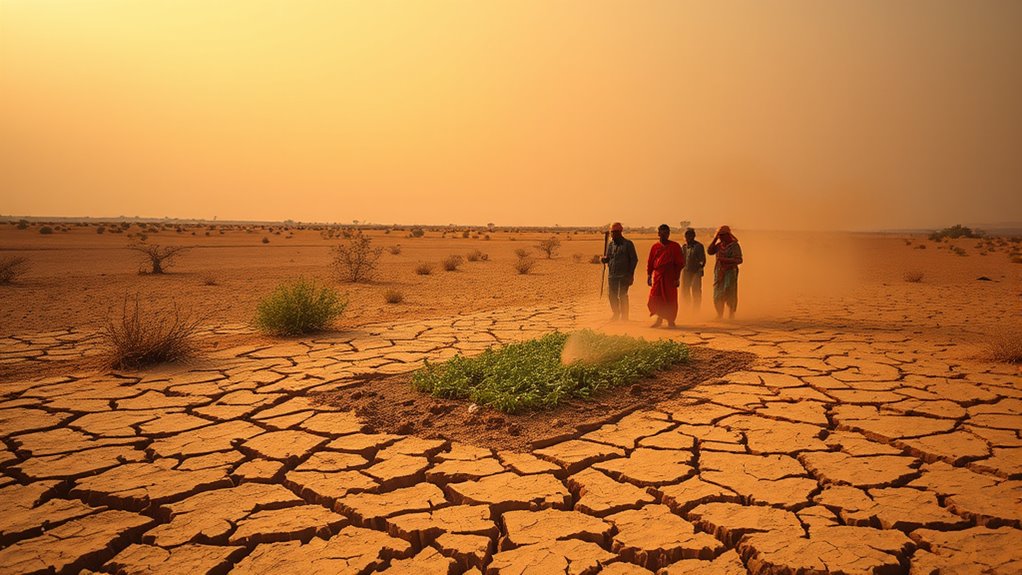
Drought remains a persistent challenge across Sub-Saharan Africa, threatening livelihoods, food security, and economic stability. As a resident or stakeholder in this region, you know that water scarcity affects every aspect of daily life, from farming to drinking water supplies. To adapt, you need to prioritize water conservation strategies that maximize every drop. Simple practices like collecting rainwater, fixing leaks, and using water-efficient technologies can make a significant difference. These measures help conserve the limited water resources, ensuring they last longer during dry spells. Simultaneously, embracing crop diversification becomes essential. Relying on a single crop makes your food system vulnerable to drought; diversifying crops allows for better resilience. You can grow drought-tolerant varieties or introduce crops suited to changing rainfall patterns, reducing the risk of total crop failure. By planting a variety of crops, you spread the risk, ensuring that if one fails due to drought, others may still thrive. This approach also improves soil health and reduces pest outbreaks, which often worsen during dry conditions.
Implementing water conservation isn’t just about individual efforts; it involves community-wide initiatives. You can participate in local water-saving programs or support policies that promote sustainable water use. Education campaigns can raise awareness about the importance of conserving water and adopting efficient irrigation methods like drip or sprinkle systems. These techniques deliver water directly to plants’ roots, minimizing waste and maximizing absorption. Additionally, crop diversification requires you to seek knowledge about climate-resilient crops suited to drought-prone areas. Working with agricultural experts or local extension services can help identify suitable options, making your farm more resilient over time.
Furthermore, utilizing modern irrigation technology like automation and soil moisture sensors can optimize water use and reduce wastage. You should also consider integrating traditional knowledge with modern techniques. Many communities in Sub-Saharan Africa have long practiced water-saving rituals and crop rotations that naturally enhance resilience. Combining these practices with new technologies can strengthen your ability to withstand droughts. Furthermore, investing in soil moisture retention methods, such as mulching or agroforestry, helps keep the soil moist for longer periods, supporting crops when rainfall is scarce. These combined efforts—water conservation, crop diversification, and sustainable land management—are essential for building resilience. They enable you to adapt to ongoing climate variability, safeguard your food supply, and sustain your livelihood despite the challenges posed by recurring droughts. In the end, resilience isn’t just about responding to droughts but proactively preparing for them through strategic resource management and adaptive farming practices.
rainwater harvesting system for farms
As an affiliate, we earn on qualifying purchases.
As an affiliate, we earn on qualifying purchases.
Frequently Asked Questions
How Does Climate Change Influence Drought Severity in Sub-Saharan Africa?
Climate change increases drought severity in Sub-Saharan Africa by intensifying climate variability and disrupting rainfall patterns. You’ll notice longer dry spells and unpredictable rainfall, making water shortages worse. As temperatures rise, evaporation rates increase, further reducing available water. These changes challenge agriculture, water supply, and ecosystems, forcing communities to adapt quickly. Without action, climate change will continue to exacerbate droughts, threatening livelihoods and food security across the region.
What Role Do Indigenous Knowledge and Practices Play in Drought Resilience?
Sure, because relying on ancient tricks like traditional farming and indigenous water management is obviously the secret to drought resilience, right? You can harness centuries-old practices to manage water efficiently and adapt your farming to changing conditions. These indigenous techniques, passed down through generations, optimize water use, conserve resources, and build community resilience. So, while modern solutions are great, your ancestors’ wisdom might just be your best drought defense.
How Are Gender Disparities Affecting Drought Response Strategies?
Gender gaps substantially impact drought response strategies, as women often have less access to resources, decision-making, and information. This limits their ability to contribute effectively to resilience efforts. By promoting women’s empowerment, you enable more inclusive and effective strategies, harnessing diverse perspectives and knowledge. Addressing gender disparities ensures that both men and women can participate equally, strengthening community resilience and improving drought response outcomes.
What Funding Sources Support Drought Resilience Projects in the Region?
You’ll find that international donors and public-private partnerships pour billions into drought resilience projects in Sub‑Saharan Africa, making it almost like a flood of funding. These sources fuel innovative solutions, from advanced water management to climate-smart agriculture. Your efforts can tap into these resources to strengthen communities’ survival chances, ensuring that droughts no longer threaten lives or livelihoods. The money’s there—your role is to harness it effectively.
How Can Technology Improve Early Warning Systems for Droughts?
You can improve early warning systems for droughts by leveraging satellite monitoring to gather real-time data on weather patterns and soil moisture. Combining this with advanced data analytics allows you to identify drought risks earlier and more accurately. This technology helps you make informed decisions, mobilize resources faster, and implement timely interventions, ultimately strengthening drought resilience across the region.
Conclusion
So, you’ve got all the solutions, right? Just ignore the droughts, hope they magically disappear, and watch your crops and communities thrive. After all, who needs water or planning when you can rely on luck? But in reality, ignoring drought resilience only guarantees more empty wells and broken dreams. Wake up — climate change isn’t waiting. It’s time to invest, adapt, and stop pretending everything will just water itself. Or, keep dreaming; your choice.
Fall Picks
fall essentials
As an affiliate, we earn on qualifying purchases.