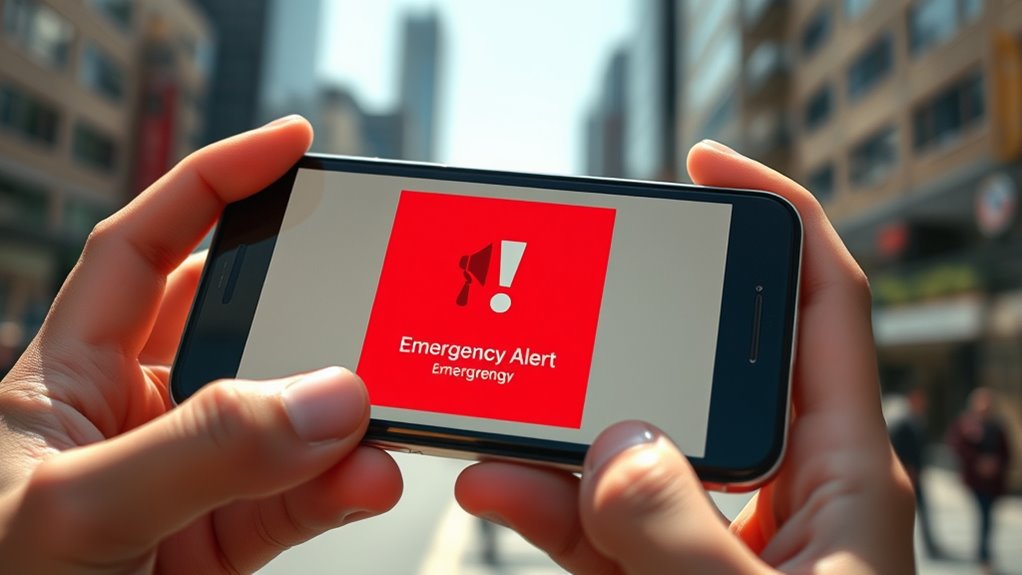

To interpret emergency alerts effectively, look at the symbols, message codes, and instructions included. Recognize that colors and shapes signal the alert type and severity, like red triangles for warnings. Understand common codes such as “TOR” for tornado or “TSW” for thunderstorm. Follow any clear directions, such as seek shelter or evacuate. Becoming familiar with these cues helps you respond quickly and confidently during emergencies. Keep exploring to master all the details that can keep you safe.
Key Takeaways
- Recognize standard alert symbols like red triangles for severe weather or blue circles for safety alerts.
- Understand message codes (e.g., “TOR” for tornado) to quickly identify the emergency type.
- Read accompanying instructions carefully to determine recommended actions such as evacuate or seek shelter.
- Familiarize yourself with local alert systems and symbols through official guides for faster interpretation.
- Use visual cues, codes, and instructions collectively to assess threat severity and respond appropriately.

Have you ever received an emergency alert and wondered what it really means? When your phone buzzes or a siren sounds, the message can seem confusing or overwhelming. That’s because emergency alerts often include alert symbols and message codes designed to quickly convey critical information. Understanding these symbols and codes helps you respond appropriately and stay safe during emergencies.
Alert symbols are visual cues embedded in the alert message to give you immediate context. For example, a red triangle might signal a severe weather warning, while a blue circle could indicate a public safety alert. These symbols are standardized to help you recognize the type of threat at a glance, even if you don’t read the full message. Pay attention to these visual cues—they’re meant to quickly communicate urgency and the nature of the emergency.
Alert symbols provide quick visual cues to identify the emergency type at a glance.
Message codes are alphanumeric or abbreviated sequences included within the alert. They serve as shorthand for specific situations, such as “TOR” for tornado, “TSW” for severe thunderstorm warning, or “AMBER” for child abduction alerts. These codes are used by authorities to streamline communication, especially when messages are broadcast across multiple platforms. When you see a message code, it’s essential to look up what it means or listen carefully to accompanying instructions. Knowing these codes allows you to understand the severity and type of emergency more quickly than reading lengthy descriptions.
Most emergency alerts will include a combination of alert symbols and message codes, along with plain-language instructions. For example, an alert might display a warning symbol along with the message code “TSW” and instruct you to seek shelter immediately. Recognizing the symbol and understanding the code means you can prioritize your response—whether it’s evacuating, taking cover, or staying indoors. Many alert systems also provide links or references to more detailed information, so if you’re ever unsure, it’s wise to consult official sources or government websites for explanations.
It’s also helpful to familiarize yourself with common alert symbols and message codes before an emergency occurs. Many local agencies provide guides or resources to help you interpret alerts. By doing this, you’re better prepared to act swiftly and accurately. Additionally, understanding essential information about alert symbols ensures you can quickly interpret visual cues during an emergency. Remember, emergency alerts are designed to be quick and clear, but knowing how to interpret the symbols and message codes makes them even more effective. When you understand what’s being communicated, you’re empowered to make informed decisions that could keep you and your loved ones safe.

Emergency Preparedness Poster Print – Severe Weather Guide – 13×19 – Modern Alert Design
- Size: 13×19 inches
- Weather Guide: Severe weather preparedness steps
- Design: Bold, high-visibility alert design
As an affiliate, we earn on qualifying purchases.
As an affiliate, we earn on qualifying purchases.
Frequently Asked Questions
How Often Are Emergency Alert Systems Tested?
You should know that emergency alert systems are tested at least once a year through the FCC’s nationwide frequency testing, called the EAS test. Local agencies might perform additional testing, so alert frequency can vary. These tests help confirm the system works properly during emergencies. Stay alert for announcements about upcoming tests, and remember, regular testing keeps the system reliable for everyone’s safety.
Can I Customize Which Alerts I Receive?
Yes, you can customize which alerts you receive by adjusting your notification preferences. You have the power to enable or disable specific alert types, such as weather warnings, Amber alerts, or local emergencies. By managing your alert customization, you guarantee you get relevant information, reduce unnecessary notifications, and stay informed on what’s important to you. Take control of your alerts and set your preferences to stay safe and well-informed.
What Should I Do if I Miss an Alert?
If you miss an alert, don’t panic. Check your device’s notification history or alert app to review missed notifications. Stay informed by following local news and community channels for updates. Develop alert response strategies, like setting reminders to check alerts regularly and ensuring your contact info is current. This way, you stay prepared and can respond quickly to any emergency, even if you initially miss an alert.
Are There Language Options for Alerts?
Yes, emergency alerts often offer multilingual support through language settings on your device or notification system. You can customize your preferences to receive alerts in multiple languages, ensuring you understand critical information during emergencies. Check your device’s settings or the alert provider’s options to enable language options. This way, you stay informed and can respond appropriately, no matter which language you prefer or need during an emergency situation.
How Accurate Are the Location Details in Alerts?
The location details in emergency alerts are generally quite accurate, but they can vary depending on your device and network. Your alert’s reliability depends on the system’s ability to pinpoint your location precisely. To guarantee the most accurate information, keep your device’s location services enabled and update your contact info regularly. Remember, while alerts aim to be reliable, always use your best judgment and verify details through local authorities when possible.
Conclusion
So, next time an emergency alert blares, don’t just hit snooze or pretend it’s a weather warning about your neighbor’s BBQ. Pay attention, interpret it wisely, and stay safe. After all, ignoring alerts is how we turn minor hiccups into full-blown chaos—because who needs calm when you can have a dramatic disaster, right? Remember, being alert might just save your bacon. Or at least make you look like a responsible adult. Choose wisely!