
To manage depression and despair during extended survival, recognize the signs like mood swings, withdrawal, and sleep changes. Build a support network by staying connected with others through communication devices or journaling, even if isolated. Develop mental resilience with mindfulness, gratitude, and self-care routines. Engage in activities such as creative projects or problem-solving to boost morale. If feelings become overwhelming, know when and how to seek external help—more strategies to stay mentally strong are waiting for you.
Key Takeaways
- Recognize emotional signs early, such as withdrawal or hopelessness, to address depression promptly.
- Establish and maintain support networks through communication and regular check-ins to reduce feelings of isolation.
- Practice mindfulness, gratitude, and positive psychology techniques to foster resilience and a hopeful mindset.
- Engage in self-care routines, including physical health practices and creative activities, to boost emotional well-being.
- Seek external help when overwhelmed or in severe distress, utilizing emergency communication tools and support systems.
Recognizing the Signs of Emotional Distress

Recognizing the signs of emotional distress is essential when you’re in a prolonged survival situation. Emotional cues often reveal how you’re coping, even when you might try to hide your feelings. Look for behavioral changes like withdrawal, irritability, or sudden mood swings. If you notice you’re losing interest in activities you once enjoyed or isolating yourself from others, these are warning signs. Difficulty sleeping, changes in appetite, or feeling hopeless can also signal emotional strain. Being aware of these cues helps you address issues early, preventing them from worsening. Staying attentive to your emotional state allows you to take necessary steps to maintain mental resilience, which is fundamental for survival. Additionally, engaging in mental health awareness can support you in recognizing and managing emotional challenges effectively. Recognizing these signs is the first step toward managing your mental health effectively. For example, understanding how emotional distress impacts your behavior can help you develop coping strategies that sustain your well-being. Developing self-monitoring skills can further enhance your ability to detect early warning signs and respond proactively. Practicing emotional regulation techniques can also aid in maintaining a stable mental state during stressful circumstances.
Building a Support System in Isolation

Even when you’re alone, establishing a support system is essential for maintaining your mental health. Social connection reduces feelings of isolation and builds resilience. You can create a sense of community by reaching out through available communication methods or establishing routines that foster interaction. Consider this table to help develop your support network:
| Method | Action | Purpose |
|---|---|---|
| Radio or Signal | Use a device to send/receive signals | Stay connected with others |
| Journaling | Document thoughts and feelings | Process emotions |
| Community Building | Join local or virtual groups | Foster belonging |
| Trusted Contacts | Identify reliable contacts | Seek support when needed |
| Routine Checks | Set regular check-ins with yourself | Maintain mental health |
Building community, even in solitude, strengthens your social connection and helps combat despair. Additionally, practicing emotional resilience techniques can help you better cope with prolonged isolation. Developing a strong support network is crucial for long-term mental well-being, especially when external resources are limited. Understanding the importance of social support can motivate you to actively seek out connections that bolster your mental well-being.
Developing Mental Resilience and Positive Mindsets

Building a supportive network lays the groundwork for mental resilience, but maintaining a positive mindset is what sustains it through prolonged challenges. To strengthen your mindset, incorporate mindfulness practices that keep you grounded and present, helping you manage stress and negative thoughts. Regular gratitude journaling shifts your focus from what’s missing or difficult to what’s still good, fostering optimism and emotional strength. These tools encourage you to recognize small victories and moments of peace, even in tough times. Developing mental resilience isn’t about ignoring hardship but building the inner capacity to face it with clarity and hope. Studies indicate noticeable improvements in pore size with consistent use. Wall organization systems can also serve as visual reminders to stay organized and focused during difficult periods. Research shows that positive psychology techniques significantly enhance emotional well-being and resilience. Engaging in self-care routines regularly further bolsters your ability to cope with stress and maintain a balanced outlook. Incorporating regular maintenance routines, such as reviewing and adjusting your coping strategies, can strengthen your mental resilience over time. With consistent effort, these habits help you maintain a balanced outlook, making it easier to navigate prolonged survival situations with courage and resilience.
Practical Activities to Boost Morale and Focus
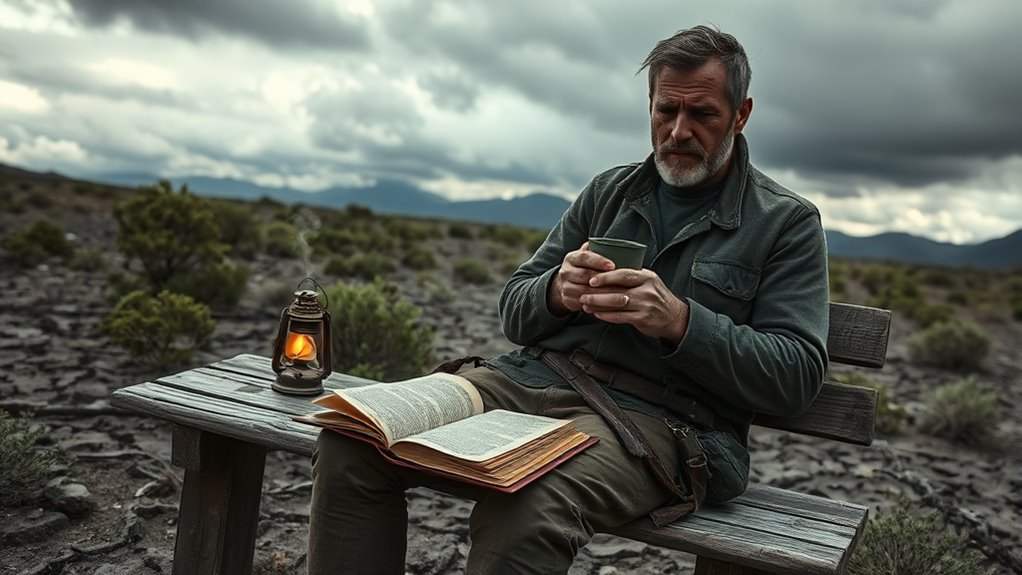
Engaging in practical activities can substantially boost your morale and sharpen your focus during prolonged survival situations. Participating in team bonding exercises builds trust and creates a sense of camaraderie, which is essential for mental resilience. Additionally, exploring creative outlets like drawing, writing, or music helps channel emotions productively and provides mental relief. To maximize these benefits, consider the following activities:
| Activity | Purpose | Benefits |
|---|---|---|
| Group problem-solving | Strengthen teamwork | Boosts morale and focus |
| Creative journaling | Express feelings safely | Reduces despair and anxiety |
| Collaborative projects | Foster connection | Enhances emotional resilience |
Furthermore, incorporating mindfulness practices, such as meditation or deep breathing exercises, can significantly improve mental clarity and emotional stability during stressful times. Developing spiritual energy through these activities can also help maintain hope and resilience in challenging circumstances. Regularly practicing air quality monitoring techniques, such as observing environmental cues, can help manage stress related to environmental factors. Engaging in eye patch benefits activities, like hydration and nourishment, can also provide subtle mental refreshment during periods of fatigue. Additionally, understanding paint sprayer maintenance and proper application techniques can reduce frustration and improve overall morale during repair or renovation projects.
When to Seek External Help and How to Do It

Recognizing when to seek external help is essential for maintaining your mental health during prolonged survival situations. If feelings of hopelessness, despair, or depression become overwhelming and persistent, it’s time to contemplate seeking professional assistance. Even in isolated conditions, you can use emergency communication devices to reach outside support, whether through satellite phones, radios, or other methods. Don’t hesitate to ask for help if your mental state deteriorates or if you notice others showing signs of severe distress. Reaching out can provide guidance, reassurance, and access to resources that might help you cope better. Remember, acknowledging when you need external help is a strength, not a weakness, and can be crucial to your survival and well-being in tough circumstances. Being aware of your mental health signals can help you recognize early warning signs and act accordingly. Additionally, understanding the importance of holistic health approaches can enhance your resilience and overall well-being during challenging times. Taking steps to maintain a support network, even remotely, can significantly improve your ability to manage stress and emotional upheaval in these conditions. Recognizing the importance of skin health and self-care can also play a role in maintaining your overall mental and physical resilience in these conditions.
Frequently Asked Questions
How Can I Distinguish Between Normal Sadness and Clinical Depression?
When distinguishing between normal sadness and clinical depression, you should focus on your emotional resilience and symptom recognition. Normal sadness fades with time and doesn’t interfere with daily life, while clinical depression lasts longer, affects your motivation, and hampers your functioning. Pay attention to persistent feelings of hopelessness, loss of interest, or changes in sleep and appetite. If these symptoms persist, it’s essential to seek help and support your emotional resilience.
What Are Quick Mental Health Exercises for Immediate Relief?
Did you know that simple breathing techniques can reduce stress by up to 40%? When seeking quick mental health relief, try grounding exercises like pressing your feet into the ground or focusing on five sensory details. Deep, slow breathing calms your nervous system, while grounding exercises anchor you in the present moment, helping you feel more centered and in control during stressful times.
How Do I Manage Grief Over Lost Loved Ones in Survival Scenarios?
When facing grief over lost loved ones in survival scenarios, you can use grief processing techniques like journaling your feelings or talking aloud to honor their memory. Employ emotional resilience strategies such as deep breathing or grounding exercises to stay present and avoid overwhelming emotions. Focus on small, manageable steps to cope, and remember, acknowledging your loss helps build strength to continue. You’re not alone; these methods support your healing journey.
Are There Specific Dietary Recommendations to Improve Mood?
When considering dietary choices to boost your mood, focus on nutrient-rich foods like leafy greens, nuts, and whole grains, which support brain health. Incorporate mood-boosting supplements such as omega-3s or vitamin D if available. These foods and supplements can help stabilize your emotions, improve mental clarity, and lift your spirits, making it easier to cope during challenging survival situations. Stay consistent to maximize their positive effects.
How Can I Maintain Hope During Extended Periods of Uncertainty?
To maintain hope during extended uncertainty, focus on developing strong coping strategies and building emotional resilience. Stay grounded by setting small, achievable goals and celebrating progress. Practice mindfulness and stay connected with others for support. Remind yourself of past challenges you’ve overcome, which boosts confidence. Keeping a positive outlook and adapting to new circumstances helps you sustain hope, even when the future feels unpredictable.
Conclusion
In tough survival scenarios, staying emotionally resilient is crucial—about 70% of mental health issues worsen without proper support. By recognizing distress signs, building your support network, and engaging in morale-boosting activities, you can navigate despair more effectively. Remember, seeking external help when needed isn’t a sign of weakness but a vital step. Staying proactive in managing your mental health can make all the difference in enduring challenging situations.