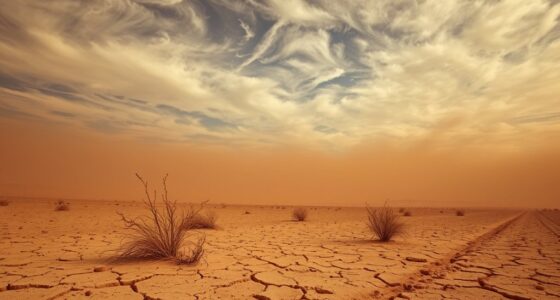

To boost your household’s drought resilience, adopt water-saving habits like fixing leaks, turning off taps when not in use, and installing aerators. Use appliances efficiently by running full loads and choosing eco-settings. Landscape with drought-tolerant plants, water early or late to reduce evaporation, and utilize drip irrigation or rain barrels for outdoor watering. Educate everyone at home about these practices to maximize savings. Keep exploring ways to protect your water supply and stay prepared for dry times.
Key Takeaways
- Fix leaks promptly and install aerators to reduce indoor water use without sacrificing pressure.
- Water outdoor plants early or late and use drip irrigation to minimize evaporation and wastage.
- Replace lawns with drought-tolerant or native plants to decrease outdoor water requirements.
- Collect rainwater in barrels for outdoor tasks, reducing reliance on tap water during droughts.
- Educate household members on short showers, turning off taps, and efficient appliance use to foster conservation habits.

Every household can make a difference in conserving water by adopting simple yet effective tactics. During times of drought, every drop counts, and small changes in your daily routine can considerably impact water availability. You don’t need elaborate systems or costly upgrades—just practical habits that reduce water use and help build resilience against water shortages. Start by being mindful of your water consumption and look for opportunities to cut back wherever possible.
Every household can help conserve water with simple, practical habits during droughts.
One of the easiest ways to save water is to fix leaks promptly. A tiny drip from a leaky faucet or a running toilet can waste gallons of water daily. Regularly check your plumbing fixtures and repair leaks as soon as you notice them. Installing aerators on faucets can also reduce flow without sacrificing water pressure, making it simple to conserve water during everyday tasks like washing hands or dishes. When you’re brushing your teeth or shaving, turn off the tap until you need to rinse—this small step can save a surprising amount of water over time.
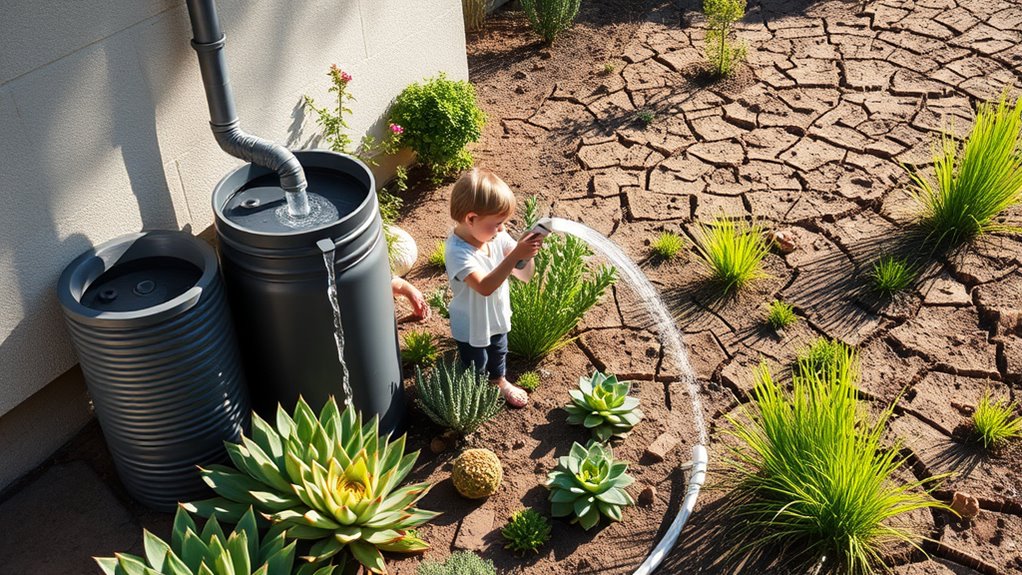
Next, consider your appliance use. Running dishwashers and washing machines only when they’re full maximizes efficiency. Opt for eco-friendly settings that use less water and choose high-efficiency models if you’re replacing old appliances. You can also collect rainwater in barrels for outdoor use, such as watering plants or cleaning outdoor surfaces. This not only reduces your reliance on tap water but also takes advantage of natural resources that might otherwise go to waste.
Outside your home, landscape management plays a crucial role. Replace water-intensive grass with drought-tolerant plants or native species that require less watering. When watering your garden, do so early in the morning or late in the evening to minimize evaporation. Use drip irrigation systems instead of sprinklers, as they deliver water directly to plant roots efficiently. Mulching around plants helps retain soil moisture, reducing the need for frequent watering. These practices collectively make your outdoor space more resilient to drought conditions.
Additionally, utilizing water-saving devices like water-efficient fixtures can further enhance your conservation efforts. Lastly, educate everyone in your household about water-saving habits. Encourage shorter showers, turning off taps when not in use, and being conscious of water use during daily activities. Every person’s effort adds up, creating a community-wide impact that strengthens your collective resilience. By making these small adjustments and fostering a culture of conservation, you’re actively contributing to drought resilience. Your mindful actions help ensure that water remains available during tough times and set a responsible example for others to follow.
Frequently Asked Questions
How Can I Measure My Household’s Water Consumption Accurately?
You can measure your household’s water consumption by checking your water meter regularly, ideally at the same time each day. Record the readings and subtract the previous one to see how much water you’ve used. Many utility companies also provide detailed bills that show your monthly usage. Installing a smart water monitor can give real-time data, helping you identify areas to cut back and save water effectively.
What Are the Long-Term Benefits of Drought-Resistant Landscaping?
Did you know that drought-resistant landscaping can reduce outdoor water use by up to 50%? By choosing native plants and drought-tolerant species, you’ll save money on water bills and decrease your environmental impact. Over time, your garden stays vibrant with less maintenance, and you help conserve essential water resources. Plus, these landscapes often require fewer chemicals, making your yard safer for family and wildlife alike.
Are There Government Incentives for Installing Water-Saving Devices?
Yes, there are government incentives for installing water-saving devices. You might qualify for rebates or tax credits that help reduce your costs. Local and state programs often encourage water conservation by offering financial assistance for installing low-flow toilets, smart sprinklers, or rainwater harvesting systems. Check with your utility provider or government websites to see what specific programs are available in your area, and take advantage of these savings opportunities.
How Do Water-Saving Habits Affect Household Water Bills Over Time?
Imagine your water bill shrinking like a droplet evaporating from a dry garden. When you adopt water-saving habits, you cut down on unnecessary use, which over time, lowers your bills considerably. Small changes, like fixing leaks or taking shorter showers, add up. As you conserve water, you not only save money but also help preserve this precious resource for future generations. Your mindful habits make a lasting, positive impact.
Can Water-Saving Tactics Help Improve Local Water Supply Resilience?
Yes, water-saving tactics can improve local water supply resilience by reducing demand during dry periods and lessening stress on water sources. When you adopt habits like fixing leaks, using efficient fixtures, and watering wisely, you help conserve water, ensuring there’s enough during shortages. Your efforts make a difference, supporting community resilience and helping local systems cope with droughts or other supply disruptions.
Conclusion
By embracing these water-saving tactics, you’re planting seeds of change that grow into a resilient garden of hope. Each small effort is like watering a fragile sprout, nurturing a future where water flows freely for generations to come. Remember, your actions are the droplets that fill the ocean of collective resilience. Together, you can turn the tide, transforming scarcity into abundance—one mindful choice at a time—ensuring a sustainable world for tomorrow.