
To prepare for earthquakes, you should strengthen your home’s foundation and support structures, install seismic dampers, and reinforce walls with shear panels. Secure windows, doors, and heavy fixtures to prevent damage and injuries. Arrange furniture safely and keep emergency supplies nearby. Regularly review your evacuation plan and collaborate with community safety initiatives. Staying proactive with these measures can considerably reduce risks, and exploring further will give you more practical tips to keep your home and loved ones protected.
Key Takeaways
- Conduct structural assessments and reinforce foundations to improve earthquake resistance and prevent collapse.
- Install seismic dampers, base isolators, and shear panels to absorb energy and strengthen support systems.
- Secure heavy fixtures, impact-resistant windows, and roof elements to prevent damage and hazards during quakes.
- Develop and practice emergency evacuation plans with clear routes, safe zones, and reliable communication methods.
- Maintain safety gear, emergency kits, and collaborate with community resources for coordinated earthquake preparedness.
Assessing Building Vulnerabilities and Risks

Evaluating building vulnerabilities and risks is an essential step in earthquake preparedness because it helps you identify structures that may fail during a quake. Start by checking if your building complies with local building codes, which set standards for earthquake resistance. Non-compliant buildings are more likely to sustain damage or collapse, increasing risks to occupants. Additionally, hazard mapping plays a critical role in understanding the specific seismic threats in your area. By reviewing hazard maps, you can determine the level of risk your building faces from potential earthquakes. This combined approach of assessing code compliance and hazard zones allows you to prioritize inspections and improvements, ensuring your structure is better prepared. Conducting regular building inspections and maintenance can further reduce vulnerabilities. Staying informed about seismic risk factors enables you to adopt targeted mitigation strategies effectively. Incorporating structural reinforcements based on vulnerability assessments can significantly enhance your building’s earthquake resilience. Being proactive in evaluating vulnerabilities reduces potential damage and safeguards lives during an earthquake, especially when considering building materials and their ability to withstand seismic forces. Additionally, understanding seismic design standards can guide retrofitting efforts to improve overall safety.
Reinforcing Foundations and Structural Supports

Once you’ve identified vulnerabilities in your building, strengthening its foundations and structural supports becomes a key step in earthquake preparedness. Improving foundation integrity guarantees the building can better withstand seismic forces, reducing the risk of collapse. You should focus on enhancing load distribution across the structure to prevent stress concentration points. Consider these actions:
- Reinforcing existing footings and adding underpinning where necessary
- Installing base isolators or seismic dampers to absorb earthquake energy
- Ensuring proper soil stabilization to prevent settlement or shifting
- Selecting vetted construction materials that meet safety standards for seismic resilience
These measures help maintain structural stability during shaking, minimizing damage and protecting occupants. Prioritizing foundation and support reinforcement builds resilience, making your building better equipped to handle seismic events effectively.
Securing Walls, Windows, and Doors
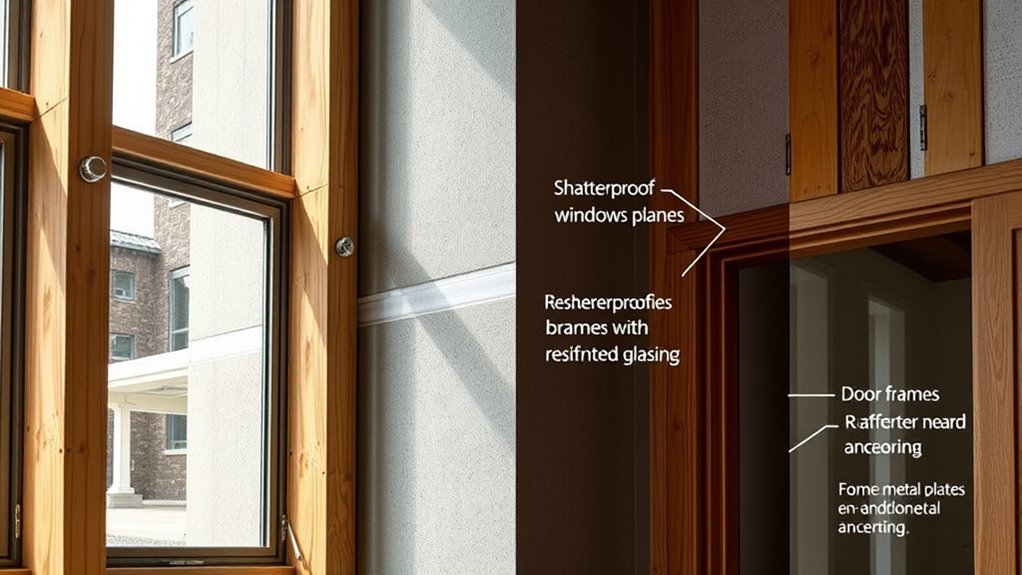
Securing your walls, windows, and doors is essential for earthquake safety. Reinforcing wall structures helps prevent collapse, while impact-resistant windows protect against shattering. Taking these steps can make a significant difference in minimizing damage and keeping you safe. Additionally, using structural reinforcements can further enhance the stability of your home during seismic events. Installing fire-resistant doors and windows can also provide added protection from potential fire hazards following an earthquake. Incorporating building code standards ensures that your home meets safety requirements designed to withstand seismic activity. Ensuring your home has proper fire safety equipment like extinguishers and detectors can help prevent fires that may occur after a quake, contributing to overall safety. Implementing self watering plant pots in your home can also contribute to a resilient environment by promoting healthier indoor plants that improve air quality and overall safety.
Reinforcing Wall Structures
To better protect yourself during an earthquake, you should reinforce your wall structures, including securing windows and doors. Begin with a foundation inspection to ensure your building’s stability, as a solid base minimizes movement during quakes. Wall reinforcement involves strengthening existing walls with shear panels or braces to prevent collapse. Secure loose fixtures and ensure wall attachments are tight to avoid debris hazards. Additionally, consider installing flexible straps or anchors to keep heavy items anchored safely. Staying informed about earthquake-resistant construction techniques can help you implement effective structural reinforcements. Staying updated on building code standards ensures your reinforcement methods meet current safety regulations. Stay informed about crypto pump signals and market trends to be prepared for sudden market shifts that could impact your safety plans. Regularly reviewing structural reinforcements and maintenance routines can also help identify potential vulnerabilities before an earthquake occurs. – Conduct regular foundation inspections to identify vulnerabilities – Use strengthening materials like shear panels or braces – Secure fixtures and heavy furniture to walls for added stability
Installing Impact-Resistant Windows
Have you considered upgrading your windows to impact-resistant models? Installing impact-resistant windows enhances window protection during earthquakes, preventing shattered glass and potential injuries. These specially designed windows use reinforced glass that withstands strong tremors, guaranteeing glass safety and reducing debris hazards. Impact-resistant windows are a vital part of your overall safety measures, providing peace of mind when seismic activity occurs. By choosing these windows, you minimize the risk of flying glass that can cause injuries and damage to your home. Proper installation ensures they stay intact during shaking, offering a reliable barrier. Investing in impact-resistant windows not only secures your walls but also reinforces your home’s resilience against earthquakes. It’s a proactive step toward safeguarding your loved ones and property from unexpected seismic events. Additionally, selecting windows that meet building safety standards can further improve your home’s seismic resistance. The effectiveness of these windows is often supported by their compliance with building codes, which are designed to enhance safety during seismic events. Incorporating impact-resistant windows can also improve overall safety and complement other structural reinforcements for comprehensive earthquake preparedness. Using advanced materials in window construction can further enhance their durability and impact resistance.
Installing Seismic Braces and Dampers

Installing seismic braces and dampers is a crucial step in enhancing your building’s ability to withstand earthquakes. These devices absorb and distribute seismic energy, reducing stress on structural elements. Seismic braces reinforce load-bearing walls and frames, preventing collapse during tremors. Seismic dampers act as shock absorbers, dissipating vibrational energy and minimizing movement. When installing them, consider:
- Proper placement for maximum energy absorption
- Compatibility with existing structural components
- Regular maintenance for sustained performance
- Selecting the appropriate headphone jack type ensures optimal audio connection and performance.
- Additionally, understanding the seismic design principles can help optimize the effectiveness of these reinforcements.
Upgrading Roofing and Overhangs for Seismic Stability

Ever wondered how upgrading your roof and overhangs can boost seismic stability? Reinforcing these areas helps prevent collapse during an earthquake. Start by installing secure roof anchor points that connect the roof structure to the building’s walls, reducing sway and detachment risks. Overhang bracing is essential; it stabilizes extensions like eaves and balconies, preventing them from swinging or breaking off. Use strong, flexible materials designed to absorb seismic forces. Check existing fastenings and replace any weak points. Proper bracing and anchoring ensure that your roof and overhangs stay attached and stable during shaking. Incorporating seismic-resistant building techniques can also help maintain the integrity of your home’s equipment during seismic events. Additionally, using recycled materials for some of the reinforcements can promote eco-friendly construction practices. These upgrades not only protect your property but also keep you safe by minimizing falling debris and structural failure during a quake.
Implementing Safe Interior Layouts and Furniture Placement

To minimize injuries during an earthquake, implementing safe interior layouts and furniture placement is essential. Your furniture arrangement and interior layout should prioritize stability and safety. Secure heavy items to walls, so they don’t topple over. Keep walkways clear to avoid tripping hazards. Place furniture away from windows and exterior walls to reduce debris risks. Consider these key points:
- Anchor bookshelves, cabinets, and large furniture to the wall studs
- Arrange furniture to create open, unobstructed pathways
- Avoid placing heavy or fragile items on unstable surfaces or near high-traffic zones
Developing and Practicing Emergency Evacuation Plans

You need to identify safe exits so everyone knows how to leave quickly during an earthquake. Setting up reliable communication systems guarantees you can stay in contact even if lines are down. Regular drills help everyone practice the plan and respond confidently when it matters most.
Identify Safe Exits
Developing and practicing emergency evacuation plans begins with identifying safe exits that you can rely on during an earthquake. You need clear, accessible emergency exit routes that lead to safe evacuation zones. To do this effectively, consider the following:
- Map out all exits, noting those closest to your location
- Ensure pathways are free of obstructions and well-lit
- Confirm that exits lead directly to designated safe evacuation zones
Regularly practicing these routes helps you recognize potential hazards and improves your response time. It’s vital to familiarize yourself with all available exits so that, in an emergency, you can evacuate swiftly and safely. Properly identifying and maintaining these routes ensures you’re prepared to reach safe zones without hesitation when seconds count.
Establish Communication Systems
Establishing reliable communication systems is essential for effective evacuation during an earthquake. You need a clear plan for emergency communication to coordinate disaster response quickly. Make sure everyone knows how to reach each other if phone lines are down, and consider alternative methods like walkie-talkies or messaging apps. To help you organize, here’s a simple overview:
| Communication Method | Purpose | Notes |
|---|---|---|
| Mobile Phones | Emergency alerts and updates | Battery backup recommended |
| Walkie-Talkies | Short-distance communication | Keep channels clear |
| Emergency Radios | Long-range communication | Test regularly |
| Signal Flags | Visual communication | Suitable outdoors |
| Loudspeakers | Announcements | Use in open spaces |
Preparing these systems guarantees a swift disaster response during an earthquake.
Conduct Regular Drills
Regular drills are essential to guarantee everyone knows how to respond quickly and safely during an earthquake. Conducting regular practice sessions helps reinforce emergency preparedness and ensures your evacuation plans are effective. During these drills, you should simulate real earthquake scenarios, including fire drills, to test response times and coordination. To maximize effectiveness, focus on:
- Clearly communicating evacuation routes and safe zones
- Assigning specific roles to staff and occupants
- Reviewing and updating procedures based on drill outcomes
These practices help identify weaknesses and improve reaction times. Regular drills not only prepare everyone for earthquakes but also strengthen safety culture in your environment. Consistent practice makes responses instinctive, minimizing confusion and injuries when an actual event occurs.
Using Safety Equipment and Emergency Supplies Effectively

To guarantee you’re prepared during an earthquake, it’s essential to know how to use safety equipment and emergency supplies effectively. Your personal safety depends on quick access to items like helmets, gloves, and sturdy shoes to protect yourself from falling debris. Keep a well-stocked emergency kit with water, non-perishable food, and first aid supplies in an accessible location. Knowing basic first aid skills helps you address injuries until professional help arrives. Use flashlights to navigate in the dark and ensure batteries are fresh. Practice quickly locating and using these items so you’re confident during a real event. Properly utilizing safety equipment and supplies minimizes injuries and keeps you safe until the danger passes. Being prepared saves lives and ensures you can respond calmly and efficiently.
Collaborating With Local Authorities and Community Initiatives

Working closely with local authorities and community initiatives considerably enhances your earthquake preparedness. By engaging with these groups, you improve community awareness and access valuable resources like local hazard maps. This collaboration helps you identify high-risk areas and develop targeted safety plans. Participating in community drills and training sessions fosters better coordination during emergencies. Additionally, working with authorities guarantees your home and neighborhood comply with current building codes and safety standards. You can also contribute to or benefit from community-led initiatives, such as neighborhood watch programs or emergency response teams. These efforts promote shared responsibility and preparedness, making everyone safer. Ultimately, strong cooperation with local authorities and community groups strengthens your resilience and response capability during seismic events.
Frequently Asked Questions
How Often Should Structural Reinforcements Be Inspected and Maintained?
You should follow a regular inspection schedule for your structural reinforcements, ideally at least once every year or after significant events like storms or earthquakes. Maintenance best practices include checking for cracks, corrosion, or any signs of deterioration, and addressing issues promptly. Staying proactive guarantees your building remains safe and resilient, reducing damage risk during an earthquake. Regular inspections and proper maintenance are key to long-term structural integrity.
What Are the Signs of Potential Structural Failure After Reinforcement?
You might think your reinforced structure is indestructible, but watch for signs of potential failure. If you notice foundation cracks or uneven flooring that wasn’t there before, it’s a red flag. These subtle clues hint that your reinforcements might be giving way. Don’t ignore these warning signs—address them promptly, or you could face bigger problems when the next quake strikes. Stay vigilant and keep your safety a priority.
How Do Seismic Upgrades Affect Property Insurance Premiums?
Seismic upgrades can lead to insurance discounts, as they demonstrate your property’s improved resilience. These upgrades often result in premium adjustments, usually lowering your insurance costs because insurers view your property as less risky. By investing in structural reinforcements, you show proactive safety measures, which can make you eligible for better rates. Always check with your insurer to see how specific upgrades might qualify you for these benefits.
Are There Specific Building Codes for Earthquake-Resistant Design in My Area?
You should check local building code compliance and seismic zoning regulations in your area to determine if there are specific earthquake-resistant design requirements. Many regions have strict codes that mandate structural reinforcements and safety measures to enhance earthquake resilience. By ensuring your building meets these standards, you’re better protected and may even benefit from insurance discounts. Contact your local building authority or a licensed engineer for detailed requirements tailored to your location.
Can Temporary Safety Measures Be Effective During an Earthquake Before Permanent Fixes?
Like a knight donning makeshift armor before battle, temporary fixes and emergency measures can serve as essential shields during an earthquake. They may not be permanent fortress walls but can help minimize damage and protect lives. While not foolproof, quick actions—like securing heavy furniture or using safety barriers—can buy critical seconds, making a significant difference until permanent structural reinforcements are in place.
Conclusion
By taking these steps, you’re building a shield that can weather the storm. Think of your home as a fortress, strengthened brick by brick, support by support. Regularly assess and reinforce your space, practice emergency plans, and stay prepared with safety supplies. Remember, preparedness isn’t just an act; it’s your safety net in the face of nature’s unpredictable dance. Stay vigilant, stay safe, and let your readiness be the lighthouse guiding you through the storm.