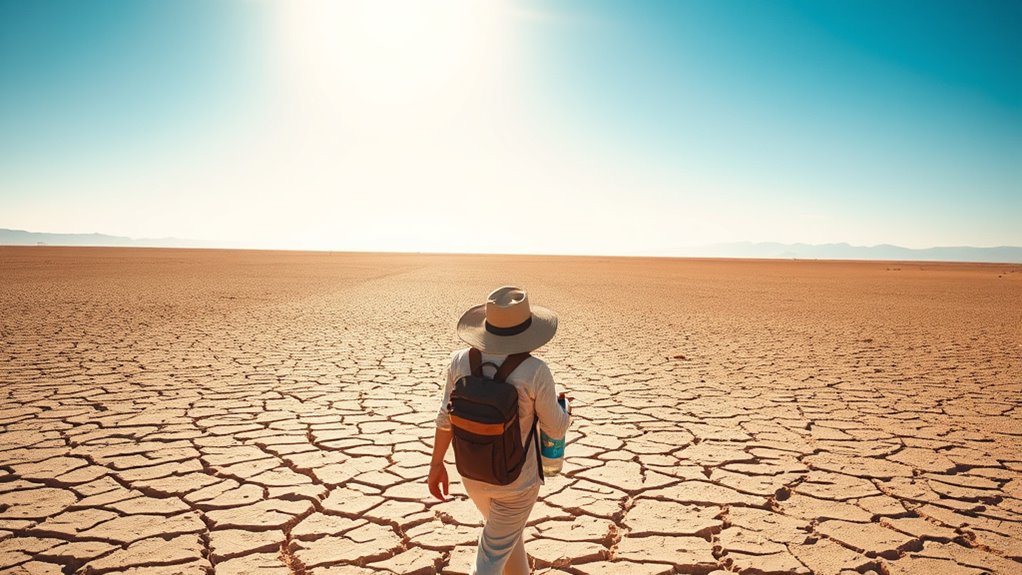

During extreme heat waves, you face risks like heat exhaustion, heatstroke, and dehydration, which can threaten your health. To reduce these dangers, stay hydrated with water and electrolyte drinks, wear lightweight clothing, and avoid outdoor activities during the hottest parts of the day. Urban cooling strategies such as planting trees and installing reflective surfaces help lower temperatures. Taking these steps now can protect you and your community—keep going to discover more ways to stay safe during heat waves.
Key Takeaways
- Extreme heat waves increase risks of heat exhaustion, heatstroke, dehydration, and related health complications.
- Urban heat island effect worsens heat exposure; planting trees and reflective surfaces help cool environments.
- Staying hydrated with water and electrolyte drinks is essential; avoid alcohol and caffeine during heat waves.
- Schedule outdoor activities during cooler times and use indoor cooling methods like fans or air conditioning.
- Monitoring weather advisories and recognizing heat illness symptoms are crucial for prevention and safety.
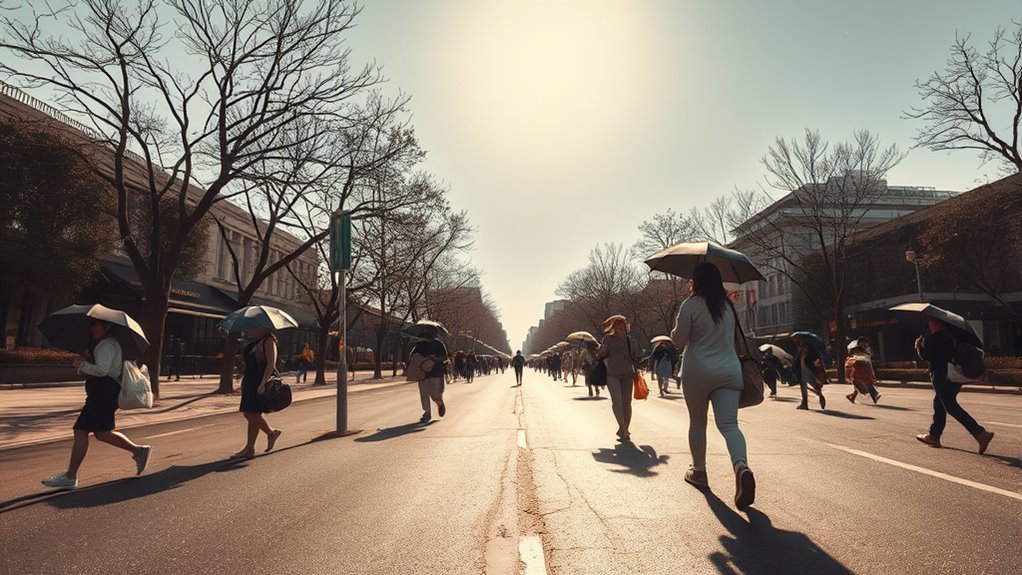
Have you ever wondered how rising temperatures during heat waves can threaten your health? As temperatures soar, your body faces increased stress trying to maintain a normal temperature, putting you at risk of heat-related illnesses like heat exhaustion or even heatstroke. One effective way to combat this is through urban cooling strategies that help lower ambient temperatures around you. Cities often become hotter due to the “urban heat island” effect, where concrete and asphalt trap heat, making it essential to implement cooling measures. Planting more trees, installing reflective roofing materials, and creating shaded public spaces can markedly reduce local temperatures, making your environment more comfortable and safer during extreme heat events.
Urban cooling strategies like planting trees and reflective roofs help combat heat waves and protect health.
But cooling alone isn’t enough—you need to stay properly hydrated to safeguard your health. Hydration strategies are vital during heat waves because your body loses fluids rapidly through sweating. Drinking plenty of water is fundamental, but it’s equally important to consume electrolyte-rich drinks when sweating heavily, as they help replenish lost salts and minerals. Avoiding alcohol and caffeine is wise, as these can dehydrate you further. Keep a water bottle with you at all times, especially if you’re outdoors or exercising, and sip fluids regularly even if you don’t feel thirsty. Recognizing early signs of dehydration, such as dry mouth, dizziness, or fatigue, can prevent more severe heat-related health issues. Additionally, using heat pump technology in homes and workplaces can help maintain a cooler indoor environment, reducing reliance on external cooling methods.
You should also be mindful of your daily routines during heat waves. Plan outdoor activities for the cooler parts of the day—early mornings or evenings—and take frequent breaks in shaded or air-conditioned spaces. Wearing lightweight, loose-fitting, and light-colored clothing can help reflect heat and improve your comfort. Remember to wear a wide-brimmed hat and sunglasses when outside to shield yourself from direct sunlight. Keeping your home cool is equally important; use fans or air conditioning when possible, and close blinds or curtains during peak heat hours to block out the sun.
Finally, staying informed about the weather forecast and heat advisories allows you to take proactive steps in protecting your health. Be vigilant about signs of heat-related illness in yourself and others. Recognize that proper urban cooling and hydration strategies are your best defenses against the dangers posed by extreme heat waves. By taking these measures seriously, you can reduce your risk of heat-related health problems and stay safer when the temperature rises unexpectedly.
Frequently Asked Questions
How Do Heat Waves Affect Mental Health?
Heat waves can markedly affect your mental health by increasing heat-related anxiety, making you feel overwhelmed or stressed. The high temperatures can also lead to cognitive decline, causing difficulty concentrating, memory problems, and reduced decision-making abilities. As you endure prolonged heat, you might notice mood swings or irritability. To protect your mental health, stay cool, hydrate, and seek shade or air-conditioned spaces during extreme heat events.
Can Animals Experience Heat-Related Health Issues During Heat Waves?
Yes, animals can experience heat-related health issues during heat waves. Their animal thermoregulation isn’t always enough to cope with extreme temperatures, leading to heat stress in pets. You should guarantee they stay cool, provide plenty of water, and limit outdoor activity during the hottest parts of the day. Recognizing signs of heat stress early can help prevent serious health problems for your animals.
Are There Specific Populations More Vulnerable to Heat-Related Illnesses?
Like fragile glass, vulnerable populations are more prone to heat-related illnesses. You should know that children, the elderly, and those with chronic health conditions are especially at risk. Socioeconomic factors also play a big role—people with limited access to cooling or healthcare face higher dangers. If you belong to or work with these groups, take extra precautions during heat waves to stay safe and healthy.
How Does Urban Planning Help Mitigate Heat Wave Impacts?
Urban planning helps mitigate heat wave impacts by increasing urban green spaces, which provide shade and cool the air, and using reflective surfaces on buildings and pavements to reduce heat absorption. By incorporating these strategies, you can create cooler environments, decrease the urban heat island effect, and protect vulnerable populations from extreme heat. Thoughtful planning makes cities more resilient and comfortable during heat waves, saving lives and improving overall health.
What Are the Long-Term Health Effects of Repeated Heat Waves?
Repeated heat waves can lead to long-term health effects like chronic dehydration and cardiovascular damage. You might find yourself more prone to persistent dehydration, which weakens your body’s ability to regulate fluids. Over time, the stress from frequent heat exposure can cause lasting damage to your heart and blood vessels. Staying hydrated and taking precautions during heat waves can help reduce these risks and protect your health.
Conclusion
As you face rising temperatures, it’s vital to stay informed and prepared. Remember, extreme heat isn’t just uncomfortable—it’s a serious health threat. Are you ready to take the necessary steps to protect yourself and loved ones? By staying cool, hydrated, and aware, you can reduce risks and survive even the hottest days. Don’t wait until it’s too late—your health depends on your actions today. Will you prioritize your safety when the heat waves hit?