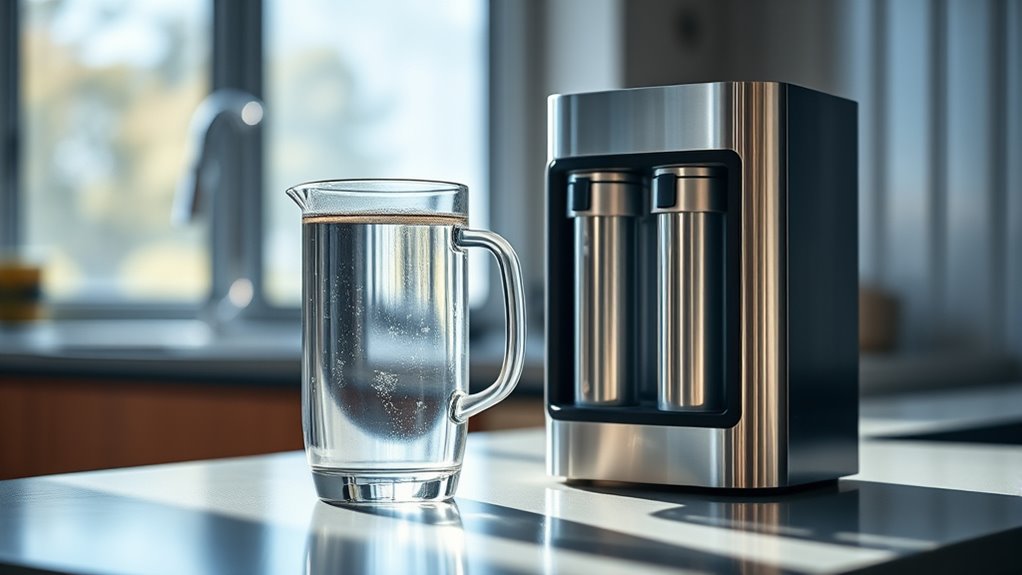

To choose the right water filtration system, start by testing your tap water to identify specific contaminants like lead, chlorine, or bacteria. Match those issues with filtration technologies such as activated carbon, reverse osmosis, or UV purifiers. Consider your household size, water usage, and maintenance needs to guarantee the system fits your lifestyle and budget. If you want detailed guidance on selecting the best option for your home, keep exploring further.
Key Takeaways
- Assess your water quality with testing kits or reports to identify specific contaminants needing removal.
- Match filtration technologies like activated carbon, reverse osmosis, or UV to address your particular water issues.
- Determine your household’s capacity needs and choose between point-of-use or whole-house systems accordingly.
- Consider maintenance requirements and ongoing costs, such as filter replacements and professional servicing.
- Evaluate installation complexity, budget, and lifestyle preferences to select a system that ensures consistent, safe, great-tasting water.
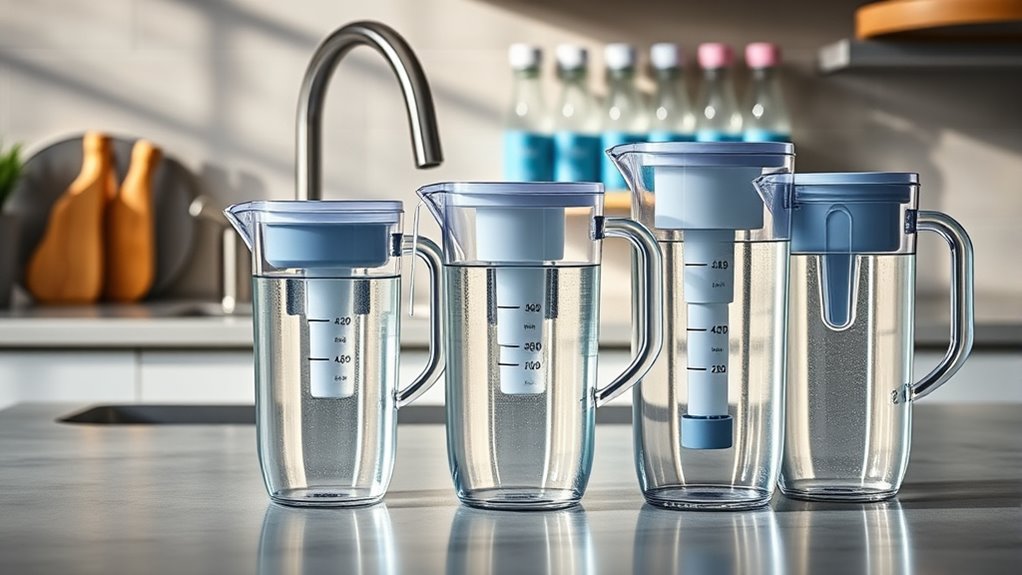
Are you unsure how to pick the right water filtration system for your home? The key lies in understanding your water quality and choosing the appropriate filtration technology. Your water quality can vary greatly depending on your location, the source of your water, and even the condition of your pipes. Testing your tap water is a vital first step. Many local water utilities provide annual water quality reports, but for more specific insights, you might consider purchasing a home water testing kit. These kits can identify common contaminants like chlorine, lead, nitrates, bacteria, and sediments. Once you know what’s in your water, selecting a filtration system becomes much easier.
Understanding your water quality is essential to choosing the right filtration system.
Filtration technology is the backbone of any water treatment solution. Different systems use various methods to remove impurities, so understanding these can help you make an informed decision. Activated carbon filters are among the most popular because they effectively reduce chlorine, bad tastes, and odors while also removing some organic compounds. Reverse osmosis systems, on the other hand, use a semi-permeable membrane to eliminate a broad spectrum of contaminants, including heavy metals, salts, and certain bacteria. If your water contains high levels of specific pollutants, such as lead or arsenic, a reverse osmosis system might be the best choice. UV purifiers use ultraviolet light to kill bacteria and viruses, making them ideal if microbial contamination is a concern.
It’s also worth considering the flow rate and capacity of the filtration system. If you have a large family or frequently host guests, you’ll want a system that can handle higher water volumes without sacrificing performance. Some filters are designed for point-of-use applications, like under-sink units or countertop models, while others are whole-house systems, providing filtered water at every tap. Whole-house systems are generally more expensive and require professional installation but can greatly improve overall water quality. Additionally, incorporating lifestyle considerations, such as ease of maintenance and compatibility with your home decor, can make your water filtration system more enjoyable to use.
Maintenance is another critical factor. Some filtration technologies need regular filter replacements, which can add to ongoing costs and effort. Others, like UV systems, may require periodic bulb replacements. Make sure to choose a system that fits your lifestyle and budget. By carefully evaluating your water quality and understanding the strengths of different filtration technologies, you’ll be better equipped to select a system that guarantees safe, clean, and great-tasting water for your home.
Frequently Asked Questions
How Often Should I Replace My Water Filter?
You should replace your water filter every 6 to 12 months, depending on its filter lifespan and your water usage. Check your manufacturer’s recommendations for ideal replacement frequency. If you notice a change in water taste, smell, or flow rate, it’s a sign it’s time to change the filter. Regular replacements ensure your system stays effective and your water remains clean and safe to drink.
Are There Filters Effective Against Specific Contaminants?
Yes, some filters are designed for specific contaminant removal, making filter specificity essential. For example, activated carbon filters effectively reduce chlorine and volatile organic compounds, while reverse osmosis systems target heavy metals and salts. Check your filter’s specifications to guarantee it addresses the contaminants present in your water. By selecting a filter tailored to your needs, you improve contaminant removal and ensure your water is cleaner and safer.
What Is the Cost Difference Between Various Systems?
Imagine exploring a spectrum of options, where the cost comparison reveals quite a range. Basic pitcher filters are budget-friendly, while advanced under-sink systems and whole-house setups can be more of an investment. Filtration expenses vary widely, depending on technology and capacity. You’ll find that initial costs and ongoing maintenance influence your decision, but investing wisely guarantees your water stays pure without breaking the bank.
Can I Install the System Myself?
Yes, you can do a DIY installation if you’re comfortable with basic plumbing and follow the manufacturer’s instructions carefully. However, for a more secure and efficient setup, especially with complex systems or if you’re unsure about your skills, it’s better to seek professional help. Professional installation guarantees everything is correctly fitted, reducing potential issues down the line, and gives you peace of mind knowing your water filtration system works effectively.
Do Filters Remove Beneficial Minerals From Water?
You might think filters strip away beneficial minerals, but it’s not always the case. Many systems are designed to retain essential minerals while removing contaminants, so mineral retention varies with filter efficacy. If you want to keep your water’s health benefits, look for filters that specify mineral retention. Don’t throw the baby out with the bathwater—choose a filtration system that balances contaminant removal with preserving your water’s natural minerals.
Conclusion
Remember, a wise man once said, “You are what you eat—and drink.” Choosing the right water filtration system guarantees you’re giving your family the purest, safest water possible. Take the time to assess your needs, compare options, and invest in quality. It’s worth it for peace of mind and your health. Because when it comes to water, don’t settle for less—your well-being depends on making the right choice today.