Solar chargers and portable power banks are great tools to keep your devices powered while on the go. Look for models with high solar panel efficiency, especially if you’re in shaded or cloudy areas, to guarantee faster energy collection. Choose a power bank with enough capacity for your needs and features like quick charging or multiple ports for versatility. To get the most out of these tools and discover helpful tips, keep exploring what makes them work best for you.
Key Takeaways
- Choose solar chargers with high efficiency to maximize energy collection in limited sunlight conditions.
- Match power bank capacity (mAh) to your device needs for optimal charging and portability.
- Ensure solar panels are positioned for maximum sun exposure to improve recharging speed.
- Look for power banks with multiple output ports and fast charging features for convenience.
- Balance size and weight of portable power banks with your energy requirements for outdoor use.
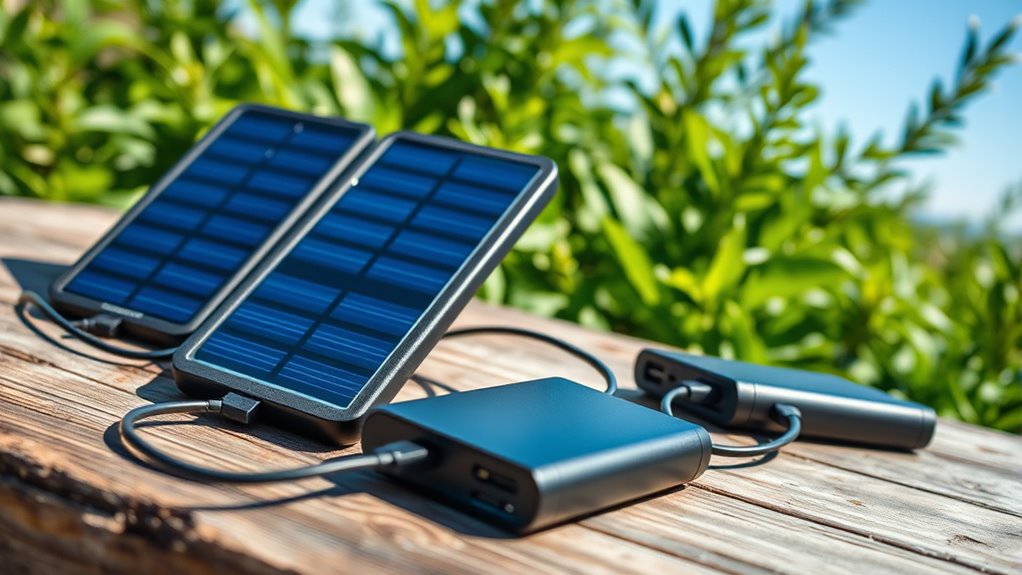
As portable devices become essential for everyday life, solar chargers and power banks offer convenient solutions to keep your gadgets powered on the go. Whether you’re hiking, traveling, or simply away from outlets, having a reliable power source can make all the difference. When choosing a solar charger, one of the most important factors to consider is solar panel efficiency. This measures how effectively the device converts sunlight into usable energy. A higher solar panel efficiency means you’ll generate more power in less time, which is especially useful when sunlight is limited or intermittent. If you’re often in bright, sunny environments, prioritizing a solar charger with high efficiency ensures you get the most out of every ray. Conversely, in shaded or cloudy conditions, even the most efficient panels will struggle, so understanding your typical usage environment helps guide your choice.
In addition to solar panel efficiency, you’ll want to compare battery capacities when selecting a power bank. Battery capacity, usually measured in milliamp-hours (mAh), determines how much charge your device can store. If you’re planning to power multiple devices or keep your gadgets charged over several days, opting for a power bank with a higher capacity is wise. For example, a 20,000mAh power bank can fully charge most smartphones multiple times, while a 50,000mAh unit can handle larger devices like tablets or even small laptops. Comparing these capacities helps you balance size, weight, and convenience against your power needs. Keep in mind that larger capacity power banks tend to be heavier and bulkier, so if portability is a priority, find a middle ground that still offers sufficient juice without adding too much bulk.
When you combine a solar charger with a high-capacity power bank, you get a versatile setup that keeps your devices running longer, even off the grid. It’s wise to check not only the solar panel efficiency but also how well the power bank manages energy transfer—look for features like fast charging and multiple output ports. Also, consider how quickly the power bank can recharge via solar or an outlet, as some models are better optimized for rapid recharging. By comparing these specifications, you ensure you’re investing in a system that adapts to your lifestyle and energy demands. Proper solar panel efficiency and smart energy management are key to maximizing your device’s uptime, especially during extended outdoor activities. Remember, no matter how advanced your solar charger or power bank is, proper usage—like positioning panels for maximum sunlight and managing your device’s power consumption—plays a vital role in maintaining reliable power whenever you need it.
Frequently Asked Questions
How Long Do Solar Chargers Typically Last Before Needing Replacement?
Solar chargers usually last around 2 to 5 years before needing replacement. This depends on the solar panel lifespan and battery durability. If you take good care of your device, avoiding extreme weather and keeping it clean, it can last longer. Over time, the efficiency of the solar panel decreases, and the battery’s capacity diminishes, so regular checks help you know when it’s time for a new one.
Are Portable Power Banks Waterproof or Water-Resistant?
Most portable power banks aren’t fully waterproof, but many are water-resistant. In fact, about 60% of models undergo waterproof testing, earning water resistance ratings like IP67 or IP68. These ratings indicate they can withstand splashes, rain, or brief immersion. However, always check the specific water resistance rating before exposing your power bank to water, as not all models offer the same protection.
Can Solar Chargers Charge Devices Other Than Smartphones?
Yes, solar chargers can charge devices beyond smartphones, making them versatile for various electronic needs. They harness alternative energy sources, converting sunlight into power suitable for tablets, cameras, and even small laptops. Just guarantee your devices are compatible with the solar charger’s output to avoid any damage. Using a solar charger with broad device compatibility helps you stay connected and powered up during outdoor adventures or emergencies.
What Is the Maximum Capacity of Most Portable Power Banks?
Most portable power banks have a battery capacity ranging from 5,000 to 20,000 mAh, providing ample energy for multiple device charges. This capacity influences the charging speed, with higher capacity banks delivering faster and more efficient power transfer. You’ll find options that balance battery size and charging speed, allowing you to power your devices on the go without sacrificing performance or convenience.
Do Solar Chargers Work Effectively Indoors or Only Outdoors?
Solar chargers work best outdoors because their indoor efficiency is limited. They rely heavily on sunlight dependence, which means they need direct sunlight to generate power effectively. Indoors, natural light isn’t strong enough, so your solar charger may not charge devices efficiently or at all. If you want reliable power indoors, consider using a portable power bank instead, which doesn’t depend on sunlight.
Conclusion
Think of solar chargers and portable power banks as your personal sunrays, always ready to light your way when power fades. They symbolize freedom—no cords, no limits—just endless energy from nature’s own gift. As you carry them, you carry a piece of the sun’s eternal glow, reminding you that even in darkness, there’s always a source of hope. Embrace these devices, and let the sunshine fuel your adventures, anytime, anywhere.