Many people overlook how vital adjusting their grain mill settings is for achieving the perfect flour texture, which directly affects baking results. Setting the mill too coarse can lead to dense, uneven baked goods, while making it too fine may cause gummy textures or poor rise. Getting the balance right takes practice and proper understanding of your mill’s adjustments. Keep exploring to learn proven techniques to fine-tune your flour for consistent, high-quality baking success.
Key Takeaways
- Many users set their mill adjustments too fine or too coarse without testing, leading to inconsistent flour texture.
- Over-tightening the mill often results in overly fine flour, which can cause gummy baked goods and poor rise.
- Conversely, setting the mill too loosely produces coarse flour, resulting in dense, rustic baked items.
- Proper adjustment involves gradual changes and small test batches to find the optimal balance for your specific grains.
- Regular cleaning and inspection of the mill ensure consistent settings and prevent build-up that affects flour fineness.

HOZODO Grain Mill Attachment for KitchenAid Stand Mixer, All Metal 9 Levels Flour Mill for KitchenAid, Suitable for Fully Dried Low-Moisture, Low-Oil Grains, Grain Corn, Millet, Wheat,Sliver
Versatile Grinding Option: Designed for KitchenAid mixers to grind a variety of dry grains into perfect powder. This…
As an affiliate, we earn on qualifying purchases.
As an affiliate, we earn on qualifying purchases.
Why Flour Texture Is Key to Baking Success
The texture of your flour plays a essential role in achieving perfect baked goods. Proper grain storage guarantees your wheat varieties stay fresh and free from moisture, which affects how the flour grinds and feels. Different wheat varieties have unique protein and gluten contents, influencing the flour’s texture and baking performance. Coarser flour may lend a rustic crumb, while finer flour creates a tender crumb. Knowing how your grain storage impacts moisture levels helps you select the right wheat for your baking needs. When you mill your own flour, controlling the texture becomes easier, allowing you to optimize the outcome. Additionally, understanding how grain moisture content influences flour texture helps you produce baked goods with consistent, desirable results. Proper storage techniques are essential to maintain optimal moisture levels and prevent spoilage. Maintaining the correct moisture levels during storage not only preserves the wheat’s quality but also ensures the flour develops the desired texture. A comprehensive understanding of grain variety characteristics can further refine your flour selection and baking results. Proper grain processing methods can improve flour consistency and baking performance. Ultimately, understanding how wheat varieties and storage conditions influence flour texture helps you produce baked goods with consistent, desirable results.
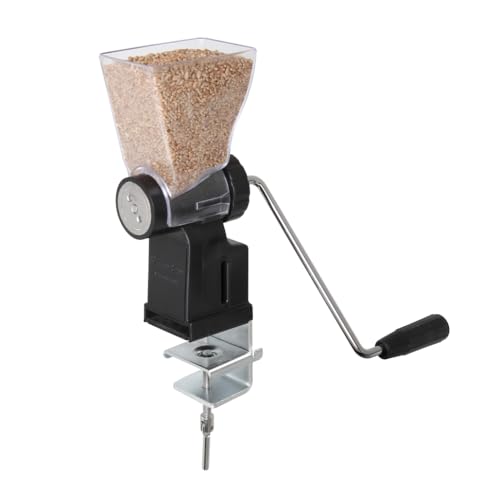
Kitchen Crop Hand Crank Grain Mill Wheat Flour Grinder, Stainless Steel Metal Burrs (The Grain Mill)
MULTI-GRAIN CAPABILITY: Equipped with durable stainless steel grinding burrs, it easily grinds wheat, rice, oats, barley, rye, peppercorns,…
As an affiliate, we earn on qualifying purchases.
As an affiliate, we earn on qualifying purchases.
Common Myths About Grain Mill Settings and Flour Quality
Many people believe that adjusting their grain mill settings automatically results in higher-quality flour, but this isn’t always true. Grain mill myths often lead to misconceptions about flour quality. Some think that finer settings always produce better flour, but this isn’t accurate—flour texture depends on your baking needs, not just mill adjustments. Others believe that coarser settings compromise nutrition, which isn’t necessarily true either; nutrient retention depends on the grain and milling process, not just fineness. These flour quality misconceptions can cause you to over- or under-process your grains, affecting flavor, texture, and baking results. Understanding these myths helps you make informed adjustments, ensuring your flour meets your specific baking requirements without falling into common pitfalls. Additionally, milling process variables can influence the final flour quality just as much as the mill setting itself. Proper calibration and understanding of your mill’s performance characteristics are essential for achieving the desired flour outcome. Recognizing that grain qualities vary can also help tailor your milling approach for optimal results. Moreover, paying attention to grain moisture content can significantly impact the consistency of your flour.

VEVOR Electric Grain Mill Grinder, 3000W Spice Grinders, Commercial Corn Mill with Funnel, Thickness Adjustable Powder Machine, Heavy Duty Feed Flour Cereal Mill Wheat Grinders, Dry Grinder
Outstanding Dry Grinding: The VEVOR Electric Grain Mill Grinder features high-quality cast iron grinding plates that are strong,…
As an affiliate, we earn on qualifying purchases.
As an affiliate, we earn on qualifying purchases.
How Grain Mill Settings Control Flour Coarseness and Fineness

You can control the flour’s texture by adjusting the mill settings, which determine how coarse or fine the grind becomes. Changing these settings affects the final product, influencing everything from bread to pastry quality. Finding the right balance between coarse and fine grind guarantees you get the desired flour consistency for your recipes.
Adjusting Grind Settings
Ever wondered how to achieve the perfect flour texture with your grain mill? Adjusting your grind settings is key. Start by selecting the appropriate setting for your desired coarseness or fineness. If your flour feels too coarse, tighten the adjustment knob or dial to create smaller particle sizes. For a coarser grind, loosen it. Remember, consistent mill maintenance guarantees smooth adjustments and prevents uneven textures. Proper grain storage also plays a role—store your grains in a cool, dry place to avoid moisture that can clog or damage the grinding mechanism. Always clean your mill after each use to maintain ideal performance. Fine-tuning your settings and keeping your mill in top shape helps you produce consistent, high-quality flour tailored to your baking needs. Additionally, understanding grind consistency can help you achieve more uniform flour textures. Regularly inspecting mill components ensures optimal operation and longevity of your equipment. Maintaining adjustment mechanisms also contributes to precise control over your flour texture. To further enhance your milling process, consider researching grain moisture content as it significantly impacts grinding performance and flour quality.
Impact on Flour Texture
Have you noticed how adjusting your grain mill changes the texture of your flour? It all comes down to controlling the grain size you produce. When you tighten or loosen your mill’s settings, you alter the milling consistency, which directly impacts whether the flour is coarse or fine. A coarser setting results in larger particles, giving you a rustic, textured flour ideal for certain bread types. Conversely, a finer setting produces smaller particles, creating a smoother, more refined flour perfect for delicate baked goods. Your mill’s adjustments determine the balance between these textures. Understanding how your mill’s settings influence grain size helps you achieve the desired flour consistency for each recipe, ensuring better control over your baking results.
Balancing Coarse and Fine
Adjusting your grain mill’s settings directly influences whether your flour turns out coarse or fine. The grain size you aim for depends on how you set the mill and control the milling speed. A coarser grind results from larger grain sizes, which is perfect for certain recipes like bread or pasta. Conversely, a finer flour comes from smaller grain sizes, ideal for pastries or delicate baked goods. Milling speed plays a vital role; faster speeds tend to produce finer flour by increasing the impact on the grain, but too high a speed can generate heat and compromise quality. Finding the right balance between grain size and milling speed ensures you get consistent texture, avoiding overly coarse or excessively fine flour. Experimenting with these settings helps you tailor flour to your specific baking needs. Additionally, understanding grain texture settings can help you achieve more precise control over your flour’s final consistency. Being aware of milling speed effects can further improve the quality and uniformity of your flour.

KitchenAid KGM All Metal Grain Mill Attachment
Grinds Low-Moisture Grains (Wheat, Corn, Rice, Etc;) From Coarse to Fine
As an affiliate, we earn on qualifying purchases.
As an affiliate, we earn on qualifying purchases.
Finding the Best Flour Texture for Different Baked Goods

Choosing the right flour texture is essential for achieving the best results in your baked goods. Different baked items require specific grain textures to ensure proper structure and flavor. For bread, a coarser grind provides the necessary gluten development, while cakes benefit from a finer flour for a tender crumb. When selecting grains, consider proper grain storage to prevent spoilage, which can affect flour quality. Proper grain storage helps maintain the nutritional value of your flour, ensuring health benefits are preserved. Additionally, understanding grain moisture content can help you select the optimal grains for milling, leading to better flour quality. Adjusting your mill’s texture setting allows you to customize for each recipe. Keep in mind that milling noise can increase with finer textures, so find a balance that minimizes noise without sacrificing quality. Experimenting with different textures helps you discover what works best for each baked good, giving you consistent, professional results every time. Additionally, understanding AI-driven food analysis can assist in optimizing your milling process for better flavor and texture outcomes. Being aware of grain particle size distribution can also help you achieve more consistent flour results tailored to specific baked goods.
How to Adjust Your Grain Mill for the Perfect Flour Texture

To achieve the perfect flour texture, you need to know how to fine-tune your grain mill’s settings. Start by adjusting the mill’s grind size, turning the dial or screws gradually until you reach your desired fineness. Always clean and inspect your mill regularly as part of mill maintenance to prevent clogs and ensure consistent results. Proper grain storage is essential; keep grains in a cool, dry place to avoid moisture that can clog or damage your mill. When adjusting, test small batches to gauge texture before grinding larger quantities. Remember, fine-tuning may take a few tries, but precise adjustments help you get the flour consistency perfect for your baking needs. Consistent mill maintenance and proper storage contribute to stable, high-quality flour.
Signs Your Flour Texture Isn’t Right for Baking
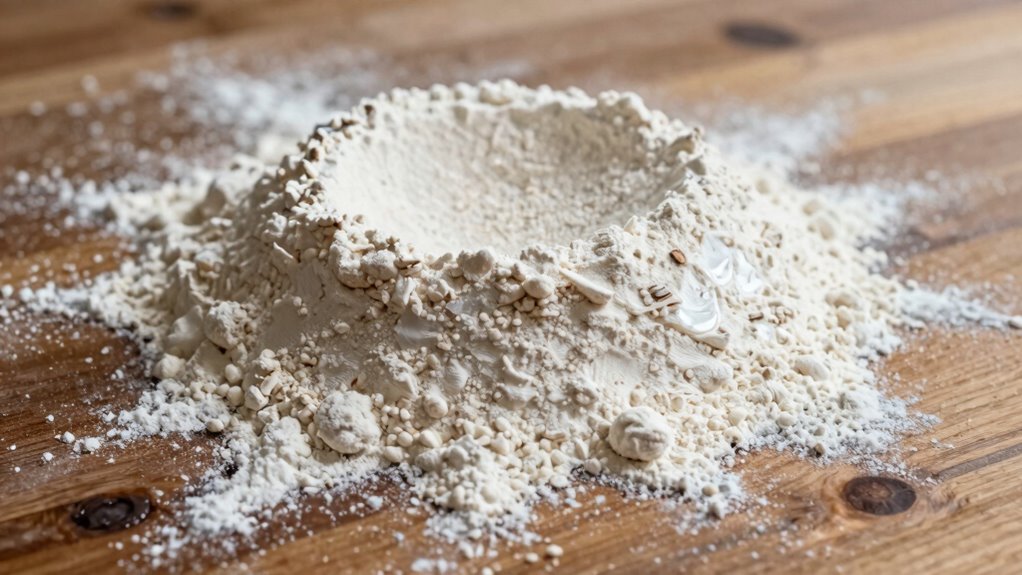
If your flour feels too coarse, your baked goods might turn out dense or crumbly. On the other hand, flour that’s overly fine can result in a gummy texture or difficulty rising. Recognizing these signs helps you adjust your mill for the perfect baking texture. Additionally, understanding home design and architecture details can inspire better kitchen layouts that facilitate efficient baking practices. Properly maintained and calibrated arcade machines ensure consistent performance, which can be a helpful analogy for maintaining your mill for optimal results. Regularly inspecting your cleaning tools ensures they remain effective in preventing contamination that could affect flour consistency.
Texture Too Coarse
When your flour feels gritty or chunky rather than smooth and powdery, it’s a clear sign that the texture is too coarse for baking. The grain size is larger than ideal, indicating insufficient milling precision. This coarse texture can lead to dense baked goods and poor dough development. To recognize this, look for:
- Visible larger particles that don’t break down easily
- A gritty, sand-like feel when rubbed between fingers
- Difficulty achieving a uniform, smooth dough
- Inconsistent rise in baked products
- Flour that feels rough rather than silky
Coarse flour results from a less refined milling process, which leaves larger bits of bran and germ intact. For excellent baking, your flour should have a consistent, fine texture aligned with the intended grain size.
Overly Fine Flour
Even if your flour feels silky and smooth, it might be too fine for certain baked goods. Overly fine flour can hinder proper gluten development, resulting in dense or crumbly textures. Additionally, extremely fine flour may reduce nutrient preservation since the milling process can strip away parts of the grain’s outer layers. This loss also impacts flavor enhancement, as coarser textures help retain the grain’s natural oils and aromatic compounds. Using flour that’s too fine can alter baking outcomes and diminish the depth of flavor you want in your baked goods. To get the best results, match your flour texture to the specific recipe, balancing nutrient retention and flavor. Properly milled flour ensures ideal texture, nutrients, and taste in every bake.
Troubleshooting Dense, Dry, or Uneven Baked Goods
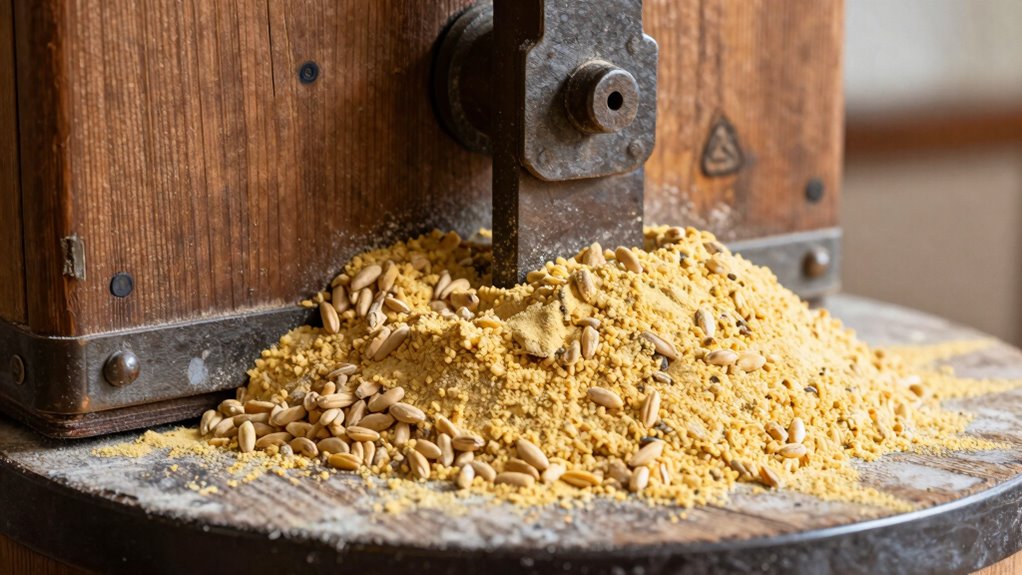
Dense, dry, or uneven baked goods often result from issues in the milling or mixing process that affect the flour’s hydration and gluten development. Poor grain storage can lead to moisture loss or mold, impacting flour quality. Regular mill maintenance guarantees consistent particle size and prevents contamination. To troubleshoot, consider these factors:
Proper grain storage and mill maintenance are key to achieving moist, evenly textured baked goods.
- Verify grain storage conditions—keep grains dry and pest-free.
- Adjust your mill’s settings for coarser or finer flour.
- Ensure thorough mixing to evenly hydrate ingredients.
- Use fresh, properly stored grains for better consistency.
- Test different hydration levels to find the most suitable dough moisture.
Tips for Consistent Flour Texture With Your Grain Mill

Maintaining a consistent flour texture begins with fine-tuning your grain mill settings and paying close attention to the quality of your grains. Proper grain storage is essential—store grains in a cool, dry place to prevent moisture and mold, which can affect grinding results. Before milling, inspect your grains for debris or damaged kernels, as these can cause uneven textures. Regular mill maintenance is key; clean your mill thoroughly after each use to prevent buildup that impacts consistency. Adjust your mill settings gradually, testing small batches to find the ideal grind size. Consistent results come from a combination of quality grains, proper storage, and diligent maintenance, ensuring your flour remains uniform and perfect for your baking needs.
Why Experimenting With Flour Texture Elevates Your Baking Skills
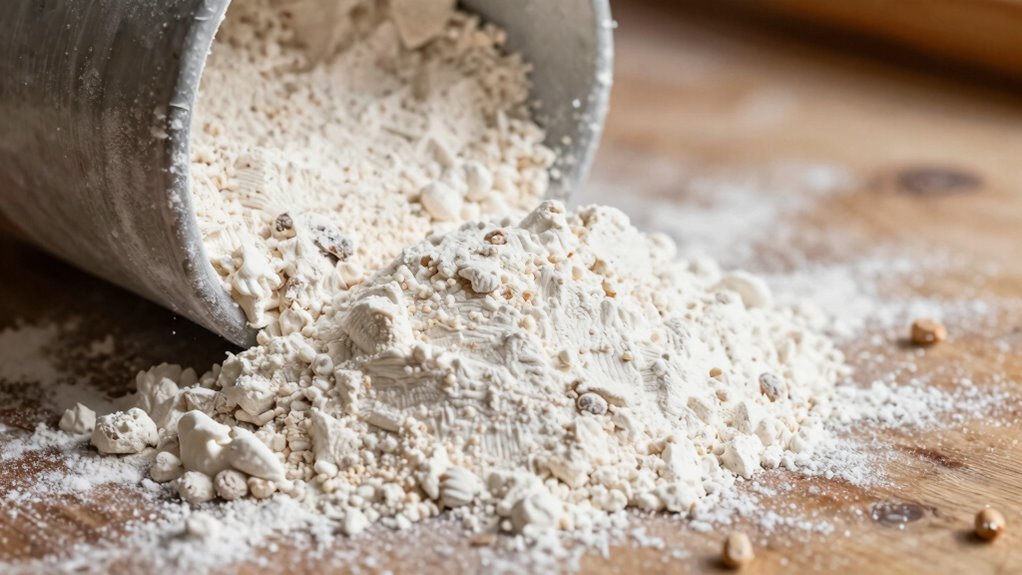
Experimenting with flour texture allows you to discover how different grinds can impact the outcome of your baked goods. By adjusting your grain mill settings, you can influence gluten development and overall texture. For example, finer flour enhances gluten formation, creating chewier bread, while coarser grinds lend a rustic, airy quality to pastries. Proper grain storage guarantees freshness, which affects how the flour behaves during baking. As you experiment, you’ll notice:
- More efficient gluten development with medium grinds
- Unique textures in bread, muffins, or cookies
- Better control over dough elasticity
- Improved flavor from freshly milled grains
- Reduced moisture absorption issues
This trial-and-error approach sharpens your baking intuition and results in more consistent, superior baked goods.
Frequently Asked Questions
How Do Humidity and Storage Conditions Affect Flour Texture?
Humidity and storage conditions directly impact flour texture by altering its moisture content. If you store flour in a humid environment, it absorbs moisture, making it denser and more prone to clumping. Conversely, a dry, cool storage environment helps maintain ideal moisture levels, ensuring consistent texture. To keep your flour fresh and easy to work with, store it in an airtight container in a low-humidity area.
Can Different Types of Grains Require Unique Mill Settings?
Ever wondered if different grains need unique mill settings? Absolutely. Each grain variety, like wheat, rye, or corn, has distinct properties that require specific milling adjustments for ideal flour texture. You should tailor your settings based on the grain type to achieve the best results. Ignoring these differences can lead to inconsistent flour quality, so always adjust your mill according to the grain you’re processing.
What Are the Health Implications of Varying Flour Coarseness?
Varying flour coarseness affects your health by influencing gluten development and nutrient retention. Finer flour promotes more gluten, which can impact digestion if you’re sensitive, while coarser flour reduces gluten formation, easing digestion. Additionally, coarser settings help retain more nutrients like fiber and minerals, offering better nutritional value. Adjusting your mill settings based on your health needs ensures ideal gluten levels and nutrient preservation for a healthier diet.
How Often Should I Calibrate My Grain Mill for Optimal Results?
You should calibrate your grain mill every few weeks to guarantee optimal results. Regular calibration helps maintain consistent flour texture, which is essential for grain freshness and baking quality. Keep up with proper mill maintenance by cleaning and checking the settings regularly. This way, you prevent buildup and ensure your flour remains fresh and finely ground, giving you better control over your baking outcomes.
Does the Age of the Grain Impact the Ideal Milling Setting?
While fresh grains often require a finer setting for ideal milling efficiency, aged grains tend to be drier and harder, needing a slightly coarser grind. As grain freshness decreases, you might need to adjust your mill to prevent uneven texture or clogging. Keep testing and calibrating your settings accordingly, understanding that the age of the grain directly influences the suitable milling process for consistent, quality flour.
Conclusion
Ironically, the only thing more confusing than choosing the right flour texture is realizing it’s often the easiest fix. With a little experimentation and attention, you can turn your baking mishaps into masterpieces. So next time your bread falls flat or cookies crumble, remember: the secret might just be in adjusting that grain mill. Sometimes, the simplest tweaks make all the difference—yet, oddly enough, that’s what most bakers overlook.