

To improve your chances of rescue, use a combination of visual signals like ground symbols, reflective surfaces, and large ground patterns, especially from above. Employ sound devices such as whistles or banging to attract attention, and utilize electronic tools like satellite beacons or smartphones with GPS. Keep a signaling kit with mirrors, flares, and bright materials ready, and make sure signals are clear and consistent. For more effective tactics, continue exploring proven emergency signaling techniques.
Key Takeaways
- Use large, contrasting ground symbols like SOS or X with rocks, logs, or reflective materials for easy aerial detection.
- Employ multiple signaling methods simultaneously, such as visual signals and auditory cues, to increase visibility.
- Maintain and regularly update ground symbols and signals to ensure continuous visibility from rescue teams.
- Carry and properly use a signaling kit with mirrors, flares, whistles, and brightly colored materials for effective communication.
- Leverage advanced technology like satellite beacons, smartphone apps, and drones to enhance rescue chances.
Visual Signaling Methods

Visual signaling methods are essential tools for attracting attention during an emergency. Flame signaling is a simple yet effective method—you can create a large, flickering fire to catch the eye of rescuers, especially in low visibility conditions. Be cautious to avoid uncontrollable fires by keeping flames manageable and clear of dry brush. Reflective surfaces, like mirrors or metal objects, also serve as powerful signaling tools. By angling them toward rescuers or the sun, you can produce bright flashes that stand out from a distance. These methods work best in daylight or when there’s limited visibility. Using flame signaling and reflective surfaces requires quick thinking and resourcefulness, but they substantially increase your chances of being seen and rescued. Additionally, understanding the importance of visibility in relation to contrast ratio can help you optimize your signaling effectiveness in different environments. Maintaining signal visibility is vital to ensure your signals are effective across various conditions and distances. To further improve your chances, consider adaptive signaling techniques, which involve adjusting your methods based on environmental changes and available resources. Being aware of environmental factors can help you choose the most effective signaling method in any given situation. For example, incorporating signaling tools like whistles or flags can further enhance your signaling options when visual cues alone are insufficient.
Using Signal Devices Effectively
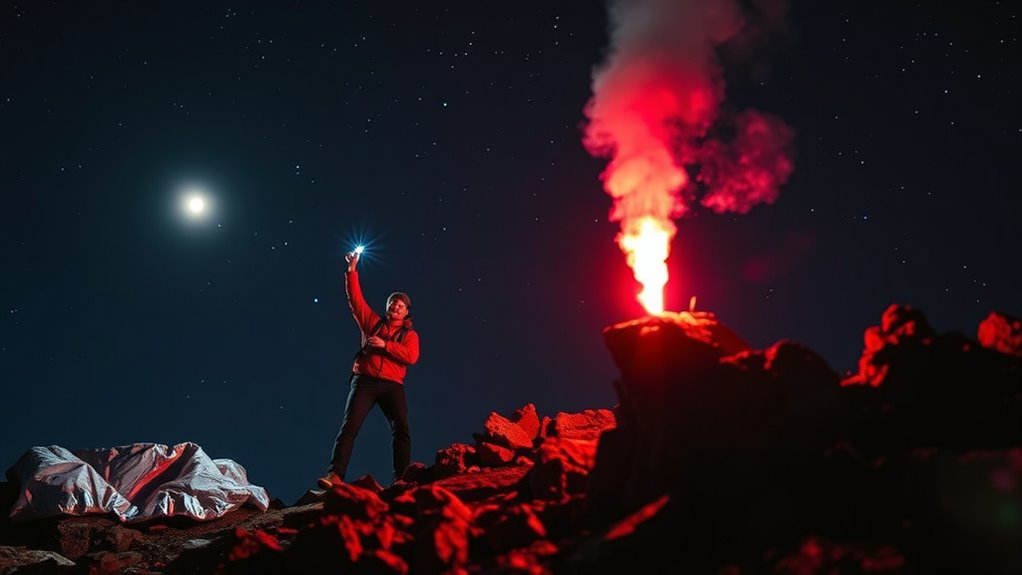
Using signal devices effectively can considerably improve your chances of being rescued. At night, prioritize devices that provide strong nighttime illumination, such as flashlights or signal flares, to make your location visible from a distance. Use clear, distinct signal patterns—like repeated flashes or specific light sequences—to aid rescuers in recognizing your signals quickly. Avoid random or inconsistent light movements, as they can be confusing or mistaken for natural phenomena. Keep your device pointed toward potential rescue routes and maintain steady illumination when possible. Familiarize yourself with your device’s signal pattern recognition features, such as SOS flashes or specific Morse code signals, to communicate effectively. Proper use of signal devices ensures your signals stand out, increasing the likelihood of prompt rescue. Additionally, understanding emergency signaling techniques can further enhance your visibility and communication during rescue operations. Incorporating advanced signaling methods, such as reflective signals or mirror flashes, can further increase your chances of being noticed by rescuers from greater distances. Using visual signaling tools, like mirrors or brightly colored objects, can also help attract attention more effectively. Being aware of different signaling tools can help you choose the most effective method for your situation. Moreover, practicing these techniques beforehand can improve signal clarity and your overall safety during an emergency.
Sound Signaling Techniques
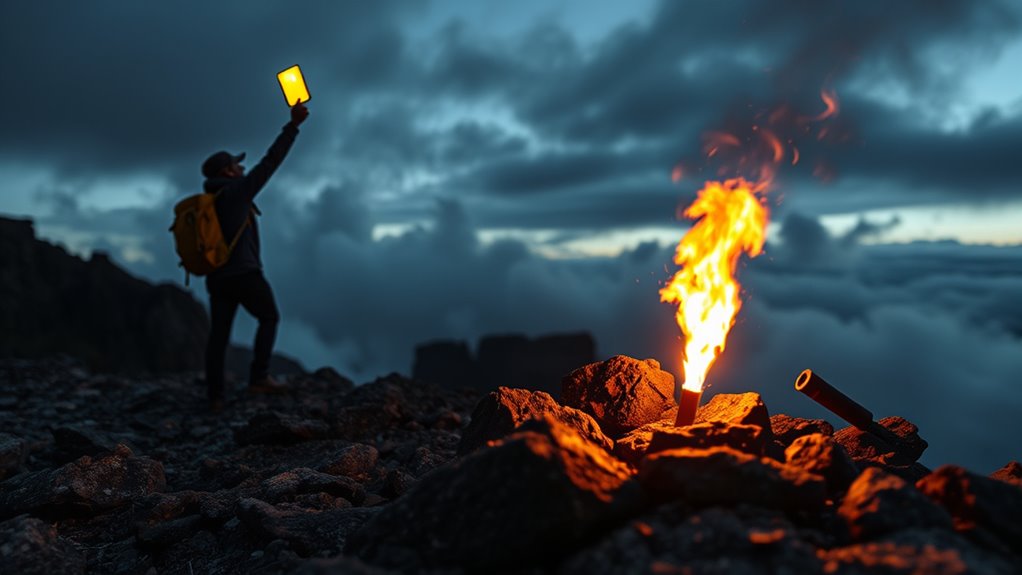
Sound signaling can be a vital tool for attracting attention during a rescue. Proper techniques increase your chances of being noticed, especially when shelter building or food preservation is urgent. Here are effective methods:
- Use a whistle or horn to produce loud, consistent sounds at regular intervals.
- Create rhythmic noise by banging objects together near your shelter to draw attention.
- Shout in bursts, focusing on clear, loud calls directed toward rescuers or open areas.
- Utilize natural materials like rocks or sticks to produce percussive sounds, especially if you need to alert rescuers without revealing your location prematurely.
- Incorporating sound signaling techniques into your survival skills can significantly improve your chances of rescue. These sound signals can help rescue teams locate you quickly, while you prioritize maintaining shelter and food preservation to survive until help arrives. Regularly practicing auditory signals can enhance their effectiveness when it matters most. Additionally, understanding the use of trustworthy signaling devices ensures your efforts are effective and reliable. Being familiar with the variety of sounds you can produce may also increase the likelihood of catching a rescuer’s attention. Developing a consistent signaling pattern can further improve the chances of your signals being recognized and interpreted correctly by rescue teams.
Electronic Beacons and Personal Devices

Electronic beacons and personal devices have become reliable tools for signaling during emergencies, often providing a more immediate way to attract rescue teams’ attention. Devices like Personal Locator Beacons (PLBs) use satellite communication to transmit your location instantly to rescue services, even in remote areas. Many smartphones now feature emergency apps that send distress signals with GPS coordinates through satellite links. Additionally, drone surveillance has revolutionized rescue efforts by enabling search teams to quickly scan large or difficult terrain from the air. These electronic tools enhance your chances of being found faster, especially when traditional signals might fail. Using personal devices in combination with satellite communication and drone technology maximizes your visibility and accelerates rescue efforts, increasing your survival chances during critical moments. Incorporating advanced technology such as smart sensors and real-time tracking can further improve emergency response efficiency. Moreover, AI security techniques like pattern analysis can help identify potential risks and optimize the deployment of rescue resources. Integrating vetted global technologies ensures more reliable and widespread coverage during rescue operations. Recent innovations in on-device AI processing power, like the Snapdragon 8 Gen 3, enable smarter and quicker responses in critical situations, further supporting rescue efforts.
Creating and Using Ground-to-Air Signals

To create effective ground-to-air signals, you need basic materials like rocks, brightly colored fabric, or reflective objects. Using clear and consistent techniques, such as large symbols or patterns, helps rescuers recognize your signals from above. Make sure your ground symbols are simple, recognizable, and visible from a distance to improve your chances of being spotted. Incorporating emergency signaling skills can greatly enhance your visibility and aid rescue efforts during a crisis. Familiarity with survival communication methods can also increase the likelihood of being located quickly. Additionally, understanding visual signaling principles can optimize your signaling effectiveness in various environments.
Signal Materials Needed
When creating ground-to-air signals, having the right materials on hand can make all the difference in attracting rescuers’ attention. Crucial items include a signal mirror to reflect sunlight and catch the eye of aircraft. Fire starting tools, such as matches or a lighter, help create smoke signals, especially if you need to attract attention over time. Brightly colored materials like clothing or tarp can be arranged to form visible patterns or signals on the ground. Additionally, whistles or noise-making devices can supplement visual signals by drawing attention with sound. Keep these materials easily accessible and in a waterproof container. Being prepared ensures you can quickly deploy effective signals, increasing your chances of rescue. Proper gear is essential for maximizing your signaling efforts, including vetted devices like home theater projectors to enhance visibility from the air. Regularly practicing your signaling methods and understanding ground-to-air signaling techniques can also improve your chances of a successful rescue. Using visual cues, such as reflective surfaces and contrasting colors, can further improve the effectiveness of your signals.
Effective Signal Techniques
Creating effective ground-to-air signals requires more than just having the right materials; it’s about knowing how to deploy them strategically. Use signals like mirrors, whistles, or flares with careful consideration of flare safety to avoid accidents. Always verify flares are used in open areas, away from combustible materials, and follow manufacturer instructions. Signal timing is vital; repeat signals at regular intervals to catch the rescuer’s attention and avoid confusion. Use clear, deliberate movements or signals, such as waving a cloth or creating large ground symbols, to increase visibility. Remember, consistent and well-timed signals improve your chances of being spotted. Proper technique and safety precautions make your signals more effective, increasing the likelihood of rescue.
Recognizable Ground Symbols
Recognizable ground symbols are crucial for signaling your location to rescuers from the air. Using clear, visible navigation markers can dramatically improve your chances of being spotted. To create effective ground-to-air signals, consider these options:
- Use large, contrasting patterns like an “X,” “SOS,” or a square made from rocks or logs.
- Mark your location with bright materials such as reflective tape or clothing.
- Clear an open space to enhance visibility, especially from above.
- Employ distress signals like a ground-to-air mirror or signal fires in safe conditions.
These grounded symbols serve as essential navigation markers, guiding rescue teams and conveying distress signals efficiently. Properly creating and maintaining these symbols increases your visibility, making rescue operations faster and more successful.
Signaling Tips for Different Environments
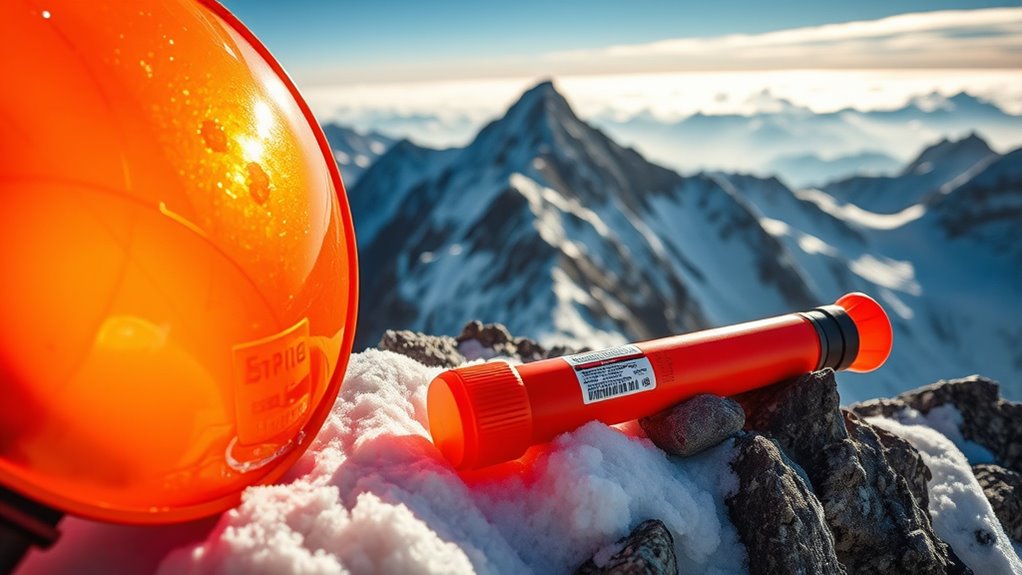
No matter where you are, using the right signals can make a big difference in rescue efforts. You need to focus on visual signals for maximum visibility, employ audio methods when sight is limited, and adapt your techniques to suit your environment. Understanding these environment-specific tips will improve your chances of being noticed and rescued quickly.
Visual Signals for Visibility
In different environments, using the right visual signals can make all the difference in attracting rescue personnel’s attention. Bright, conspicuous signals are essential. For daytime visibility, consider flare deployment in open areas to create a visible smoke or light trail. Wearing reflective clothing enhances your visibility at night or in low-light conditions. You can also use signal mirrors to reflect sunlight toward rescuers. In snowy or desert environments, high-contrast colors like orange or yellow are highly effective. Additionally, setting up ground markers or creating patterns with rocks or debris can help rescuers locate you quickly. Combining these methods increases your chances of being seen, especially when time matters most. Always tailor your visual signaling approach to your surroundings for maximum impact.
Audio Signaling Methods
Audio signaling can be a vital tool for attracting rescue in various environments, especially when visual signals are limited or ineffective. Using a loud whistle or shouting can grab attention, but adding an emergency flashlight with a built-in siren increases your chances. Flashlights can produce distress signals, like SOS patterns, that are recognizable from a distance. In dense forests or caves, noise from an emergency flashlight’s siren can cut through ambient sounds. Consistently using loud, clear signals helps rescuers locate you faster. Remember, your goal is to make your presence known without exhausting yourself. Combining sound with visual cues, like flashing an emergency flashlight while calling out, maximizes your chances of being noticed and rescued quickly.
Environment-Specific Techniques
Different environments require tailored signaling techniques to maximize your chances of rescue. In dense forests or mountainous terrain, satellite communication devices enable you to call for help even without cell service. Using reflective signals like mirrors or shiny objects can catch the sun’s rays and attract attention. In open areas, deploying a rescue drone allows for aerial surveys and locating your position quickly. For snow or ice environments, creating large ground signals with rocks or debris enhances visibility from above. Additionally, sound signals like whistles or horns work well in confined spaces or thick foliage. Combining these methods guarantees you adapt effectively to your surroundings, increasing rescue opportunities. Always familiarize yourself with environment-specific tools, including satellite communication options and rescue drone deployment techniques.
Preparing a Signaling Kit for Emergencies
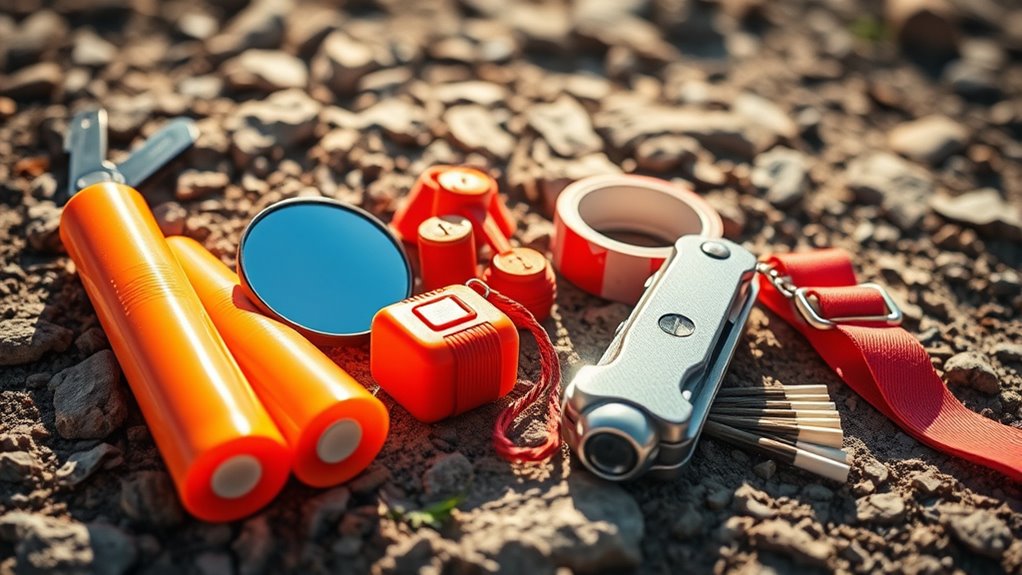
Having a well-prepared signaling kit can make all the difference during an emergency, helping rescuers locate you quickly. Start by organizing your emergency kit efficiently, grouping signaling devices, batteries, and maintenance tools together. Regularly check and maintain your signaling devices to guarantee they work when needed. Consider adding items like mirrors, whistles, and flare pens. Use this table as a guide:
| Item | Purpose | Maintenance Tips |
|---|---|---|
| Signal Mirror | Visual signaling | Clean and store in dry place |
| Whistle | Sound signaling | Test periodically |
| Flares | Bright visual signals | Inspect for corrosion |
Proper emergency kit organization and signaling device maintenance maximize your chances of rescue.
Frequently Asked Questions
What Are the Most Universally Recognized International Rescue Signals?
You want to know the most universally recognized international rescue signals. Visual distress signals like waving a bright cloth or mirror can attract attention, especially during the day. Sound signals, such as a whistle or tapping, are effective at night or in poor visibility. Using a combination of these signals increases your chances of being noticed and rescued quickly, ensuring rescue teams can locate you more efficiently.
How Can Signals Be Maintained Over Extended Periods?
Oh, sure, keeping signals visible for days sounds easy, right? But in reality, you need sustainable signal methods and signal durability strategies. Use durable materials for flares or reflective surfaces, and create signals that can withstand weather, wear, and time. Regularly check and adjust your signals, and consider combining visual with auditory methods. Staying persistent and prepared guarantees your signals remain effective until rescue arrives—no magic, just smart planning.
What Are Common Mistakes to Avoid in Emergency Signaling?
When it comes to emergency signaling, you should avoid common mistakes like using signals that aren’t visible or consistent. Make sure your emergency equipment, like mirrors or flares, is in good condition and easily accessible. Don’t forget to maintain signal visibility by choosing open, unobstructed spots and using clear, universal signals. Stay alert and avoid confusion by practicing proper signaling techniques, so rescue teams can find you quickly.
How Do Weather Conditions Affect Signaling Effectiveness?
Weather conditions can be a double-edged sword, like a foggy mirror distorting your reflection. Weather impact can severely limit your signaling effectiveness, creating visibility challenges that make it harder for rescuers to see your signals. Rain, fog, or snow can obscure visual signals and weaken sound signals, so adapt your methods accordingly. Use reflective materials, sound signals, or create signals that stand out even in poor weather to increase your chances of rescue.
Are There Legal Considerations for Signaling in Remote Areas?
You should know that legal constraints and signal permissions vary depending on your location. Before signaling in remote areas, check local regulations to avoid fines or legal trouble. Some places restrict the use of certain signals or devices to prevent false alarms. Always make certain you have proper authorization if required, and use internationally recognized signals when possible. Staying informed helps you signal effectively and legally in emergency situations.
Conclusion
By mastering these signaling methods, you turn hope into a beacon of rescue. Remember, in emergencies, your signals are your voice when words fail, shining like a lighthouse amid darkness. Every flash, sound, or sign is a plea for help, a reminder that even in the direst moments, your actions can light the way to safety. Stay prepared, stay vigilant—because sometimes, a simple signal is all it takes to turn despair into rescue.