To survive extreme heat waves, seek shaded and cooled areas, stay indoors with fans or air conditioning, and cover your head with wide-brimmed hats or scarves. Wear loose, light-colored, and breathable clothing, and avoid strenuous activities during hottest times. Stay well-hydrated by drinking plenty of water, and recognize signs of heat exhaustion or stroke. Taking these protective measures can make a big difference—continue to explore more ways to stay safe and comfortable.
Key Takeaways
- Stay indoors in shaded or cooled environments during peak heat hours.
- Wear loose, light-colored, breathable clothing and a wide-brimmed hat for sun protection.
- Drink plenty of water regularly and avoid alcohol or caffeine.
- Limit outdoor activities to early mornings or late evenings.
- Use fans, portable cooling devices, and damp cloths to help lower body temperature.
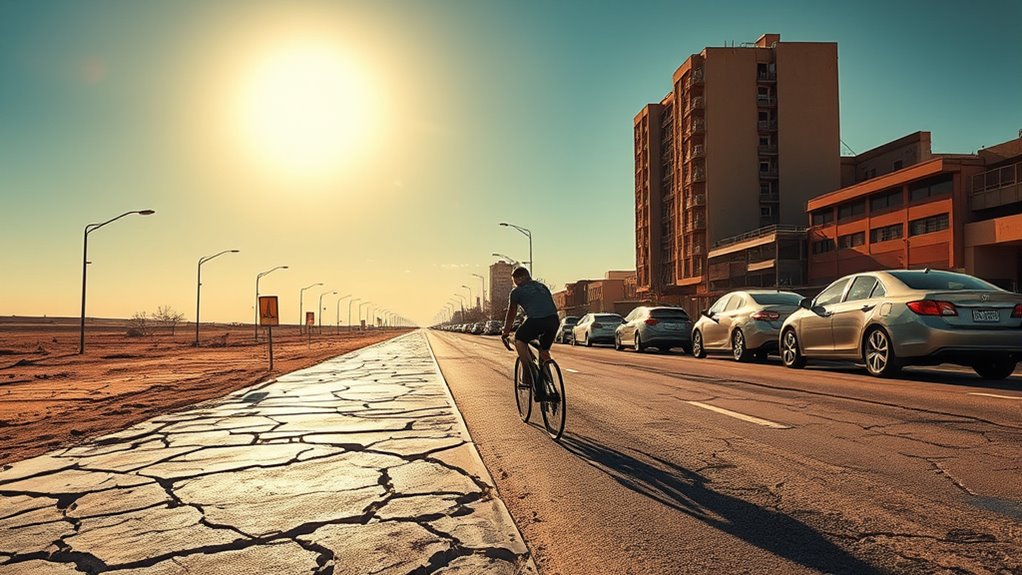
As heat waves become more frequent and intense, understanding how to survive them is essential. One of the most effective strategies is urban cooling, which involves adapting your environment and habits to reduce heat exposure. Urban areas tend to trap heat due to concrete and asphalt, creating urban heat islands that worsen the effects of extreme temperatures. To combat this, you should seek shaded areas whenever possible, utilize fans, or even invest in portable cooling devices. Making simple changes like closing blinds during the hottest parts of the day can significantly lower indoor temperatures. Additionally, planting trees or installing reflective surfaces around your home can help reflect heat away and keep your living space cooler. These measures collectively promote urban cooling, making your environment more manageable during heat waves. Using specialized cooling equipment can further improve comfort and safety during extreme temperatures.
Beyond environmental adjustments, your clothing choices play a crucial role in heat protection. Wearing heat resistant clothing can help you stay comfortable and prevent heat-related illnesses. Look for loose, lightweight, and light-colored fabrics that allow your skin to breathe and reflect sunlight. Materials like linen, cotton, or specialized heat-resistant fabrics are ideal. Avoid dark, heavy, or synthetic clothes that trap heat and moisture against your skin. When outdoors, covering your head with a wide-brimmed hat or lightweight scarf can shield you from direct sunlight. Moisture-wicking clothing can also help keep your body cool by drawing sweat away from your skin, facilitating evaporation. When combined with other cooling techniques, such as staying in shaded areas and hydrating regularly, heat resistant clothing becomes a significant part of your heat wave survival toolkit.
It’s important to plan your activities carefully during extreme heat. Limit outdoor exertion to cooler parts of the day, such as early mornings or late evenings. Always wear appropriate clothing that offers protection from the sun, and stay in shaded or cooled environments as much as possible. Drinking plenty of water is essential—dehydration can strike quickly in high temperatures, so keep a bottle nearby and sip regularly. If you’re feeling dizzy, weak, or nauseous, seek a cool place immediately and consider cooling your skin with damp cloths or fans. Recognize the signs of heat exhaustion and heatstroke, and don’t hesitate to seek medical help if symptoms worsen. Remember, your body needs extra care during heat waves, and taking proactive steps like urban cooling strategies and wearing heat resistant clothing can make all the difference in staying safe and comfortable. Incorporating advanced cooling technologies can further enhance your ability to withstand extreme heat conditions.
Frequently Asked Questions
How Can Urban Areas Reduce Heat Island Effects Effectively?
You can reduce heat island effects by increasing urban greening and installing reflective surfaces. Plant trees and create green spaces to provide shade and cool the air naturally. Use reflective materials on roofs and pavements to bounce sunlight away and lower surface temperatures. Combining these strategies helps improve air quality, reduce energy consumption, and create a more comfortable, cooler environment in your city.
Are There Specific Clothing Materials Best for Extreme Heat?
Think of clothing as your armor against the sun’s fiery assault. You should choose breathable fabrics like cotton, linen, or moisture-wicking synthetics that allow sweat to evaporate and keep you cool. Additionally, opt for sun protective clothing with UPF ratings to block harmful rays. These materials create a shield, helping you stay comfortable and safe when the heat is at its fiercest.
What Are Early Signs of Heat-Related Illnesses?
You might notice early signs of heat-related illnesses like heat exhaustion, such as heavy sweating, weakness, headache, and dizziness. If you ignore these symptoms, you risk developing heat stroke, which can cause a high body temperature, confusion, and even loss of consciousness. It’s essential to cool down immediately, hydrate, and seek medical help if symptoms worsen. Recognizing these early signs saves lives and prevents severe health consequences.
How Can Vulnerable Populations Stay Safe During Heat Waves?
To stay safe during heat waves, you should prioritize heat safety and hydration strategies. Make sure to drink plenty of water, avoid strenuous activities during peak heat, and stay in cool, shaded areas. Wear lightweight, light-colored clothing and use fans or air conditioning if available. Keep an eye on vulnerable populations, like the elderly or those with health issues, and encourage regular hydration to prevent heat-related illnesses.
What Community Resources Are Available During Extreme Heat Events?
During extreme heat events, you can access community resources like public cooling centers and emergency hydration stations. These facilities provide relief from the heat, offering air conditioning and cold water to help you stay safe. Check local government websites or contact community centers for locations and hours. Using these resources, you can reduce heat-related health risks and stay comfortable during intense heat waves.
Conclusion
Remember, facing extreme heat is like standing in the sun with a mirror—if you don’t shield yourself, you’ll get burned. By staying hydrated, seeking shade, and listening to weather alerts, you become your own shield against the scorching storm. Think of this heat wave as a fierce fire; your awareness and preparations are the water that can douse it. Stay smart, stay safe, and you’ll weather the heat wave like a seasoned firefighter tackling the flames.