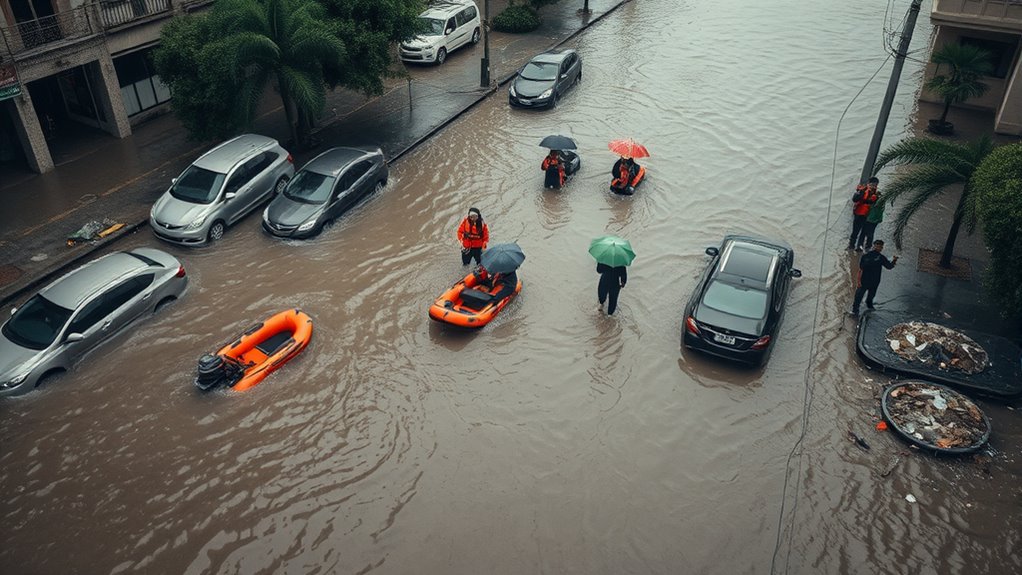

During a flood, prioritize your safety by avoiding walking or driving through floodwaters, as strong currents and hidden dangers can harm you. Move quickly to higher ground using safe exit points, and never attempt to cross flooded streets or rivers. Keep emergency supplies ready, stay informed via alerts, and act promptly to evacuate if needed. Understanding these water safety tips and proper procedures can help protect you and your loved ones—continue for more essential advice.
Key Takeaways
- Avoid walking or driving through floodwaters; seek higher ground and safe evacuation routes immediately.
- Recognize that strong currents near bridges and narrow channels can be more dangerous than they appear.
- Prepare an emergency kit, stay informed via alerts, and have multiple escape options ready.
- Never cross flooded streets or rivers; find safe exit points and move away from water sources promptly.
- Wear sturdy footwear when in floodwaters, avoid contact with debris or chemicals, and wash thoroughly afterward.

When flooding threatens your community, knowing how to evacuate safely and stay water-safe can make all the difference. Floodwaters often carry unpredictable river currents that can sweep you off your feet or pull you into dangerous areas. Understanding how these currents behave helps you make smarter decisions during a flood event. River currents are strongest near bridges, culverts, or narrow channels, so avoid these areas if floodwaters are rising. Always remember, just because water looks shallow doesn’t mean it’s safe—currents can be deceptively strong and carry debris or hazardous materials. The strength of river currents can vary depending on recent rainfall and the terrain, so staying informed about local water conditions is crucial.
Avoid bridges and narrow channels during floods; currents can be stronger and more dangerous than they appear.
Preparing in advance is key to flood safety. Flood preparedness means having an emergency kit ready, knowing your community’s evacuation routes, and staying informed through alerts and weather updates. Make sure your kit includes essentials like water, non-perishable food, first aid supplies, and important documents. Keep a battery-powered radio on hand to receive alerts if power goes out. Familiarize yourself with local evacuation plans, so you can act quickly when warnings are issued. Keep your vehicle fueled and ready, and plan multiple routes out of your neighborhood in case one becomes impassable.
During an evacuation, avoid walking or driving in floodwaters. Even a few inches of moving water can cause you to lose control or get swept away, especially if there are strong river currents. Never attempt to cross a flooded street or river because the water’s depth and current strength are often hidden. If you encounter a flooded area, find the highest ground available and move away from water sources. Keep children and pets close, and never leave them behind.
If you’re caught in floodwaters, look for a safe exit point, such as a sturdy building or an elevated area. If you’re in a vehicle, abandon it if water is rising around you, and seek higher ground immediately. Remember, floodwaters can carry hazardous debris, chemicals, or sewage, so avoid contact with the water whenever possible. Wear sturdy shoes if you walk through water, and wash thoroughly afterward to prevent infection. Being aware of water safety guidelines can significantly reduce the risk of injury during flooding events.
Staying water-safe during a flood involves patience, vigilance, and respect for the power of nature. By understanding river currents, preparing your supplies, and following safety guidelines, you can protect yourself and your loved ones when floodwaters threaten your community. Acting quickly and wisely can make all the difference in staying safe amid rising waters.
Frequently Asked Questions
How Can I Prepare My Pets for Flood Evacuation?
To prepare your pets for flood evacuation, create a pet emergency kit with food, water, medications, and comfort items. Keep your pets’ records and photos handy in case you get separated. Practice flood preparedness by familiarizing your pets with their carrier and evacuation routes. Verify their collar has updated ID tags. Staying calm helps your pets stay calm, making the evacuation smoother for everyone involved.
What Should I Do if I Can’t Evacuate in Time?
If you can’t evacuate in time, immediately use emergency communication channels to stay informed and alert authorities of your situation. Seek shelter options nearby, such as community centers or designated emergency shelters, and move to higher ground if possible. Keep essential supplies handy, including water, food, and a flashlight. Stay calm, avoid floodwaters, and listen for updates to guarantee your safety until help arrives or evacuation becomes feasible.
Are There Specific Water Safety Tips for Children?
You should always supervise children closely around water and make certain they wear life jackets when near floodwaters. Teach kids basic water safety rules, like not swimming alone and staying away from fast-moving water. Keep children in shallow, safe areas and use barriers or barriers to limit access. Always stay alert, and remind kids of child precautions, so they understand water dangers and stay safe during flood emergencies.
How Do I Identify Safe Routes During a Flood?
During a flood, you identify safe routes through thorough flood planning and route assessment. Look for elevated paths, avoid flooded areas, and check local advisories for updates. Use maps to plan your route, and consider alternative paths in case your primary route becomes unsafe. Always stay alert to water levels and road conditions, and prioritize routes that avoid swift-moving water or debris. Your safety depends on careful assessment and staying informed.
What Equipment Is Essential for Water Safety After a Flood?
You need vital flood safety gear like waterproof boots, life jackets, and gloves to protect yourself. Water rescue tools such as poles, ropes, and throw bags are essential for safe rescues and maintaining stability. Always carry a flashlight, a whistle, and a waterproof first aid kit. These items help you stay safe, assist others, and navigate through floodwaters effectively. Proper equipment guarantees you can respond quickly and safely in flood situations.
Conclusion
Remember, during a flood, your safety is the anchor that keeps you grounded. Evacuate promptly and avoid floodwaters—they’re like hidden thieves, carrying unseen dangers. Stay alert, follow official guidance, and never underestimate the power of water. Think of your actions as the lighthouse guiding you safely to shore amid stormy seas. By staying prepared and cautious, you steer clear of disaster and help everyone stay afloat. Your quick, brave response can make all the difference.