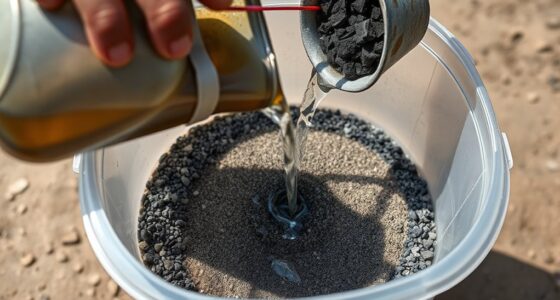
To guarantee safe, clean drinking water at home, use reliable storage containers that are cleaned regularly with soap or vinegar, and store water in cool, dark places away from chemicals and sunlight. Install and maintain appropriate filtration systems, like pitcher or under-sink filters, replacing filters as recommended. Always check stored water for signs of contamination and rotate your supplies. Continuing with these tips will help you master effective water purification and storage practices for your household.
Key Takeaways
- Use reliable water filtration systems, such as pitcher or under-sink filters, and replace filters regularly for safe drinking water.
- Clean and disinfect water storage containers frequently with soap and vinegar to prevent bacteria, mold, and algae buildup.
- Store water in cool, dark, sealed containers to inhibit bacterial growth and prevent contamination from sunlight or chemicals.
- Rotate stored water regularly and monitor for signs of cloudiness, odor, or discoloration to maintain quality.
- Maintain proper filtration and container hygiene to ensure clean, safe water for drinking, cooking, and cleaning at home.

Having a reliable supply of clean water at home is indispensable for your health and daily routines. Whether you’re drinking, cooking, or cleaning, the quality of your water directly impacts your well-being. One effective way to guarantee safe water is through proper water filtration. This process removes contaminants, bacteria, and chemicals that might be present in tap water, giving you peace of mind with every glass. Water filtration systems can range from simple pitcher filters to more advanced under-sink units, depending on your needs and budget. Regularly maintaining your filters is essential; forget to change them when necessary, and you risk letting impurities slip through or reducing the system’s effectiveness. Staying on top of filter replacements guarantees that your water remains clean and safe.
In addition to filtration, container maintenance plays a critical role in keeping your stored water pure. Your storage containers should be cleaned thoroughly and frequently to prevent mold, bacteria, or algae buildup. Use non-toxic, food-grade materials for your containers, and wash them with soap and water at regular intervals. Rinsing with a vinegar solution can help eliminate mineral deposits and disinfect the container without introducing harmful chemicals. Proper container maintenance also involves ensuring that lids are sealed tightly to prevent contamination from dust or insects. When filling your containers, always use clean, filtered water, and avoid directly pouring water from unclean sources. This layering of good practices helps preserve the quality of your stored water over time. Incorporating water storage practices that include proper container handling can further enhance your water safety.
Another tip is to store water in a cool, dark place, which inhibits bacterial growth and prevents degradation of the water quality. Avoid storing water containers in direct sunlight or near chemicals, as exposure can lead to contamination or deterioration. Additionally, rotating your stored water supply—using the oldest water first—ensures you always have fresh water available. Remember, the cleanliness and maintenance of your containers directly impact the safety of your stored water. If you notice any signs of cloudiness, foul odor, or discoloration, it’s time to clean the container again and evaluate your filtration system.
Frequently Asked Questions
How Often Should I Replace My Water Filters?
You should replace your water filters based on their filter lifespan, which typically ranges from every 2 to 6 months. Follow the replacement schedule recommended by the manufacturer, as factors like water quality and usage can affect how often you need to change them. Regularly check your filters for signs of clogging or reduced flow, and substitute them promptly to ensure clean, safe drinking water.
Can I Store Water in Plastic Containers Long-Term?
You can store water in plastic containers long-term, but only if you choose food-grade, BPA-free options. Coincidentally, using the right plastic container safety guarantees your stored water stays fresh and safe. Follow long-term storage tips like keeping containers in a cool, dark place and rotating your water supply every six months. This way, you’ll have clean water ready without risking contamination, making your storage both practical and safe.
What’s the Best Way to Disinfect Stored Water?
You can disinfect stored water effectively by using chlorine bleach or boiling. Add 8 drops of unscented household bleach per gallon of water, stir well, and let it sit for 30 minutes to kill waterborne pathogens. Alternatively, boiling water for at least one minute (or three minutes at higher altitudes) guarantees disinfection. These methods target waterborne pathogens and keep your stored water safe for use.
How Much Water Should I Store per Person?
You should store at least one gallon of water per person per day for a minimum of three days, ensuring good water quality and enough storage capacity for emergencies. If you have space, aim for a two-week supply. Consider your household size and water needs, and select containers that maintain water quality. Regularly rotate your stored water to keep it fresh and reliable during crises.
Are There Eco-Friendly Water Purification Options?
Think of your water purifier as a garden of sustainability. You can choose eco-friendly options like biodegradable filters that break down naturally, leaving no harmful traces. Solar purification harnesses the sun’s energy to cleanse water gently and sustainably. These methods act as guardians of the environment, ensuring your water stays pure without harming nature, allowing you to nurture both your health and the planet with conscious choices.
Conclusion
Now, as you fill your bottles with clean water, remember that this simple act connects you to countless others who also value purity and health. It’s a small effort that, when combined with mindful storage and purification, creates a ripple of safety and well-being in your home. Sometimes, it’s these everyday choices — like securing safe water — that remind us how much we truly cherish our loved ones and the life we build together.