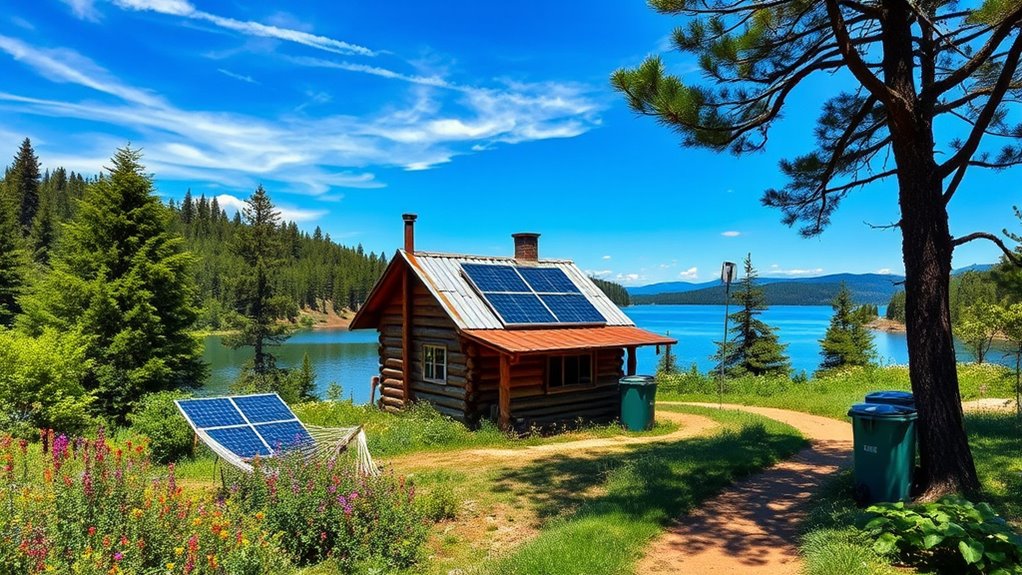
Off-grid living lets you embrace sustainability and independence by using solar panels, wind turbines, and rainwater harvesting. It reduces your carbon footprint, lowers long-term costs, and gives you control over your resources. However, it demands careful planning, regular maintenance, and a strong commitment to managing your energy and water supplies. It’s rewarding but challenging, especially initially. Want to discover more about how to make off-grid living work for you?
Key Takeaways
- Offers independence from utility companies and greater control over energy and water resources.
- Requires significant upfront investment and technical knowledge for system setup and maintenance.
- Promotes eco-friendly living by utilizing renewable energy and responsible water management.
- Demands ongoing effort for system upkeep, troubleshooting, and resource management.
- Provides a sustainable, self-sufficient lifestyle but may not suit everyone’s commitment level.

Have you ever wondered what it’s like to live completely off the grid? It’s a lifestyle that offers independence from traditional utilities and brings you closer to nature. One of the biggest advantages is harnessing renewable energy. Instead of relying on power companies, you can set up solar panels or small wind turbines to generate electricity. This not only reduces your carbon footprint but also keeps your energy costs low over time. With renewable energy, you’re in control of your power supply, and you don’t have to worry about outages or rising utility bills. But it’s essential to plan carefully; your energy needs must match your generation capacity, especially during cloudy days or calm periods when solar and wind might underperform.
Living off-grid means harnessing renewable energy like solar and wind for independence and lower costs.
Sustainable water management is another critical aspect of off-grid living. You need a reliable way to collect, store, and treat water. Many off-grid dwellers install rainwater harvesting systems to gather water from rooftops, which can be filtered and purified for drinking and household use. Sometimes, well systems are used if groundwater is accessible. The key is ensuring your water source remains sustainable and uncontaminated, so you’re not dependent on external providers. Proper water management prevents shortages and reduces waste, which is crucial when you’re miles away from municipal water systems. It also means you can maintain a self-sufficient lifestyle, growing your own food and using water responsibly. Additionally, understanding the importance of active listening and empathy can help you communicate effectively with neighbors or support networks in remote areas.
Living off-grid gives you a profound sense of freedom and responsibility. You’re responsible for maintaining your energy and water systems, which requires some technical know-how and ongoing effort. It’s rewarding to see your own energy production and water collection work seamlessly, but it also demands planning and regular upkeep. You’ll need backup plans, like batteries for energy storage or additional water tanks, to handle emergencies or periods of low resource availability. While the initial setup can be costly and complex, many find the long-term benefits outweigh the effort. Plus, living sustainably becomes second nature, fostering a deeper connection to your environment and encouraging eco-friendly habits.
Ultimately, off-grid living isn’t for everyone, but if you value independence and environmental stewardship, it might be worth exploring. Balancing renewable energy and sustainable water practices allows you to create a self-reliant, eco-conscious home. It’s a lifestyle that challenges you to adapt and innovate, but it also offers the chance to live more harmoniously with nature, free from the constraints of conventional utility systems.
Frequently Asked Questions
How Do Off-Grid Homes Handle Emergency Medical Situations?
When emergency medical situations occur, you should rely on your emergency preparedness plans and stocked medical supplies. Off-grid homes often have first aid kits, basic medications, and communication tools like satellite phones to call for help if needed. You take proactive steps to stay prepared, ensuring you can handle minor injuries and know when to seek external medical assistance quickly. Staying organized and ready is essential for managing emergencies effectively.
What Are the Best Locations for Off-Grid Living?
Think of the perfect off-grid location as a hidden gem waiting to be discovered. You’ll want areas with abundant sunlight for solar power and easy access to water sources for water independence. Consider regions like the Pacific Northwest for lush forests and reliable rainfall or the Southwest for sunny days and solar potential. These spots support sustainable living, giving you the freedom to thrive off the grid while harnessing nature’s resources.
How Do Off-Grid Residents Access Reliable Internet?
You access reliable internet off-grid through satellite internet and cellular connectivity. Satellite internet provides coverage in remote areas, allowing you to connect even in the most isolated locations. Cellular connectivity, with a strong signal, offers faster speeds and stability. You might need a signal booster or satellite dish to enhance your connection. Combining these options guarantees you stay connected, work remotely, and enjoy online services while living off-grid.
What Are the Legal Challenges of Off-Grid Living?
You might face legal challenges that feel like battling a beast! Zoning restrictions can drastically limit your options, making it almost impossible to build or live as you wish. Property rights can also be tricky, with authorities sometimes questioning your right to live off-grid. You need to navigate these laws carefully, or you risk fines, eviction, or losing your land entirely. It’s a wild legal jungle out there!
How Do Off-Grid Homes Manage Waste Disposal?
You manage waste disposal in off-grid homes primarily through waste management systems like septic tanks. You’ll need to install and regularly maintain septic systems to process wastewater safely, preventing environmental contamination. Composting toilets are another option, turning human waste into compost. Proper waste management is essential to stay compliant with local regulations and protect your land and water sources, ensuring an eco-friendly off-grid lifestyle.
Conclusion
Living off the grid can feel like carving out your own piece of paradise, offering independence and a closer connection to nature. However, it’s not without its challenges, and you’ll need to weigh the pros against the cons carefully. Remember, every rose has its thorn, so while the freedom is tempting, be prepared for the effort it takes to maintain your new lifestyle. Ultimately, it’s your journey—make sure it’s one that truly suits you.