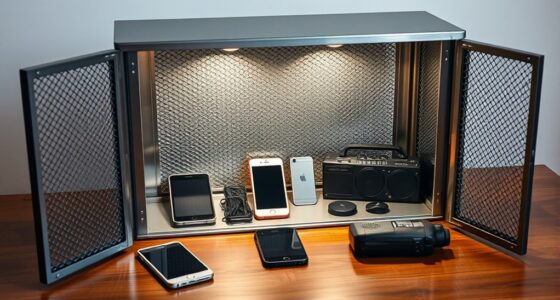
Understanding HF, VHF, and UHF frequencies helps you choose the right radios for emergencies. HF covers long distances, ideal for global or remote contact, while VHF is best for regional, line-of-sight communication. UHF excels in urban or obstacle-rich areas, offering short-range but reliable signals. Knowing how each band works helps you plan better. Keep exploring to discover how to optimize your setup for any emergency situation.

Get emergency and outdoor gear delivered free — and shop member deals
- Fast, free delivery on millions of items
- Access to Prime Big Deal Days deals on October 6–7
- Prime Video, Amazon Music and more included
Key Takeaways
- HF offers long-distance communication via ionospheric reflection, ideal for global emergencies; VHF and UHF are better for local, line-of-sight contact.
- VHF signals typically reach up to 60 miles and penetrate atmosphere well, suitable for regional communication; UHF is more effective in urban environments with obstacles.
- HF bands are more affected by atmospheric noise and static, while VHF and UHF are more susceptible to physical obstructions and electronic interference.
- HF requires larger antennas and licenses, but provides extensive coverage; UHF and VHF use smaller antennas and may have license-free options for local use.
- Combining HF, VHF, and UHF frequencies creates a versatile, resilient emergency communication system adaptable to varying environmental conditions.
As an affiliate, we earn on qualifying purchases.
What Are HF, VHF, and UHF Radio Frequencies?
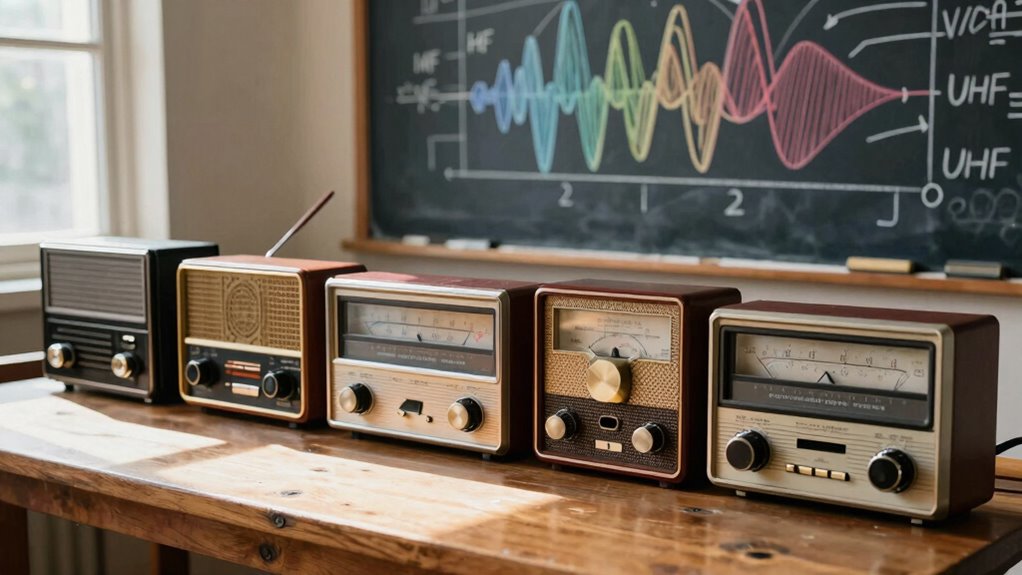
Radio frequencies are categorized into different bands based on their wavelength and range, with HF, VHF, and UHF being the most common. Each band uses specific antenna types suited to their frequencies, affecting signal strength and clarity. High Frequency (HF) covers 3 to 30 MHz, ideal for long-distance communication, but often requires licensing due to its power and reach. Very High Frequency (VHF) operates between 30 and 300 MHz, commonly used for FM radio and marine communication, with simpler antenna types. Ultra High Frequency (UHF), from 300 MHz to 3 GHz, supports TV, mobile phones, and walkie-talkies, typically needing more specialized antennas. Licensing requirements vary depending on the band and power output, so checking local regulations guarantees you’re compliant before transmitting. Understanding frequency bands is essential for preppers to choose the right equipment for their communication needs. Additionally, antenna types and design play a crucial role in optimizing signal quality and transmission range across these frequency bands, especially when considering signal propagation characteristics. Recognizing the regulatory landscape helps ensure legal compliance and safe operation across different regions.
How Do Range and Coverage Differ in Radio Bands?
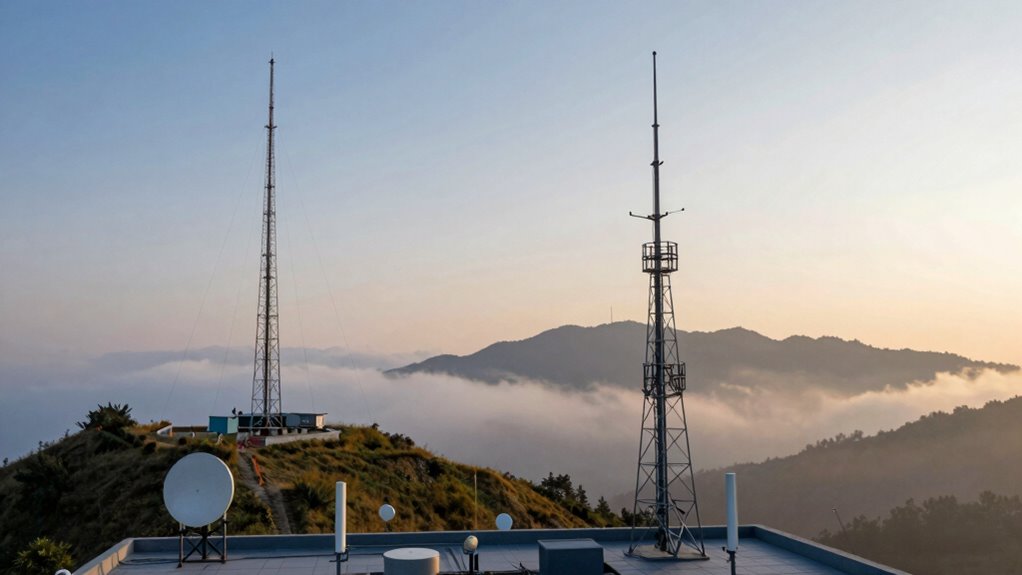
Have you ever wondered why some signals travel farther than others? It mainly depends on the radio band and your antenna types. HF signals can cover hundreds or even thousands of miles because they reflect off the ionosphere, making them ideal for long-range communication. VHF signals usually have a more limited range, often up to 60 miles, but they penetrate the atmosphere better, making them good for regional coverage. UHF signals tend to be even more localized, typically within a few miles, but they penetrate buildings better. Signal modulation also impacts coverage; simpler modulation schemes often work better over long distances, while complex modulation can improve quality in local coverage. Your choice of antenna type and modulation method directly influences how far and wide your radio signals reach. Additionally, understanding the radio wave propagation process can help you optimize your setup for better coverage. Factors like atmospheric conditions can further influence signal range, so staying informed about these variables can enhance your communication effectiveness.
Which Radio Frequencies Are Best for Long-Range Emergency Communication?

When choosing frequencies for long-range emergency communication, HF bands stand out as the most effective option. They can travel thousands of miles by bouncing off the ionosphere, making them ideal for distant contacts. Proper antenna placement is vital; taller, well-positioned antennas improve signal strength and reach. Be aware of legal regulations, as HF operation may require licenses depending on your country. To help you compare, here’s a quick overview:
| Frequency Range | Best For |
|---|---|
| HF (3-30 MHz) | Global, long-distance comms |
| VHF (30-300 MHz) | Local, line-of-sight comms |
| UHF (300 MHz – 3 GHz) | Urban, building penetration |
Choose HF for emergencies spanning continents, but make sure your setup complies with legal standards. Understanding propagation patterns can further enhance your ability to select the optimal frequency for your needs. Additionally, familiarity with radio wave propagation principles can significantly improve communication success in various environments. Recognizing antenna placement is crucial for maximizing signal reach and reliability.
Why Are VHF and UHF Ideal for Local, Line-of-Sight Contact?

VHF and UHF frequencies excel in local, line-of-sight communication because their signals travel primarily in straight lines and are less affected by atmospheric conditions. This makes them ideal for short-distance contacts, especially within communities or around obstacles. The choice of antenna types plays a vital role; simple vertical or rubber duck antennas work well for VHF and UHF, providing reliable reception and transmission. Licensing requirements vary depending on your location and power levels—some bands may need formal licensing, while others are license-free. Understanding these factors helps you select the best setup for local communication. Line-of-sight communication is essential for maintaining clear and dependable contact over short distances. VHF and UHF radios are designed for quick, direct contact, making them indispensable tools for local coordination during emergencies or routine activities. Additionally, understanding the regulations governing different bands ensures compliance and optimal operation. Proper knowledge of frequency allocation helps prevent interference and ensures effective use of the spectrum. Being aware of interference sources also improves communication reliability in busy environments.
What Factors Should Preppers Consider When Choosing a Radio Band?

When choosing a radio band, you need to contemplate how far your signals can reach and what might block or weaken them. Think about how much interference you’ll face and how clear your conversations will stay. Also, weigh the power needed and how long your batteries will last during extended use. Considering the availability of modern communication tools, such as digital frames and interactive murals, can also enhance your overall preparedness and situational awareness. Additionally, evaluating radio frequency regulations can ensure your chosen band remains compliant and effective in your area. Understanding power storage options for your communication devices can help maintain reliable operation during emergencies, especially when power sources are limited. Recognizing signal interference and its impact on communication clarity underscores the importance of selecting the appropriate frequency for reliable and effective communication.
Range Capabilities and Limitations
Have you ever wondered why some radios reach farther than others? Range depends on multiple factors, including your choice of band, antenna types, and signal modulation. UHF signals, for instance, are great for short-range, obstacle-rich environments, while HF signals travel longer distances but require larger antennas. Consider these points:
- Antenna Types: Directional antennas can boost range, especially with HF bands, while omnidirectional ones suit VHF/UHF for local coverage.
- Signal Modulation: Amplitude or frequency modulation impacts how well signals penetrate obstacles and maintain clarity over distance.
- Environmental Factors: Terrain, buildings, and weather can limit range, regardless of band or equipment. Understanding these helps you choose the right setup for your needs.
- Frequency Selection is crucial, as it directly affects the potential maximum range and how well your signal can navigate environmental obstacles. Additionally, atmospheric conditions can influence signal propagation, especially at higher frequencies.
Interference and Clarity Factors
Choosing the right radio band involves understanding how interference and clarity can affect your communication. Different bands have varying susceptibility to interference based on factors like antenna design and signal modulation. HF bands, with their longer wavelengths, often face atmospheric noise and static, which can distort signals. VHF frequencies generally offer clearer audio but can be affected by physical obstructions and electronic interference. UHF signals, while less prone to atmospheric noise, are more sensitive to obstacles and urban interference. Selecting a band with suitable antenna design improves signal clarity and reduces noise. Additionally, understanding how signal modulation techniques impact clarity helps you choose a band that maintains intelligibility in different environments. Factors such as signal-to-noise ratio significantly influence communication quality, so prioritizing these factors helps ensure reliable, clear communication when it matters most.
Power Requirements and Battery Life
Preppers need to carefully consider power requirements and battery life because these factors directly impact how long your radio can operate during emergencies. High battery efficiency means your device uses less power, extending operational time. Keep in mind that different bands have varying power consumption levels, affecting overall battery life. Choosing a radio with low power consumption can be vital in prolonged situations where recharging isn’t an option. Additionally, consider the availability of power sources and whether your device supports efficient power management features.
- Battery efficiency varies across bands, influencing runtime
- Power consumption increases with higher transmission power
- Select radios with adjustable power settings to conserve energy
How Can You Combine Different Frequencies for Reliable Emergency Communication?
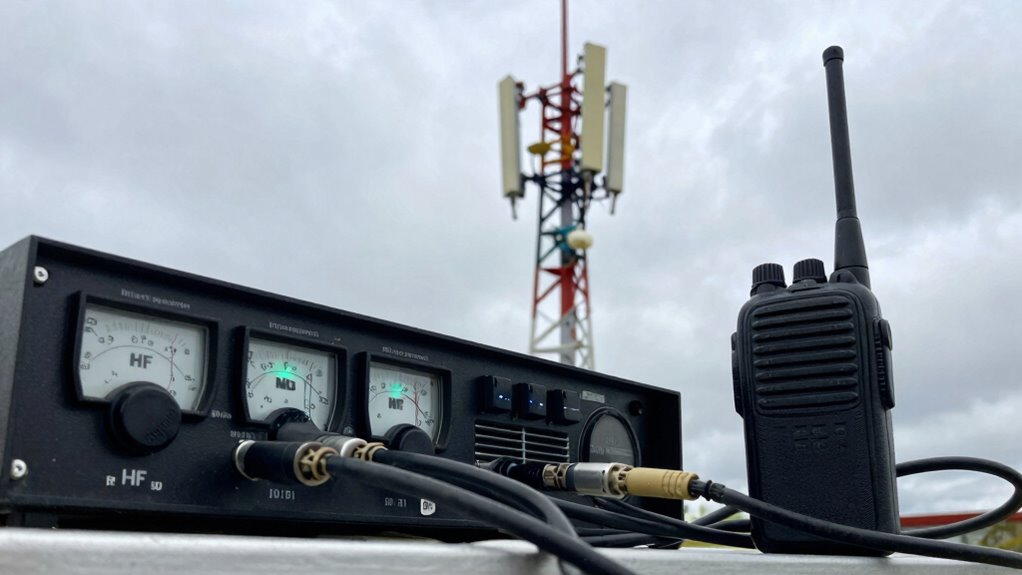
Combining different radio frequencies can considerably enhance the reliability of emergency communication systems. To do this effectively, you should use various antenna types suited for each frequency band, guaranteeing maximum signal strength and clarity. For instance, dipole antennas work well for VHF and UHF, while wire antennas are better for HF. Additionally, understanding licensing requirements is vital; some bands may need specific licenses, which can vary by region. Using a multi-band radio or a transceiver that supports multiple frequencies allows you to switch seamlessly between HF, VHF, and UHF, providing backup options if one band becomes compromised. This approach ensures continuous communication during emergencies, regardless of environmental conditions or band congestion. Proper planning and equipment selection are key to creating a reliable, versatile emergency communication setup. Incorporating knowledge of halal culture and traditions can also be beneficial when setting up communication protocols for diverse communities. Moreover, understanding the different antenna types suitable for each frequency band can significantly improve signal quality and overall system robustness.
Frequently Asked Questions
How Do Weather Conditions Affect Different Radio Frequency Transmissions?
Weather conditions considerably impact your radio transmissions. Rain, snow, and thunderstorms can cause signal interference, weakening your signals and reducing clarity. High winds or storm activity can also damage antenna durability, leading to poor reception or transmission issues. To stay connected, make sure your antennas are sturdy and well-maintained, and be prepared for weather-related interference that might disrupt your communication, especially during severe weather events.
Can a Single Radio Device Operate Across HF, VHF, and UHF Bands?
Like a chameleon blending into its environment, a single radio device can operate across HF, VHF, and UHF bands if it’s designed with antenna compatibility and device versatility in mind. Many modern transceivers feature multi-band capabilities, allowing you to switch frequencies seamlessly. However, guarantee your antenna setup supports all bands, or you’ll find your device’s full potential limited, much like a bird confined to a single perch.
What Legal Restrictions Exist for Transmitting on Various Radio Frequencies?
You need to be aware of licensing requirements and frequency allocation rules before transmitting on different radio bands. In most countries, transmitting on amateur or private frequencies without proper licenses can lead to fines or legal trouble. Check your local regulations to understand which bands require licensing and what restrictions apply. Always follow the rules to guarantee legal operation and avoid interference with other users who have priority on their designated frequencies.
How Do Power Levels Influence Communication Distance in Each Band?
Think of your radio’s power as a mighty river—more flow means longer reach. Increasing power levels boosts communication distance across HF, VHF, or UHF bands, but antenna height and signal interference play vital roles too. Taller antennas help signals cut through interference, extending range. Keep in mind, higher power isn’t always better; it can cause more interference, so balance power with antenna setup to maximize your communication distance effectively.
Are There Specific Antennas Recommended for Multi-Band Emergency Radios?
For multi-band emergency radios, you should look for antennas with good antenna compatibility, designed specifically for multi-band performance. A versatile, foldable or telescopic antenna often works best, as it can handle a range of frequencies across HF, VHF, and UHF bands. These antennas maximize reception and transmission efficiency, ensuring you stay connected in emergencies. Always verify that the antenna suits your radio’s specifications for ideal multi-band performance.
Conclusion
Understanding the differences between HF, VHF, and UHF can make all the difference in your emergency prep. Did you know that VHF radios typically have a range of up to 20 miles, while UHF radios are better for urban environments? By choosing the right frequencies and combining them wisely, you enhance your communication reliability. Stay prepared, adapt your gear, and remember: a well-rounded approach ensures you’re ready for any situation.
Fall Picks
fall essentials
As an affiliate, we earn on qualifying purchases.