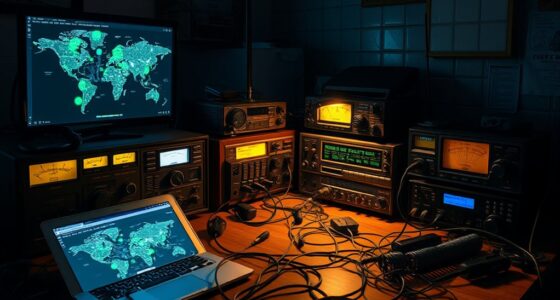
IoT sensors improve early warning systems by providing real-time, calibrated data from various sources like temperature, humidity, and vibration sensors. They help you detect threats early, such as natural disasters or infrastructure issues, by continuously monitoring conditions and recognizing patterns. Proper calibration guarantees data accuracy, reducing false alarms and increasing response speed. When these sensors are integrated effectively, your system becomes more reliable and efficient. Keep exploring to discover how proper calibration and data integration can maximize your system’s potential.
Key Takeaways
- IoT sensors provide real-time data for rapid threat detection and continuous environmental monitoring.
- Proper sensor calibration ensures data accuracy, reducing false alarms and improving system reliability.
- Integrating multiple sensor types offers a holistic view, enhancing pattern recognition and anomaly detection.
- Automated calibration and advanced analytics optimize early warning system responsiveness and effectiveness.
- Regular system maintenance and data management minimize errors and maximize detection speed for critical threats.

IoT sensors have revolutionized early warning systems by providing real-time data that helps detect threats sooner. When you deploy these sensors, you’re equipping your system to continuously monitor environmental conditions, structural integrity, or other critical factors. However, for these sensors to deliver accurate and reliable data, proper sensor calibration is essential. Calibration ensures that each sensor’s readings align with standard measurements, minimizing errors caused by environmental changes or device drift. Regular calibration maintains the integrity of your data, enabling your early warning system to function effectively. Furthermore, the true power of IoT sensors lies in data integration. When you connect multiple sensors to a centralized platform, you create a thorough view of the situation, allowing you to spot patterns and anomalies that would be invisible when observing individual data streams. Data integration involves combining inputs from various sensors—such as temperature, humidity, vibration, or gas detectors—so you can analyze the combined data holistically. This process enhances your system’s ability to detect complex threats like natural disasters, industrial accidents, or infrastructure failures. Incorporating goal setting techniques into your system design can help prioritize key indicators and improve response strategies.
As you integrate sensor data, you’re able to develop a more nuanced understanding of ongoing conditions. For example, a single temperature sensor might indicate a minor change, but when combined with humidity and pressure data, you can recognize the early signs of a potential wildfire or equipment malfunction. This integrated approach reduces false alarms and improves response times because you’re basing alerts on a broader context rather than isolated readings. To maximize the effectiveness of your early warning system, you need to regularly perform sensor calibration and ensure seamless data integration. Proper calibration prevents false positives and negatives, while exhaustive data integration allows for faster, more accurate threat detection. You should also consider implementing automated calibration routines and advanced data analytics to continually refine your system’s accuracy and responsiveness.
Frequently Asked Questions
How Do Iot Sensors Withstand Extreme Environmental Conditions?
You can guarantee IoT sensors withstand extreme environmental conditions by choosing models with high sensor durability and environmental resilience. Select sensors built with rugged enclosures, corrosion-resistant materials, and sealed against dust and moisture. Proper installation and regular maintenance also help maintain their resilience. Additionally, using sensors rated for specific conditions—like extreme temperatures or high humidity—ensures they perform reliably, even in harsh environments, extending their lifespan and maintaining accurate data collection.
What Are the Privacy Concerns Related to Iot Sensor Data?
You should be aware that IoT sensor data raises privacy concerns because it involves data privacy risks and potential misuse. To protect your information, implement sensor anonymization techniques that prevent personal identification. Be cautious about how data is stored, shared, and accessed, ensuring strong security measures are in place. By prioritizing data privacy and using anonymization, you can safeguard sensitive information while benefiting from IoT sensor insights.
How Do Iot Sensors Integrate With Existing Infrastructure?
Your IoT sensors seamlessly integrate with existing infrastructure, transforming your system into a powerhouse of connectivity. You calibrate sensors carefully to guarantee accuracy, and focus on data interoperability so information flows smoothly between devices. This integration might seem like a complex puzzle, but with proper planning and compatible protocols, your sensors will work harmoniously, making your infrastructure smarter, more responsive, and ready to tackle any challenge head-on.
What Is the Cost of Deploying Iot Sensors at Scale?
The cost of deploying IoT sensors at scale varies based on factors like sensor type, deployment scope, and integration complexity, but a thorough cost analysis helps you plan effectively. You’ll face deployment challenges such as infrastructure upgrades and data management. Budget for initial setup, ongoing maintenance, and potential troubleshooting. While upfront costs can be significant, the long-term benefits of timely alerts and improved safety often justify the investment.
How Is the Data From Iot Sensors Secured Against Cyber Threats?
A stitch in time saves nine, so you must prioritize securing IoT sensor data. You do this by implementing strong encryption protocols to protect information during transmission and storage. Additionally, you set access controls to restrict data access only to authorized personnel. Regular updates and monitoring help detect vulnerabilities early, ensuring your systems stay resilient against cyber threats and maintain the integrity of your early warning data.
Conclusion
By integrating IoT sensors into early warning systems, you enhance your ability to detect hazards early, respond swiftly, and protect lives effectively. These sensors provide real-time data, enable proactive measures, and foster smarter decision-making. Embrace the power of IoT to stay ahead of disasters, to anticipate risks, and to create safer communities. With these technologies, you don’t just react to emergencies—you prevent them, you don’t just monitor threats—you manage them.