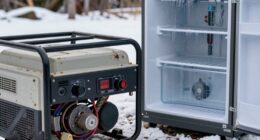
The key number to determine your ideal solar generator size is your total daily energy consumption in watt-hours. Start by listing all devices you’ll run and note their wattage and usage hours. This helps you find your daily energy needs. Including peak wattage ensures your system handles surges. By focusing on this single figure, you avoid over- or under-sizing your system. Keep exploring to discover how to fine-tune your setup for efficiency and future growth.
Key Takeaways
- The critical number is your total daily energy requirement in watt-hours, not just inverter or surge capacity.
- Focus on your device wattage and usage hours to determine the necessary battery capacity.
- Ensure the inverter can handle peak wattage, but prioritize matching battery capacity to energy needs.
- Consider seasonal and weather-related solar input variability to size your system appropriately.
- Plan for future expansion and safety margins by adding buffers to your calculated daily energy needs.
How to Identify Your Power Needs Before Sizing a Solar Generator
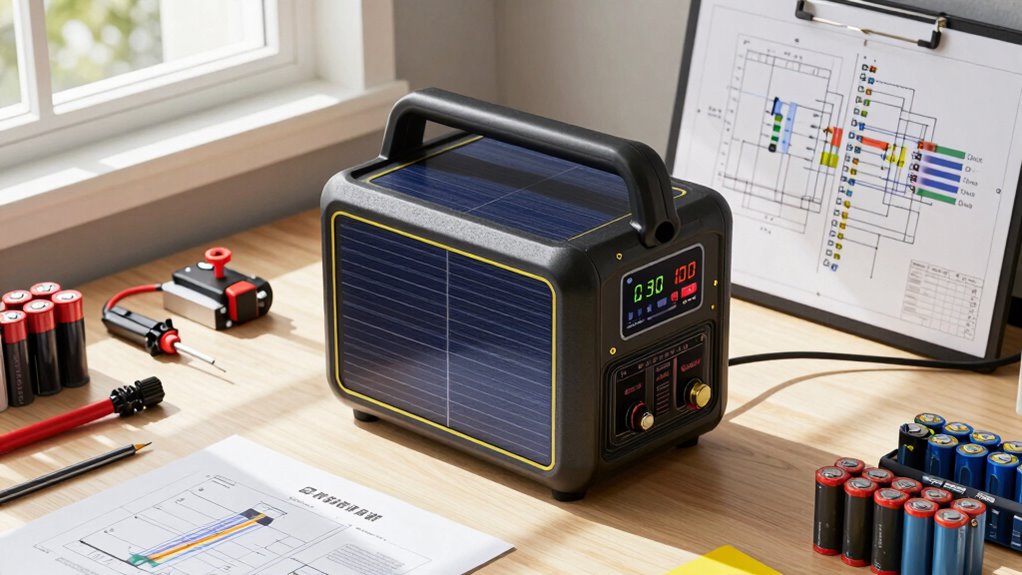
Before selecting a solar generator, you need to determine your actual power needs. Start by listing all devices you plan to run and noting their wattage. This helps you estimate the total energy consumption. Focus on two key aspects: battery capacity and inverter size. Battery capacity determines how much energy the generator can store, so choose one that meets your daily usage plus some backup. The inverter size must be large enough to handle the peak power of your appliances; if it’s too small, devices won’t run properly. It’s also important to consider standby generator specifications, such as derating factors for altitude and temperature, to ensure reliable performance in your environment. Understanding your power draw in various conditions can help you select a generator that performs reliably under different circumstances. Additionally, accounting for derating factors can help you choose a generator that maintains performance across different environmental conditions. Being aware of power fluctuations and how they impact your setup can further optimize your selection. Recognizing performance variability caused by environmental factors can help you plan for consistent energy supply. This approach guarantees you’ll have enough energy when you need it most.
How to Calculate Your Daily Energy Consumption for Your Solar Generator

Once you’ve identified the wattage of each device you plan to run, the next step is to determine how much energy you’ll use each day. To do this, note the wattage and estimate how many hours each device operates daily. Multiply these to get watt-hours per device. Add all these figures together to find your total daily energy consumption. Keep in mind, your battery life impacts how long your stored energy lasts, so choose a battery capacity that matches your daily needs. Inverter capacity is also vital; it must handle the total wattage of all running devices simultaneously. By accurately calculating your daily energy use, you ensure your solar generator has enough battery capacity and inverter strength to meet your power demands reliably. Incorporating data-driven strategies can help optimize your system for efficiency and longevity. Additionally, understanding the conogenic ratings of your products can help prevent skin issues and ensure safe, healthy use of your devices over time. Recognizing the importance of energy efficiency can further extend your system’s lifespan and performance, especially when selecting components that maximize overall system performance and reduce waste. Properly considering filter sizing/flow is also crucial for maintaining system efficiency and preventing potential failures.
Why Peak Wattage Matters for Your Devices and Your Generator
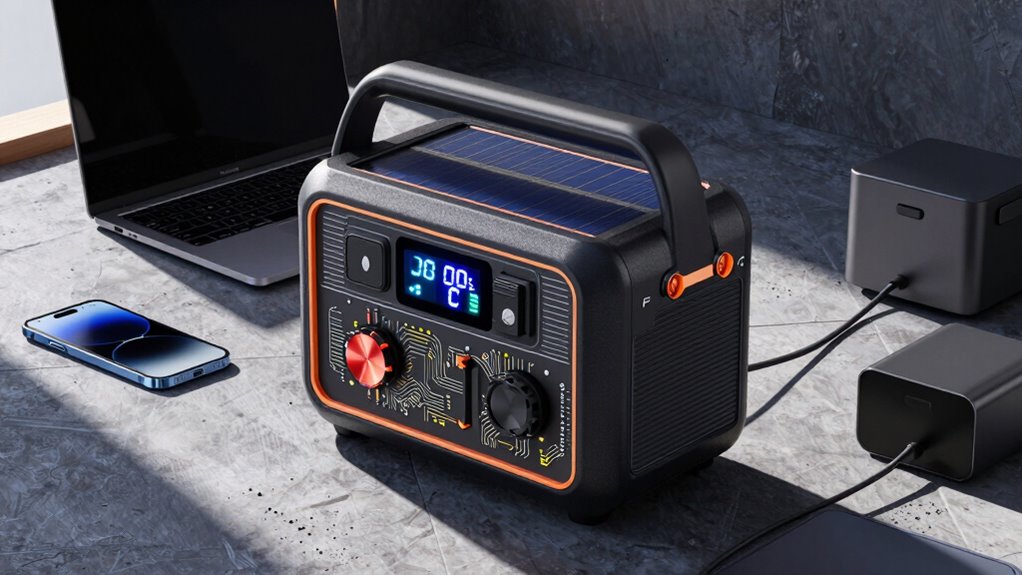
Understanding peak wattage is essential because it determines the maximum power your devices require at startup or during brief surges. If your generator can’t handle these spikes, your devices might not start properly or could be damaged. Peak wattage depends on your device’s startup power and the inverter capacity, which must match or exceed these demands. Battery chemistry also plays a role, affecting how quickly your system can respond to sudden loads. Keep these in mind:
- Ensuring inverter capacity exceeds peak wattage prevents overloads
- Matching battery chemistry to your surge needs improves performance
- Proper sizing avoids shutdowns or damage during power spikes
How to Choose the Right Battery Capacity for Your Energy Use
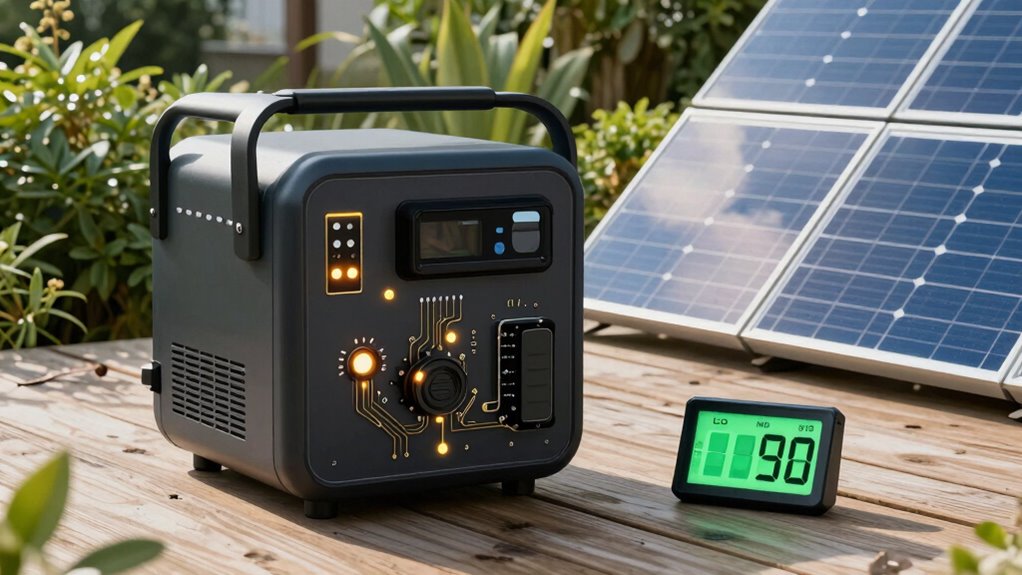
Choosing the right battery capacity is crucial to guarantee your solar generator meets your energy needs without running out of power too quickly. To do this, analyze your daily energy requirements by listing all devices you plan to power and noting their consumption. Multiply each device’s wattage by its average daily usage time to find the total energy needed in watt-hours. Then, select a battery capacity that can store enough energy to cover your typical daily use, with some extra for cloudy days or unexpected needs. Keep in mind that larger batteries can store more energy but may be more expensive and heavier. Understanding your battery inverter generator capacity helps you determine the appropriate size for your needs. Additionally, considering home safety tips for caregivers can help you manage your energy storage system safely and efficiently. Being aware of home appliances’ energy consumption enables you to optimize your overall energy management. For better home comfort, integrating energy-efficient devices and monitoring your usage can improve system performance. Knowing the smart lock features available can also enhance security while managing your energy system remotely. By understanding your energy requirements, you ensure your battery capacity aligns with your actual usage, providing reliable, uninterrupted power.
How Do Solar Inputs Impact Your Generator Size?
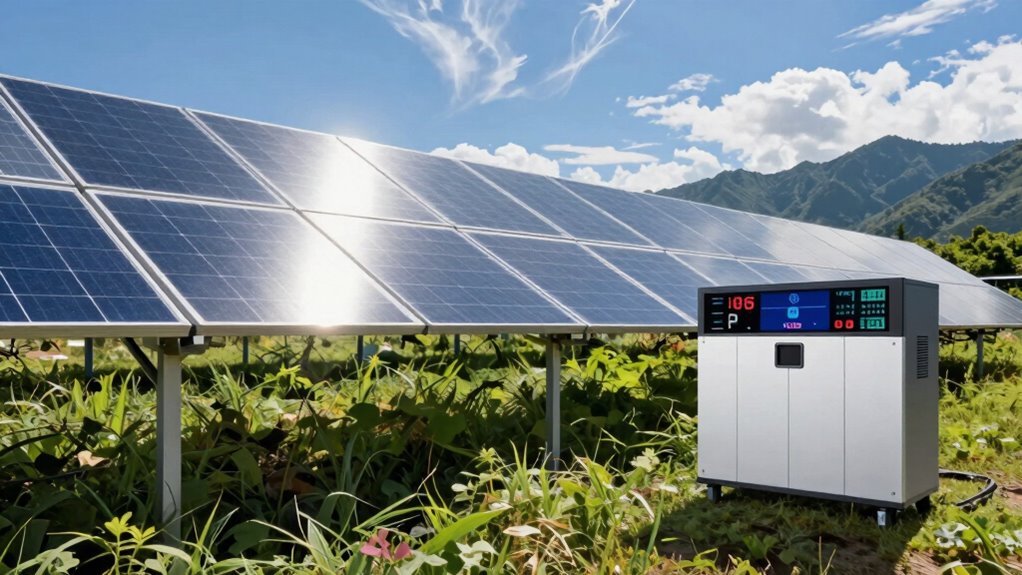
Your solar input directly influences the size of your generator, as higher efficiency panels and more sunlight mean you can generate power more quickly. Variations in sunlight, like cloudy days or seasonal changes, also affect how much solar energy you receive. Understanding these factors helps you choose a generator that matches your actual solar input and energy needs. Additionally, selecting high-efficiency solar panels can maximize energy harvest and optimize system performance. Considering solar input variability helps ensure your system remains reliable under different weather conditions. Regularly monitoring and maintaining your LiFePO4 batteries ensures consistent performance despite fluctuations in solar energy, making it essential to incorporate battery management systems for optimal longevity. Incorporating solar input data into your planning can further enhance system reliability and efficiency.
Solar Panel Efficiency
Have you ever wondered how the efficiency of your solar panels influences the size of your solar generator? Higher efficiency ratings mean you can generate more power from a smaller, lighter setup. This impacts your overall generator size because efficient panels maximize output without extra bulk. Keep in mind, solar panel durability guarantees your investment lasts through various weather conditions, maintaining consistent efficiency over time. When choosing panels, consider these factors:
- Higher efficiency ratings lead to a smaller, more lightweight system.
- Durable panels maintain performance longer, reducing replacement costs.
- Efficiency influences how much space your panels need to produce the desired power output.
Sunlight Availability Variations
Sunlight availability varies throughout the day and across seasons, directly affecting how much solar energy your panels can capture. Cloud cover reduces the intensity of sunlight reaching your panels, lowering their output temporarily or long-term depending on weather patterns. Seasonal changes also play a crucial role; shorter winter days and the sun’s lower angle decrease solar input, requiring you to adjust your generator size accordingly. Overcast days and cloudy skies can considerably diminish energy production, so it’s vital to account for these fluctuations when sizing your system. By understanding how cloud cover and seasonal variation influence sunlight, you can design a solar generator that consistently meets your energy needs, even during less sunny periods. Additionally, considering solar input variability for modern design ideas can help optimize your setup for aesthetic and functional integration. Recognizing solar resource fluctuations enables better planning for reliable energy output year-round.
What’s the Best Size for Your Solar Generator? Balancing Cost and Performance
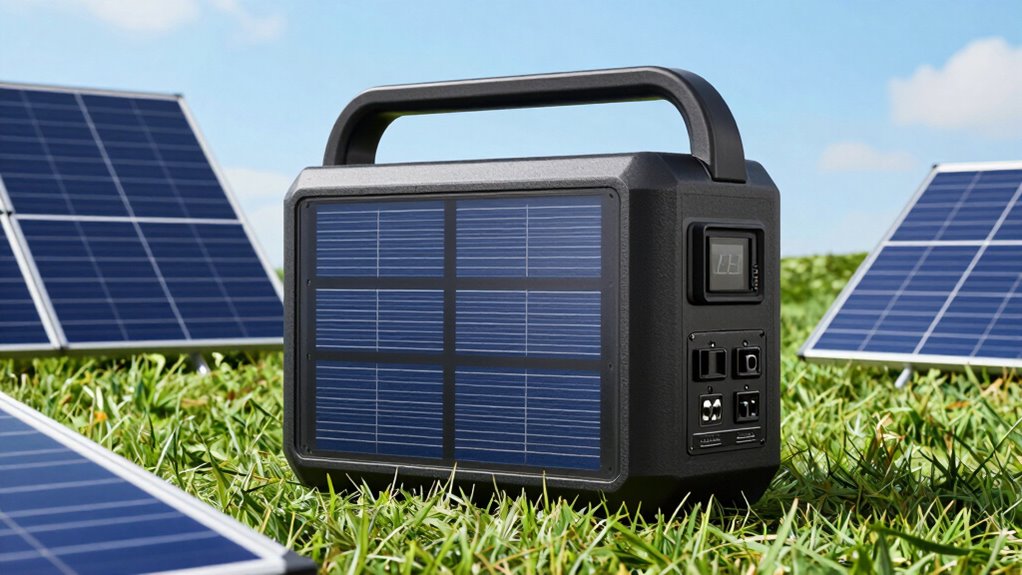
Choosing the right size for your solar generator involves finding a balance between cost and performance. You want enough power to meet your needs without overspending or sacrificing portability. Consider how often you’ll use it and the devices you’ll run. A larger generator offers longer battery lifespan and better performance but can be heavier and less portable. On the other hand, a smaller unit is easier to carry but may require more frequent recharging. Keep these factors in mind:
Choosing the right solar generator size balances cost, performance, and portability for your needs.
- Power capacity suited to your essential devices
- Battery lifespan aligned with your usage patterns
- Portability considerations for your typical environment
Knowing your power demands helps you avoid over- or under-sizing, saving money and ensuring reliable performance.
Common Mistakes When Sizing a Solar Generator: And How to Avoid Them
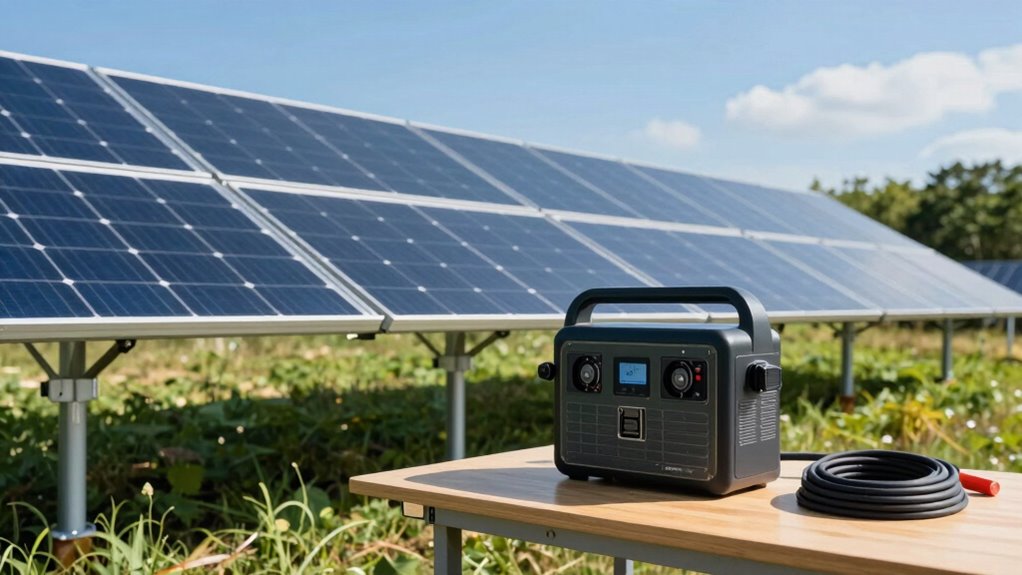
One common mistake is overestimating your power needs, which can lead to unnecessary expenses. Ignoring surge requirements might cause your system to falter during sudden power spikes. Don’t forget to plan for future expansion to avoid having to replace your generator down the line.
Overestimating Power Needs
A common mistake when sizing a solar generator is overestimating your power needs, which can lead to purchasing a system that’s larger and more expensive than necessary. This often results in reduced battery life and lower power efficiency, as the system is underutilized. To avoid this, you should:
- Accurately assess your daily energy consumption to prevent overbuying
- Focus on essential devices to streamline your power needs
- Choose a generator size that balances capacity with long-term battery health
Ignoring Surge Requirements
While it’s important to size your solar generator based on your typical energy use, many overlook the importance of accounting for surge requirements. Surge capacity is the extra power needed to handle transient demands when starting appliances like refrigerators or power tools. If you ignore these surges, your generator might struggle or shut down during startup, risking damage or incomplete operation. To avoid this mistake, always add a cushion—usually 2-3 times the running wattage—to accommodate these brief power spikes. Properly sizing for surge capacity ensures your generator can handle peak loads without stress. Remember, transient demands are brief but critical moments that can profoundly impact your system’s performance. Ignoring them can lead to inadequate power and operational issues.
Neglecting Future Expansion
Neglecting future expansion when sizing your solar generator can lead to significant limitations down the line. Without proper expansion planning, you may find your system unable to support additional loads or new appliances. To future proof your setup, consider your long-term needs and potential growth. This involves:
- Choosing a larger inverter to handle increased power demands
- Installing extra battery capacity for future energy storage
- Planning for additional solar panels to boost generation
How to Adjust Your Solar Generator Size as Your Needs Change
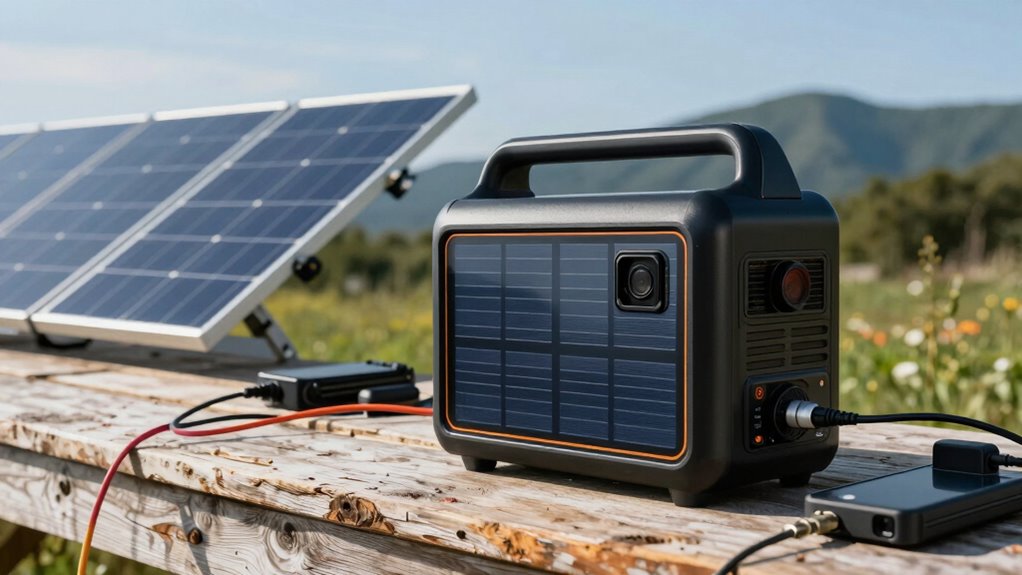
As your energy needs evolve, adjusting your solar generator size guarantees you continue to meet your power demands efficiently. To do this, consider maintenance planning, which helps identify when components like batteries or inverters need upgrading or replacement. Ensuring component compatibility is vital to avoid costly mismatches and streamline upgrades.
| Aspect | What to Check | Action |
|---|---|---|
| Battery Capacity | Future energy requirements | Upgrade or add batteries as needed |
| Inverter Compatibility | Power output needs | Replace with compatible inverters |
| System Expansion | Potential expansion plans | Plan for modular upgrades |
This strategic approach keeps your system flexible, reliable, and efficient as your needs grow.
Frequently Asked Questions
Can I Upgrade My Solar Generator Later if My Power Needs Increase?
Yes, you can upgrade your solar generator later if your power needs increase. Look for models with larger battery capacity and expandability options, which make adding extra batteries or modules easy. This way, you can boost your system’s capacity over time without completely replacing it. Just verify your generator supports such upgrades and check compatibility before purchasing, so you can grow your power supply as your needs grow.
How Does Climate Affect My Solar Generator’s Size Requirements?
Climate considerations and weather variability substantially impact your solar generator’s size needs. In areas with frequent cloud cover or harsh weather, you’ll need a larger capacity to compensate for reduced sunlight. Conversely, in sunny regions, a smaller system may suffice. Always evaluate your local climate conditions to guarantee your solar generator can reliably meet your power demands, especially during extended periods of poor weather. Proper sizing prevents shortages and keeps your power steady.
What Safety Margins Should I Consider When Sizing My Solar Generator?
Oh, sure, just ignore safety margins and hope for the best—who needs safety protocols, right? But seriously, you should add at least 20-25% extra capacity to account for battery longevity and unexpected power demands. This buffer helps prevent overworking your system, prolongs battery life, and guarantees reliable performance. It’s the smart way to avoid surprises and keep your solar generator working smoothly for years to come.
Are There Eco-Friendly or Sustainable Options for Solar Generator Components?
Yes, you can choose eco-friendly batteries and sustainable components for your solar generator. Look for options like lithium iron phosphate batteries, which are more environmentally friendly and longer-lasting. Additionally, opt for generators with sustainably sourced or recyclable parts. These choices help reduce your carbon footprint, promote sustainability, and guarantee your setup is eco-conscious. Prioritizing eco-friendly batteries and sustainable components makes your solar generator more environmentally responsible.
How Do Inverter Efficiency and Losses Impact the Overall Size Calculation?
Inverter efficiency impact and inverter losses directly influence your solar generator size. Higher inverter losses mean more energy gets lost during conversion, requiring a larger system to meet your power needs. When sizing your system, consider the inverter’s efficiency rating; a more efficient inverter minimizes losses, allowing for a smaller, more cost-effective setup. Ignoring this can lead to undersized systems that struggle to deliver consistent power.
Conclusion
So, after all this talk about numbers, don’t forget the one that really matters—your actual energy needs. Ironically, no matter how fancy your solar generator is, it won’t save you from underestimating what you use daily. So, double-check your consumption, pick the right size, and avoid the costly mistake of thinking bigger is always better. Because in the end, the perfect size isn’t just about capacity—it’s about fitting your life, not wasting your money.