To find water in the wild, look for streams, rivers, or lakes, but always assess their safety carefully. Avoid water near pollution sources and filter or strain it before purification. Boiling water for at least a minute kills most bacteria and parasites, while portable filters can also help. Collect rainwater or dew for safer options if available. Keep in mind, proper collection and purification are essential—continue to explore ways to guarantee your water is safe to drink.
Key Takeaways
- Identify natural sources like streams, rivers, or lakes, avoiding polluted or industrial areas.
- Assess water clarity and surroundings; murky water can still be safe but requires caution.
- Use filtration devices or cloth to remove sediments before boiling or treating.
- Boil water for at least one minute (or three minutes at high altitude) to eliminate pathogens.
- Collect rainwater or dew carefully, then filter and boil before drinking to ensure safety.
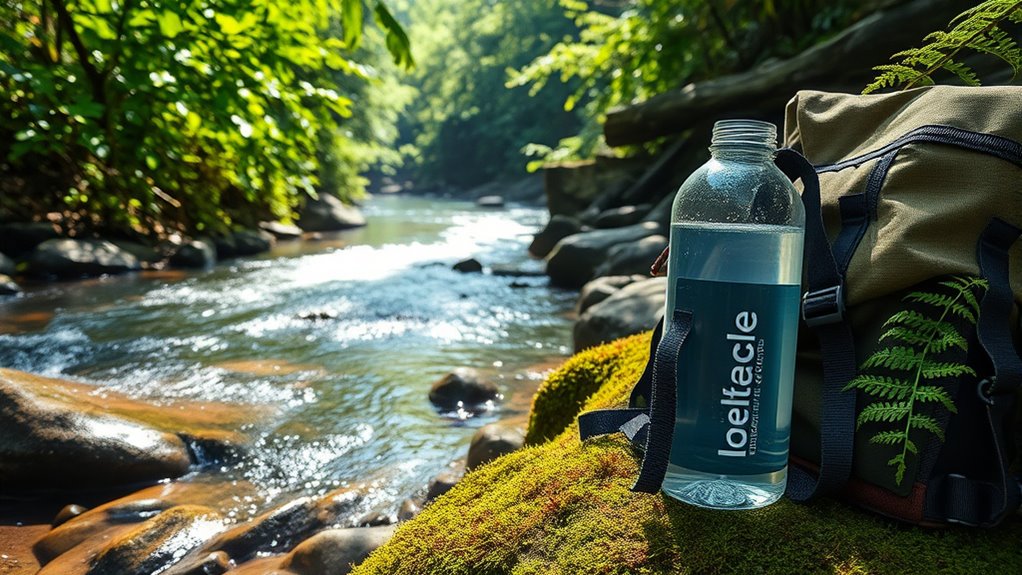
When you’re stranded in the wild and need water, finding a reliable source is your top priority. Your first step is to identify natural sources that can provide fresh, drinkable water. Look for streams, rivers, or lakes—these are often the best options because they tend to be more consistent. However, don’t assume that just because water is visible, it’s safe to drink straight from the source. Natural water can contain bacteria, parasites, or pollutants, so you’ll need to take measures to make it safe for consumption.
Start by inspecting the water for clarity; clear water is generally preferable, but murky water isn’t necessarily unsafe. It could still harbor harmful microorganisms. If you see algae blooms or floating debris, it’s better to find a different source. Always consider the surrounding environment—avoid water near industrial sites, farms, or areas with obvious pollution. Once you’ve located a water source, your next move is to think about how to purify it. Water filtration becomes essential here. Portable water filters or purification systems are ideal because they can remove bacteria, protozoa, and other contaminants. If you lack specialized gear, you can improvise by boiling water over a fire, which is one of the most effective purification methods.
When filtering water, use whatever clean cloth or material you have available to strain out sediments and larger particles. This step is vital before using a filter or boiling, as it reduces the load of impurities and prolongs your equipment’s effectiveness. If you have a water filter designed for outdoor use, follow the manufacturer’s instructions for proper operation. For boiling, bring the water to a rolling boil and maintain it for at least one minute (or three minutes at higher altitudes). Boiling kills most bacteria, viruses, and parasites, making the water safe to drink.
In some cases, natural sources like rainwater or dew can provide safe drinking water, especially if collected carefully. Always collect water from clean, unobstructed areas and store it in a sanitized container. Remember, no matter which natural source you choose, water filtration or boiling remains vital to eliminate health risks. Additionally, understanding the importance of water purification techniques can significantly increase your survival chances in the wild. By wisely selecting your water source and properly purifying it, you greatly improve your chances of staying healthy while waiting for rescue or finding your way out. Keep a clear head, prioritize safety, and use your resources wisely—your survival depends on it.
Frequently Asked Questions
How Can I Tell if Water Is Safe to Drink?
You can tell if water is safe to drink by observing safety indicators like clear appearance, no foul smell, and absence of floating debris. Conduct water testing if possible, using portable water test kits to check for harmful bacteria or chemicals. Trust your senses first, but always purify water through boiling or filtration to guarantee safety, especially if you notice any discoloration, strange taste, or unusual odors.
What Are the Best Natural Methods to Purify Water?
Think of natural purification like passing water through a sieve—filtering out the bad stuff. You can use natural filtration by pouring water through sand, charcoal, or cloth to remove debris and some pathogens. Solar disinfection (SODIS) is also effective; just fill a clear bottle, leave it in sunlight for six hours, and let UV rays kill bacteria. These methods harness nature’s power to make water safer to drink.
How Long Does It Take to Purify Water in the Wild?
It typically takes about 30 minutes to purify water in the wild using water filtration and chemical treatment. You should filter the water first to remove debris, then use chemical treatments like iodine or chlorine tablets, which usually require 30 minutes to effectively kill bacteria and viruses. Always follow the instructions on the chemical treatment for accurate timing and safety. Patience guarantees safe, clean drinking water.
Can Boiling Water Remove All Contaminants?
Boiling water is highly effective, removing about 99.9% of most pathogens. When you boil water, it can eliminate bacteria, viruses, and parasites, making it safe to drink. However, boiling alone doesn’t remove chemical contaminants or heavy metals. To guarantee contaminant removal, consider using additional purification methods like activated carbon filters or chemical treatments, especially if you’re unsure about chemical pollution in your water source.
What Equipment Is Essential for Water Purification?
You need essential equipment like portable filters and chemical purifiers for water purification. Portable filters quickly remove bacteria, protozoa, and debris, making water safe to drink. Chemical purifiers, such as iodine or chlorine tablets, are excellent for disinfecting water when filters aren’t enough. Carry both to guarantee you can handle different water sources and contamination levels, keeping you safe and hydrated during your outdoor adventure.
Conclusion
Now that you know how to find and purify water in the wild, you’re practically a hydration superhero, capable of turning even the driest oasis into a life-saving source. Mastering these skills means you’ll never be helpless against dehydration, no matter how dire the situation. With a little knowledge and resourcefulness, you can conquer nature’s toughest challenges—because surviving in the wilderness is no small feat, and clean water is your ultimate weapon.