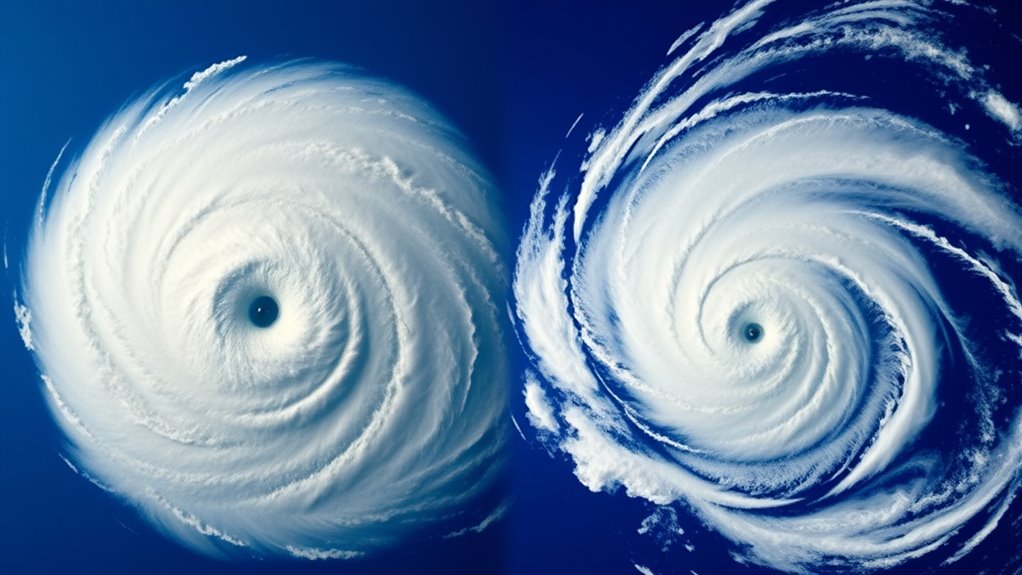

Hurricanes and typhoons are fundamentally the same type of powerful tropical storms that form over warm waters. The main difference is where they occur: hurricanes develop over the Atlantic and eastern Pacific, while typhoons form over the northwestern Pacific. Both gain strength through similar processes and can cause severe damage, including flooding and wind destruction. To understand how these storms impact regions differently and what makes them alike, keep exploring what makes them unique.
Key Takeaways
- Hurricanes and typhoons are the same type of storm, but they are named differently based on their geographic location.
- Hurricanes develop over the Atlantic and northeastern Pacific, while typhoons form over the northwestern Pacific.
- Both storms require similar conditions to form, including warm ocean waters, low wind shear, and high humidity.
- Their impacts on coastal areas—such as wind damage, flooding, and storm surges—are essentially the same regardless of name.
- The main difference lies in regional naming conventions, not in their formation or destructive potential.

Hurricanes and typhoons are fundamentally the same type of storm, but they go by different names depending on where they form. Both are powerful tropical cyclones that develop over warm ocean waters, and their formation involves similar processes. When conditions are just right—warm sea surface temperatures, low wind shear, and high humidity—these storms begin as disturbances in the atmosphere. As the storm formation progresses, the system organizes into a low-pressure center with thunderstorms spinning around it. Once the winds reach a certain speed, typically 74 miles per hour or higher, it’s classified as a hurricane or typhoon. The primary difference lies in their geographic location: hurricanes develop over the Atlantic and northeastern Pacific, while typhoons form over the northwestern Pacific. Understanding storm formation is key to grasping their potential impact on coastal areas. These storms draw energy from the warm ocean waters, which fuels their growth and intensifies their strength. As they spin and grow, they can evolve into massive systems with sustained winds, heavy rain, and dangerous storm surges. The impact on coastal areas can be devastating, especially when these storms make landfall. High winds can flatten buildings, uproot trees, and cause widespread power outages. Heavy rainfall often leads to flooding, which damages homes, infrastructure, and disrupts communities. Storm surges—an abnormal rise in sea level caused by the storm’s winds pushing water toward the coast—are particularly destructive, inundating low-lying areas and causing significant loss of life and property.
The impact on coastal areas extends beyond immediate physical damage. Storms can block roads, hinder emergency response, and displace residents for extended periods. Coastal ecosystems, like wetlands and coral reefs, also suffer from the intense winds and flooding, which can take years to recover. The economic toll is equally significant, with fisheries, tourism, and local businesses bearing the brunt of the destruction. Preparedness and early warning systems are vital in reducing the devastating effects of hurricanes and typhoons on coastal communities. Understanding how these storms form and their potential impact helps you stay informed and ready for when one approaches your area. Whether called hurricanes or typhoons, these storms remind us of the power of nature and the importance of respecting its forces.

Qu River Prep Emergency Kit – Winter Storm & Ice Storm Survival Kit, Power Outage Preparedness with 15 Essential Items, COB Light, Rain Poncho, Blanket, Emergency Water & First Aid
UPDATED FOR WINTER: Contains 15 essential winter storm survival items, over 30 pieces total. Curated by disaster housing…
As an affiliate, we earn on qualifying purchases.
As an affiliate, we earn on qualifying purchases.
Frequently Asked Questions
How Do Hurricanes and Typhoons Impact Local Economies Differently?
You’ll find that hurricanes and typhoons impact local economies differently by affecting economic recovery timelines and insurance implications. Hurricanes often cause widespread damage that delays recovery efforts and increases insurance claims, raising premiums. Typhoons can hit densely populated areas harder, leading to faster economic disruption and complex insurance processes. Both events strain local resources, but the specific impacts depend on the region’s infrastructure and preparedness, shaping how quickly economies bounce back.
What Are the Forecasting Methods Used for Hurricanes Versus Typhoons?
Forecasting hurricanes and typhoons is like using a high-powered telescope to see through fog. You rely on satellite imaging to track storm formation and movement, providing real-time visuals. Prediction models, which analyze atmospheric data, help forecast their paths and intensities. While the methods are similar, regional agencies may fine-tune models based on local weather patterns. These tools together improve accuracy, helping you prepare for these fierce storms.
Are There Differences in the Ecological Effects of Hurricanes and Typhoons?
You’ll find that hurricanes and typhoons both impact ecological resilience and cause habitat disruption, but the effects can differ regionally. Hurricanes often bring intense rainfall and flooding, severely disrupting coastal habitats and freshwater ecosystems. Typhoons, especially in the Pacific, may cause similar damage but sometimes with stronger winds. Overall, both storms challenge ecosystems, but local geography influences how resilient habitats can recover and how much disruption occurs.
How Do Building Codes Adapt to Hurricane Versus Typhoon Risks?
Building codes adapt to hurricane and typhoon risks by strengthening structural resilience and updating building regulations. You’ll find codes that require reinforced roofs, impact-resistant windows, and stronger foundations to withstand high winds and flooding. These regulations vary depending on the region’s threat level, ensuring structures can endure severe storms. By adhering to these updated codes, you help protect lives and property from the destructive forces of hurricanes and typhoons.
What Historical Events Highlight the Differences Between Hurricanes and Typhoons?
You’ll find that historical storm classifications reveal notable differences; for instance, Typhoon Tip in 1979 remains the strongest storm ever recorded globally, with winds reaching 195 mph. This event highlights how typhoons can become exceptionally powerful in the Western Pacific, compared to hurricanes in the Atlantic. Analyzing global storm records, you see that these storms differ in formation zones and intensity, emphasizing the unique risks and behaviors of each type.

DURASACK Heavy Duty Sand Bags with Tie Strings Empty Woven Polypropylene Sand-Bags for Flood Control with 1600 Hours of UV Protection, 50 lbs Capacity, 14×26 inches, White, Pack of 20
TOUGHEST MATERIAL: Our woven polypropylene sand bags are built to endure the elements. All DURASACK Heavy Duty Sand…
As an affiliate, we earn on qualifying purchases.
As an affiliate, we earn on qualifying purchases.
Conclusion
Think of hurricanes and typhoons as two siblings wearing different hats—they’re fundamentally the same storm, just called by different names depending on where you are. Imagine standing in a storm’s eye, feeling the wind’s roar—whether it’s a hurricane or typhoon, the power is equally awe-inspiring. Just like how a storm can turn a calm day into chaos, knowing their differences helps you stay prepared. After all, understanding these storms is like having an umbrella in a downpour—you’re ready for whatever comes.

Storm Surge Barriers to Protect New York City: Against the Deluge
Used Book in Good Condition
As an affiliate, we earn on qualifying purchases.
As an affiliate, we earn on qualifying purchases.

Midland – WR120B – NOAA Emergency Weather Alert Radio – Localized Programming, Trilingual Display, 60+ Emergency Alerts, Alarm, Selectable Alert Tone
NOAA Weather Scan & Alert – This emergency weather alert radio features S.A.M.E localized programming and alert you…
As an affiliate, we earn on qualifying purchases.
As an affiliate, we earn on qualifying purchases.