To be insurance-ready, take clear, recent photos of your property, covering rooms, valuables, and furniture, and keep an updated detailed inventory of items with descriptions and values. Collect receipts and proof of ownership, storing copies securely both digitally and physically. Use organized records to speed up claims and prevent disputes. Maintaining these documents guarantees you’re prepared for emergencies and can navigate the claims process with confidence. Keep going to discover how to make your coverage even stronger.
Key Takeaways
- Take clear, recent photos of all rooms, valuables, and possessions with proper lighting and date stamps.
- Maintain detailed, up-to-date inventories including item descriptions, purchase dates, and estimated values.
- Collect and digitize receipts, invoices, and proof of ownership, storing copies securely both digitally and physically.
- Store digital backups in secure cloud accounts and physical documents in fireproof safes for protection.
- Regularly review and update your documentation to ensure accuracy and readiness for insurance claims.

Are you truly prepared for unexpected events? When disaster strikes, having your insurance readiness in order can make all the difference. One of the most crucial steps is ensuring you have clear, recent photos of your property and possessions. Visual documentation helps verify what you own and the condition it’s in before any damage occurs. Take comprehensive photos of rooms, furniture, appliances, and valuable items like jewelry or electronics. Use good lighting and include date stamps if possible. This visual record provides irrefutable evidence for your insurance claims, making the process smoother and more accurate. Without photos, it can become a he-said, she-said situation, which might delay or complicate your claim.
Having recent photos of your belongings ensures smooth insurance claims during unexpected events.
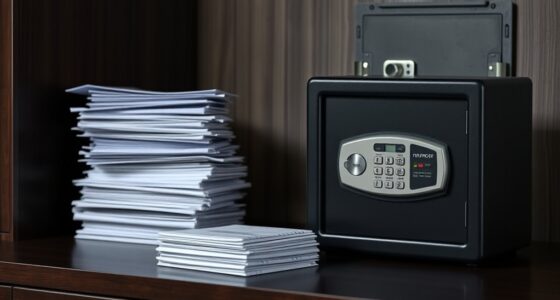
Along with photos, maintaining detailed inventories of your belongings is vital. Create a comprehensive list that includes item descriptions, purchase dates, and approximate values. Keep this inventory updated regularly, especially after significant purchases or changes. Store copies electronically and physically in a safe location outside your home, like a secure cloud account or a fireproof safe. This way, if your home is compromised, you’ll still have access to your records. An organized inventory simplifies the claims process because you can quickly provide your insurer with a clear picture of what was lost or damaged. It also helps you assess whether your current coverage is adequate or if you need to adjust your policy.
Proofs of ownership are equally important. Gather receipts, invoices, bank statements, or credit card records that confirm your ownership of high-value items. Digitize these documents and save copies in multiple secure locations. Having solid proof can prevent disputes, especially for expensive or frequently stolen items. It also saves you from the hassle of trying to recall details under stressful circumstances. Being proactive by collecting and storing these proofs ensures you can substantiate your claim efficiently. Remember, insurance companies often require proof of ownership to process claims, and having all these documents ready can significantly reduce delays. Additionally, understanding the reliability of your documentation methods can help ensure your evidence holds up under scrutiny.
In essence, being prepared means more than just having an insurance policy; it’s about organizing your evidence and making it accessible. Photos, inventories, and proofs of ownership are your best tools to streamline the claims process and ensure you’re not left empty-handed when disaster happens. Taking these steps now can save you time, money, and frustration down the road. Proper insurance readiness isn’t just a precaution—it’s a vital part of protecting your life and property against the unpredictable.
Top picks for "insurance readines photo"
Open Amazon search results for this keyword.
As an affiliate, we earn on qualifying purchases.
Frequently Asked Questions
How Often Should I Update My Insurance Inventory?
You should update your insurance inventory at least once a year, or whenever you make significant purchases or changes to your belongings. Regular updates guarantee your policy reflects the current value of your assets, helping you get accurate coverage and faster claims. Keep a record of receipts and photos to support your inventory. Frequent updates save you time and stress when you need to file a claim or adjust your coverage.
What Types of Photos Are Most Effective for Claims?
Think of your photos as a treasure map for your claim. You want clear, well-lit images that capture every detail—front, back, and inside of valuables, appliances, and possessions. Use a steady hand or tripod to avoid blurriness, and include date-stamped shots when possible. These high-quality images serve as your proof of ownership, making the claim process smoother and faster, like guiding you through a well-lit path to recovery.
Can Digital Proofs Replace Physical Documentation?
Digital proofs can often substitute physical documentation, especially with high-quality images and secure storage. You can easily upload and organize digital files, making access faster and more convenient during claims. However, some insurers may still require physical copies for verification. To be safe, keep both digital and physical records. Using digital proofs streamlines the process, reduces clutter, and ensures you have immediate access when needed for claims.
How Do I Organize Proof Photos for Easy Access?
Back in the day, organizing proof photos might have been a chore, but now, it’s easy. You should create clearly labeled folders on your computer or cloud storage, sort images by date or category, and back everything up regularly. Use descriptive file names like “Kitchen Damage 2023” for quick access. Consistent organization guarantees you find what you need swiftly, saving you time and stress when it matters most.
What Are Common Mistakes to Avoid in Insurance Readiness?
You should avoid neglecting to update your documentation regularly, as outdated records can cause issues during claims. Don’t forget to back up digital files and store physical copies securely in a safe location. Failing to include detailed descriptions or missing key items can delay processing. Also, avoid taking poor-quality photos or incomplete inventories, which make it harder to verify your assets. Regularly review and organize your documents to stay prepared.
Conclusion
By keeping your photos, inventories, and proofs up to date, you’re not just preparing for the unexpected—you’re building a safety net that catches you when you fall. Stay organized, stay ready, and turn chaos into clarity with each document you secure. Remember, preparedness isn’t a one-time task; it’s a rhythm you create—steady, persistent, and unwavering. So, take action today, and let your readiness be the shield that shields you tomorrow.