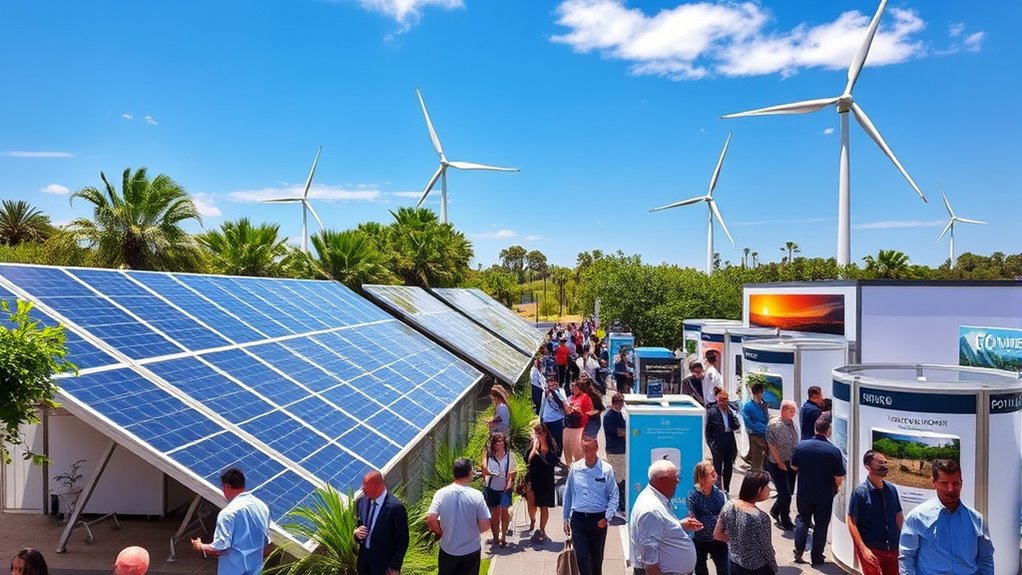
Investors are actively funding climate adaptation industries that boost urban resilience and improve water management systems. You’ll see significant investments in green infrastructure like permeable pavements, green roofs, and natural wetlands, which help cities handle flooding, heatwaves, and droughts. Governments, private companies, and international organizations are prioritizing scalable, sustainable solutions to safeguard communities and ecosystems. Keep exploring to uncover how these investments are transforming cities and water systems worldwide.
Key Takeaways
- Significant investments are flowing into urban resilience projects like green infrastructure and natural systems integration.
- Funding is prioritized for water management solutions such as smart systems, advanced treatment plants, and nature-based approaches.
- Governments, private sector, and international organizations are increasing financial support for climate adaptation research and infrastructure.
- Investment trends focus on scalable, sustainable solutions that enhance city and water system resilience to climate stresses.
- There is a growing emphasis on proactive, innovative approaches to transform vulnerabilities into resilient urban and water management systems.
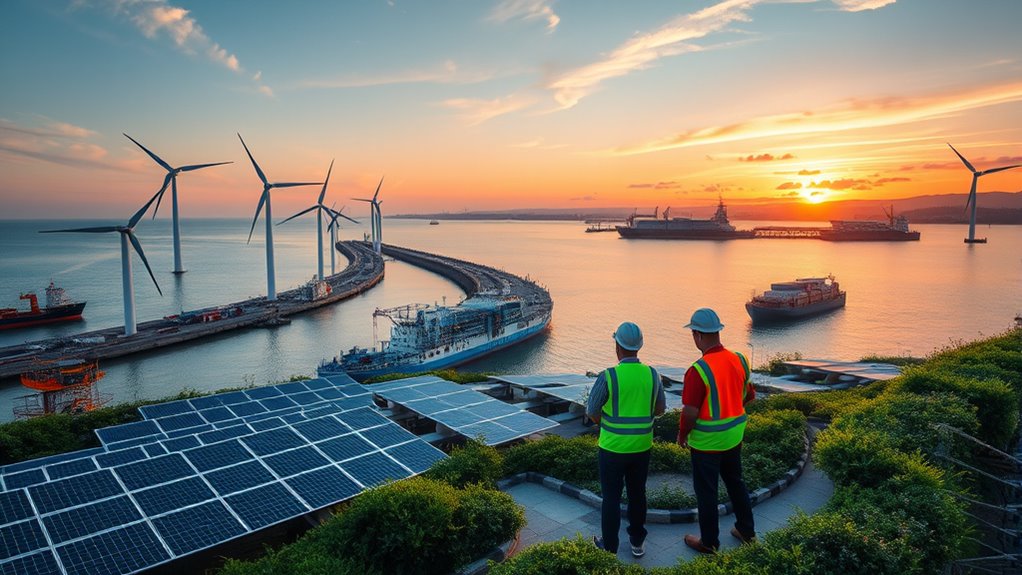
Climate adaptation industries are emerging as essential players in helping communities and businesses prepare for the impacts of climate change. As extreme weather events become more frequent and severe, these industries focus on building urban resilience and improving water management systems to withstand future challenges. You might be surprised how much innovation is happening around these areas, transforming the way cities and regions respond to environmental stresses.
Urban resilience is at the heart of many climate adaptation efforts. You can see this in projects designed to make cities more capable of handling flooding, heatwaves, and other climate-related stresses. For example, green infrastructure solutions like permeable pavements, green roofs, and urban wetlands are gaining traction. These features help absorb stormwater, reduce heat islands, and create more adaptable cityscapes. When you think about urban resilience, it’s about more than just infrastructure; it’s about fostering communities that can recover quickly from disruptions. Investment flows into technologies and designs that integrate natural systems into urban planning, making cities smarter and more adaptable over time.
Urban resilience involves green infrastructure that helps cities recover quickly from climate disruptions.
Water management is another critical focus within the climate adaptation industries. As climate change intensifies droughts and floods, efficient water systems become essential. You might see investments in advanced water treatment plants, smart irrigation systems, and real-time monitoring tools. These innovations aim to optimize water use, prevent shortages, and reduce waste. Enhanced water management also involves rethinking traditional infrastructure—such as levees and reservoirs—by incorporating nature-based solutions like restored wetlands that can hold excess water during heavy rains. Improved water management isn’t just about safeguarding resources; it’s about creating resilient systems that can respond to unpredictable weather patterns and minimize damage to communities and ecosystems.
The flow of investment into these sectors reflects a recognition that climate adaptation isn’t a one-time fix but a continuous process. Governments, private companies, and international organizations are channeling funds into research, new technologies, and infrastructure upgrades. You’ll find that these investments are often driven by the dual goals of protecting economic interests and safeguarding vulnerable populations. The focus is on scalable, sustainable solutions that can be integrated into existing urban landscapes and water systems, making them more resilient in the face of climate change.
In essence, the growth of climate adaptation industries signifies a shift toward proactive, innovative responses to environmental challenges. It’s about turning vulnerability into strength—building cities and water systems that can endure and thrive despite the changing climate. As these industries evolve, your role as an observer or participant involves understanding the importance of resilient infrastructure and supporting sustainable investments that secure a safer, more adaptable future.
Frequently Asked Questions
What Are the Main Barriers to Investment in Climate Adaptation Industries?
You face barriers like limited financial incentives that make investing in climate adaptation industries less attractive. Technological innovation can be slow or costly, discouraging investors. Uncertainty about future climate impacts and policy changes also create risks, reducing confidence in long-term investments. To overcome these hurdles, you need stronger financial incentives, support for technological innovation, and clear policies that encourage sustainable investments in climate adaptation.
How Do Government Policies Influence Funding in This Sector?
Imagine a lighthouse guiding ships through fog—that’s how government policies influence funding in climate adaptation. Your policies impact funding mechanisms by creating incentives or barriers, shaping investor confidence. When policies are clear and supportive, they attract more investment, fueling innovation and resilience. Conversely, uncertain policies cast doubt, making it harder to secure funding. Your government’s policy impact determines whether this sector sails smoothly toward a sustainable future.
Which Regions Are Currently Leading in Climate Adaptation Investments?
You’ll find regional leadership and investment hotspots mainly in North America, Europe, and parts of Asia. These regions lead in climate adaptation investments due to strong government policies, innovative industries, and advanced infrastructure. Your focus should be on these areas if you’re seeking opportunities, as they’re attracting significant funding to develop resilient solutions. Watch for emerging hotspots in Africa and Latin America, where increasing investments aim to address urgent climate challenges.
What Is the Projected Growth Rate for Climate Adaptation Industries?
Imagine your community facing rising floods, and new flood barriers are built with innovative tech. The projected growth rate for climate adaptation industries is around 10-15% annually, driven by market demand and technological innovations. As climate risks increase, investments surge, creating more job opportunities and smarter solutions. You’ll see steady expansion, ensuring communities are better prepared, while your investments help shape resilient, sustainable futures.
How Are Private Investors Assessing Risks in Climate Adaptation Projects?
You assess risks in climate adaptation projects by analyzing various factors such as potential environmental impacts and regulatory changes. You leverage risk assessment tools to identify vulnerabilities and uncertainties. Technological innovation plays a vital role, helping you evaluate new solutions’ viability and resilience. By staying informed on industry trends and advancements, you make smarter investment decisions, ensuring your funds support projects that are both sustainable and capable of withstanding future climate challenges.
Conclusion
Just as Atlas bears the weight of the world, your investments now can uphold communities facing climate change. By channeling funds into adaptive industries, you’re shaping a resilient future—like the phoenix rising from ashes. Remember, the tides of change wait for no one; your action today echoes through tomorrow’s landscapes. Embrace this moment, and be the catalyst for a sustainable world where hope isn’t just a myth but a reality in the making.