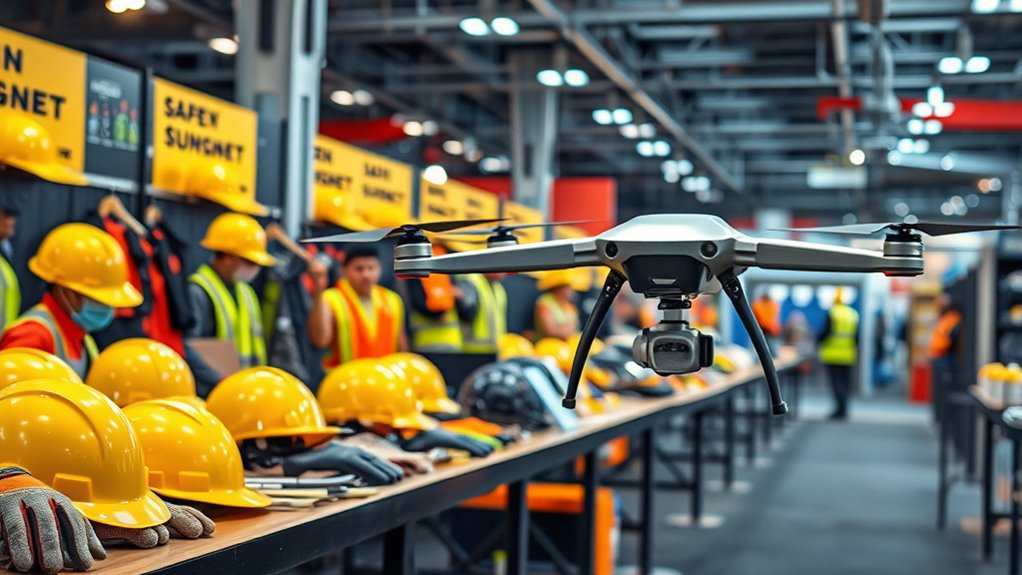

The safety tool market is expanding rapidly, fueled by advances in smart PPE and drone surveillance. You’ll see industries like construction and manufacturing adopting these technologies to improve safety and reduce risks. Smart PPE offers real-time health and environmental monitoring, while drones help inspect hard-to-reach areas and spot hazards early. As these innovations become more affordable and connected, workplaces are becoming smarter and safer. Keep exploring to uncover how these trends are shaping a safer future for you.
Key Takeaways
- The safety tool market is rapidly expanding due to increased adoption of advanced PPE and drone surveillance technologies.
- Smart PPE with sensors and connectivity enhances real-time monitoring and proactive safety measures across industries.
- Drone applications improve site inspection, hazard detection, and situational awareness, reducing worker exposure to risks.
- Integration of wearable sensors and drones fosters a more proactive safety culture with data-driven decision-making.
- Market forecasts predict continued growth with AI, autonomous drones, and smarter workplaces improving overall safety standards.
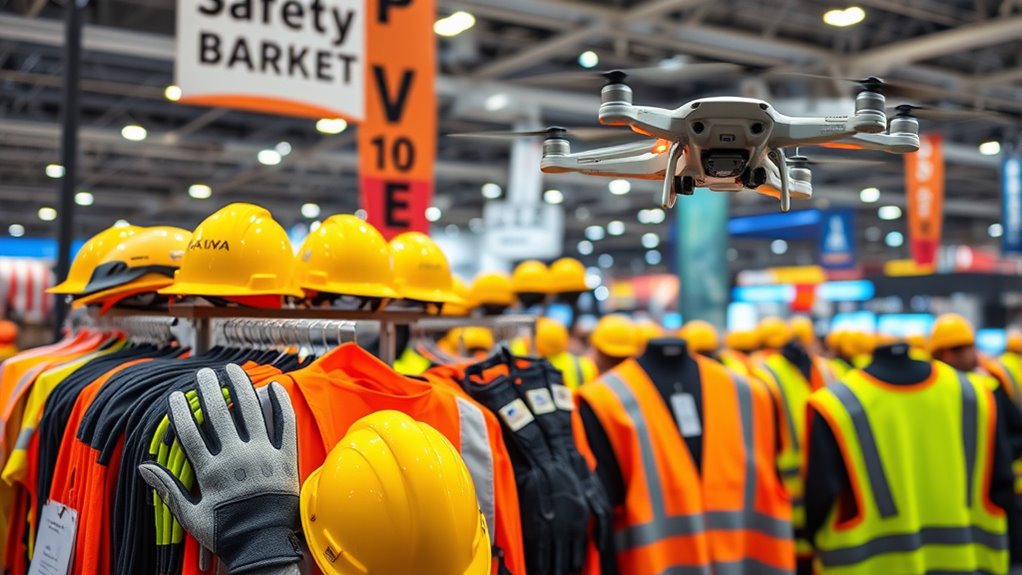
The safety tool market is experiencing rapid growth as industries prioritize worker protection and regulatory compliance. You’re likely noticing that traditional safety gear is evolving into more advanced solutions, with technologies like Smart PPE leading the charge. Smart PPE integrates sensors and connectivity features directly into personal protective equipment, allowing you to monitor vital signs, environmental conditions, and even fatigue levels in real-time. This innovation helps prevent accidents before they happen, making workplaces safer and more efficient. By providing immediate data, Smart PPE empowers you to make informed decisions on-site, reducing downtime and enhancing safety protocols. As these smart systems become more affordable and user-friendly, you can expect widespread adoption across sectors such as construction, manufacturing, and oil & gas.
Alongside wearable tech, drone surveillance is transforming how industries oversee safety and operational efficiency. Drones give you a bird’s-eye view of large or complex work sites, enabling rapid inspection of hazardous areas that might be difficult or dangerous to access manually. They allow you to identify potential safety issues early, whether it’s a structural weakness, equipment malfunction, or environmental hazard. With high-resolution cameras, thermal imaging, and real-time data transmission, drones provide all-encompassing situational awareness that was previously impossible or time-consuming to achieve. This means you can respond quickly to emerging risks, ensuring worker safety and maintaining compliance with safety regulations. Additionally, drone surveillance reduces the need for personnel to enter risky zones, minimizing exposure to danger while still gathering critical information.
These technological advancements are not just about safety; they’re about creating a smarter, more proactive safety culture. You’ll find that Smart PPE and drone surveillance work together seamlessly—wearable sensors can alert you to dangerous conditions, while drones can verify and investigate those alerts from above. This integrated approach streamlines safety protocols and reduces human error, which is often a factor in workplace accidents. As the market continues to evolve, expect even more sophisticated solutions, such as AI-powered analytics and autonomous drones, to further enhance your ability to predict and prevent incidents. The focus on innovative safety tools underscores a broader shift towards smarter, more connected workplaces. You can be confident that, with these advancements, safety standards will improve, risks will diminish, and your workplace will become a safer environment for everyone.
rapid growth in safety technology
Frequently Asked Questions
How Have Recent Technological Advances Impacted Safety Tool Innovation?
Recent technological advances have markedly boosted safety tool innovation, especially with wearable sensors and AI integration. You now benefit from real-time monitoring of hazardous conditions, which allows for quicker responses and better prevention. AI helps analyze data from sensors, improving safety protocols and customizing protective measures. These innovations make your work environment safer and more efficient, reducing risks and enhancing overall safety management.
What Are the Main Challenges in Adopting Drone Technology for Safety Purposes?
Imagine steering stormy seas with a fragile boat—that’s what adopting drone tech for safety feels like. You face regulatory hurdles that act like hidden rocks and public perception as unpredictable waves. These challenges make it tough to deploy drones confidently, risking delays and resistance. Overcoming these hurdles requires clear regulations and building trust, so you can steer through the storm and harness drones’ safety potential effectively.
How Do Regional Regulations Influence Safety Tool Market Growth?
Regional regulations greatly influence your safety tool market growth by shaping regional compliance requirements and creating regulatory barriers. If local laws are strict or unclear, it becomes harder for you to introduce new safety tools, especially innovative ones like drones. Managing diverse regulatory landscapes requires adaptability and proactive engagement with authorities. When regions streamline compliance and reduce barriers, your business can expand faster, leveraging new safety technologies more effectively across different markets.
What Is the Expected Lifespan of Modern Safety Equipment?
Think of your safety equipment like a trusted car; with proper maintenance cycles, it can last for years. Modern safety gear typically has an expected lifespan of 5 to 10 years, depending on usage and material quality. Equipment durability varies, but regular inspection and timely replacement ensure maximum protection. Neglecting maintenance can shorten its life, much like ignoring oil changes can reduce a car’s longevity.
How Do Costs Compare Between Traditional PPE and Drone-Based Safety Solutions?
The cost comparison between traditional PPE and drone-based safety solutions varies, but generally, drone solutions have higher initial expenses due to equipment and technology costs. However, an expense analysis shows drones can reduce long-term costs by minimizing worker injuries and increasing efficiency. While PPE is cheaper upfront, drones offer a more scalable and extensive safety approach, making them a worthwhile investment for large or high-risk operations.
Conclusion
As you consider the future of safety tools, remember that investing in advanced PPE and innovative drones isn’t just about technology—it’s about safeguarding lives. Some might worry about costs, but think of the peace of mind knowing you’re preventing accidents before they happen. By embracing these tools now, you’re showing your commitment to safety and caring for those who rely on you. Don’t wait for a tragedy—act today to ensure a safer tomorrow.